
Exodus 33:10
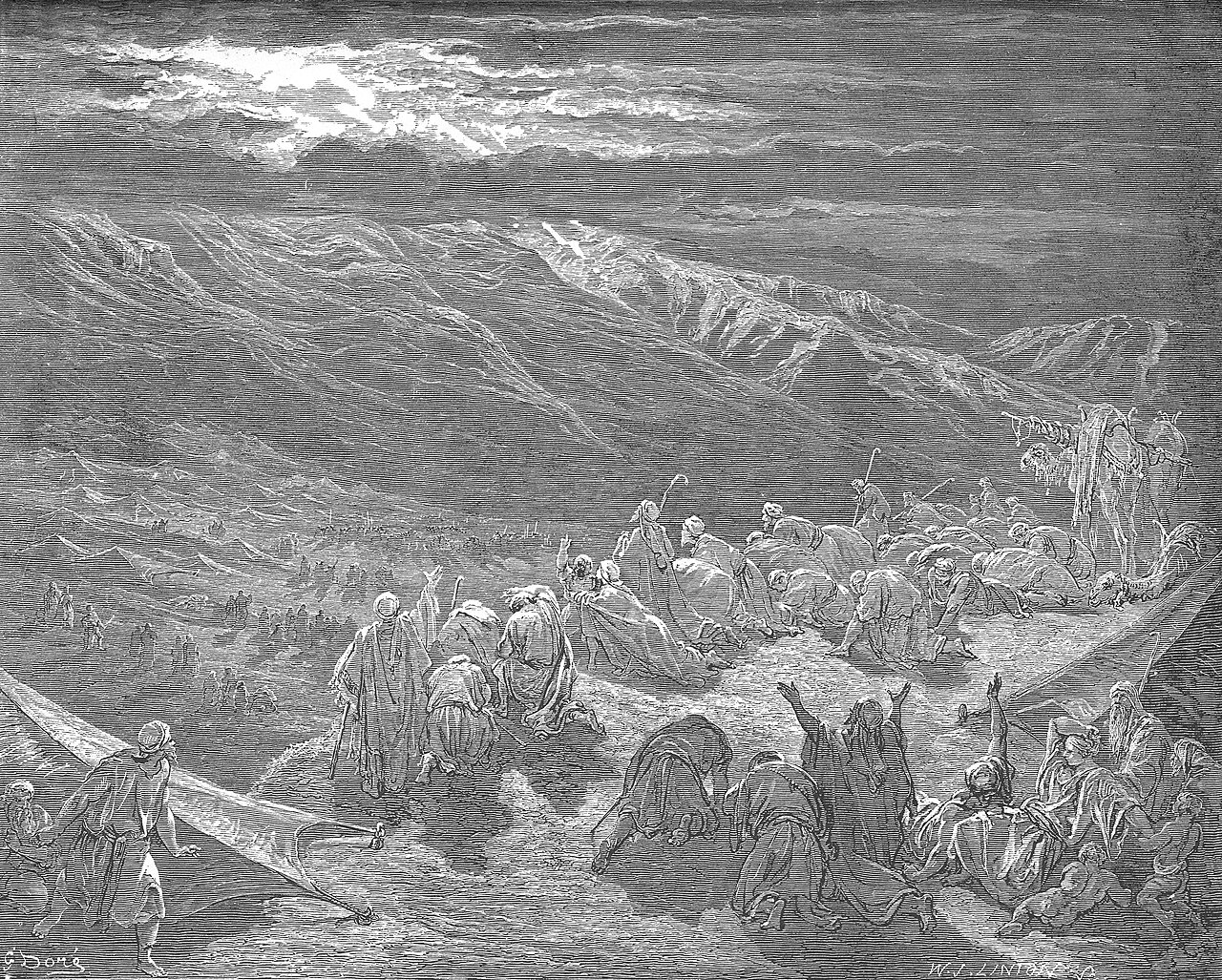
in Exodus 33When all the people saw the pillar of cloud standing at the entrance to the tent, they would stand up and worship, each one at the entrance to his own tent.
BSB
The same verse in ASV and KJV ▾
ASV
And all the people saw the pillar of cloud stand at the door of the Tent: and all the people rose up and worshipped, every man at his tent door.
KJV
And all the people saw the cloudy pillar stand at the tabernacle door: and all the people rose up and worshipped, every man in his tent door.
⋯
This verse in Exodus 33
Commentary
5 notes on this verseThus must we worship God in our tents with an eye to Christ as the Mediator. Their worshipping in their tent doors declared plainly that they were not ashamed publicly to own their respect to God and Moses, as they had publicly worshipped the calf. God was, in Moses, reconciling Israel to himself, and manifested himself very willing to be at peace.
This site's exposition
as Moses entered into the tabernacle
on Exodus 33:9-10
The cloudy pillar that led the march at 13:21 and stood between the two armies at 14:19 comes down and takes its place at a tent door. The people worship from where they are, every man in his own tent door, which is as near as this chapter lets them come. The width of the whole camp lies between the pillar at that door and the people at theirs.
This site's exposition
they would stand up and worship
Matthew Henry notes that the people who had worshipped the calf in public now worship the LORD in public, each man at his own door. Albert Barnes reads it as further proof of penitence. Adam Clarke notes that every eye in the camp saw the cloud descend.
The record, by era
The Puritans and the Awakening1 voice
And all the people saw the cloudy pillar stand at the tabernacle door,....
The Nineteenth Century1 voice
A commentator
Albert Barnes1798–1870
Notes, Explanatory and Practical, on the Old and New Testaments (1832-1869)
proposed
The tabernacle door - The entrance of the tent. The people by their act of worship gave another proof of their penitence.
How the passage was read
What the Jewish commentators add
This took place after what is reported in the section beginning with the words, See, Thou sayest unto me (v.
This section is reception history: how the passage was read and kept in the Jewish tradition. Where a reading parts from an essential of the Christian faith, the section says so at that point.
Texts and citation data: Sefaria; each excerpt follows its version’s licence. 4 further sources are cited on this chapter that carry no English text this site may quote or only restate the verse.
The words behind it
16 Hebrew wordsEvery Hebrew word of this verse in the order it stands, with what it means and the door to its own study. The last column counts the times a word stands in the whole Bible: the rarer the word, the more the places it appears belong together.
| Hebrew | Sound | Meaning | Word study | In the Bible |
|---|---|---|---|---|
| וְרָאָ֤ה | veraah | and it saw | H7200 → | 1300 times |
| כָל־ | khol- | all | H3605 → | 5413 times |
| הָעָם֙ | haam | the people | H5971 → | 1873 times |
| אֶת־ | ʾet- | <obj.> | H853 → | 10935 times |
| עַמּ֣וּד | ʾamud | [the] pillar of | H5982 → | 111 times |
| הֶֽעָנָ֔ן | heanan | <the> cloud | H6051 → | 87 times |
| עֹמֵ֖ד | ʾomed | standing | H5975 → | 521 times |
| פֶּ֣תַח | petach | [the] opening of | H6607 → | 164 times |
| הָאֹ֑הֶל | haohel | the tent | H168 → | 345 times |
| וְקָ֤ם | vekam | and it arose | H6965 → | 628 times |
| כָּל־ | kol- | all | H3605 → | 5413 times |
| הָעָם֙ | haam | the people | H5971 → | 1873 times |
| וְהִֽשְׁתַּחֲוּ֔וּ | vehishtachavu | and they bowed down | H7812 → | 172 times |
| אִ֖ישׁ | ʾish | everyone | H376 → | 1663 times |
| פֶּ֥תַח | petach | [the] opening of | H6607 → | 164 times |
| אָהֳלֽוֹ׃ | ʾoholo | tent his | H168 → | 345 times |
וְרָאָ֤הand it saw
veraahH7200 →1300 times
כָל־all
khol-H3605 →5413 times
הָעָם֙the people
haamH5971 →1873 times
אֶת־<obj.>
ʾet-H853 →10935 times
עַמּ֣וּד[the] pillar of
ʾamudH5982 →111 times
הֶֽעָנָ֔ן<the> cloud
heananH6051 →87 times
עֹמֵ֖דstanding
ʾomedH5975 →521 times
פֶּ֣תַח[the] opening of
petachH6607 →164 times
הָאֹ֑הֶלthe tent
haohelH168 →345 times
וְקָ֤םand it arose
vekamH6965 →628 times
כָּל־all
kol-H3605 →5413 times
הָעָם֙the people
haamH5971 →1873 times
וְהִֽשְׁתַּחֲוּ֔וּand they bowed down
vehishtachavuH7812 →172 times
אִ֖ישׁeveryone
ʾishH376 →1663 times
פֶּ֥תַח[the] opening of
petachH6607 →164 times
אָהֳלֽוֹ׃tent his
ʾoholoH168 →345 times
A shaded row is a word that stands 400 times or fewer in the Bible.
The walk
8 stopsEach card is a verse this one points to, and under it the verses that one points to in turn. Where several paths arrive at the same place, that place is listed first: the text keeps returning to it.
Through
Luke 18:13But the tax collector stood at a distance, unwilling even to lift up his eyes to heaven. Instead, he beat his breast and said, ‘God, have mercy on me, a sinner!’
it leads to
- 1 John 1:8–10
If we say we have no sin, we deceive ourselves, and the truth is not in us.
- Ezra 9:6
and said: “O my God, I am ashamed and embarrassed to lift up my face to You, my God, because our iniquities are higher than our heads, and our guilt has reached the heavens.
- 1 Timothy 1:15
This is a trustworthy saying, worthy of full acceptance: Christ Jesus came into the world to save sinners, of whom I am the worst.
- Psalms 41:4
I said, “O LORD, be gracious to me; heal me, for I have sinned against You.”
- Hebrews 8:12
For I will forgive their iniquities and will remember their sins no more.”
- 1 John 1:8–10
Through
Exodus 4:31and they believed. And when they heard that the LORD had attended to the Israelites and had seen their affliction, they bowed down and worshiped.
it leads to
- Exodus 3:18
The elders of Israel will listen to what you say, and you must go with them to the king of Egypt and tell him, ‘The LORD, the God of the Hebrews, has met with…
- Exodus 12:27
you are to reply, ‘It is the Passover sacrifice to the LORD, who passed over the houses of the Israelites in Egypt when He struck down the Egyptians and spared our homes.’” Then the…
- Exodus 3:18
Through
1 Kings 8:22Then Solomon stood before the altar of the LORD in front of the whole assembly of Israel, spread out his hands toward heaven,
it leads to
- Ezra 9:5
At the evening offering, I got up from my humiliation with my tunic and cloak torn, and I fell on my knees, spread out my hands to the LORD my God,
- Ezra 9:5
Where this verse is studied
On this page
About Exodus
This page draws on Adam Clarke, Commentary on the Bible; Albert Barnes, Notes, Explanatory and Practical, on the Old and New Testaments (1832-1869); John Gill, Exposition of the Old Testament; John Gill, Exposition of the Old Testament (1748-1763) and Matthew Henry, Commentary on the Whole Bible.