
Exodus 32:33
in Exodus 32The LORD replied to Moses, “Whoever has sinned against Me, I will blot out of My book.
BSB
The same verse in ASV and KJV ▾
ASV
And Jehovah said unto Moses, Whosoever hath sinned against me, him will I blot out of my book.
KJV
And the Lord said unto Moses, Whosoever hath sinned against me, him will I blot out of my book.
⋯
This verse in Exodus 32
Commentary
8 notes on this verseWhosoever hath sinned against me, him will I blot out - As if the Divine Being had said: “All my conduct is regulated by infinite justice and righteousness: in no case shall the innocent ever suffer for the guilty. That no man may transgress through ignorance, I have given you my law, and thus published my covenant; the people themselves have acknowledged its justice and equity, and have voluntarily ratified it.
This site's exposition
please blot me out of the book
on Exodus 32:32-33
Moses offers to be blotted out of God's book for the people, and the Hebrew breaks off before its alternative. The answer refuses the exchange, Whoever has sinned against Me, I will blot out of My book.
This site's exposition
I will blot out of My book
Adam Clarke takes the book as the register of the tribes and families that Moses had ordered on the mountain. Blotting out, for him, means losing a place in the promised land. Revelation 3:5 uses the same image for the book of life.
The record, by era
The Puritans and the Awakening4 voices
1 And when the people saw that Moses delayed to come down out of the mount, the people gathered themselves together unto Aaron, and said unto him, Up, make us gods, which shall go before us; for as for this Moses, the man that brought us up out of the land of Egypt, we wot not what is become of him.
quarantine:scripture (2026-07-29) — verbatim-scripture
Whosoever hath sinned, him will I blot out of my book - The soul that sins shall die, and not the innocent for the guilty.
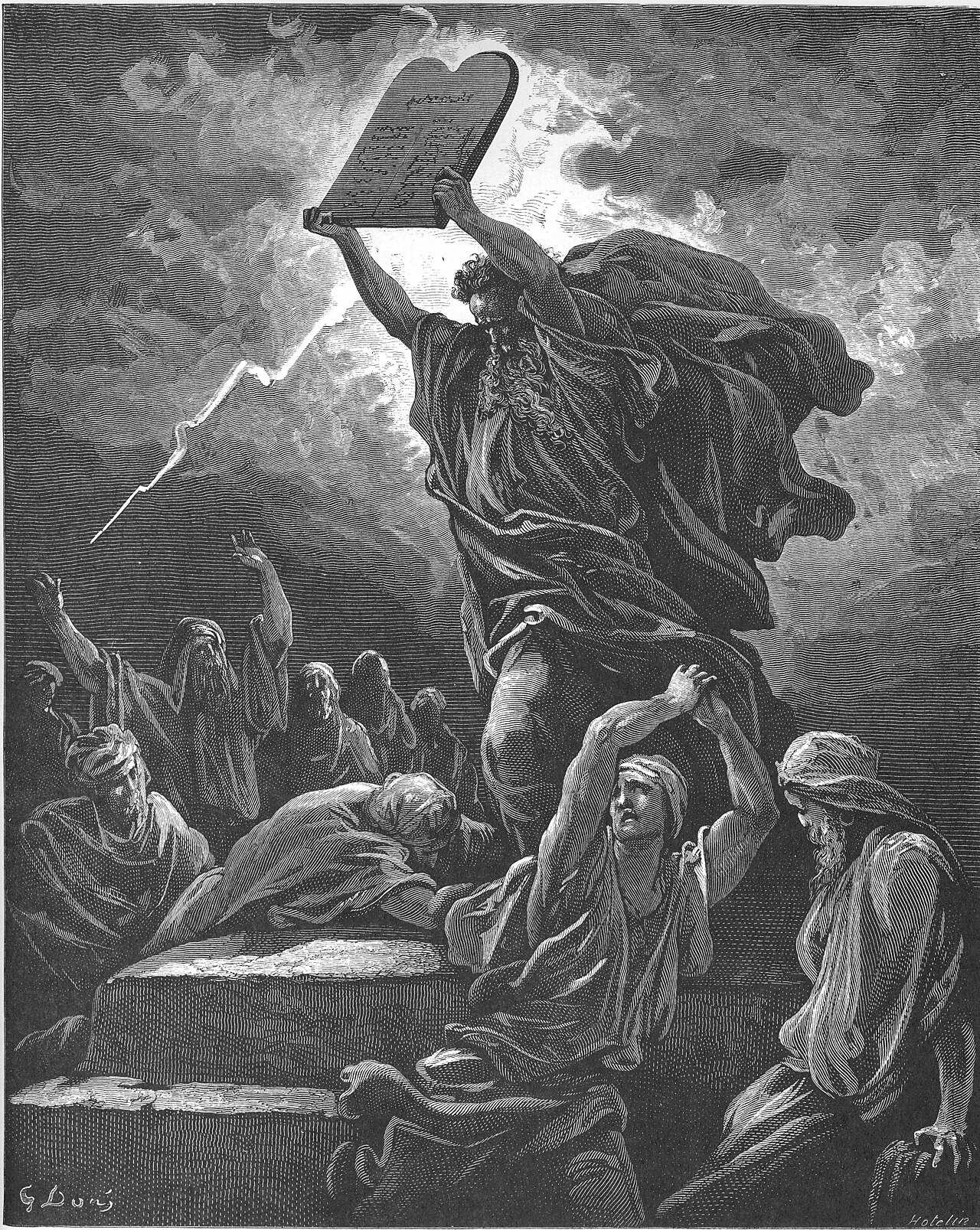
Those are angry and sin not, that are angry at sin only. Moses shewed himself angry, both by breaking the tables, and burning the calf, that he might by these expressions of a strong passion awaken the people to a sense of the greatness of their sin.
And the Lord said unto Moses,....
The Nineteenth Century1 voice
A commentator
Jamieson, Fausset & Brown1802–1910
Commentary Critical and Explanatory on the Whole Bible (1871)
proposed
Moses said unto the people, Ye have sinned a great sin--Moses labored to show the people the heinous nature of their sin, and to bring them to repentance.
The words behind it
10 Hebrew wordsEvery Hebrew word of this verse in the order it stands, with what it means and the door to its own study. The last column counts the times a word stands in the whole Bible: the rarer the word, the more the places it appears belong together.
| Hebrew | Sound | Meaning | Word study | In the Bible |
|---|---|---|---|---|
| וַיֹּ֥אמֶר | vaiyomer | and he said | H559 → | 5305 times |
| יְהוָ֖ה | yahweh | Yahweh | H3068 → | 6520 times |
| אֶל־ | ʾel- | to | H413 → | 5510 times |
| מֹשֶׁ֑ה | mosheh | Moses | H4872 → | 765 times |
| מִ֚י | mi | who? | H4310 → | 423 times |
| אֲשֶׁ֣ר | ʾasher | [is [the] one] who | H834 → | 5497 times |
| חָֽטָא־ | chata'- | he has sinned | H2398 → | 238 times |
| לִ֔י | li | to <the> me | ||
| אֶמְחֶ֖נּוּ | ʾemchenu | I will wipe out him | H4229 → | 36 times |
| מִסִּפְרִֽי׃ | misifri | from book my | H5612 → | 186 times |
וַיֹּ֥אמֶרand he said
vaiyomerH559 →5305 times
יְהוָ֖הYahweh
yahwehH3068 →6520 times
אֶל־to
ʾel-H413 →5510 times
מֹשֶׁ֑הMoses
moshehH4872 →765 times
מִ֚יwho?
miH4310 →423 times
אֲשֶׁ֣ר[is [the] one] who
ʾasherH834 →5497 times
חָֽטָא־he has sinned
chata'-H2398 →238 times
לִ֔יto <the> me
li
אֶמְחֶ֖נּוּI will wipe out him
ʾemchenuH4229 →36 times
מִסִּפְרִֽי׃from book my
misifriH5612 →186 times
A shaded row is a word that stands 400 times or fewer in the Bible.
The walk
8 stopsEach card is a verse this one points to, and under it the verses that one points to in turn. Where several paths arrive at the same place, that place is listed first: the text keeps returning to it.
Through
Revelation 20:12And I saw the dead, great and small, standing before the throne. And there were open books, and one of them was the Book of Life. And the dead were judged according to their…
it leads to
- 2 Corinthians 5:10
For we must all appear before the judgment seat of Christ, that each one may receive his due for the things done in the body, whether good or bad.
- Matthew 16:27
For the Son of Man will come in His Father’s glory with His angels, and then He will repay each one according to what he has done.
- Daniel 7:10
A river of fire was flowing, coming out from His presence. Thousands upon thousands attended Him, and myriads upon myriads stood before Him. The court was convened, and the books were opened.
- Ecclesiastes 12:14
For God will bring every deed into judgment, along with every hidden thing, whether good or evil.
- Revelation 2:23
Then I will strike her children dead, and all the churches will know that I am the One who searches minds and hearts, and I will repay each of you according to your deeds.
- 2 Corinthians 5:10
Through
Ezekiel 18:4Behold, every soul belongs to Me; both father and son are Mine. The soul who sins is the one who will die.
it leads to
- Ezekiel 18:20
The soul who sins is the one who will die. A son will not bear the iniquity of his father, and a father will not bear the iniquity of his son. The righteousness of…
- Romans 6:23
For the wages of sin is death, but the gift of God is eternal life in Christ Jesus our Lord.
- Numbers 16:22
But Moses and Aaron fell facedown and said, “O God, the God of the spirits of all flesh, when one man sins, will You be angry with the whole congregation?”
- Ezekiel 18:20
Where this verse is studied
On this page
About Exodus
Who and where
1 name in this verse with a page on the site.
This page draws on Adam Clarke, Commentary on the Bible; Jamieson, Fausset & Brown, Commentary Critical and Explanatory on the Whole Bible; John Calvin, Commentary on the Four Last Books of Moses Arranged in the Form of a Harmony; John Gill, Exposition of the Old Testament (1748-1763); John Wesley, Explanatory Notes upon the Old Testament and Matthew Henry, Commentary on the Whole Bible.