
Exodus 14:26
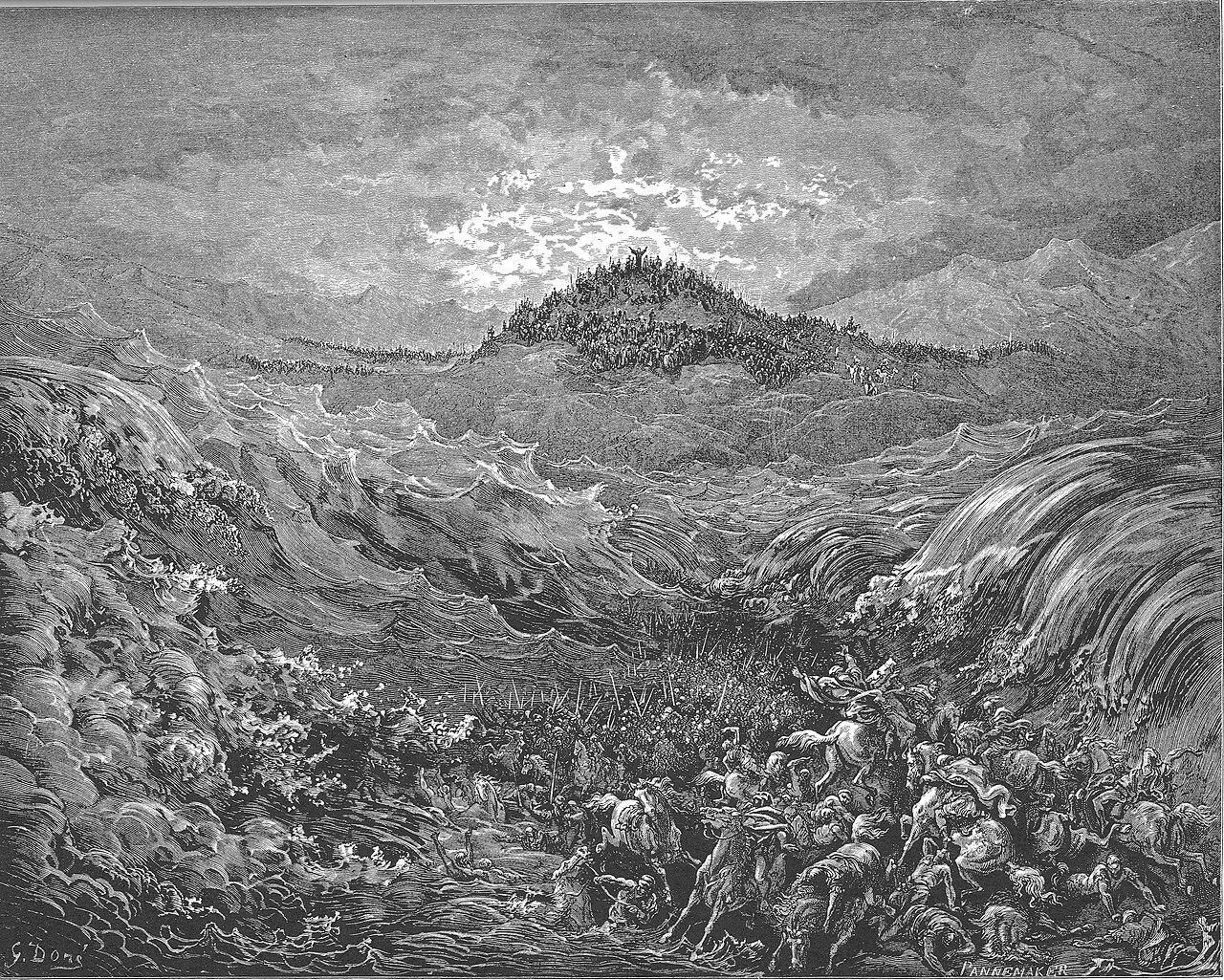
in Exodus 14Then the LORD said to Moses, “Stretch out your hand over the sea, so that the waters may flow back over the Egyptians and their chariots and horsemen.”
BSB
The same verse in ASV and KJV ▾
ASV
And Jehovah said unto Moses, Stretch out thy hand over the sea, that the waters may come again upon the Egyptians, upon their chariots, and upon their horsemen.
KJV
And the Lord said unto Moses, Stretch out thine hand over the sea, that the waters may come again upon the Egyptians, upon their chariots, and upon their horsemen.
⋯
This verse in Exodus 14
Commentary
5 notes on this verseA commentator
Albert Barnes1798–1870
Notes, Explanatory and Practical, on the Old and New Testaments (1832-1869)
That the waters may come - A sudden cessation of the wind, possibly coinciding with a spring tide (it was full moon) would immediately convert the low flat sand-banks first into a quicksand, and then into a mass of waters, in a time far less than would suffice for the escape of a single chariot, or horseman loaded with heavy corslet.
This site's exposition
Stretch out thine hand over the sea
on Exodus 14:26-28
The gesture that opened the sea closes it, and the water returns to his strength when the morning appeared. There remained not so much as one of them, which is the same absolute the text used of Egypt's houses at 12:30, where there was not a house where there was not one dead. Nehemiah 9:11 and Psalm 136:15 sing the event back as Israel's history, and Hebrews 11:29 says the Egyptians assaying to do the same were drowned.
The record, by era
The Puritans and the Awakening3 voices
He did so, and immediately the waters returned to their place, and overwhelmed all the host of the Egyptians. Pharaoh and his servants, that had hardened one another in sin, now fell together, and not one escaped.
And the Lord said unto Moses,....
Note, It is very common, but very absurd and criminal, for people to repent of their good deeds; their justice and charity, and even their repentance, are repented of.
The words behind it
17 Hebrew wordsEvery Hebrew word of this verse in the order it stands, with what it means and the door to its own study. The last column counts the times a word stands in the whole Bible: the rarer the word, the more the places it appears belong together.
| Hebrew | Sound | Meaning | Word study | In the Bible |
|---|---|---|---|---|
| וַיֹּ֤אמֶר | vaiyomer | and he said | H559 → | 5305 times |
| יְהוָה֙ | yahweh | Yahweh | H3068 → | 6520 times |
| אֶל־ | ʾel- | to | H413 → | 5510 times |
| מֹשֶׁ֔ה | mosheh | Moses | H4872 → | 765 times |
| נְטֵ֥ה | neteh | stretch out | H5186 → | 214 times |
| אֶת־ | ʾet- | <obj.> | H853 → | 10935 times |
| יָדְךָ֖ | yadekha | hand your | H3027 → | 1618 times |
| עַל־ | ʾal- | over | H5921 → | 5755 times |
| הַיָּ֑ם | haiyam | the sea | H3220 → | 396 times |
| וְיָשֻׁ֤בוּ | veyashuvu | so they may return | H7725 → | 1056 times |
| הַמַּ֙יִם֙ | hamayim | the waters | H4325 → | 581 times |
| עַל־ | ʾal- | over | H5921 → | 5755 times |
| מִצְרַ֔יִם | mitzrayim | Egypt | H4714 → | 641 times |
| עַל־ | ʾal- | over | H5921 → | 5755 times |
| רִכְבּ֖וֹ | rikhbo | chariot[s] its | H7393 → | 119 times |
| וְעַל־ | veal- | and over | H5921 → | 5755 times |
| פָּרָשָֽׁיו׃ | parashav | horsemen its | H6571 → | 57 times |
וַיֹּ֤אמֶרand he said
vaiyomerH559 →5305 times
יְהוָה֙Yahweh
yahwehH3068 →6520 times
אֶל־to
ʾel-H413 →5510 times
מֹשֶׁ֔הMoses
moshehH4872 →765 times
נְטֵ֥הstretch out
netehH5186 →214 times
אֶת־<obj.>
ʾet-H853 →10935 times
יָדְךָ֖hand your
yadekhaH3027 →1618 times
עַל־over
ʾal-H5921 →5755 times
הַיָּ֑םthe sea
haiyamH3220 →396 times
וְיָשֻׁ֤בוּso they may return
veyashuvuH7725 →1056 times
הַמַּ֙יִם֙the waters
hamayimH4325 →581 times
עַל־over
ʾal-H5921 →5755 times
מִצְרַ֔יִםEgypt
mitzrayimH4714 →641 times
עַל־over
ʾal-H5921 →5755 times
רִכְבּ֖וֹchariot[s] its
rikhboH7393 →119 times
וְעַל־and over
veal-H5921 →5755 times
פָּרָשָֽׁיו׃horsemen its
parashavH6571 →57 times
A shaded row is a word that stands 400 times or fewer in the Bible.
The walk
8 stopsEach card is a verse this one points to, and under it the verses that one points to in turn. Where several paths arrive at the same place, that place is listed first: the text keeps returning to it.
Through
James 2:13For judgment without mercy will be shown to anyone who has not been merciful. Mercy triumphs over judgment.
it leads to
- Matthew 5:7
Blessed are the merciful, for they will be shown mercy.
- Proverbs 21:13
Whoever shuts his ears to the cry of the poor, he too shall cry out and receive no answer.
- Matthew 6:15
But if you do not forgive men their trespasses, neither will your Father forgive yours.
- Luke 6:37
Do not judge, and you will not be judged. Do not condemn, and you will not be condemned. Forgive, and you will be forgiven.
- Matthew 5:7
Through
Matthew 7:2For with the same judgment you pronounce, you will be judged; and with the measure you use, it will be measured to you.
it leads to
- James 2:13
For judgment without mercy will be shown to anyone who has not been merciful. Mercy triumphs over judgment.
- Mark 4:24
He went on to say, “Pay attention to what you hear. With the measure you use, it will be measured to you, and even more will be added to you.
- Obadiah 1:15
For the Day of the LORD is near for all the nations. As you have done, it will be done to you; your recompense will return upon your own head.
- Luke 6:38
Give, and it will be given to you. A good measure, pressed down, shaken together, and running over will be poured into your lap. For with the measure you use, it will be measured…
- James 2:13
Where this verse is studied
On this page
Studies4
About Exodus
Who and where
1 name in this verse with a page on the site.
This page draws on Albert Barnes, Notes, Explanatory and Practical, on the Old and New Testaments (1832-1869); John Gill, Exposition of the Old Testament; John Gill, Exposition of the Old Testament (1748-1763); John Wesley, Explanatory Notes upon the Old Testament and Matthew Henry, Commentary on the Whole Bible.