
Deuteronomy 9:18
in Deuteronomy 9Then I fell down before the LORD for forty days and forty nights, as I had done the first time. I did not eat bread or drink water because of all the sin you had committed in doing what was evil in the sight of the LORD and provoking Him to anger.
BSB
The same verse in ASV and KJV ▾
ASV
And I fell down before Jehovah, as at the first, forty days and forty nights; I did neither eat bread nor drink water; because of all your sin which ye sinned, in doing that which was evil in the sight of Jehovah, to provoke him to anger.
KJV
And I fell down before the Lord, as at the first, forty days and forty nights: I did neither eat bread, nor drink water, because of all your sins which ye sinned, in doing wickedly in the sight of the Lord, to provoke him to anger.
⋯
This verse in Deuteronomy 9
Commentary
4 notes on this verseA commentator
Albert Barnes1798–1870
Notes, Explanatory and Practical, on the Old and New Testaments (1832-1869)
I fell down before the Lord, as at the first - Moses interceded for the people before he came down from the mountain the first time Exo 32:11-13. This intercession is only briefly alluded to in this verse. Afterward he spent another 40 days on the mountain in fasting and prayer to obtain a complete restitution of the covenant Exo 34:28. It is this second forty days, and the intercession of Moses made therein (compare Exo 34:9), that is more particularly brought forward here and in Deu 9:25-29.
This site's exposition
And I fell down before the Lord, as at the first
on Deuteronomy 9:18-19
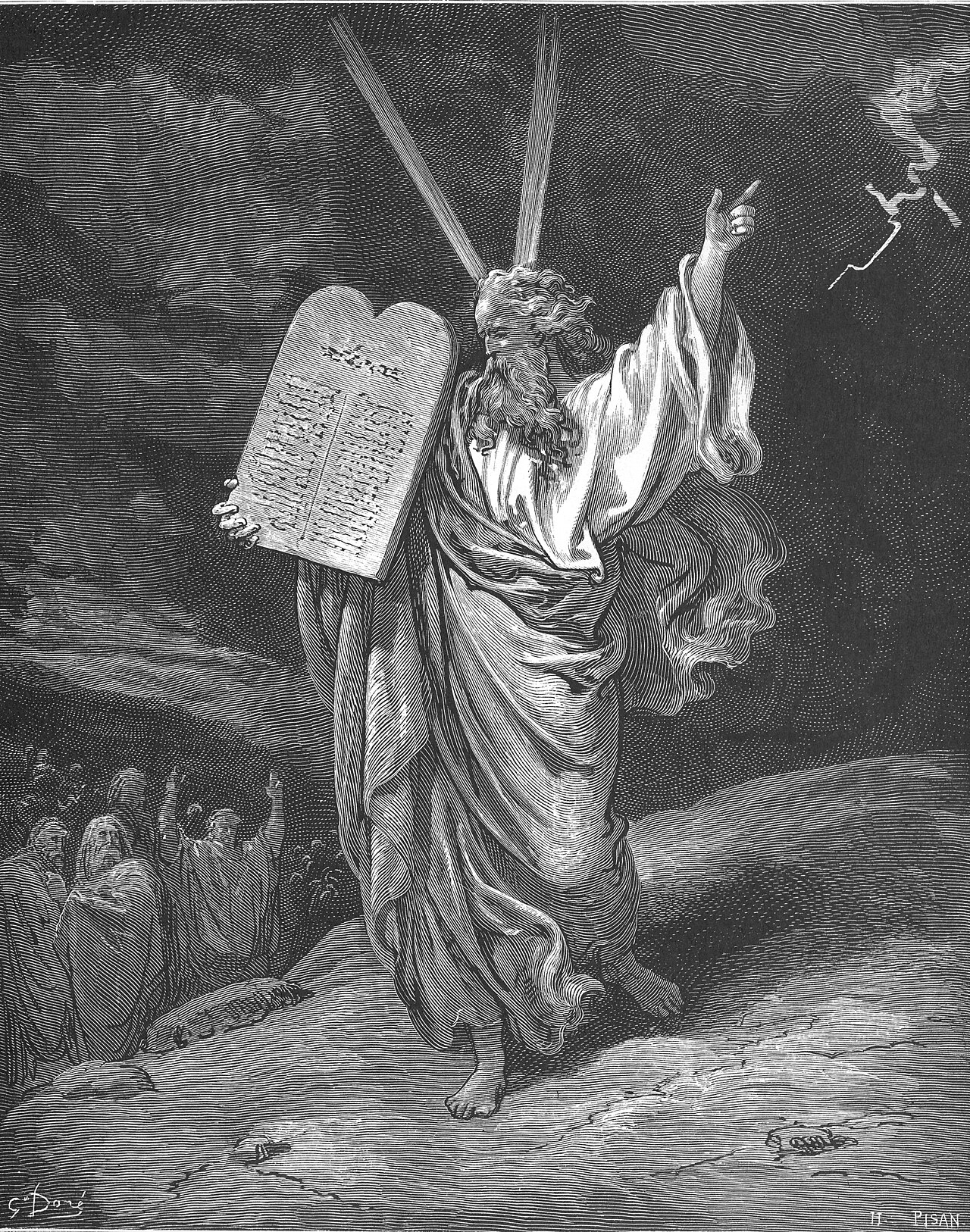
The forty days are kept a second time, now face down and on the people's account rather than to receive anything. Moses says what moved him, that he was afraid of the anger and hot displeasure, and the verse ends with the Lord hearkened unto me at that time also. Readers divide over whether verse 18 and verse 25 record two separate fasts or one told twice, and both readings are old: Barnes takes verse 18 for the second forty days of Exodus 34:28 and treats verse 25 as that same period in fuller detail, while Rashi, cited by Gill, holds the two to be the one fast repeated to suit the order of the prayer.
The record, by era
The Puritans and the Awakening1 voice
And I fell down before the Lord,....
The Nineteenth Century1 voice
A commentator
Jamieson, Fausset & Brown1802–1910
Commentary Critical and Explanatory on the Whole Bible (1871)
proposed
I fell down before the Lord--The sudden and painful reaction which this scene of pagan revelry produced on the mind of the pious and patriotic leader can be more easily imagined than described. Great and public sins call for seasons of extraordinary humiliation, and in his deep affliction for the awful apostasy, he seems to have held a miraculous fast as long as before.
How the passage was read
What the Jewish commentators add
On the verses either side of this one
This is also meant to be part of the chastisements. He is saying: “your sin was greater than could be borne, 138 See Genesis:13. to the point that when I saw you being merry before the calf I could not restrain [my anger] and I broke the Tablets.
This section is reception history: how the passage was read and kept in the Jewish tradition. Where a reading parts from an essential of the Christian faith, the section says so at that point.
Texts and citation data: Sefaria; each excerpt follows its version’s licence. 6 further sources are cited on this chapter that carry no English text this site may quote or only restate the verse.
The words behind it
24 Hebrew wordsEvery Hebrew word of this verse in the order it stands, with what it means and the door to its own study. The last column counts the times a word stands in the whole Bible: the rarer the word, the more the places it appears belong together.
| Hebrew | Sound | Meaning | Word study | In the Bible |
|---|---|---|---|---|
| וָֽאֶתְנַפַּל֩ | vaetnapal | and I prostrated myself | H5307 → | 435 times |
| לִפְנֵ֨י | lifnei | <to> before | H6440 → | 2123 times |
| יְהוָ֜ה | yahweh | Yahweh | H3068 → | 6520 times |
| כָּרִאשֹׁנָ֗ה | karishonah | like the former [time] | H7223 → | 182 times |
| אַרְבָּעִ֥ים | ʾarbaim | forty | H705 → | 136 times |
| יוֹם֙ | yom | day[s] | H3117 → | 2304 times |
| וְאַרְבָּעִ֣ים | vearbaim | and forty | H705 → | 136 times |
| לַ֔יְלָה | laylah | night[s] | H3915 → | 233 times |
| לֶ֚חֶם | lechem | food | H3899 → | 298 times |
| לֹ֣א | lo' | not | H3808 → | 5168 times |
| אָכַ֔לְתִּי | ʾakhalti | I ate | H398 → | 810 times |
| וּמַ֖יִם | umayim | and water | H4325 → | 581 times |
| לֹ֣א | lo' | not | H3808 → | 5168 times |
| שָׁתִ֑יתִי | shatiti | I drank | H8354 → | 217 times |
| עַ֤ל | ʾal | on | H5921 → | 5755 times |
| כָּל־ | kol- | all | H3605 → | 5413 times |
| חַטַּאתְכֶם֙ | chatatkhem | sin your | H2403 → | 295 times |
| אֲשֶׁ֣ר | ʾasher | which | H834 → | 5497 times |
| חֲטָאתֶ֔ם | chatatem | you had sinned | H2398 → | 238 times |
| לַעֲשׂ֥וֹת | laasot | by doing | H6213 → | 2628 times |
| הָרַ֛ע | hara' | the evil | H7451 → | 662 times |
| בְּעֵינֵ֥י | beeinei | in [the] eyes of | H5869 → | 887 times |
| יְהוָ֖ה | yahweh | Yahweh | H3068 → | 6520 times |
| לְהַכְעִיסֽוֹ׃ | lehakhiso | to provoke to anger him | H3707 → | 54 times |
וָֽאֶתְנַפַּל֩and I prostrated myself
vaetnapalH5307 →435 times
לִפְנֵ֨י<to> before
lifneiH6440 →2123 times
יְהוָ֜הYahweh
yahwehH3068 →6520 times
כָּרִאשֹׁנָ֗הlike the former [time]
karishonahH7223 →182 times
אַרְבָּעִ֥יםforty
ʾarbaimH705 →136 times
יוֹם֙day[s]
yomH3117 →2304 times
וְאַרְבָּעִ֣יםand forty
vearbaimH705 →136 times
לַ֔יְלָהnight[s]
laylahH3915 →233 times
לֶ֚חֶםfood
lechemH3899 →298 times
לֹ֣אnot
lo'H3808 →5168 times
אָכַ֔לְתִּיI ate
ʾakhaltiH398 →810 times
וּמַ֖יִםand water
umayimH4325 →581 times
לֹ֣אnot
lo'H3808 →5168 times
שָׁתִ֑יתִיI drank
shatitiH8354 →217 times
עַ֤לon
ʾalH5921 →5755 times
כָּל־all
kol-H3605 →5413 times
חַטַּאתְכֶם֙sin your
chatatkhemH2403 →295 times
אֲשֶׁ֣רwhich
ʾasherH834 →5497 times
חֲטָאתֶ֔םyou had sinned
chatatemH2398 →238 times
לַעֲשׂ֥וֹתby doing
laasotH6213 →2628 times
הָרַ֛עthe evil
hara'H7451 →662 times
בְּעֵינֵ֥יin [the] eyes of
beeineiH5869 →887 times
יְהוָ֖הYahweh
yahwehH3068 →6520 times
לְהַכְעִיסֽוֹ׃to provoke to anger him
lehakhisoH3707 →54 times
A shaded row is a word that stands 400 times or fewer in the Bible.
The walk
8 stopsEach card is a verse this one points to, and under it the verses that one points to in turn. Where several paths arrive at the same place, that place is listed first: the text keeps returning to it.
Through
Exodus 34:28So Moses was there with the LORD forty days and forty nights without eating bread or drinking water. He wrote on the tablets the words of the covenant—the Ten Commandments.
it leads to
- Deuteronomy 9:25
So I fell down before the LORD for forty days and forty nights, because the LORD had said He would destroy you.
Reached by 3 separate paths from here.
- Exodus 34:1
Then the LORD said to Moses, “Chisel out two stone tablets like the originals, and I will write on them the words that were on the first tablets, which you broke.
- Deuteronomy 4:13
He declared to you His covenant, which He commanded you to follow—the Ten Commandments that He wrote on two tablets of stone.
- Exodus 31:18
When the LORD had finished speaking with Moses on Mount Sinai, He gave him the two tablets of the Testimony, tablets of stone inscribed by the finger of God.
- Deuteronomy 9:25
Through
Deuteronomy 9:9When I went up on the mountain to receive the tablets of stone, the tablets of the covenant that the LORD made with you, I stayed on the mountain forty days and forty nights.…
it leads to
- Exodus 34:28
So Moses was there with the LORD forty days and forty nights without eating bread or drinking water. He wrote on the tablets the words of the covenant—the Ten Commandments.
Reached by 2 separate paths from here.
- Exodus 24:18
Moses entered the cloud as he went up on the mountain, and he remained on the mountain forty days and forty nights.
Reached by 2 separate paths from here.
- Exodus 34:28
Through
Psalms 106:23So He said He would destroy them— had not Moses His chosen one stood before Him in the breach to divert His wrath from destroying them.
it leads to
- Deuteronomy 9:13–14
The LORD also said to me, “I have seen this people, and they are indeed a stiff-necked people.
- Deuteronomy 9:13–14
Through
Deuteronomy 10:10I stayed on the mountain forty days and forty nights, like the first time, and that time the LORD again listened to me and agreed not to destroy you.
it leads to
- Deuteronomy 9:18–19
Then I fell down before the LORD for forty days and forty nights, as I had done the first time. I did not eat bread or drink water because of all the sin you…
- Deuteronomy 9:18–19
Where this verse is studied
On this page
Studies1
About Deuteronomy
This page draws on Albert Barnes, Notes, Explanatory and Practical, on the Old and New Testaments (1832-1869); Albert Barnes, Notes on the Old Testament; Jamieson, Fausset & Brown, Commentary Critical and Explanatory on the Whole Bible; John Gill, Exposition of the Old Testament and John Gill, Exposition of the Old Testament (1748-1763).