
Deuteronomy 31:2
in Deuteronomy 31he said to them, “I am now a hundred and twenty years old; I am no longer able to come and go, and the LORD has said to me, ‘You shall not cross the Jordan.’
BSB
The same verse in ASV and KJV ▾
ASV
And he said unto them, I am a hundred and twenty years old this day; I can no more go out and come in: and Jehovah hath said unto me, Thou shalt not go over this Jordan.
KJV
And he said unto them, I am an hundred and twenty years old this day; I can no more go out and come in: also the Lord hath said unto me, Thou shalt not go over this Jordan.
⋯
This verse in Deuteronomy 31
Commentary
6 notes on this verseThis site's exposition
When Moses had finished speaking these words to all Israel
on Deuteronomy 31:1-2
Being “no longer able to come and go” is the idiom for leading in war, as at Numbers 27:17. Since 34:7 says his strength had not failed, older readers take it of the office.
This site's exposition
a hundred and twenty years old
Moses is now a hundred and twenty years old, and his life falls into three spans of forty years. Stephen counts them at Acts 7:23, 7:30 and 7:36: Egypt, Midian, and the wilderness. The last span closes at the Jordan he will not cross.
The record, by era
The Puritans and the Awakening2 voices
But he cannot any longer discharge his office; for, 1. He is 120 years old, and it is time for him to think of resigning his honour and returning to his rest. He that had arrived at so great an age then, when seventy or eighty was the ordinary stint, as appears by the prayer of Moses ( Ps. xc.
quarantine:debris (2026-07-29) — unbalanced-parens
And he said unto them, I am an hundred and twenty years old this day,....
The Nineteenth Century2 voices
I am a hundred and twenty years old - The life of Moses, the great prophet of God and lawgiver of the Jews, was exactly the same in length as the time Noah employed in preaching righteousness to the antediluvian world.
A commentator
Albert Barnes1798–1870
Notes, Explanatory and Practical, on the Old and New Testaments (1832-1869)
proposed
I am an hundred and twenty years old - The 40 years of the wandering had passed since Moses, then 80 years old, “spake unto Pharaoh” (Exo 7:7; Compare Deu 34:7). I can, no more go out and come in - Render I shall not longer be able to go out and come in: i. e., discharge my duties among you. There is no inconsistency with Deu 34:7. Moses here adverts to his own age as likely to render him in future unequal to the active discharge of his office as leader of the people: the writer of Deu 34:1-12, one of Moses’ contemporaries, remarks of him that up to the close of life “his eye was not dim, nor his natural force abated” Deu 31:7; i. e. that he was to the last, in the judgment of others, in full possession of faculties and strength.
How the passage was read
What the Jewish commentators add
On the verses either side of this one
When Moses concluded his words, all who stood before him, and the young children, and the women returned to their own tents.
1 more on this passage, in their own words ▾
Moshe went and he addressed these statements to all of Yisroel.
This section is reception history: how the passage was read and kept in the Jewish tradition. Where a reading parts from an essential of the Christian faith, the section says so at that point.
Texts and citation data: Sefaria; each excerpt follows its version’s licence. 3 further sources are cited on this chapter that carry no English text this site may quote or only restate the verse.
The words behind it
21 Hebrew wordsEvery Hebrew word of this verse in the order it stands, with what it means and the door to its own study. The last column counts the times a word stands in the whole Bible: the rarer the word, the more the places it appears belong together.
| Hebrew | Sound | Meaning | Word study | In the Bible |
|---|---|---|---|---|
| וַיֹּ֣אמֶר | vaiyomer | and he said | H559 → | 5305 times |
| אֲלֵהֶ֗ם | ʾalehem | to them | H413 → | 5510 times |
| בֶּן־ | ben- | [am] a son of | H1121 → | 4930 times |
| מֵאָה֩ | meah | one hundred | H3967 → | 581 times |
| וְעֶשְׂרִ֨ים | veesrim | and twenty | H6242 → | |
| שָׁנָ֤ה | shanah | year[s] | H8141 → | 877 times |
| אָנֹכִי֙ | ʾanokhi | I | H595 → | 359 times |
| הַיּ֔וֹם | haiyom | this day | H3117 → | 2304 times |
| לֹא־ | lo'- | not | H3808 → | 5168 times |
| אוּכַ֥ל | ʾukhal | I am able | H3201 → | 194 times |
| ע֖וֹד | od | still | H5750 → | 490 times |
| לָצֵ֣את | latzet | to go out | H3318 → | 1067 times |
| וְלָב֑וֹא | velavo' | and to come | H935 → | 2568 times |
| וַֽיהוָה֙ | vayahweh | and Yahweh | H3068 → | 6520 times |
| אָמַ֣ר | ʾamar | he has said | H559 → | 5305 times |
| אֵלַ֔י | ʾelai | to me | H413 → | 5510 times |
| לֹ֥א | lo' | not | H3808 → | 5168 times |
| תַעֲבֹ֖ר | taavor | you will pass over | H5674 → | 556 times |
| אֶת־ | ʾet- | <obj.> | H853 → | 10935 times |
| הַיַּרְדֵּ֥ן | haiyarden | the Jordan | H3383 → | 182 times |
| הַזֶּֽה׃ | hazeh | <the> this | H2088 → | 1180 times |
וַיֹּ֣אמֶרand he said
vaiyomerH559 →5305 times
אֲלֵהֶ֗םto them
ʾalehemH413 →5510 times
בֶּן־[am] a son of
ben-H1121 →4930 times
מֵאָה֩one hundred
meahH3967 →581 times
וְעֶשְׂרִ֨יםand twenty
veesrimH6242 →
שָׁנָ֤הyear[s]
shanahH8141 →877 times
אָנֹכִי֙I
ʾanokhiH595 →359 times
הַיּ֔וֹםthis day
haiyomH3117 →2304 times
לֹא־not
lo'-H3808 →5168 times
אוּכַ֥לI am able
ʾukhalH3201 →194 times
ע֖וֹדstill
odH5750 →490 times
לָצֵ֣אתto go out
latzetH3318 →1067 times
וְלָב֑וֹאand to come
velavo'H935 →2568 times
וַֽיהוָה֙and Yahweh
vayahwehH3068 →6520 times
אָמַ֣רhe has said
ʾamarH559 →5305 times
אֵלַ֔יto me
ʾelaiH413 →5510 times
לֹ֥אnot
lo'H3808 →5168 times
תַעֲבֹ֖רyou will pass over
taavorH5674 →556 times
אֶת־<obj.>
ʾet-H853 →10935 times
הַיַּרְדֵּ֥ןthe Jordan
haiyardenH3383 →182 times
הַזֶּֽה׃<the> this
hazehH2088 →1180 times
A shaded row is a word that stands 400 times or fewer in the Bible.
The walk
8 stopsEach card is a verse this one points to, and under it the verses that one points to in turn. Where several paths arrive at the same place, that place is listed first: the text keeps returning to it.
Through
Numbers 20:12But the LORD said to Moses and Aaron, “Because you did not trust Me to show My holiness in the sight of the Israelites, you will not bring this assembly into the land that…
it leads to
- Deuteronomy 1:37
The LORD was also angry with me on your account, and He said, “Not even you shall enter the land.
- Numbers 27:14
for when the congregation contended in the Wilderness of Zin, both of you rebelled against My command to show My holiness in their sight regarding the waters.” Those were the waters of Meribah in…
- Ezekiel 36:23
I will show the holiness of My great name, which has been profaned among the nations—the name you have profaned among them. Then the nations will know that I am the LORD, declares the…
- Deuteronomy 1:37
Through
Deuteronomy 34:7Moses was a hundred and twenty years old when he died, yet his eyes were not weak, and his vitality had not diminished.
it leads to
- Joshua 14:10–11
Now behold, as the LORD promised, He has kept me alive these forty-five years since He spoke this word to Moses, while Israel wandered in the wilderness. So here I am today, eighty-five years…
- Genesis 48:10
Now Israel’s eyesight was poor because of old age; he could hardly see. Joseph brought his sons to him, and his father kissed them and embraced them.
- Genesis 27:1
When Isaac was old and his eyes were so weak that he could no longer see, he called his older son Esau and said to him, “My son.” “Here I am,” Esau replied.
- Acts 7:36
He led them out and performed wonders and signs in the land of Egypt, at the Red Sea, and for forty years in the wilderness.
- Joshua 14:10–11
Through
Numbers 27:17who will go out and come in before them, and who will lead them out and bring them in, so that the congregation of the LORD will not be like sheep without a shepherd.”
it leads to
- Ezekiel 34:5
They were scattered for lack of a shepherd, and when they were scattered they became food for all the wild beasts.
- Ezekiel 34:5
Where this verse is studied
On this page
Studies12
About Deuteronomy
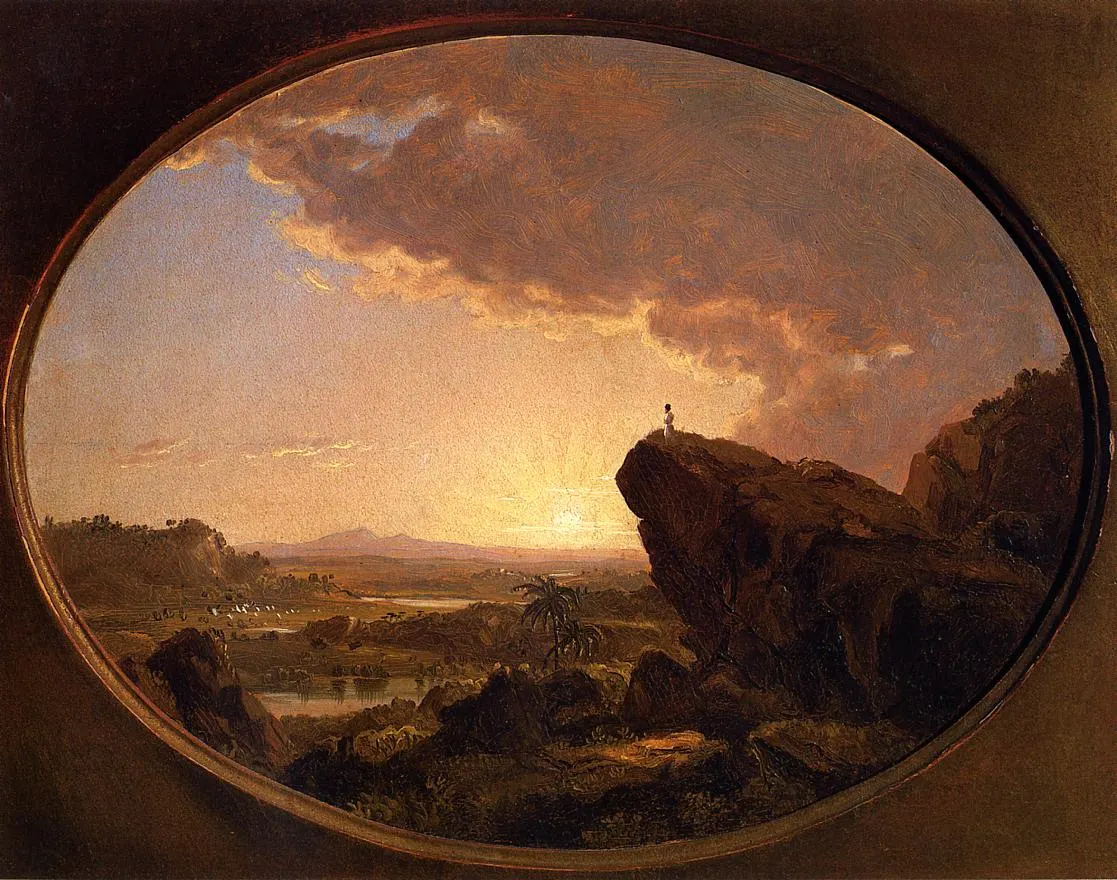
This page draws on Adam Clarke, Commentary on the Bible; Albert Barnes, Notes, Explanatory and Practical, on the Old and New Testaments (1832-1869); Berean Standard Bible, Acts 7:23, 7:30, 7:36; John Gill, Exposition of the Old Testament (1748-1763); Keil and Delitzsch, Biblical Commentary on the Old Testament: The Pentateuch and Matthew Henry, Commentary on the Whole Bible.