
2 Samuel 13:1
in 2 Samuel 13After some time, David’s son Amnon fell in love with Tamar, the beautiful sister of David’s son Absalom.
BSB
The same verse in ASV and KJV ▾
ASV
And it came to pass after this, that Absalom the son of David had a fair sister, whose name was Tamar; and Amnon the son of David loved her.
KJV
And it came to pass after this, that Absalom the son of David had a fair sister, whose name was Tamar; and Amnon the son of David loved her.
⋯
This verse in 2 Samuel 13
Commentary
5 notes on this verseWhose name was Tamar - Tamar was the daughter of David and Maacah, daughter of the king of Geshur, and the uterine sister of Absalom. Amnon was David’s eldest son by Ahinoam. She was therefore sister to Amnon only by the father’s side, i.e., half-sister; but whole sister to Absalom.
This site's exposition
had a fair sister
on 2 Samuel 13:1-3
The chapter names the two brothers on either side of Tamar in one breath: Absalom, her full brother, and Amnon, David's firstborn by Ahinoam and her half brother only. Amnon's love curdles at once into vexation, a want that cannot be filled without breaking the law of Israel. Jonadab, David's own nephew through his brother Shimeah, enters as a very subtil man, the same word Scripture uses elsewhere for shrewdness bent toward evil.
The record, by era
The Puritans and the Awakening2 voices
And it came to pass after this,....
Unnatural in itself, to lust after his sister, which even natural conscience startles at and cannot think of without horror. Such a spirit of contradiction there is in man's corrupt nature that still it desires forbidden fruit, and the more strongly it is forbidden the more greedily it is desired.
The Nineteenth Century1 voice
A commentator
Albert Barnes1798–1870
Notes, Explanatory and Practical, on the Old and New Testaments (1832-1869)
proposed
The history here, down to the end of 2 Sam. 23 (excepting a few particulars), is omitted in the Book of Chronicles.
The words behind it
14 Hebrew wordsEvery Hebrew word of this verse in the order it stands, with what it means and the door to its own study. The last column counts the times a word stands in the whole Bible: the rarer the word, the more the places it appears belong together.
| Hebrew | Sound | Meaning | Word study | In the Bible |
|---|---|---|---|---|
| וַיְהִ֣י | vayhi | and it was | H1961 → | 3559 times |
| אַֽחֲרֵי־ | ʾacharei- | after | H310 → | 715 times |
| כֵ֗ן | khen | thus | H3651 → | 771 times |
| וּלְאַבְשָׁל֧וֹם | uleavshalom | and [belonged] to Absalom | H53 → | 110 times |
| בֶּן־ | ben- | [the] son of | H1121 → | 4930 times |
| דָּוִ֛ד | david | David | H1732 → | 999 times |
| אָח֥וֹת | ʾachot | a sister | H269 → | 114 times |
| יָפָ֖ה | yafah | a beautiful | H3303 → | 42 times |
| וּשְׁמָ֣הּ | ushemah | and name her | H8034 → | 864 times |
| תָּמָ֑ר | tamar | [was] Tamar | H8559 → | 25 times |
| וַיֶּאֱהָבֶ֖הָ | vaiyeehaveha | and he loved her | H157 → | 211 times |
| אַמְנ֥וֹן | ʾamnon | Amnon | H550 → | 28 times |
| בֶּן־ | ben- | [the] son of | H1121 → | 4930 times |
| דָּוִֽד׃ | david | David | H1732 → | 999 times |
וַיְהִ֣יand it was
vayhiH1961 →3559 times
אַֽחֲרֵי־after
ʾacharei-H310 →715 times
כֵ֗ןthus
khenH3651 →771 times
וּלְאַבְשָׁל֧וֹםand [belonged] to Absalom
uleavshalomH53 →110 times
בֶּן־[the] son of
ben-H1121 →4930 times
דָּוִ֛דDavid
davidH1732 →999 times
אָח֥וֹתa sister
ʾachotH269 →114 times
יָפָ֖הa beautiful
yafahH3303 →42 times
וּשְׁמָ֣הּand name her
ushemahH8034 →864 times
תָּמָ֑ר[was] Tamar
tamarH8559 →25 times
וַיֶּאֱהָבֶ֖הָand he loved her
vaiyeehavehaH157 →211 times
אַמְנ֥וֹןAmnon
ʾamnonH550 →28 times
בֶּן־[the] son of
ben-H1121 →4930 times
דָּוִֽד׃David
davidH1732 →999 times
A shaded row is a word that stands 400 times or fewer in the Bible.
The walk
8 stopsEach card is a verse this one points to, and under it the verses that one points to in turn. Where several paths arrive at the same place, that place is listed first: the text keeps returning to it.
Through
2 Samuel 14:27Three sons were born to Absalom, and a daughter named Tamar, who was a beautiful woman.
it leads to
- 2 Samuel 18:18
During his lifetime, Absalom had set up for himself a pillar in the King’s Valley, for he had said, “I have no son to preserve the memory of my name.” So he gave the…
- 2 Samuel 18:18
Through
1 Chronicles 3:2the third was Absalom the son of Maacah daughter of King Talmai of Geshur; the fourth was Adonijah the son of Haggith;
it leads to
- 2 Samuel 19:4–10
But the king covered his face and cried out at the top of his voice, “O my son Absalom! O Absalom, my son, my son!”
- 1 Chronicles 2:23
But Geshur and Aram captured Havvoth-jair, along with Kenath and its sixty surrounding villages. All these were descendants of Machir the father of Gilead.
- 2 Samuel 14:23
So Joab got up, went to Geshur, and brought Absalom to Jerusalem.
- 2 Samuel 18:14
But Joab declared, “I am not going to wait like this with you!” And he took three spears in his hand and thrust them through the heart of Absalom while he was still alive…
- 2 Samuel 15:8
For your servant made a vow while dwelling in Geshur of Aram, saying: ‘If indeed the LORD brings me back to Jerusalem, I will worship the LORD in Hebron.’”
- 2 Samuel 19:4–10
Through
2 Samuel 13:15Then Amnon hated Tamar with such intensity that his hatred was greater than the love he previously had. “Get up!” he said to her. “Be gone!”
it leads to
- Ezekiel 23:17
Then the Babylonians came to her, to the bed of love, and in their lust they defiled her. But after she had been defiled by them, she turned away in disgust.
- Ezekiel 23:17
Through
1 Chronicles 3:9These were all the sons of David, besides the sons by his concubines. And Tamar was their sister.
it leads to
- 2 Samuel 13:1–20
After some time, David’s son Amnon fell in love with Tamar, the beautiful sister of David’s son Absalom.
- 2 Samuel 13:1–20
Where this verse is studied
On this page
About 2 Samuel
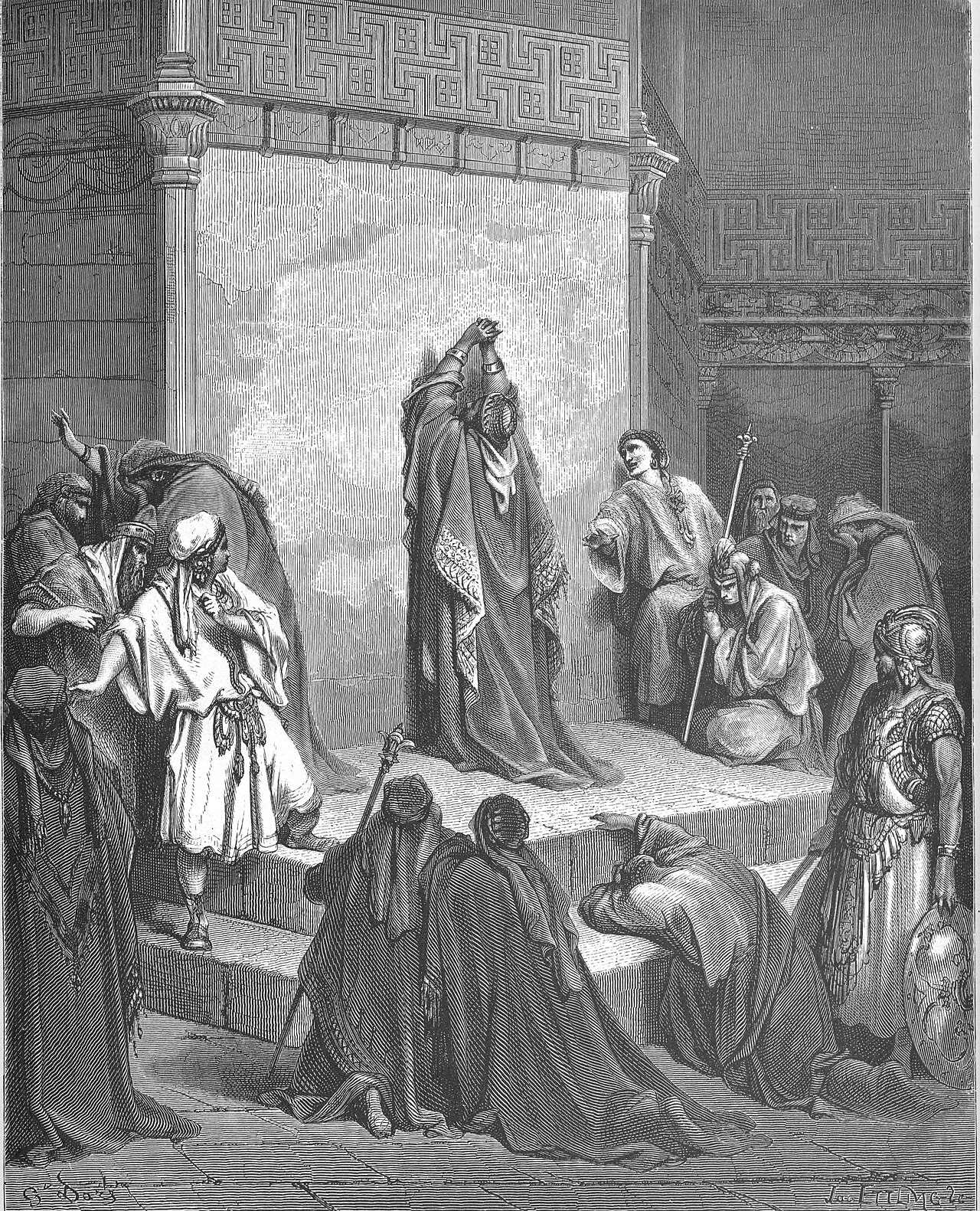
This page draws on Adam Clarke, Commentary on the Bible; Albert Barnes, Notes, Explanatory and Practical, on the Old and New Testaments (1832-1869); John Gill, Exposition of the Old Testament (1748-1763) and Matthew Henry, Commentary on the Whole Bible.