
2 Samuel 12:19
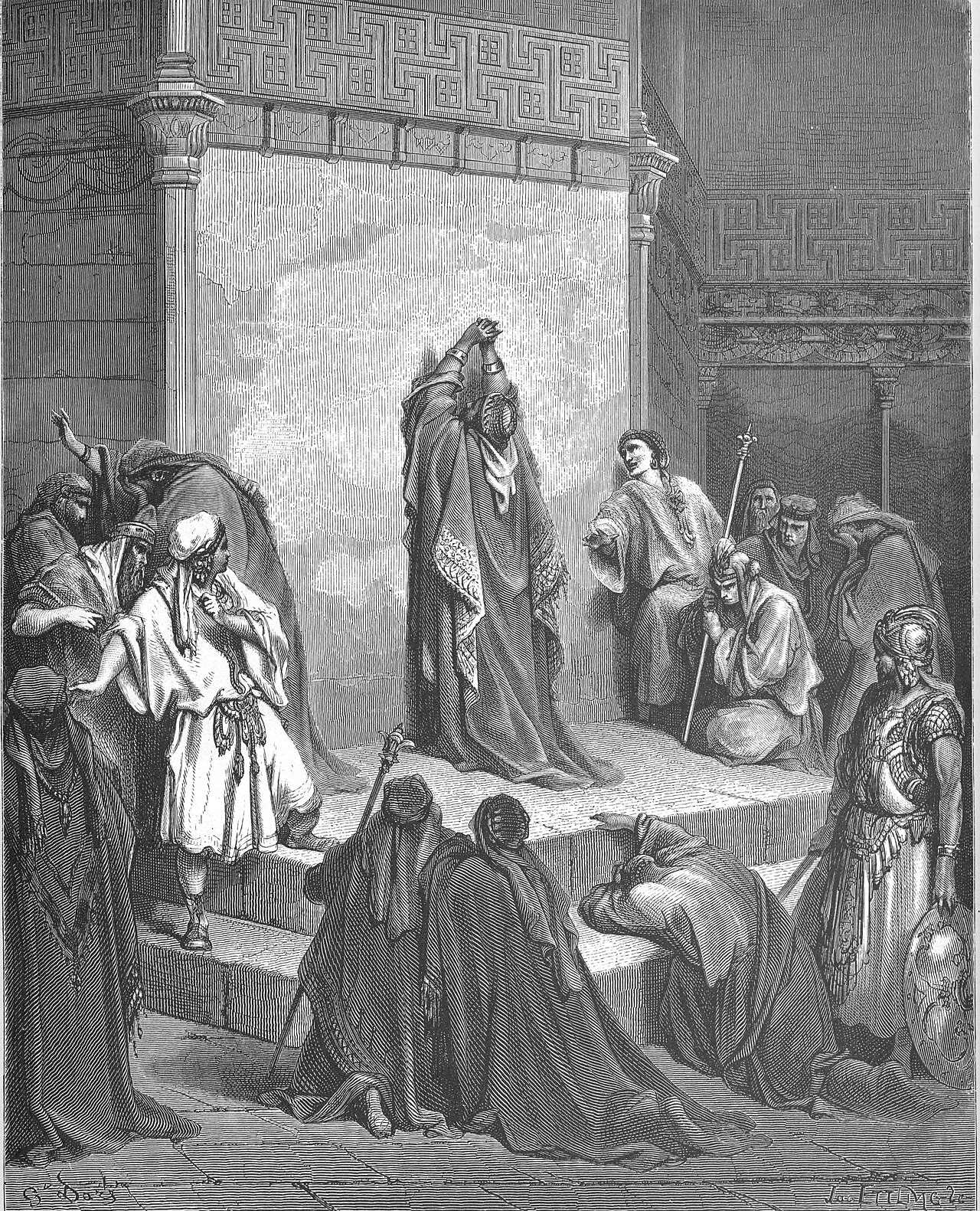
in 2 Samuel 12When David saw that his servants were whispering to one another, he perceived that the child was dead. So he asked his servants, “Is the child dead?” “He is dead,” they replied.
BSB
The same verse in ASV and KJV ▾
ASV
But when David saw that his servants were whispering together, David perceived that the child was dead; and David said unto his servants, Is the child dead? And they said, He is dead.
KJV
But when David saw that his servants whispered, David perceived that the child was dead: therefore David said unto his servants, Is the child dead? And they said, He is dead.
⋯
This verse in 2 Samuel 12
Commentary
4 notes on this verseThis site's exposition
on the seventh day, that the child died
on 2 Samuel 12:18-19
The servants fear to tell David the child has died, reasoning that a man who would not be comforted while there was hope will do himself harm once hope is gone. David reads the answer in their whispering before anyone speaks it, and his question is as plain as Nathan's sentence had been, is the child dead. Matthew Henry notes the household's fear says as much about the seven days just past as anything recorded, for they had watched a king brought lower than any subject by grief for a son not yet named. The answer, he is dead, closes the sentence of verse fourteen exactly as it was spoken.
This site's exposition
his servants were whispering to one another
Henry says the child died on the seventh day, before he could be circumcised on the eighth. Henry holds that David still trusted the child was safe with God. He adds that weeping must never keep a man from worship.
The record, by era
The Puritans and the Awakening2 voices
And when David saw that his servants whispered,....
He went to acknowledge the hand of God in the affliction, and to humble himself under it, and to submit to his holy will in it, to thank God that he himself was spared and his sin pardoned, and to pray that God would not proceed in his controversy with him, nor stir up all his wrath. Weeping must never hinder worshipping.
The words behind it
18 Hebrew wordsEvery Hebrew word of this verse in the order it stands, with what it means and the door to its own study. The last column counts the times a word stands in the whole Bible: the rarer the word, the more the places it appears belong together.
| Hebrew | Sound | Meaning | Word study | In the Bible |
|---|---|---|---|---|
| וַיַּ֣רְא | vaiyar' | and he saw | H7200 → | 1300 times |
| דָּוִ֗ד | david | David | H1732 → | 999 times |
| כִּ֤י | ki | that | H3588 → | 4482 times |
| עֲבָדָיו֙ | ʾavadav | servants his | H5650 → | 799 times |
| מִֽתְלַחֲשִׁ֔ים | mitlachashim | [were] whispering to one another | H3907 → | |
| וַיָּ֥בֶן | vaiyaven | and he understood | H995 → | |
| דָּוִ֖ד | david | David | H1732 → | 999 times |
| כִּ֣י | ki | that | H3588 → | 4482 times |
| מֵ֣ת | met | he had died | H4191 → | 839 times |
| הַיָּ֑לֶד | haiyaled | the child | H3206 → | 89 times |
| וַיֹּ֨אמֶר | vaiyomer | and he said | H559 → | 5305 times |
| דָּוִ֧ד | david | David | H1732 → | 999 times |
| אֶל־ | ʾel- | to | H413 → | 5510 times |
| עֲבָדָ֛יו | ʾavadav | servants his | H5650 → | 799 times |
| הֲמֵ֥ת | hamet | ¿ has he died | H4191 → | 839 times |
| הַיֶּ֖לֶד | haiyeled | the child | H3206 → | 89 times |
| וַיֹּ֥אמְרוּ | vaiyomeru | and they said | H559 → | 5305 times |
| מֵֽת׃ | met | he has died | H4191 → | 839 times |
וַיַּ֣רְאand he saw
vaiyar'H7200 →1300 times
דָּוִ֗דDavid
davidH1732 →999 times
כִּ֤יthat
kiH3588 →4482 times
עֲבָדָיו֙servants his
ʾavadavH5650 →799 times
מִֽתְלַחֲשִׁ֔ים[were] whispering to one another
mitlachashimH3907 →
וַיָּ֥בֶןand he understood
vaiyavenH995 →
דָּוִ֖דDavid
davidH1732 →999 times
כִּ֣יthat
kiH3588 →4482 times
מֵ֣תhe had died
metH4191 →839 times
הַיָּ֑לֶדthe child
haiyaledH3206 →89 times
וַיֹּ֨אמֶרand he said
vaiyomerH559 →5305 times
דָּוִ֧דDavid
davidH1732 →999 times
אֶל־to
ʾel-H413 →5510 times
עֲבָדָ֛יוservants his
ʾavadavH5650 →799 times
הֲמֵ֥ת¿ has he died
hametH4191 →839 times
הַיֶּ֖לֶדthe child
haiyeledH3206 →89 times
וַיֹּ֥אמְרוּand they said
vaiyomeruH559 →5305 times
מֵֽת׃he has died
metH4191 →839 times
A shaded row is a word that stands 400 times or fewer in the Bible.
Where this verse is studied
About 2 Samuel
Who and where
1 name in this verse with a page on the site.
This page draws on John Gill, Exposition of the Old Testament; John Gill, Exposition of the Old Testament (1748-1763) and Matthew Henry, Commentary on the Whole Bible.