
1 Samuel 14:39
in 1 Samuel 14As surely as the LORD who saves Israel lives, even if it is my son Jonathan, he must die!” But not one of the troops said a word.
BSB
The same verse in ASV and KJV ▾
ASV
For, as Jehovah liveth, who saveth Israel, though it be in Jonathan my son, he shall surely die. But there was not a man among all the people that answered him.
KJV
For, as the Lord liveth, which saveth Israel, though it be in Jonathan my son, he shall surely die. But there was not a man among all the people that answered him.
⋯
This verse in 1 Samuel 14
Commentary
7 notes on this verseBy these words he clearly demonstrated the well-ordered procedure of judgment, because the fault must first be discovered, and then the punishment imposed. For the order of judgment is thrown into confusion if punishment is pronounced before the examination of the discovered fault. For lest he strike before the examination, he says: "Bring here all the corners of the people, and see, and know through whom this sin has occurred today."
This site's exposition
let us investigate how this sin has occurred today
on 1 Samuel 14:38-39
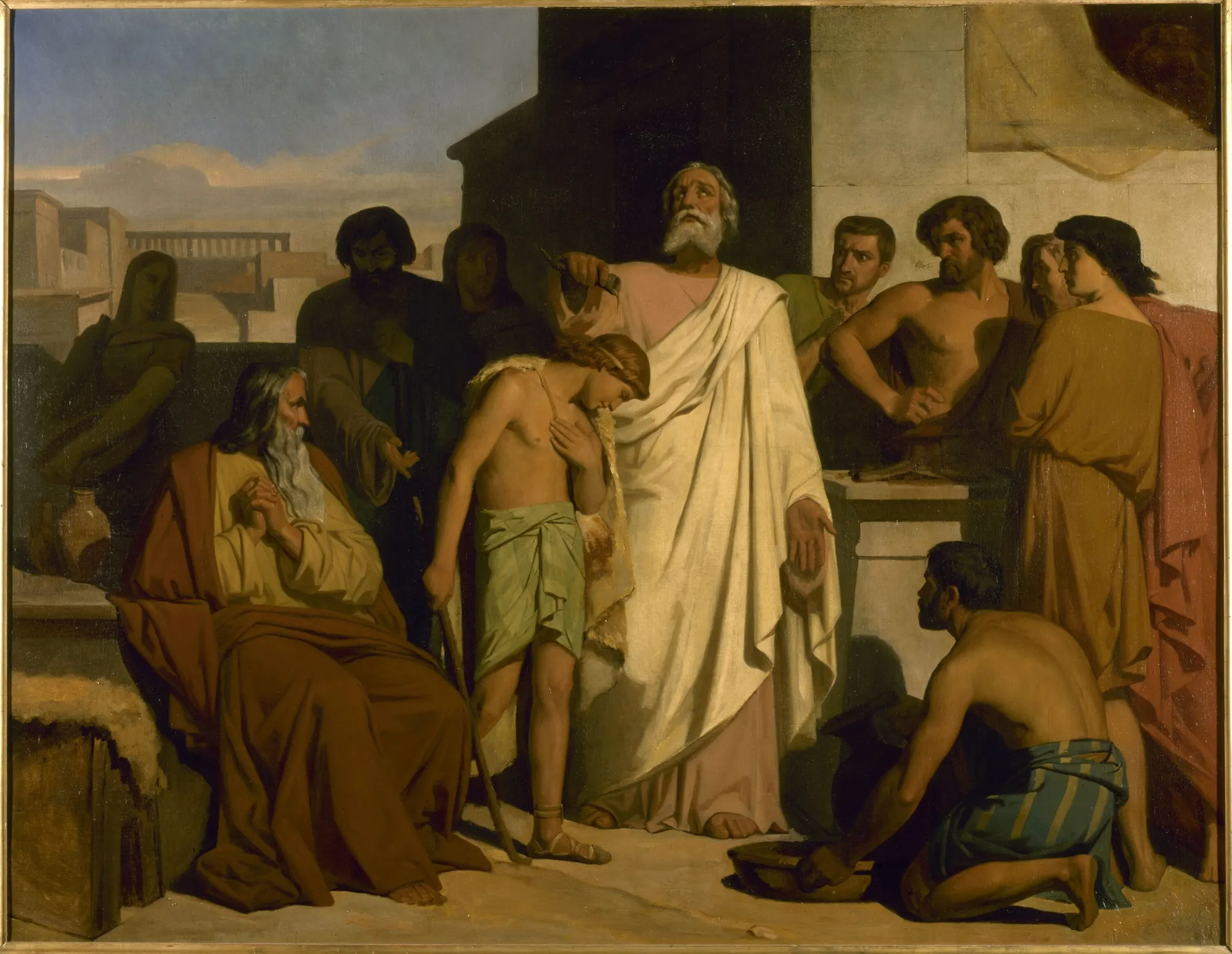
Saul treats the silence as proof that someone has sinned and calls the chiefs of the people forward to find out who. His oath widens without his knowing its target, though it be in Jonathan my son, he shall surely die, sworn over a son he does not yet suspect. No man among the people answers him, which the text leaves as an ominous quiet before the lot is cast.
This site's exposition
even if it is my son Jonathan
Albert Barnes counts this a second oath, adding the guilt of taking the LORD's name in vain to the first rash vow. Matthew Henry reads the silence as loyalty to Jonathan. Barnes sees fear of Saul in it as well, from the replies at verses 36 and 40.
The record, by era
The Puritans and the Awakening3 voices
But none of the people answered him, that is, none of those who knew Jonathan had broken the order would inform against him. Jonathan was discovered by lot to be the offender. Saul would have lots cast between himself and Jonathan on the one side, and the people on the other, perhaps because he was as confident of Jonathan's innocency in this matter as of his own,
But, when Jonathan is in danger, Saul's word is no longer a law to them, but with the utmost zeal they oppose the execution of his sentence: " Shall Jonathan die --that blessing, that darling, of his country? Shall that life be sacrificed to a punctilio of law and honour which was so bravely exposed for the public service, and to which we owe our lives and triumphs?
quarantine:debris (2026-07-29) — odd-straight-quotes
For as the Lord liveth, which saveth Israel,.... And had saved them that day with a great salvation and had wrought a great deliverance for them in freeing them from the Philistines, who had threatened the ruin of the whole nation.
The Nineteenth Century1 voice
A commentator
Albert Barnes1798–1870
Notes, Explanatory and Practical, on the Old and New Testaments (1832-1869)
Saul’s rashness becomes more and more apparent. He now adds an additional oath, to bring down yet further guilt in “taking God’s name in vain” The expressions in 1Sa 14:36, 1Sa 14:40, indicate the fear in which the people stood of Saul. None dared to resist his will.
The words behind it
18 Hebrew wordsEvery Hebrew word of this verse in the order it stands, with what it means and the door to its own study. The last column counts the times a word stands in the whole Bible: the rarer the word, the more the places it appears belong together.
| Hebrew | Sound | Meaning | Word study | In the Bible |
|---|---|---|---|---|
| כִּ֣י | ki | for | H3588 → | 4482 times |
| חַי־ | chai- | [by] [the] life | H2416 → | 498 times |
| יְהוָ֗ה | yahweh | of Yahweh | H3068 → | 6520 times |
| הַמּוֹשִׁ֙יעַ֙ | hamoshia' | who delivers | H3467 → | 206 times |
| אֶת־ | ʾet- | <obj.> | H853 → | 10935 times |
| יִשְׂרָאֵ֔ל | yisrael | Israel | H3478 → | 2507 times |
| כִּ֧י | ki | for | H3588 → | 4482 times |
| אִם־ | ʾim- | except | H518 → | 1069 times |
| יֶשְׁנ֛וֹ | yeshno | there it | H3426 → | 140 times |
| בְּיוֹנָתָ֥ן | beyonatan | [is] in Jonathan | H3129 → | 43 times |
| בְּנִ֖י | beni | son my | H1121 → | 4930 times |
| כִּ֣י | ki | for | H3588 → | 4482 times |
| מ֣וֹת | mot | certainly <to die> | H4191 → | 839 times |
| יָמ֑וּת | yamut | he will die | H4191 → | 839 times |
| וְאֵ֥ין | veein | and not | H369 → | 789 times |
| עֹנֵ֖הוּ | ʾonehu | [was] answering him | H6030 → | 331 times |
| מִכָּל־ | mikol | any of all | H3605 → | 5413 times |
| הָעָֽם׃ | haam | the people | H5971 → | 1873 times |
כִּ֣יfor
kiH3588 →4482 times
חַי־[by] [the] life
chai-H2416 →498 times
יְהוָ֗הof Yahweh
yahwehH3068 →6520 times
הַמּוֹשִׁ֙יעַ֙who delivers
hamoshia'H3467 →206 times
אֶת־<obj.>
ʾet-H853 →10935 times
יִשְׂרָאֵ֔לIsrael
yisraelH3478 →2507 times
כִּ֧יfor
kiH3588 →4482 times
אִם־except
ʾim-H518 →1069 times
יֶשְׁנ֛וֹthere it
yeshnoH3426 →140 times
בְּיוֹנָתָ֥ן[is] in Jonathan
beyonatanH3129 →43 times
בְּנִ֖יson my
beniH1121 →4930 times
כִּ֣יfor
kiH3588 →4482 times
מ֣וֹתcertainly <to die>
motH4191 →839 times
יָמ֑וּתhe will die
yamutH4191 →839 times
וְאֵ֥יןand not
veeinH369 →789 times
עֹנֵ֖הוּ[was] answering him
ʾonehuH6030 →331 times
מִכָּל־any of all
mikolH3605 →5413 times
הָעָֽם׃the people
haamH5971 →1873 times
A shaded row is a word that stands 400 times or fewer in the Bible.
The walk
8 stopsEach card is a verse this one points to, and under it the verses that one points to in turn. Where several paths arrive at the same place, that place is listed first: the text keeps returning to it.
Through
2 Samuel 12:5David burned with anger against the man and said to Nathan: “As surely as the LORD lives, the man who did this deserves to die!
it leads to
- Genesis 38:24
About three months later, Judah was told, “Your daughter-in-law Tamar has prostituted herself, and now she is pregnant.” “Bring her out!” Judah replied. “Let her be burned to death!”
Reached by 2 separate paths from here.
- 1 Samuel 26:16
This thing you have done is not good. As surely as the LORD lives, all of you deserve to die, since you did not protect your lord, the LORD’s anointed. Now look around. Where…
Reached by 2 separate paths from here.
- Genesis 38:24
Through
Ecclesiastes 9:2It is the same for all: There is a common fate for the righteous and the wicked, for the good and the bad, for the clean and the unclean, for the one who sacrifices…
it leads to
- Malachi 3:18
So you will again distinguish between the righteous and the wicked, between those who serve God and those who do not.”
- Ecclesiastes 2:14–16
The wise man has eyes in his head, but the fool walks in darkness. Yet I also came to realize that one fate overcomes them both.
- Psalms 73:3
For I envied the arrogant when I saw the prosperity of the wicked.
- Job 9:22
It is all the same, and so I say, ‘He destroys both the blameless and the wicked.’
- Malachi 3:5
“Then I will draw near to you for judgment. And I will be a swift witness against sorcerers and adulterers and perjurers, against oppressors of the widowed and fatherless, and against those who defraud…
- Malachi 3:18
Through
1 Samuel 14:44And Saul declared, “May God punish me, and ever so severely, if you, Jonathan, do not surely die!”
it leads to
- Ruth 1:17
Where you die, I will die, and there I will be buried. May the LORD punish me, and ever so severely, if anything but death separates you and me.”
- Ruth 1:17
Where this verse is studied
On this page
Studies1
About 1 Samuel
Who and where
1 name in this verse with a page on the site.
This page draws on Albert Barnes, Notes, Explanatory and Practical, on the Old and New Testaments; Albert Barnes, Notes, Explanatory and Practical, on the Old and New Testaments (1832-1869); Gregory the Dialogist, Commentary on 1 Kings, Book 5, Chapter 4; John Gill, Exposition of the Old Testament (1748-1763); John Wesley, Explanatory Notes upon the Old Testament and Matthew Henry, Commentary on the Whole Bible.