
1 Samuel 1:24
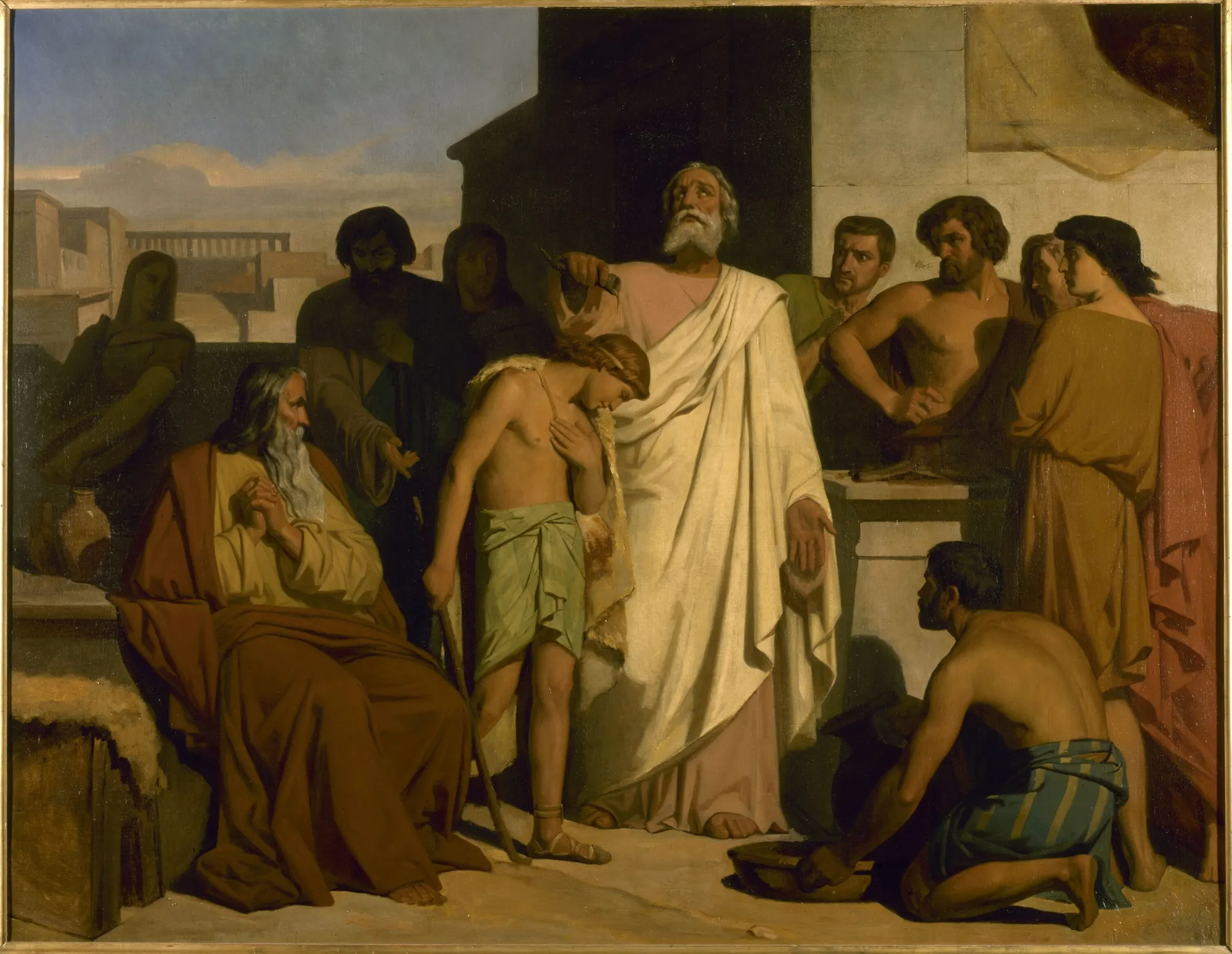
in 1 Samuel 1Once she had weaned him, Hannah took the boy with her, along with a three-year-old bull, an ephah of flour, and a skin of wine. Though the boy was still young, she brought him to the house of the LORD at Shiloh.
BSB
The same verse in ASV and KJV ▾
ASV
And when she had weaned him, she took him up with her, with three bullocks, and one ephah of meal, and a bottle of wine, and brought him unto the house of Jehovah in Shiloh: and the child was young.
KJV
And when she had weaned him, she took him up with her, with three bullocks, and one ephah of flour, and a bottle of wine, and brought him unto the house of the Lord in Shiloh: and the child was young.
⋯
This verse in 1 Samuel 1
Commentary
13 notes on this verseWith three bullocks - The Septuagint, the Syriac, and the Arabic, read, a bullock of three years old; and this is probably correct, because we read, 1Sa 1:25, that they slew את הפר eth happar, The bullock. We hear of no more, and we know that a bullock or heifer of three years old was ordinarily used, see Gen 15:9. One ephah of flour - Seven gallons and a half. A bottle of wine - נבל יין nebel yayin, a skin full of wine.
This site's exposition
Hannah took the boy with her
on 1 Samuel 1:24-25
A three-year-old bull, an ephah of flour and a skin of wine make the offering generous beyond a poor family's duty, and the text adds that “the boy was still young”. They slaughter the bull and bring the boy to Eli in one sentence, the sacrifice and the surrender told as one act. Hannah gives away in a sentence what she prayed years for.
The record, by era
The Church Fathers1 voice
Considering all these things, and whatever else the Lord shall have made known to you in this matter, which either does not occur to me or would take too much time to state here, strive in prayer to overcome this world: pray in hope, pray in faith, pray in love, pray earnestly and patiently, pray as a widow belonging to Christ. For although prayer is, as he has taught, the duty of all his members, that is, of all who believe in him and are united to his body, a more assiduous attention to prayer is found to be specially enjoined in Scripture upon those who are widows. Two women of the name of [Hannah] are honorably named there—the one, Elkanah's wife, who was the mother of holy Samuel; the other, the widow who recognized the Most Holy One when he was yet a babe. [Hannah], though married, prayed with sorrow of mind and brokenness of heart because she had no sons; and she obtained Samuel and dedicated him to the Lord, because she vowed to do so when she prayed for him.
The Medieval Church4 voices
A commentator
Gregory the DialogistCommentary on 1 Kings, Book 1, Chapter 2 · Written before 604.
proposed
(Moral Exposition) Now the boy is led to the tabernacle with three calves, because for the abundance of spiritual gifts we ought to give thanks to the supreme Trinity. Concerning these calves the prophet beseeching the Lord says: "Take away all iniquity, and receive the good, and we will render the calves of our lips" (Hosea 14:3). As if to say: For the abundance of gifts we will render sacrifices of praise, through the service of our lips. The boy is brought to be offered in the house of the Lord, when the progress of a holy mind is revealed to the teachers of Holy Church, so that while it is examined through consultation with the wise, it may in no way be stained by the fraud of the cunning enemy. The house of the Lord can also designate the eternal homeland. Of this indeed the Psalmist says exulting: "Blessed are they who dwell in your house, O Lord, they will praise you forever and ever" (Psalm 84:5). The boy is brought into the house of the Lord, when the chosen mind is raised up on high, and strives to give thanks to almighty God for all in which it makes spiritual progress, from whom it recognizes the gifts of its advancement have been bestowed upon it. And rightly one calf is sacrificed, though three are brought, because although the Trinity of persons is sung in divine praises by the confession of the faithful, the inseparable unity of those same persons is proclaimed. But what kind, or how great is praise, if it is not devout? Therefore fittingly three measures of flour are joined to three calves, so that we may be satisfied through devotion by what we say with our mouth in praises of God. For he offers a calf without flour, who in the praises of God indeed utters words, but with a wandering mind does not attend to what he speaks. […]
And she brought him with her, after she had weaned him, etc. The Church brings up her children, to whom she reasonably and without deceit administered milk, and has now advanced them from the rudiments of the new man to more perfect things, having educated …
The boy, however, was still a little child, etc. The people of the nations had recently converted to the faith and produced not a few martyrs, who with unanimous devotion shed their blood for Christ, and grafted the wild olive tree onto the good olive …
A commentator
Gregory the DialogistCommentary on 1 Kings, Book 1, Chapter 1 · Written before 604.
proposed
46. For what is signified by a calf in this place, if not the purpose of imitating the life of the perfect? But it is a calf when it arises in the heart of one making progress, yet it becomes an ox when through the strength of virtue it is brought to the disposition of a great conversion. In this place it must be carefully inquired why not one calf, but three are reported to have been brought to the tabernacle.
6 more voices on this verse
The Puritans and the Awakening5 voices
Flour - For the meal-offerings belonging to the principal sacrifices, which to each bullock were three tenth-deals, or three tenth parts of an ephah, and so nine parts of the ephah were spent, and the tenth part was given to the priest.
), The child was young, but, being intelligent above his years, he was no trouble. None can begin too soon to be religious. The child was a child, so the Hebrew reads it, in his learning-age.
quarantine:debris (2026-07-29) — leading-punctuation+unbalanced-parens
And when she had weaned him,....
When he sacrificed he worshipped, joining prayers and thanksgivings with his sacrifices. In this course of religion he was constant, for he went up yearly. And that which made it the more commendable in him was, 1.
So far was she from thinking that, by presenting her son to God, she made God her debtor, that she thought it requisite by these slain offerings to seek God's acceptance of her living sacrifice. All our covenants with God for ourselves and ours must be made by sacrifice, the great sacrifice.
The Nineteenth Century1 voice
A commentator
Jamieson, Fausset & Brown1802–1910
Commentary Critical and Explanatory on the Whole Bible (1871)
proposed
three bullocks--The Septuagint renders it "a bullock of three years old"; which is probably the true rendering.
quarantine:debris (2026-07-29) — starts-lowercase
The words behind it
17 Hebrew wordsEvery Hebrew word of this verse in the order it stands, with what it means and the door to its own study. The last column counts the times a word stands in the whole Bible: the rarer the word, the more the places it appears belong together.
| Hebrew | Sound | Meaning | Word study | In the Bible |
|---|---|---|---|---|
| וַתַּעֲלֵ֨הוּ | vataalehu | and she brought up him | H5927 → | 890 times |
| עִמָּ֜הּ | ʾimah | with her | H5973 → | 1050 times |
| כַּאֲשֶׁ֣ר | kaasher | just when | H834 → | 5497 times |
| גְּמָלַ֗תּוּ | gemalatu | she had weaned him | H1580 → | 37 times |
| בְּפָרִ֤ים | befarim | with young bulls | H6499 → | |
| שְׁלֹשָׁה֙ | sheloshah | three | H7969 → | 432 times |
| וְאֵיפָ֨ה | veeifah | and an ephah | H374 → | |
| אַחַ֥ת | ʾachat | one of | H259 → | 971 times |
| קֶ֙מַח֙ | kemach | flour | H7058 → | |
| וְנֵ֣בֶל | venevel | and a skin of | H5035 → | 38 times |
| יַ֔יִן | yayin | wine | H3196 → | 141 times |
| וַתְּבִאֵ֥הוּ | vateviehu | and she took him | H935 → | 2568 times |
| בֵית־ | veit- | [the] house of | H1004 → | 2046 times |
| יְהוָ֖ה | yahweh | Yahweh | H3068 → | 6520 times |
| שִׁל֑וֹ | shilo | Shiloh | H7887 → | 32 times |
| וְהַנַּ֖עַר | vehanaar | and the lad | H5288 → | 239 times |
| נָֽעַר׃ | naar | [was] a lad | H5288 → | 239 times |
וַתַּעֲלֵ֨הוּand she brought up him
vataalehuH5927 →890 times
עִמָּ֜הּwith her
ʾimahH5973 →1050 times
כַּאֲשֶׁ֣רjust when
kaasherH834 →5497 times
גְּמָלַ֗תּוּshe had weaned him
gemalatuH1580 →37 times
בְּפָרִ֤יםwith young bulls
befarimH6499 →
שְׁלֹשָׁה֙three
sheloshahH7969 →432 times
וְאֵיפָ֨הand an ephah
veeifahH374 →
אַחַ֥תone of
ʾachatH259 →971 times
קֶ֙מַח֙flour
kemachH7058 →
וְנֵ֣בֶלand a skin of
venevelH5035 →38 times
יַ֔יִןwine
yayinH3196 →141 times
וַתְּבִאֵ֥הוּand she took him
vateviehuH935 →2568 times
בֵית־[the] house of
veit-H1004 →2046 times
יְהוָ֖הYahweh
yahwehH3068 →6520 times
שִׁל֑וֹShiloh
shiloH7887 →32 times
וְהַנַּ֖עַרand the lad
vehanaarH5288 →239 times
נָֽעַר׃[was] a lad
naarH5288 →239 times
A shaded row is a word that stands 400 times or fewer in the Bible.
The walk
8 stopsEach card is a verse this one points to, and under it the verses that one points to in turn. Where several paths arrive at the same place, that place is listed first: the text keeps returning to it.
Through
Joshua 18:1Then the whole congregation of Israel assembled at Shiloh and set up the Tent of Meeting there. And though the land was subdued before them,
it leads to
- Joshua 19:51
These are the inheritances that Eleazar the priest, Joshua son of Nun, and the heads of the families distributed by lot to the tribes of Israel at Shiloh before the LORD at the entrance…
- 1 Samuel 1:3
Year after year Elkanah would go up from his city to worship and sacrifice to the LORD of Hosts at Shiloh, where Eli’s two sons, Hophni and Phinehas, were priests to the LORD.
- Joshua 21:2
at Shiloh in the land of Canaan and said to them, “The LORD commanded through Moses that we be given cities in which to live, together with pasturelands for our livestock.”
- Jeremiah 26:6
then I will make this house like Shiloh, and I will make this city an object of cursing among all the nations of the earth.’”
- Joshua 22:9
So the Reubenites, the Gadites, and the half-tribe of Manasseh left the Israelites at Shiloh in the land of Canaan to return to their own land of Gilead, which they had acquired according to…
- Joshua 19:51
Through
Deuteronomy 12:11then the LORD your God will choose a dwelling for His Name. And there you are to bring everything I command you: your burnt offerings and sacrifices, your tithes and special gifts, and all…
it leads to
- Deuteronomy 15:20
Each year you and your household are to eat it before the LORD your God in the place the LORD will choose.
- Deuteronomy 12:5
Instead, you must seek the place the LORD your God will choose from among all your tribes to establish as a dwelling for His Name, and there you must go.
- Deuteronomy 17:8
If a case is too difficult for you to judge, whether the controversy within your gates is regarding bloodshed, lawsuits, or assaults, you must go up to the place the LORD your God will…
- Deuteronomy 15:20
Where this verse is studied
On this page
About 1 Samuel
Who and where
2 names in this verse with a page on the site.
- PersonJudges to monarchyHannahThe barren wife who wept at Shiloh, vowed her son to the LORD, and sang the song of reversal — "he raiseth up the poor out of the…
- PlaceEphraimShilohWhere the tabernacle rested through the judges' era; Hannah prayed here, Samuel heard his name in the night, and its later ruin be…
This page draws on 10 works. Open the list of works
This page draws on Adam Clarke, Commentary on the Bible; Augustine of Hippo, LETTER 130; Bede, Commentary on Samuel; Gregory the Dialogist, Commentary on 1 Kings, Book 1, Chapter 2; Gregory the Dialogist, Commentary on 1 Kings, Book 1, Chapter 1; Jamieson, Fausset & Brown, Commentary Critical and Explanatory on the Whole Bible; John Gill, Exposition of the Old Testament; John Gill, Exposition of the Old Testament (1748-1763); John Wesley, Explanatory Notes upon the Old Testament and Matthew Henry, Commentary on the Whole Bible.