
1 Kings 22:23
in 1 Kings 22So you see, the LORD has put a lying spirit in the mouths of all these prophets of yours, and the LORD has pronounced disaster against you.”
BSB
The same verse in ASV and KJV ▾
ASV
Now therefore, behold, Jehovah hath put a lying spirit in the mouth of all these thy prophets; and Jehovah hath spoken evil concerning thee.
KJV
Now therefore, behold, the Lord hath put a lying spirit in the mouth of all these thy prophets, and the Lord hath spoken evil concerning thee.
⋯
This verse in 1 Kings 22
Commentary
5 notes on this verseThe Lord hath put a lying spirit - He hath permitted or suffered a lying spirit to influence thy prophets. Is it requisite again to remind the reader that the Scriptures repeatedly represent God as doing what, in the course of his providence, he only permits or suffers to be done? Nothing can be done in heaven, in earth, or hell, but either by his immediate energy or permission. This is the reason why the Scripture speaks as above.
This site's exposition
there came forth a spirit
on 1 Kings 22:21-23
A spirit volunteers to be a lying spirit in the mouth of all Ahab's prophets, and the Lord answers, Thou shalt persuade him, and prevail also: go forth, and do so. Commentators hold the scene two ways: some read the spirit as a real agent sent under divine judicial permission against a king who had already chosen to believe a flattering word (Keil), while others stress that the deceiving belongs to the spirit's own nature and God's part is to hand a self-deceived king over to the counsel he wanted (Henry). Both readings leave the Lord's justice intact, and Micaiah's own summary states the plain fact without settling how it works: the Lord hath put a lying spirit in the mouth of all these thy prophets.
The record, by era
The Puritans and the Awakening2 voices
Now therefore behold, the Lord hath put a lying spirit in the mouths of all these thy prophets,....
Thus we are warned to beware of false prophets, and to try the spirits; the lying spirit never deceives so fatally as in the mouth of prophets. We are told how he was abused for delivering his message thus faithfully, thus plainly, in a way so very proper both to convince and to affect.
The Nineteenth Century1 voice
A commentator
Jamieson, Fausset & Brown1802–1910
Commentary Critical and Explanatory on the Whole Bible (1871)
Did I not tell thee that he would prophesy no good concerning me, but evil?--Since Ahab was disposed to trace this unwelcome truth to personal enmity, Micaiah proceeded fearlessly to tell the incensed monarch in full detail what had been revealed to him. The Hebrew prophets, borrowing their symbolic pictures from earthly scenes, described God in heaven as a king in His kingdom.
The words behind it
14 Hebrew wordsEvery Hebrew word of this verse in the order it stands, with what it means and the door to its own study. The last column counts the times a word stands in the whole Bible: the rarer the word, the more the places it appears belong together.
| Hebrew | Sound | Meaning | Word study | In the Bible |
|---|---|---|---|---|
| וְעַתָּ֗ה | veatah | and therefore | H6258 → | 433 times |
| הִנֵּ֨ה | hineh | here! | H2009 → | 843 times |
| נָתַ֤ן | natan | he has put | H5414 → | 2011 times |
| יְהוָה֙ | yahweh | Yahweh | H3068 → | 6520 times |
| ר֣וּחַ | ruach | a spirit of | H7307 → | 378 times |
| שֶׁ֔קֶר | sheker | falsehood | H8267 → | |
| בְּפִ֖י | befi | in [the] mouth of | H6310 → | 498 times |
| כָּל־ | kol- | all | H3605 → | 5413 times |
| נְבִיאֶ֣יךָ | nevieikha | prophets your | H5030 → | 314 times |
| אֵ֑לֶּה | ʾeleh | these | H428 → | 746 times |
| וַֽיהוָ֔ה | vayahweh | and Yahweh | H3068 → | 6520 times |
| דִּבֶּ֥ר | diber | he has spoken | H1696 → | 1141 times |
| עָלֶ֖יךָ | ʾaleikha | on you | H5921 → | 5755 times |
| רָעָֽה׃ | raah | evil | H7451 → | 662 times |
וְעַתָּ֗הand therefore
veatahH6258 →433 times
הִנֵּ֨הhere!
hinehH2009 →843 times
נָתַ֤ןhe has put
natanH5414 →2011 times
יְהוָה֙Yahweh
yahwehH3068 →6520 times
ר֣וּחַa spirit of
ruachH7307 →378 times
שֶׁ֔קֶרfalsehood
shekerH8267 →
בְּפִ֖יin [the] mouth of
befiH6310 →498 times
כָּל־all
kol-H3605 →5413 times
נְבִיאֶ֣יךָprophets your
nevieikhaH5030 →314 times
אֵ֑לֶּהthese
ʾelehH428 →746 times
וַֽיהוָ֔הand Yahweh
vayahwehH3068 →6520 times
דִּבֶּ֥רhe has spoken
diberH1696 →1141 times
עָלֶ֖יךָon you
ʾaleikhaH5921 →5755 times
רָעָֽה׃evil
raahH7451 →662 times
A shaded row is a word that stands 400 times or fewer in the Bible.
The walk
8 stopsEach card is a verse this one points to, and under it the verses that one points to in turn. Where several paths arrive at the same place, that place is listed first: the text keeps returning to it.
Through
Isaiah 3:11Woe to the wicked; disaster is upon them! For they will be repaid with what their hands have done.
it leads to
- Ecclesiastes 8:13
Yet because the wicked do not fear God, it will not go well with them, and their days will not lengthen like a shadow.
- James 2:13
For judgment without mercy will be shown to anyone who has not been merciful. Mercy triumphs over judgment.
- Psalms 120:3–4
What will He do to you, and what will be added to you, O deceitful tongue?
- Psalms 28:4
Repay them according to their deeds and for their works of evil. Repay them for what their hands have done; bring back on them what they deserve.
- Isaiah 65:13–15
Therefore this is what the Lord GOD says: “My servants will eat, but you will go hungry; My servants will drink, but you will go thirsty; My servants will rejoice, but you will be…
- Ecclesiastes 8:13
Through
Isaiah 44:20He feeds on ashes. His deluded heart has led him astray, and he cannot deliver himself or say, “Is not this thing in my right hand a lie?”
it leads to
- Psalms 102:9
For I have eaten ashes like bread and mixed my drink with tears
- Romans 1:28
Furthermore, since they did not see fit to acknowledge God, He gave them up to a depraved mind, to do what ought not to be done.
- Hosea 12:1
Ephraim chases the wind and pursues the east wind all day long; he multiplies lies and violence; he makes a covenant with Assyria and sends olive oil to Egypt.
- Psalms 102:9
Where this verse is studied
On this page
About 1 Kings
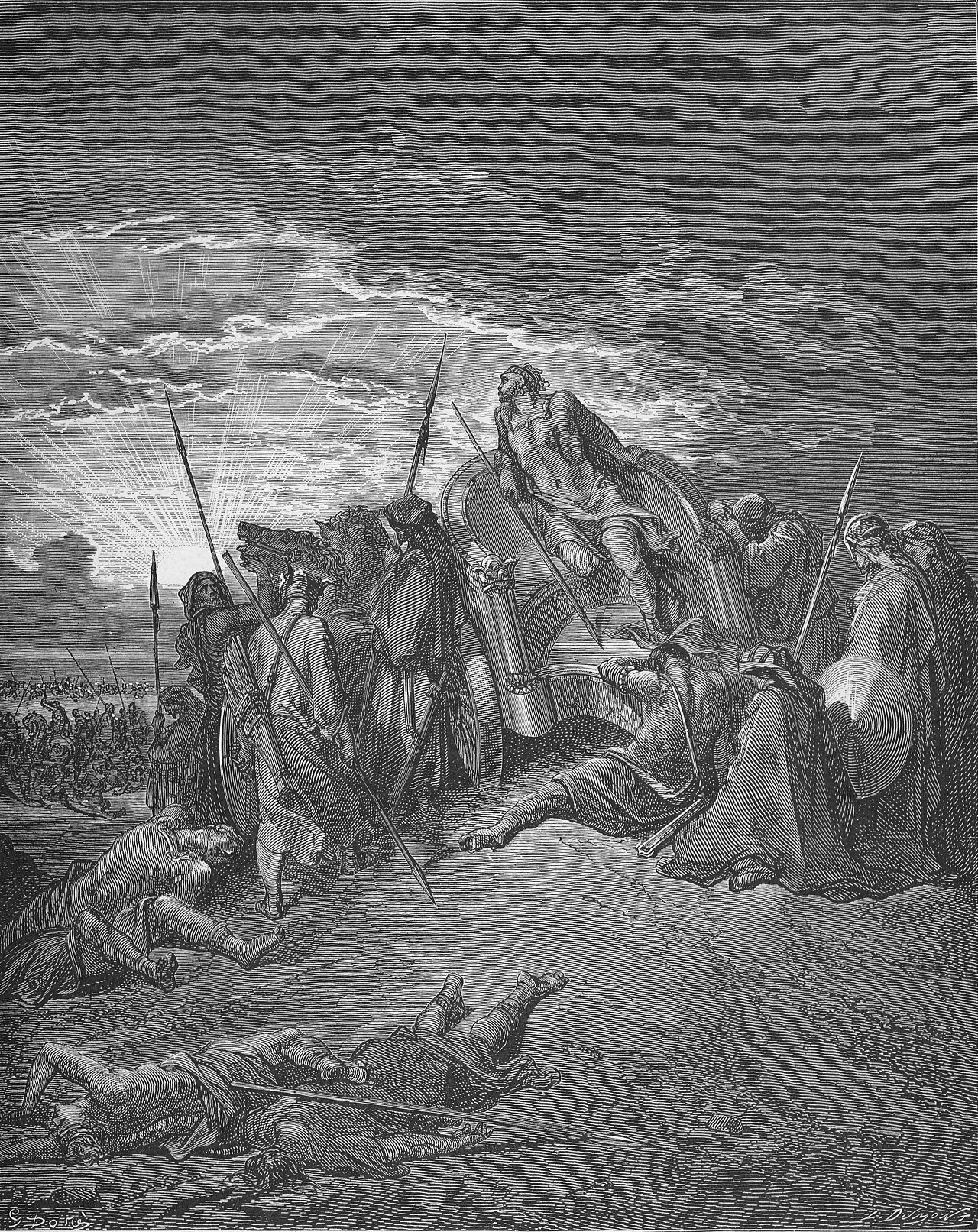
This page draws on Adam Clarke, Commentary on the Bible; Jamieson, Fausset & Brown, Commentary Critical and Explanatory on the Whole Bible; John Gill, Exposition of the Old Testament (1748-1763); Keil, The Books of the Kings and Matthew Henry, Commentary on the Whole Bible.