
Troas
Summary
The Aegean port where Paul saw the vision of the man of Macedonia and where the narrative of Acts first says we.
- At Troas, Paul saw a vision of a man of Macedonia pleading for help, and the mission turned west into Europe because of it.
- Right after that vision, the book of Acts starts saying we instead of they, and most readers take that as the point Luke joined Paul's company.
- Years later, at Troas again, a young man named Eutychus fell asleep during a long night of preaching, fell three stories, and was picked up dead. Paul went down and told the crowd he was still alive.
- That night's meeting happened on the first day of the week, one of the New Testament's earliest signs that believers gathered on Sunday.
- Paul passed through Troas at least twice more. Once he left a brother named Titus. Near the end of his life, he asked for a cloak and his scrolls that he had left there.
On this page
In Scripture
- Verses
- 6
- Books
- 3
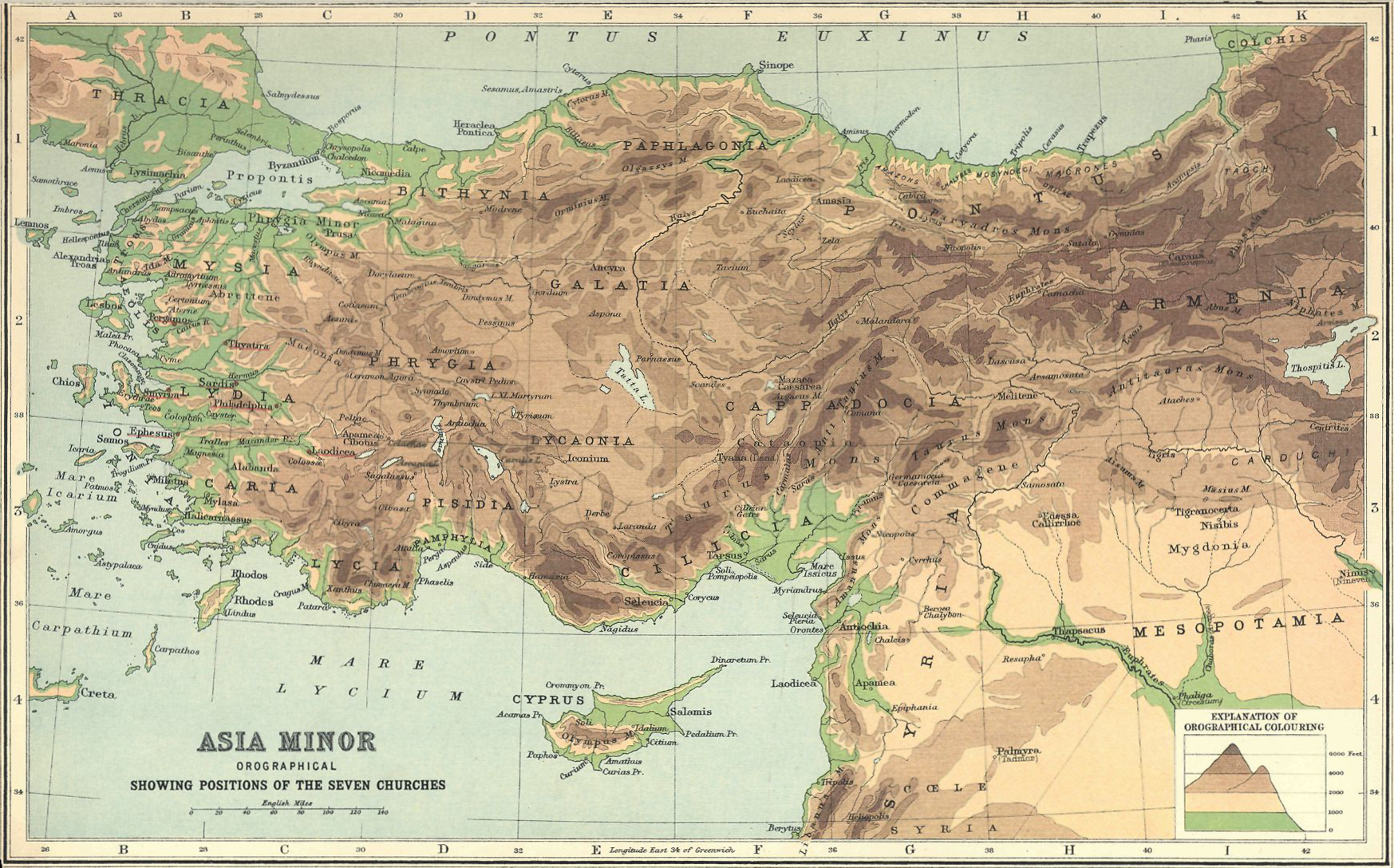
Where it is
the country around it
- Coordinates
- 39.5066° N, 26.0806° Efind it on the Atlas →
- Region
- Asia Minor
- Kind of place
- City
- Located: the gazetteer fixes one site
Why Troas matters
The vision of the man of Macedonia, and the raising of Eutychus
Acts 16:8 to 16:11, and Acts 20:5 to 20:12
Read Acts 16:8 to 16:11, and Acts 20:5 to 20:12
- They come down to TroasActs 16:8So they passed by Mysia and went down to Troas.
- The vision of the man of MacedoniaActs 16:9During the night, Paul had a vision of a man of Macedonia standing and pleading with him, “Come over to Macedonia and help us.”
- We got ready to leave for MacedoniaActs 16:10As soon as Paul had seen the vision, we got ready to leave for Macedonia, concluding that God had called us to preach the gospel to them.
- On the first day of the week, they break breadActs 20:7On the first day of the week we came together to break bread. Since Paul was ready to leave the next day, he talked to them and kept on speaking until midnight.
- Eutychus falls asleep, and fallsActs 20:9And a certain young man named Eutychus, seated in the window, was sinking into a deep sleep as Paul talked on and on. When he was sound asleep, he fell from the third story and was picked up dead.
- He is still aliveActs 20:10But Paul went down, threw himself on the young man, and embraced him. “Do not be alarmed!” he said. “He is still alive!”
- Paul keeps teaching until daybreakActs 20:11Then Paul went back upstairs, broke bread, and ate. And after speaking until daybreak, he departed.
- The boy is taken home aliveActs 20:12And the people were greatly relieved to take the boy home alive.
These are two separate visits to Troas, years apart. The first turns the mission toward Europe. The second, on Paul's return through the same city, is the only account in the New Testament of Paul raising the dead.
What happened here, in order
in the order the canon tells it
- They sail from Troas toward MacedoniaActs 16:11We sailed from Troas straight to Samothrace, and the following day on to Neapolis.
- Paul's companions wait ahead for him at TroasActs 20:5These men went on ahead and waited for us in Troas.
- Luke rejoins the company at Troas for seven daysActs 20:6And after the Feast of Unleavened Bread, we sailed from Philippi, and five days later we rejoined them in Troas, where we stayed seven days.
- Paul travels on foot from Troas to AssosActs 20:13We went on ahead to the ship and sailed to Assos, where we were to take Paul aboard. He had arranged this because he was going there on foot.
- A door stood open for Paul at Troas2 Corinthians 2:12Now when I went to Troas to preach the gospel of Christ and a door stood open for me in the Lord,
- No peace, because Titus was not there2 Corinthians 2:13I had no peace in my spirit, because I did not find my brother Titus there. So I said goodbye to them and went on to Macedonia.
- The cloak and the parchments left at Troas2 Timothy 4:13When you come, bring the cloak that I left with Carpus at Troas, and my scrolls, especially the parchments.
Troas in Scripture
6 verses name it, in 3 books
Open a book to read its mentions here. Text: Berean Standard Bible.
Old TestamentNew Testamentsegment width = share of mentions
New Testament3 books · 6 mentions
Acts4 mentions
- Acts 16:8So they passed by Mysia and went down to Troas.
- Acts 16:11We sailed from Troas straight to Samothrace, and the following day on to Neapolis.
- Acts 20:5These men went on ahead and waited for us in Troas.
- Acts 20:6And after the Feast of Unleavened Bread, we sailed from Philippi, and five days later we rejoined them in Troas, where we stayed seven days.
2 Corinthians1 mention
Common questions
What was the vision of the man of Macedonia, and why did it matter?
The Holy Spirit had already stopped Paul's company from preaching in Asia and from entering Bithynia, so they came down to Troas without a clear next step. During the night Paul saw a man of Macedonia standing and pleading with him to come over and help them. His company got ready to leave at once, reading the vision as God's own call to preach the gospel in Macedonia. That decision turned the mission from Asia Minor into Europe.
Why does Acts start saying we at Troas?
Readers differ; the positions are named
Up to this point Acts describes Paul's company in the third person, they. At the vision of Macedonia the wording shifts to we and stays that way through the rest of the journey. The text never names the reason for the shift, but the common reading among interpreters is that the writer of Acts, traditionally Luke, joined Paul's company here in person and began recording as an eyewitness. That is a widely held reading of the shift, not a statement the text makes about itself.
Was Eutychus really dead, or only stunned?
Readers differ; the positions are named
Luke's own account says Eutychus fell three stories and was picked up dead. Paul went down, embraced him, and told the crowd he was still alive. Both statements stand in the same short passage, Luke's description of what the people found and Paul's word about what was true once he reached him. Interpreters have long asked whether the fall was fatal or the young man was merely unconscious, and Scripture does not resolve the question beyond what it says in those two sentences.
Why does the detail on the first day of the week matter?
Luke notes that the church at Troas gathered specifically on the first day of the week to break bread, the day of the resurrection rather than the Jewish Sabbath. It is one of the earliest indications in the New Testament of believers meeting regularly on Sunday, alongside Paul's instruction in 1 Corinthians 16:2 to set money aside on that same day.
What did Paul leave behind at Troas?
Paul mentions Troas in two later letters, from two different visits years apart. In 2 Corinthians he recalls that a door stood open for him to preach there, but he had no peace because his coworker Titus was not there to meet him, so he went on to Macedonia instead. In 2 Timothy, likely his last surviving letter, he asks for a cloak he had left with a man named Carpus at Troas, along with his scrolls, especially the parchments.
Sources cited
- OpenBible.info Bible Geocoding: Troasread 2026-08-20The coordinates on this page. Used under CC-BY with attribution to OpenBible.info.
- Berean Standard Bible (2023)Public domain. All Scripture text on this page, drawn from the site's own verse store.
- Research brief: TroasThe brief this page is built from. Scripture and sources, prepared 2026-09-02.
- Livius.org: Alexandria in TroasConfirms the city's founding by Antigonus in 306 BC, its renaming by Lysimachus after 301 BC, and its status as a Roman colonia under Augustus. Checked 2026-09-02 in the re-verification pass.
Keep studying
On this page
Doorway2
Keep this page