
Numbers 13:32
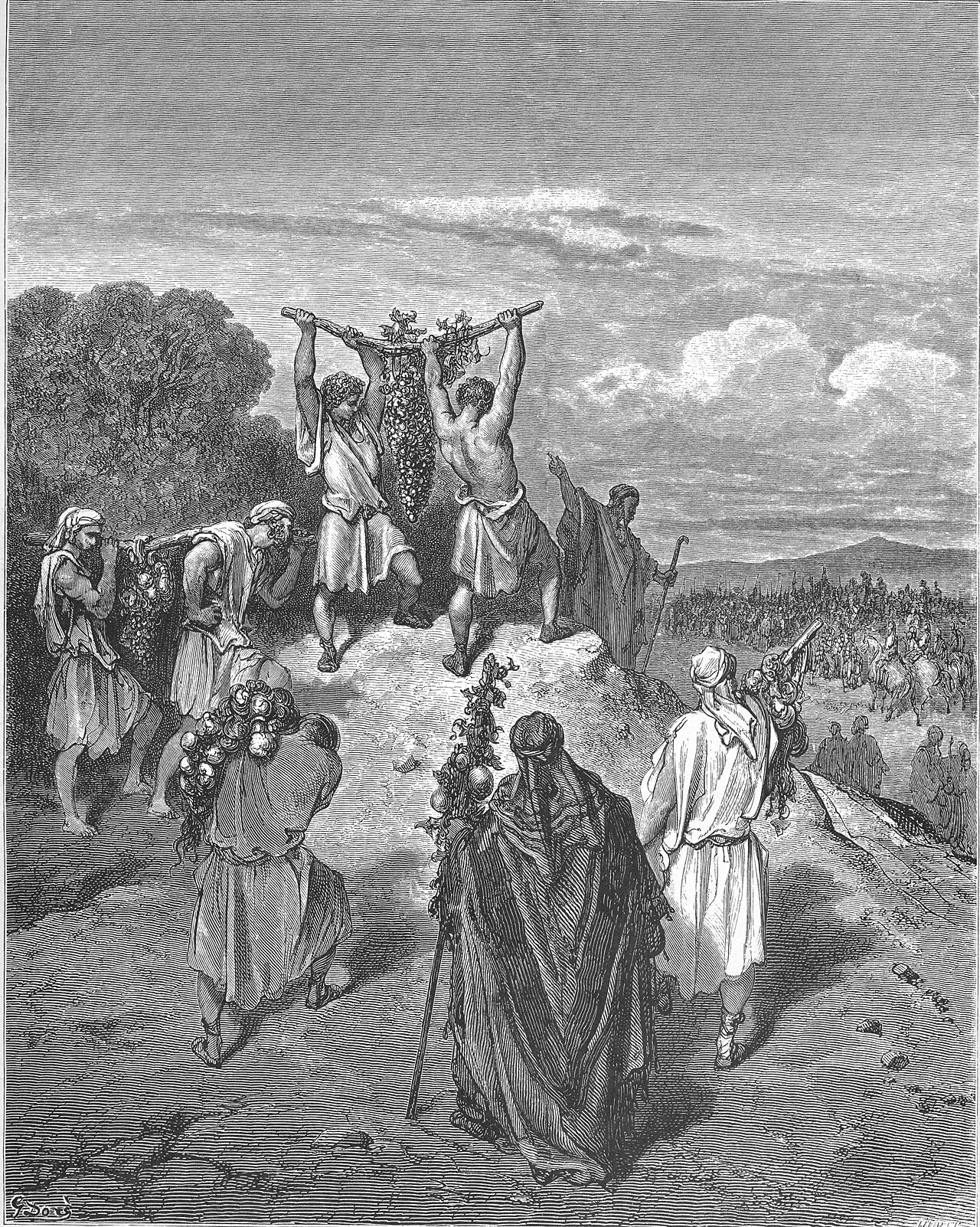
in Numbers 13So they gave the Israelites a bad report about the land that they had spied out: “The land we explored devours its inhabitants, and all the people we saw there are great in stature.
BSB
The same verse in ASV and KJV ▾
ASV
And they brought up an evil report of the land which they had spied out unto the children of Israel, saying, The land, through which we have gone to spy it out, is a land that eateth up the inhabitants thereof; and all the people that we saw in it are men of great stature.
KJV
And they brought up an evil report of the land which they had searched unto the children of Israel, saying, The land, through which we have gone to search it, is a land that eateth up the inhabitants thereof; and all the people that we saw in it are men of a great stature.
⋯
This verse in Numbers 13
Commentary
7 notes on this verseA commentator
Albert Barnes1798–1870
Notes, Explanatory and Practical, on the Old and New Testaments (1832-1869)
A land that eateth up ... - i. e. it is a land which from its position is exposed to incessant attacks from one quarter and another, and so its occupants must be always armed and watchful.
This site's exposition
We cannot go up against the people
on Numbers 13:31-32
Their argument is one comparison, they are stronger than we are, which leaves God out of the sum. The land flowing with milk and honey at verse 27 becomes a land that devours its inhabitants.
This site's exposition
So they gave the Israelites a bad report
The first account went to Moses at verse 27, and this one goes to the Israelites directly. The claim works against itself, since a land that devours its people has bred men great in stature. Numbers 14:36 says this report made the whole congregation grumble.
The record, by era
The Puritans and the Awakening2 voices
And they brought up an evil report of the land which they had searched unto the children of Israel,....
For this unreasonable fear of a plague in Canaan, they were justly cut off immediately by a plague in the wilderness, ch. xiv. But, (2.) They represented the conquest of it as altogether impracticable, and that it was to no purpose to attempt it.
The Nineteenth Century1 voice
Men of a great stature - אנשי מדות anshey middoth, men of measures - two men’s height; i. e., exceedingly tall men.
Modern Voices1 voice
A commentator
Charles Capps1934–2014
Fear Is Faith in Reverse (Capps Ministries Monthly Teaching) · Written before 2014.
proposed
It seems that God calls an evil report anything that doesn't agree with His Word.
The words behind it
27 Hebrew wordsEvery Hebrew word of this verse in the order it stands, with what it means and the door to its own study. The last column counts the times a word stands in the whole Bible: the rarer the word, the more the places it appears belong together.
| Hebrew | Sound | Meaning | Word study | In the Bible |
|---|---|---|---|---|
| וַיּוֹצִ֜יאוּ | vaiyotziu | and they brought out | H3318 → | 1067 times |
| דִּבַּ֤ת | dibat | <the> bad report of | H1681 → | 9 times |
| הָאָ֙רֶץ֙ | haaretz | the land | H776 → | 2504 times |
| אֲשֶׁ֣ר | ʾasher | which | H834 → | 5497 times |
| תָּר֣וּ | taru | they had spied out | H8446 → | 24 times |
| אֹתָ֔הּ | ʾotah | <obj.> it | H853 → | 10935 times |
| אֶל־ | ʾel- | to | H413 → | 5510 times |
| בְּנֵ֥י | benei | [the] people of | H1121 → | 4930 times |
| יִשְׂרָאֵ֖ל | yisrael | Israel | H3478 → | 2507 times |
| לֵאמֹ֑ר | lemor | <to> saying | H559 → | 5305 times |
| הָאָ֡רֶץ | haaretz | the land | H776 → | 2504 times |
| אֲשֶׁר֩ | ʾasher | which | H834 → | 5497 times |
| עָבַ֨רְנוּ | ʾavarnu | we passed | H5674 → | 556 times |
| בָ֜הּ | vah | in <the> it | ||
| לָת֣וּר | latur | to spy out | H8446 → | 24 times |
| אֹתָ֗הּ | ʾotah | <obj.> it | H853 → | 10935 times |
| אֶ֣רֶץ | ʾeretz | [is] a land | H776 → | 2504 times |
| אֹכֶ֤לֶת | ʾokhelet | [which] devours | H398 → | 810 times |
| יוֹשְׁבֶ֙יהָ֙ | yosheveiha | inhabitants its | H3427 → | 1079 times |
| הִ֔וא | hi' | it | H1931 → | 1879 times |
| וְכָל־ | vekhol | and all | H3605 → | 5413 times |
| הָעָ֛ם | haam | the people | H5971 → | 1873 times |
| אֲשֶׁר־ | ʾasher- | which | H834 → | 5497 times |
| רָאִ֥ינוּ | rainu | we saw | H7200 → | 1300 times |
| בְתוֹכָ֖הּ | vetokhah | in [the] midst of it | H8432 → | 418 times |
| אַנְשֵׁ֥י | ʾanshei | [were] men of | H582 → | 566 times |
| מִדּֽוֹת׃ | midot | stature<s> | H4060 → |
וַיּוֹצִ֜יאוּand they brought out
vaiyotziuH3318 →1067 times
דִּבַּ֤ת<the> bad report of
dibatH1681 →9 times
הָאָ֙רֶץ֙the land
haaretzH776 →2504 times
אֲשֶׁ֣רwhich
ʾasherH834 →5497 times
תָּר֣וּthey had spied out
taruH8446 →24 times
אֹתָ֔הּ<obj.> it
ʾotahH853 →10935 times
אֶל־to
ʾel-H413 →5510 times
בְּנֵ֥י[the] people of
beneiH1121 →4930 times
יִשְׂרָאֵ֖לIsrael
yisraelH3478 →2507 times
לֵאמֹ֑ר<to> saying
lemorH559 →5305 times
הָאָ֡רֶץthe land
haaretzH776 →2504 times
אֲשֶׁר֩which
ʾasherH834 →5497 times
עָבַ֨רְנוּwe passed
ʾavarnuH5674 →556 times
בָ֜הּin <the> it
vah
לָת֣וּרto spy out
laturH8446 →24 times
אֹתָ֗הּ<obj.> it
ʾotahH853 →10935 times
אֶ֣רֶץ[is] a land
ʾeretzH776 →2504 times
אֹכֶ֤לֶת[which] devours
ʾokheletH398 →810 times
יוֹשְׁבֶ֙יהָ֙inhabitants its
yosheveihaH3427 →1079 times
הִ֔ואit
hi'H1931 →1879 times
וְכָל־and all
vekholH3605 →5413 times
הָעָ֛םthe people
haamH5971 →1873 times
אֲשֶׁר־which
ʾasher-H834 →5497 times
רָאִ֥ינוּwe saw
rainuH7200 →1300 times
בְתוֹכָ֖הּin [the] midst of it
vetokhahH8432 →418 times
אַנְשֵׁ֥י[were] men of
ʾansheiH582 →566 times
מִדּֽוֹת׃stature<s>
midotH4060 →
A shaded row is a word that stands 400 times or fewer in the Bible.
The walk
8 stopsEach card is a verse this one points to, and under it the verses that one points to in turn. Where several paths arrive at the same place, that place is listed first: the text keeps returning to it.
Through
Matthew 23:13Woe to you, scribes and Pharisees, you hypocrites! You shut the kingdom of heaven in men’s faces. You yourselves do not enter, nor will you let in those who wish to enter.
it leads to
- Luke 11:52
Woe to you experts in the law! For you have taken away the key to knowledge. You yourselves have not entered, and you have hindered those who were entering.”
- Matthew 23:29
Woe to you, scribes and Pharisees, you hypocrites! You build tombs for the prophets and decorate the monuments of the righteous.
- Matthew 23:23
Woe to you, scribes and Pharisees, you hypocrites! You pay tithes of mint, dill, and cumin. But you have disregarded the weightier matters of the law: justice, mercy, and faithfulness. You should have practiced…
- Matthew 23:27
Woe to you, scribes and Pharisees, you hypocrites! You are like whitewashed tombs, which look beautiful on the outside, but on the inside are full of dead men’s bones and every kind of impurity.
- Zechariah 11:17
Woe to the worthless shepherd, who deserts the flock! May a sword strike his arm and his right eye! May his arm be completely withered and his right eye utterly blinded!”
- Luke 11:52
Through
Amos 2:9Yet it was I who destroyed the Amorite before them, though his height was like that of the cedars, and he was as strong as the oaks. Yet I destroyed his fruit above and…
it leads to
- Job 18:16
The roots beneath him dry up, and the branches above him wither away.
- Malachi 4:1
“For behold, the day is coming, burning like a furnace, when all the arrogant and every evildoer will be stubble; the day is coming when I will set them ablaze,” says the LORD of…
- Job 18:16
Through
Deuteronomy 1:28Where can we go? Our brothers have made our hearts melt, saying: ‘The people are larger and taller than we are; the cities are large, with walls up to the heavens. We even saw…
it leads to
- Numbers 13:28–33
Nevertheless, the people living in the land are strong, and the cities are large and fortified. We even saw the descendants of Anak there.
- Numbers 13:28–33
Where this verse is studied
On this page
Studies13
About Numbers
This page draws on Adam Clarke, Commentary on the Bible; Albert Barnes, Notes, Explanatory and Practical, on the Old and New Testaments (1832-1869); Albert Barnes, Notes on the Old Testament; Charles Capps, Fear Is Faith in Reverse (Capps Ministries Monthly Teaching); John Gill, Exposition of the Old Testament; John Gill, Exposition of the Old Testament (1748-1763) and Matthew Henry, Commentary on the Whole Bible.