
Numbers 13:16
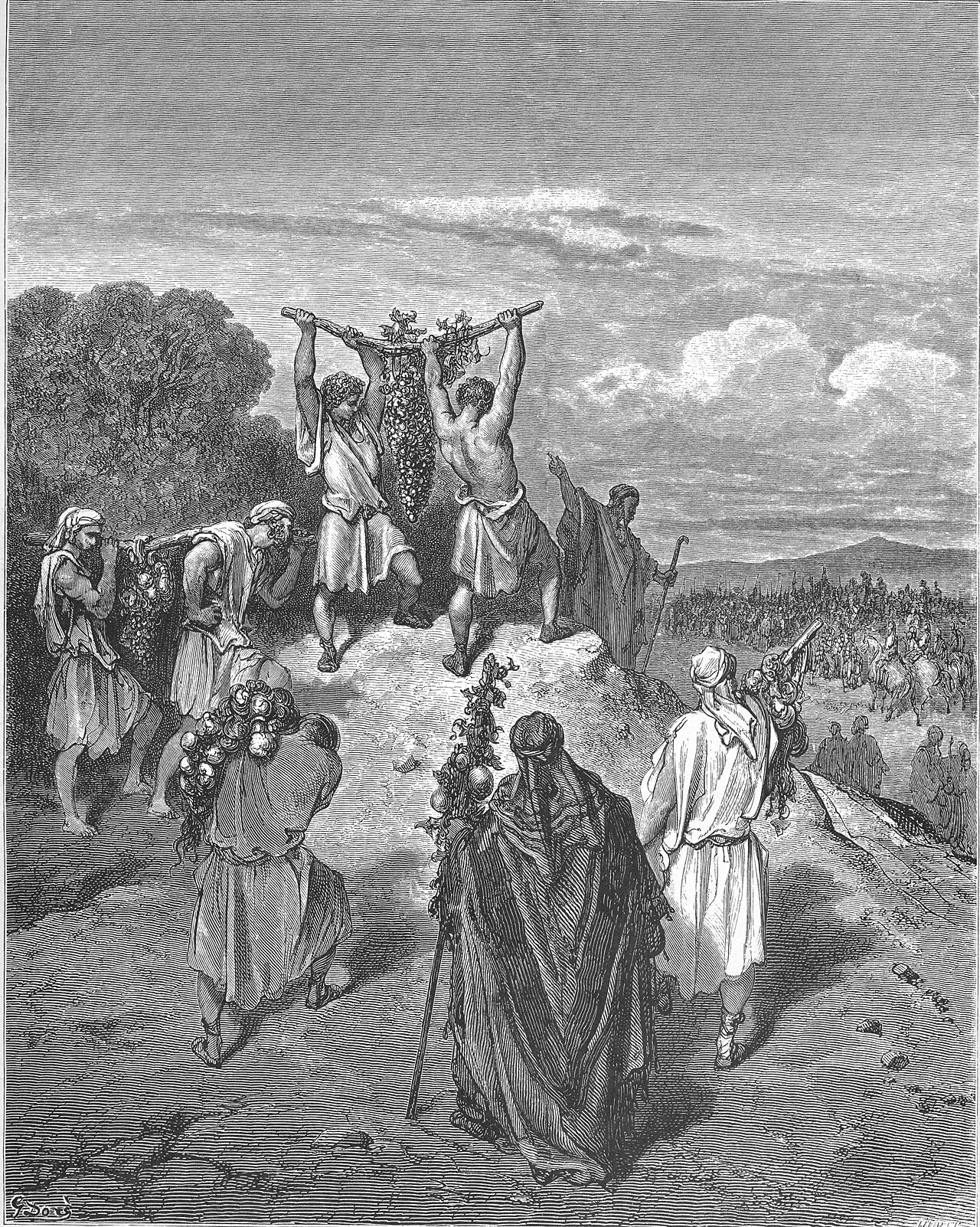
in Numbers 13These were the names of the men Moses sent to spy out the land; and Moses gave to Hoshea son of Nun the name Joshua.
BSB
The same verse in ASV and KJV ▾
ASV
These are the names of the men that Moses sent to spy out the land. And Moses called Hoshea the son of Nun Joshua.
KJV
These are the names of the men which Moses sent to spy out the land. And Moses called Oshea the son of Nun Jehoshua.
⋯
This verse in Numbers 13
Commentary
7 notes on this verseAnd the same [Moses] by divine inspiration foresaw the name Jesus very clearly and again also endowed this with special privilege. The name of Jesus, which had never been uttered among men before it was made known to Moses, Moses applied first to this one alone. He knew that Joshua, again as a type and a symbol, would receive the rule over all after Moses' death. His successor, at any rate, had never before used the title Jesus. He had been called by another name, Auses, which his parents had bestowed upon him.
This site's exposition
These were the names of the men Moses sent
Moses renames Hoshea as Joshua, setting a letter of the divine name before a word for salvation. Matthew Henry reads the change as a prayer turned into a promise. Exodus 17:9 already calls him Joshua, and Clarke names that difficulty.
The record, by era
The Puritans and the Awakening2 voices
These are the names of the men which Moses sent to spy out the land,....
Oshea signifies a prayer for salvation, Save thou; Joshua signifies a promise of salvation, He will save, in answer to that prayer: so near is the relation between prayers and promises.
The Nineteenth Century3 voices
And Moses called Oshea Jehoshua - Oshea, Heb. הושע should be written Hoshea: the word signifies saved, or a savior, or salvation; but יהושע, he shall save, or the salvation of God; a letter, says Calmet, of the incommunicable name of God, being added to his former name. This was not the first time in which he had the name Joshua; see Exo 17:9 (note), and the note there. Some suppose he had this change of name in consequence of his victory over Amalek; see Exo 17:13, Exo 17:14.
A commentator
Jamieson, Fausset & Brown1802–1910
Commentary Critical and Explanatory on the Whole Bible (1871)
proposed
Oshea--that is, "a desire of salvation." Jehoshua, by prefixing the name of God, means "divinely appointed," "head of salvation," "Saviour," the same as Jesus [Mt 1:21, Margin].
A commentator
Albert Barnes1798–1870
Notes, Explanatory and Practical, on the Old and New Testaments (1832-1869)
proposed
Oshea, Hoshea, or Hosea, the name also of the last king of Israel and the first minor prophet, means “deliverance” or and by the hand of him who bore the title of “God’s salvation.” Jehoshua was contracted (compare Neh 8:17) into Jeshua.
The words behind it
15 Hebrew wordsEvery Hebrew word of this verse in the order it stands, with what it means and the door to its own study. The last column counts the times a word stands in the whole Bible: the rarer the word, the more the places it appears belong together.
| Hebrew | Sound | Meaning | Word study | In the Bible |
|---|---|---|---|---|
| אֵ֚לֶּה | ʾeleh | these | H428 → | 746 times |
| שְׁמ֣וֹת | shemot | [are] [the] names of | H8034 → | 864 times |
| הָֽאֲנָשִׁ֔ים | haanashim | the men | H582 → | 566 times |
| אֲשֶׁר־ | ʾasher- | whom | H834 → | 5497 times |
| שָׁלַ֥ח | shalach | he sent | H7971 → | 845 times |
| מֹשֶׁ֖ה | mosheh | Moses | H4872 → | 765 times |
| לָת֣וּר | latur | to spy out | H8446 → | 24 times |
| אֶת־ | ʾet- | <obj.> | H853 → | 10935 times |
| הָאָ֑רֶץ | haaretz | the land | H776 → | 2504 times |
| וַיִּקְרָ֥א | vaiyikra' | and he called | H7121 → | 733 times |
| מֹשֶׁ֛ה | mosheh | Moses | H4872 → | 765 times |
| לְהוֹשֵׁ֥עַ | lehoshea' | <to> Hoshea | H1954 → | |
| בִּן־ | bin- | [the] son of | H1121 → | 4930 times |
| נ֖וּן | nun | Nun | H5126 → | 30 times |
| יְהוֹשֻֽׁעַ׃ | yehoshua' | Joshua | H3091 → | 218 times |
אֵ֚לֶּהthese
ʾelehH428 →746 times
שְׁמ֣וֹת[are] [the] names of
shemotH8034 →864 times
הָֽאֲנָשִׁ֔יםthe men
haanashimH582 →566 times
אֲשֶׁר־whom
ʾasher-H834 →5497 times
שָׁלַ֥חhe sent
shalachH7971 →845 times
מֹשֶׁ֖הMoses
moshehH4872 →765 times
לָת֣וּרto spy out
laturH8446 →24 times
אֶת־<obj.>
ʾet-H853 →10935 times
הָאָ֑רֶץthe land
haaretzH776 →2504 times
וַיִּקְרָ֥אand he called
vaiyikra'H7121 →733 times
מֹשֶׁ֛הMoses
moshehH4872 →765 times
לְהוֹשֵׁ֥עַ<to> Hoshea
lehoshea'H1954 →
בִּן־[the] son of
bin-H1121 →4930 times
נ֖וּןNun
nunH5126 →30 times
יְהוֹשֻֽׁעַ׃Joshua
yehoshua'H3091 →218 times
A shaded row is a word that stands 400 times or fewer in the Bible.
The walk
8 stopsEach card is a verse this one points to, and under it the verses that one points to in turn. Where several paths arrive at the same place, that place is listed first: the text keeps returning to it.
Through
Romans 9:25As He says in Hosea: “I will call them ‘My People’ who are not My people, and I will call her ‘My Beloved’ who is not My beloved,”
it leads to
- Hosea 2:23
And I will sow her as My own in the land, and I will have compassion on ‘No Compassion.’ I will say to those called ‘Not My People,’ ‘You are My people,’ and they…
- 1 Peter 2:10
Once you were not a people, but now you are the people of God; once you had not received mercy, but now you have received mercy.
- Hosea 2:23
Through
Hosea 1:1This is the word of the LORD that came to Hosea son of Beeri in the days of Uzziah, Jotham, Ahaz, and Hezekiah, kings of Judah, and of Jeroboam son of Jehoash, king of…
it leads to
- Romans 9:25
As He says in Hosea: “I will call them ‘My People’ who are not My people, and I will call her ‘My Beloved’ who is not My beloved,”
- Isaiah 1:1
This is the vision concerning Judah and Jerusalem that Isaiah son of Amoz saw during the reigns of Uzziah, Jotham, Ahaz, and Hezekiah, kings of Judah.
- Micah 1:1
This is the word of the LORD that came to Micah the Moreshite in the days of Jotham, Ahaz, and Hezekiah, kings of Judah—what he saw regarding Samaria and Jerusalem:
- Romans 9:25
Through
Exodus 17:9So Moses said to Joshua, “Choose some of our men and go out to fight the Amalekites. Tomorrow I will stand on the hilltop with the staff of God in my hand.”
it leads to
- Exodus 24:13
So Moses set out with Joshua his attendant and went up on the mountain of God.
Reached by 2 separate paths from here.
- Deuteronomy 32:44
Then Moses came with Joshua son of Nun and recited all the words of this song in the hearing of the people.
Reached by 2 separate paths from here.
- Exodus 4:20
So Moses took his wife and sons, put them on a donkey, and headed back to Egypt. And he took the staff of God in his hand.
- Exodus 24:13
Where this verse is studied
On this page
Studies13
About Numbers
Who and where
2 names in this verse with a page on the site.
This page draws on Adam Clarke, Commentary on the Bible; Albert Barnes, Notes, Explanatory and Practical, on the Old and New Testaments (1832-1869); Eusebius of Caesarea, ECCLESIASTICAL HISTORY 1.3; Jamieson, Fausset & Brown, Commentary Critical and Explanatory on the Whole Bible; John Gill, Exposition of the Old Testament (1748-1763) and Matthew Henry, Commentary on the Whole Bible.