
Leviticus 16:26
in Leviticus 16The man who released the goat as the scapegoat must wash his clothes and bathe himself with water; afterward he may reenter the camp.
BSB
The same verse in ASV and KJV ▾
ASV
And he that letteth go the goat for Azazel shall wash his clothes, and bathe his flesh in water, and afterward he shall come into the camp.
KJV
And he that let go the goat for the scapegoat shall wash his clothes, and bathe his flesh in water, and afterward come into the camp.
⋯
This verse in Leviticus 16
Commentary
5 notes on this verseHe that let go the goat - shall wash, etc. - Not only the person who led him away, but the priest who consecrated him, was reputed unclean, because the goat himself was unclean, being considered as bearing the sins of the whole congregation. On this account both the priest and the person who led him to the wilderness were obliged to wash their clothes and bathe themselves, before they could come into the camp.
This site's exposition
The man who released the goat as the scapegoat
on Leviticus 16:26-28
The bull and the goat whose blood went inside are burned outside the camp, away from the altar. Hebrews 13:11-13 describes this arrangement and says that Jesus suffered outside the gate for the same reason.
The record, by era
The Puritans and the Awakening1 voice
And he that let go the goat for the scapegoat,....
The Nineteenth Century2 voices
A commentator
Jamieson, Fausset & Brown1802–1910
Commentary Critical and Explanatory on the Whole Bible (1871)
proposed
The fat was ordered to be burnt upon the altar; the rest of the carcasses to be cut down and given to some priestly attendants to burn without the camp, in conformity with the general law for the sin offerings (Le 4:8-12;
quarantine:debris (2026-07-29) — unbalanced-parens
A commentator
Albert Barnes1798–1870
Notes, Explanatory and Practical, on the Old and New Testaments (1832-1869)
proposed
Both he who led away the goat, and he who burned the parts of the sin-offerings had to purify themselves. They who went out of the camp during a religious solemnity incurred uncleanness; hence, the need of purification. Lev 16:27 Shall burn in the fire - i. e., consume in the fire, not burn sacrificially. See Lev 1:9.
How the passage was read
On Leviticus 16:1-34On Leviticus 16:1-34
The day Israel still fasts
This chapter founds the Day of Atonement, in Hebrew Yom Kippur, the most solemn day of the Jewish year: the one day the high priest entered the innermost room of the sanctuary with blood for the nation's sins. With no Temple standing since AD 70, the day is kept now as a full fast: roughly 25 hours with no food or drink, most of it spent in synagogue prayer, many wearing white.
The Mishnah (the first code of Jewish oral law, about AD 200) defines the day's five abstentions: eating and drinking, washing, anointing, leather shoes, and marital relations (Yoma 8:1). It also carries a saying worth any reader's time: the day atones for sins between a person and God, “but for sins between a person and his fellow, the Day of Atonement does not atone until he has appeased his fellow” (Yoma 8:9). Reconciliation with people is homework done before the day.
This section is reception history: how the passage was read and kept in the Jewish tradition. Where a reading parts from an essential of the Christian faith, the section says so at that point.
Sources: Mishnah Yoma 8:1 (the five abstentions) · Mishnah Yoma 8:9 (appease your fellow first) · The Day of Atonement (this site's study)
The words behind it
15 Hebrew wordsEvery Hebrew word of this verse in the order it stands, with what it means and the door to its own study. The last column counts the times a word stands in the whole Bible: the rarer the word, the more the places it appears belong together.
| Hebrew | Sound | Meaning | Word study | In the Bible |
|---|---|---|---|---|
| וְהַֽמְשַׁלֵּ֤חַ | vehamshaleach | and the [one who] let go | H7971 → | 845 times |
| אֶת־ | ʾet- | <obj.> | H853 → | 10935 times |
| הַשָּׂעִיר֙ | hasair | the male goat | H8163 → | 59 times |
| לַֽעֲזָאזֵ֔ל | laazazel | to [the] escape goat | H5799 → | 4 times |
| יְכַבֵּ֣ס | yekhabes | he will wash | H3526 → | 51 times |
| בְּגָדָ֔יו | begadav | garments his | H899 → | 217 times |
| וְרָחַ֥ץ | verachatz | and he will wash | H7364 → | 72 times |
| אֶת־ | ʾet- | <obj.> | H853 → | 10935 times |
| בְּשָׂר֖וֹ | besaro | body his | H1320 → | 270 times |
| בַּמָּ֑יִם | bamayim | with <the> water | H4325 → | 581 times |
| וְאַחֲרֵי־ | veacharei- | and after | H310 → | 715 times |
| כֵ֖ן | khen | thus | H3651 → | 771 times |
| יָב֥וֹא | yavo' | he will come | H935 → | 2568 times |
| אֶל־ | ʾel- | into | H413 → | 5510 times |
| הַֽמַּחֲנֶֽה׃ | hamachaneh | the camp | H4264 → | 215 times |
וְהַֽמְשַׁלֵּ֤חַand the [one who] let go
vehamshaleachH7971 →845 times
אֶת־<obj.>
ʾet-H853 →10935 times
הַשָּׂעִיר֙the male goat
hasairH8163 →59 times
לַֽעֲזָאזֵ֔לto [the] escape goat
laazazelH5799 →4 times
יְכַבֵּ֣סhe will wash
yekhabesH3526 →51 times
בְּגָדָ֔יוgarments his
begadavH899 →217 times
וְרָחַ֥ץand he will wash
verachatzH7364 →72 times
אֶת־<obj.>
ʾet-H853 →10935 times
בְּשָׂר֖וֹbody his
besaroH1320 →270 times
בַּמָּ֑יִםwith <the> water
bamayimH4325 →581 times
וְאַחֲרֵי־and after
veacharei-H310 →715 times
כֵ֖ןthus
khenH3651 →771 times
יָב֥וֹאhe will come
yavo'H935 →2568 times
אֶל־into
ʾel-H413 →5510 times
הַֽמַּחֲנֶֽה׃the camp
hamachanehH4264 →215 times
A shaded row is a word that stands 400 times or fewer in the Bible.
The walk
8 stopsEach card is a verse this one points to, and under it the verses that one points to in turn. Where several paths arrive at the same place, that place is listed first: the text keeps returning to it.
Through
Hebrews 7:19(for the law made nothing perfect), and a better hope is introduced, by which we draw near to God.
it leads to
- Acts 13:39
Through Him everyone who believes is justified from everything you could not be justified from by the law of Moses.
- Hebrews 9:9
It is an illustration for the present time, because the gifts and sacrifices being offered were unable to cleanse the conscience of the worshiper.
- Hebrews 4:16
Let us then approach the throne of grace with confidence, so that we may receive mercy and find grace to help us in our time of need.
- Romans 8:3
For what the law was powerless to do in that it was weakened by the flesh, God did by sending His own Son in the likeness of sinful man, as an offering for sin.…
- Acts 13:39
Through
Leviticus 16:10But the goat chosen by lot as the scapegoat shall be presented alive before the LORD to make atonement by sending it into the wilderness as the scapegoat.
it leads to
- 1 John 2:2
He Himself is the atoning sacrifice for our sins, and not only for ours but also for the sins of the whole world.
- Hebrews 9:23–24
So it was necessary for the copies of the heavenly things to be purified with these sacrifices, but the heavenly things themselves with better sacrifices than these.
- 1 John 2:2
Through
Leviticus 11:25and whoever picks up one of their carcasses must wash his clothes, and he will be unclean until evening.
it leads to
- Leviticus 15:5
Anyone who touches his bed must wash his clothes and bathe with water, and he will be unclean until evening.
- Numbers 31:24
On the seventh day you are to wash your clothes, and you will be clean. After that you may enter the camp.”
- Leviticus 15:5
Where this verse is studied
On this page
Studies18
On this verse
About Leviticus
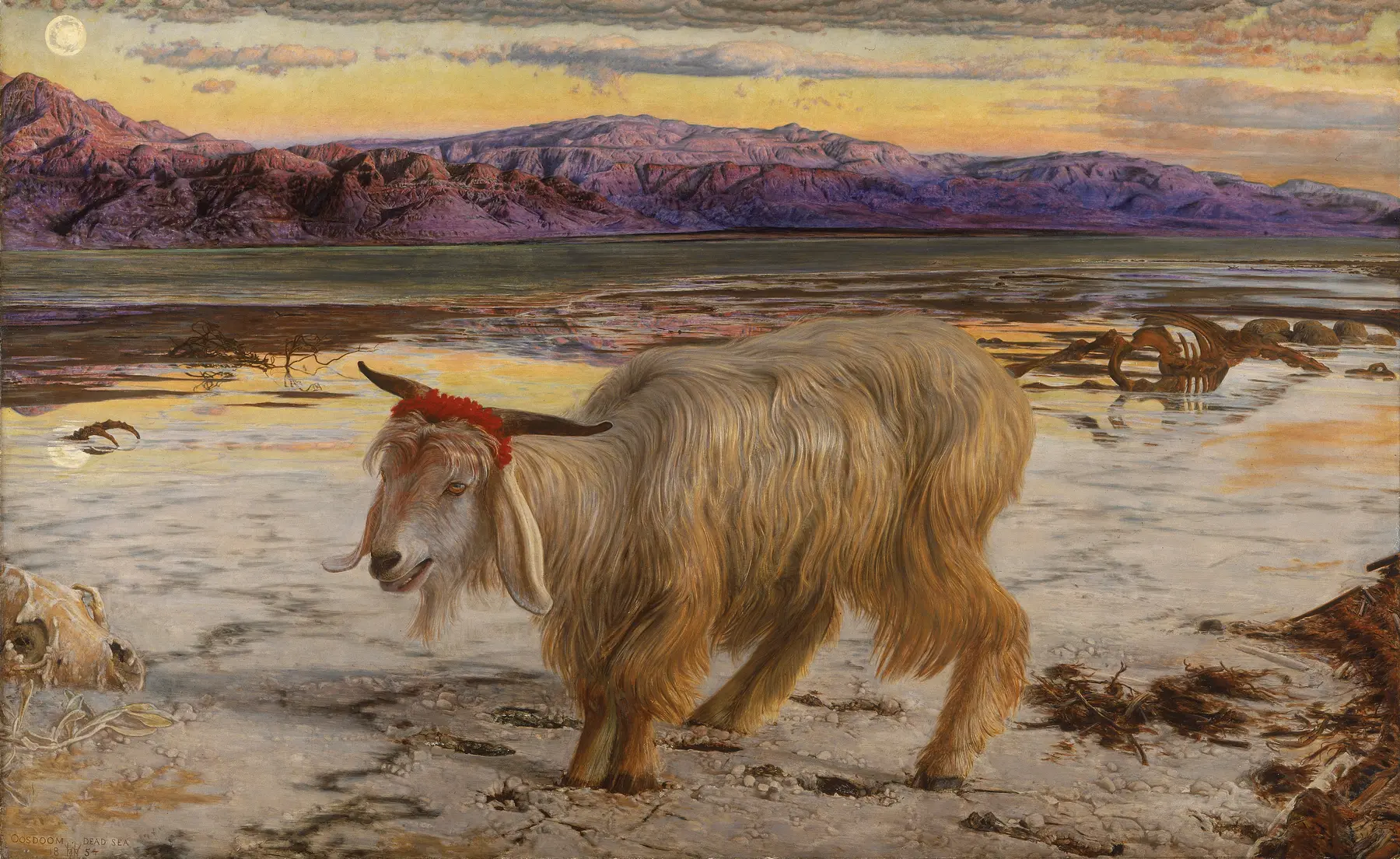
This page draws on Adam Clarke, Commentary on the Bible; Albert Barnes, Notes, Explanatory and Practical, on the Old and New Testaments (1832-1869); Jamieson, Fausset & Brown, Commentary Critical and Explanatory on the Whole Bible; John Gill, Exposition of the Old Testament (1748-1763); Keil and Delitzsch, Biblical Commentary on the Old Testament: The Pentateuch and Sir Robert Anderson, Types in Hebrews.