
Joshua 10:33
in Joshua 10At that time Horam king of Gezer went to help Lachish, but Joshua struck him down along with his people, leaving no survivors.
BSB
The same verse in ASV and KJV ▾
ASV
Then Horam king of Gezer came up to help Lachish; and Joshua smote him and his people, until he had left him none remaining.
KJV
Then Horam king of Gezer came up to help Lachish; and Joshua smote him and his people, until he had left him none remaining.
⋯
This verse in Joshua 10
Commentary
2 notes on this verseA commentator
Albert Barnes1798–1870
Notes, Explanatory and Practical, on the Old and New Testaments (1832-1869)
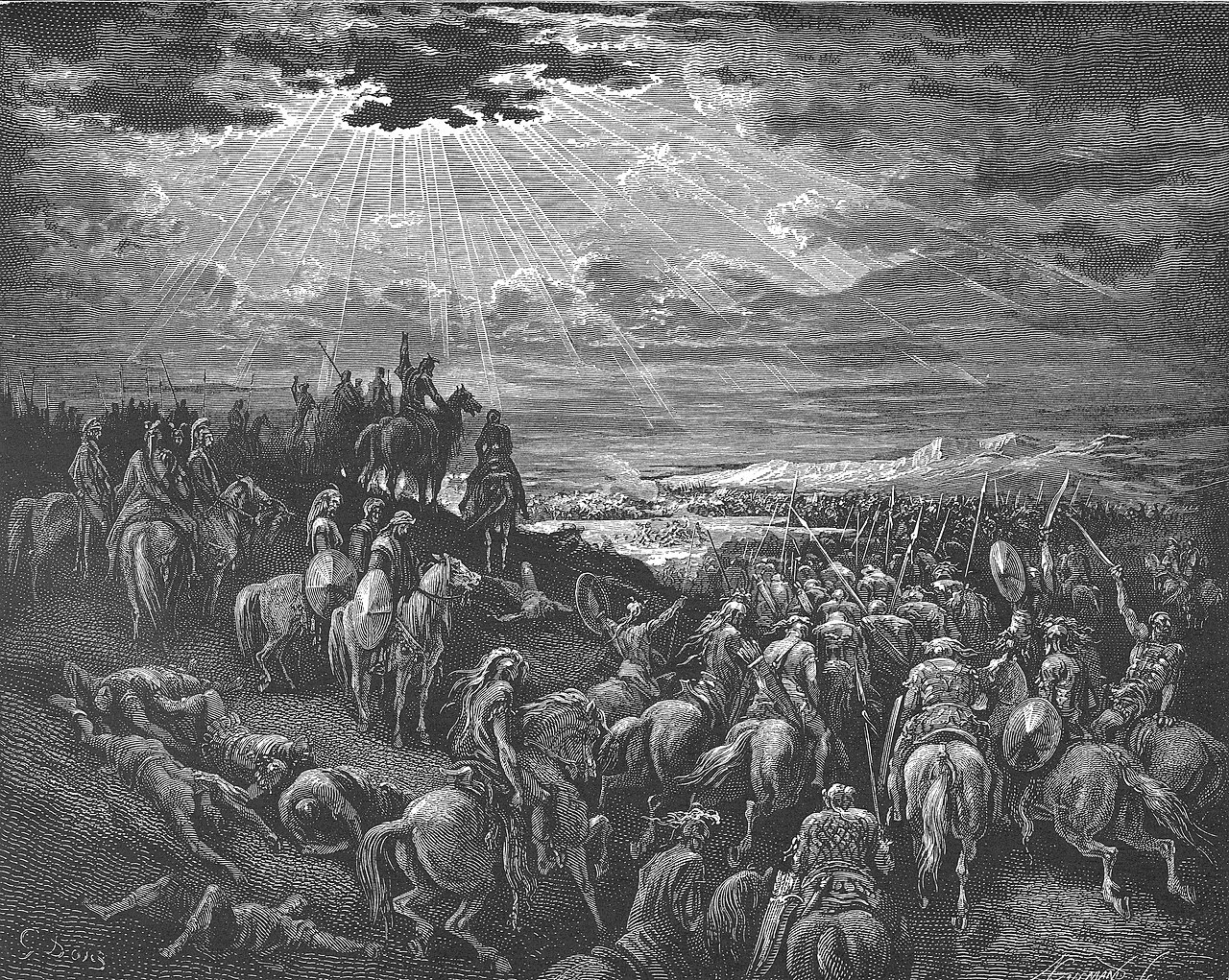
Gezer lies on the southern border of the tribe of Ephraim Jos 16:3. It was considerably to the northward of Joshua’s present line of operations, and does not appear to have been captured at this time. He contented himself for the present with repulsing the attack made upon him, killed Horam (compare Jos 12:12), inflicting a severe defeat upon his people, and then continued to pursue his conquests over the confederated kings and their allies in south Canaan.
This site's exposition
Joshua passed from Libnah
on Joshua 10:31-33
Lachish is the only city in the run that takes two days, and it is the one the account slows for. Its mound has been excavated more thoroughly than almost any site in the country, and its burn layers are the ground of the argument over when the conquest happened, which is not settled. Horam king of Gezer comes out to relieve it and loses his army, and his city is never taken: Joshua 16:10 and Judges 1:29 both record that Gezer stayed Canaanite, and 1 Kings 9:16 has Pharaoh burning it and giving it to Solomon's wife.
The words behind it
17 Hebrew wordsEvery Hebrew word of this verse in the order it stands, with what it means and the door to its own study. The last column counts the times a word stands in the whole Bible: the rarer the word, the more the places it appears belong together.
| Hebrew | Sound | Meaning | Word study | In the Bible |
|---|---|---|---|---|
| אָ֣ז | ʾaz | then | H227 → | 141 times |
| עָלָ֗ה | ʾalah | he came up | H5927 → | 890 times |
| הֹרָם֙ | horam | Horam | H2036 → | |
| מֶ֣לֶךְ | melekh | [the] king of | H4428 → | 2525 times |
| גֶּ֔זֶר | gezer | Gezer | H1507 → | 15 times |
| לַעְזֹ֖ר | la'zor | to help | H5826 → | 81 times |
| אֶת־ | ʾet- | <obj.> | H853 → | 10935 times |
| לָכִ֑ישׁ | lakhish | Lachish | H3923 → | 24 times |
| וַיַּכֵּ֤הוּ | vaiyakehu | and he attacked him | H5221 → | 499 times |
| יְהוֹשֻׁ֙עַ֙ | yehoshua' | Joshua | H3091 → | 218 times |
| וְאֶת־ | veet | and <obj.> | H853 → | 10935 times |
| עַמּ֔וֹ | amo | people his | H5971 → | 1873 times |
| עַד־ | ʾad- | until | H5704 → | 1261 times |
| בִּלְתִּ֥י | bilti | not | H1115 → | 112 times |
| הִשְׁאִֽיר־ | hishir- | he had left | H7604 → | 133 times |
| ל֖וֹ | lo | to <the> him | ||
| שָׂרִֽיד׃ | sarid | a survivor | H8300 → | 28 times |
אָ֣זthen
ʾazH227 →141 times
עָלָ֗הhe came up
ʾalahH5927 →890 times
הֹרָם֙Horam
horamH2036 →
מֶ֣לֶךְ[the] king of
melekhH4428 →2525 times
גֶּ֔זֶרGezer
gezerH1507 →15 times
לַעְזֹ֖רto help
la'zorH5826 →81 times
אֶת־<obj.>
ʾet-H853 →10935 times
לָכִ֑ישׁLachish
lakhishH3923 →24 times
וַיַּכֵּ֤הוּand he attacked him
vaiyakehuH5221 →499 times
יְהוֹשֻׁ֙עַ֙Joshua
yehoshua'H3091 →218 times
וְאֶת־and <obj.>
veetH853 →10935 times
עַמּ֔וֹpeople his
amoH5971 →1873 times
עַד־until
ʾad-H5704 →1261 times
בִּלְתִּ֥יnot
biltiH1115 →112 times
הִשְׁאִֽיר־he had left
hishir-H7604 →133 times
ל֖וֹto <the> him
lo
שָׂרִֽיד׃a survivor
saridH8300 →28 times
A shaded row is a word that stands 400 times or fewer in the Bible.
The walk
8 stopsEach card is a verse this one points to, and under it the verses that one points to in turn. Where several paths arrive at the same place, that place is listed first: the text keeps returning to it.
Through
Joshua 16:10But they did not drive out the Canaanites who lived in Gezer. So the Canaanites dwell among the Ephraimites to this day, but they are forced laborers.
it leads to
- 1 Kings 9:16
Pharaoh king of Egypt had attacked and captured Gezer. He had set it on fire, killed the Canaanites who lived in the city, and given it as a dowry to his daughter, Solomon’s wife.
Reached by 3 separate paths from here.
- Judges 1:29
Ephraim also failed to drive out the Canaanites living in Gezer; so the Canaanites continued to dwell among them in Gezer.
- Deuteronomy 7:1–2
When the LORD your God brings you into the land that you are entering to possess, and He drives out before you many nations—the Hittites, Girgashites, Amorites, Canaanites, Perizzites, Hivites, and Jebusites, seven nations…
- Joshua 17:13
However, when the Israelites grew stronger, they put the Canaanites to forced labor; but they failed to drive them out completely.
- Numbers 33:52–55
you must drive out before you all the inhabitants of the land, destroy all their carved images and cast idols, and demolish all their high places.
- 1 Kings 9:16
Through
Judges 1:29Ephraim also failed to drive out the Canaanites living in Gezer; so the Canaanites continued to dwell among them in Gezer.
it leads to
- Joshua 16:10
But they did not drive out the Canaanites who lived in Gezer. So the Canaanites dwell among the Ephraimites to this day, but they are forced laborers.
- Joshua 16:10
Through
1 Chronicles 6:67They were given Shechem (a city of refuge) with its pasturelands in the hill country of Ephraim, and Gezer,
it leads to
- Joshua 21:21
From the tribe of Ephraim they were given Shechem in the hill country of Ephraim (a city of refuge for the manslayer), Gezer,
- Joshua 21:21
Through
Joshua 16:3Then it descended westward to the border of the Japhletites as far as the border of Lower Beth-horon and on to Gezer, and it ended at the Sea.
it leads to
- 2 Chronicles 8:5
He rebuilt Upper and Lower Beth-horon as fortified cities with walls, gates, and bars,
- 2 Chronicles 8:5
About Joshua
Who and where
2 names in this verse with a page on the site.
- PersonConquestJoshuaMoses' minister and successor, one of the two faithful spies; he led Israel across Jordan, around Jericho, and through the conques…
- PlaceShephelahLachishJudah's second city, besieged by Sennacherib in 701 BC, its siege carved on the walls of his palace at Nineveh and confirmed in th…
This page draws on Albert Barnes, Notes, Explanatory and Practical, on the Old and New Testaments (1832-1869); Albert Barnes, Notes on the Old Testament and Keil and Delitzsch, Biblical Commentary on the Old Testament: Joshua, Judges, Ruth.