
Jeremiah 7:29
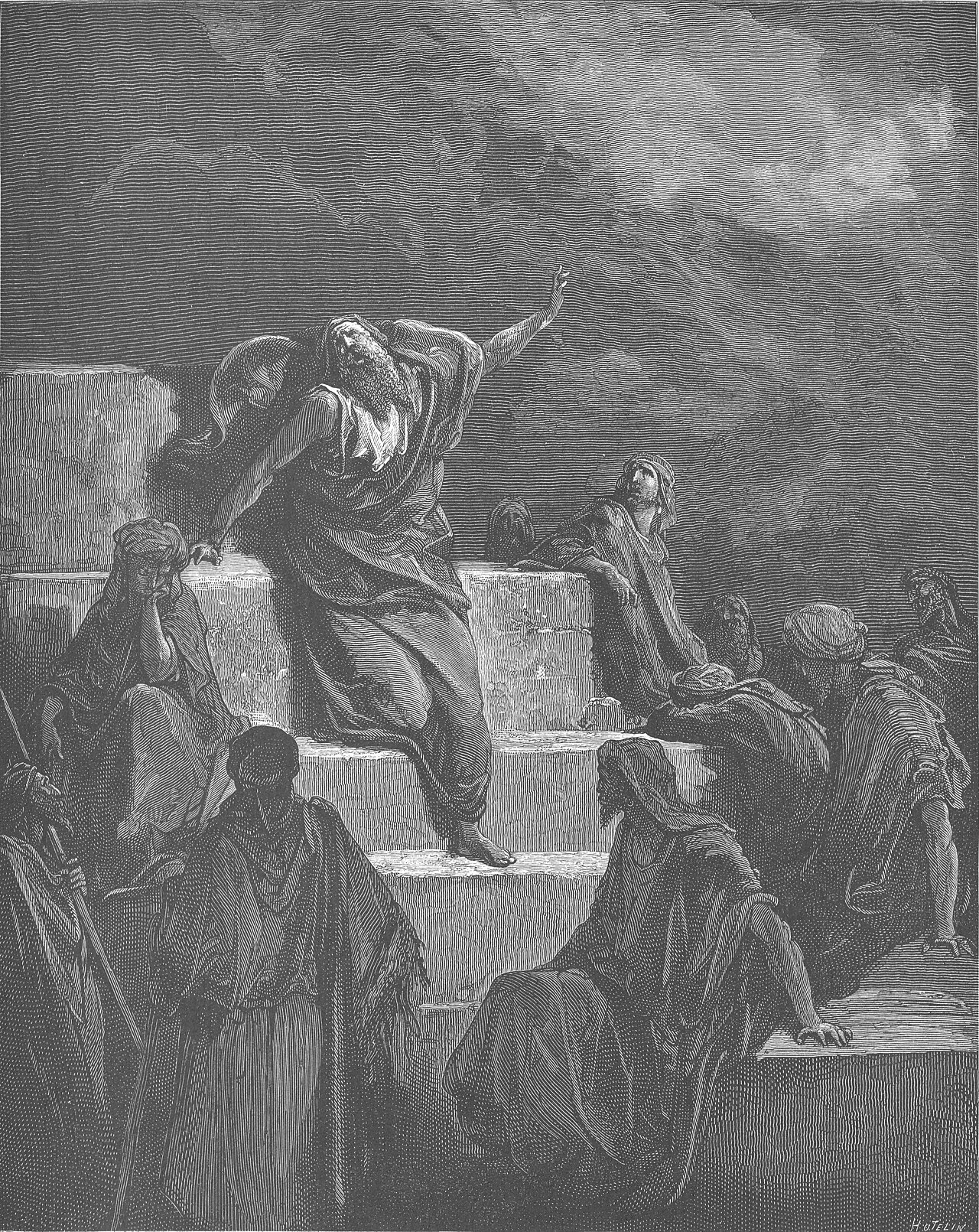
in Jeremiah 7Cut off your hair and throw it away. Raise up a lamentation on the barren heights, for the LORD has rejected and forsaken the generation of His wrath.’
BSB
The same verse in ASV and KJV ▾
ASV
Cut off thy hair, O Jerusalem, and cast it away, and take up a lamentation on the bare heights; for Jehovah hath rejected and forsaken the generation of his wrath.
KJV
Cut off thine hair, O Jerusalem, and cast it away, and take up a lamentation on high places; for the Lord hath rejected and forsaken the generation of his wrath.
⋯
This verse in Jeremiah 7
Commentary
11 notes on this verseA commentator
Albert Barnes1798–1870
Notes, Explanatory and Practical, on the Old and New Testaments (1832-1869)
Jeremiah summons the people to lament over the miserable consequences of their rejection of God. In the valley of Hinnom, where lately they offered their innocents, they shall themselves fall before the enemy in such multitudes that burial shall be impossible, and the beasts of the field unmolested shall prey upon their remains.
This site's exposition
Cut off thine hair, O Jerusalem, and cast it away
on Jeremiah 7:29-31
Cut off thine hair is a mourning rite turned into a command, Jerusalem told to grieve for herself as for the dead, because the generation of his wrath already stands under sentence. The high places of Tophet in the valley of the son of Hinnom, where sons and daughters were burned in the fire, is named at verse 31 as a horror the Lord himself denies commanding, neither came it into my heart, a rejection of any claim that Molech worship descended from the Lord's own altar. The valley's later name, Gehenna, carries this scene forward into the New Testament's own word for final judgment.
The record, by era
The Church Fathers2 voices
(Verse 29.) Shave your hair and cast it away, and take up a lamentation upon your lips: for the Lord has cast off and abandoned the generation of his wrath. And when Job heard of the death of his sons and daughters, he tore his garments and shaved his head (Job 1): and among the ancients, it was the custom of mourners to shave their hair. But now, on the contrary, letting one's hair down is a sign of mourning. However, every lamentation and prophetic wailing is undertaken for this reason: because the Lord has cast off and abandoned the generation of his wrath. There is no doubt that it signifies the people of the Jews. And especially this can be referred to the time of Christ, when faith perishes, and the Lord is blasphemed by the people.
But last of all He sent to those unbelievers His own Son, our Lord Jesus Christ, whom the wicked husbandmen cast out of the vineyard when they had slain Him. Wherefore the Lord God did even give it up (no longer hedged around, but thrown open throughout all the world) to other husbandmen, who render the fruits in their seasons—the beautiful elect tower being also raised everywhere. For the illustrious Church is [now] everywhere, and everywhere is the winepress digged: because those who do receive the Spirit are everywhere.
The Puritans and the Awakening3 voices
Cut off thine hair - This was an usual token of sorrow among the Jews. On high places - Upon the high places where thou wentest a whoring from me. The generation - A generation destined to the wrath of God.
5 For if ye throughly amend your ways and your doings; if ye throughly execute judgment between a man and his neighbour; 6 If ye oppress not the stranger, the fatherless, and the widow, and shed not innocent blood in this place, neither walk after other gods to your hurt: 7 Then will I cause you to dwell in this place, in the land that I gave to your fathers, for ever and ever.
quarantine:scripture (2026-07-29) — verbatim-scripture
It is time for those that have lost their holiness to lay aside their joy. Just cause given for this great lamentation. The sin of Jerusalem appears here very heinous, nowhere worse, or more exceedingly sinful (
quarantine:debris (2026-07-29) — unbalanced-parens
4 more voices on this verse
The Puritans and the Awakening2 voices
), The Lord hath rejected and forsaken the generation of his wrath. Sin makes those the generation of God's wrath that had ben the generation of his love.
quarantine:debris (2026-07-29) — leading-punctuation+unbalanced-parens
Cut off thine hair, O Jerusalem, and cast it away,.... This supplement is made, because the word is feminine; and therefore cannot be directed to the prophet, but to Jerusalem, and its inhabitants; shaving the head is a sign of mourning, Job 1:20 and this is enjoined, to show that there would soon be a reason for it; wherefore it follows: and take up a lamentation on high places: that it might be heard afar off; or because of the idolatry frequently committed in high places.
The Nineteenth Century2 voices
A commentator
Jamieson, Fausset & Brown1802–1910
Commentary Critical and Explanatory on the Whole Bible (1871)
proposed
Isa 15:2). hair--flowing locks, like those of a Nazarite. high places--The scene of her idolatries is to be the scene of her mourning (Jer 3:21). generation of his wrath--the generation with which He is wroth. So Isa 10:6; "the people of My wrath."
quarantine:debris (2026-07-29) — unbalanced-parens
Cut off thine hair - גזי נזרך gozzi nizrech, shear thy nazarite. The Nazarite was one who took upon him a particular vow, and separated himself from all worldly connections for a certain time, that he might devote himself without interruption to the service of God; and during all this time no razor was to pass on his head, for none of his hair was to be taken off. After the vow was over, he shaved his head and beard, and returned to society. See Num 6:2 (note), etc., and the notes there. Jerusalem is here considered under the notion of a Nazarite, by profession devoted to the service of God: but that profession was empty; it was not accompanied with any suitable practice. God tells them here to cut off their hair; to make no vain pretensions to holiness or religion; to throw off the mask, and attempt no longer to impose upon themselves and others by their hypocritical pretensions. On the same ground he orders them, Jer 7:21, to devote to common use the animals destined for sacrifice; and to make no more vain shows of religion while their hearts were not right with him. Dr. Blayney thinks the address is to the prophet, who was a Nazarite by virtue of his office, and who was called to cut off his hair as a token of mourning for the desolations which were coming upon his people. That cutting off the hair was a sign of distress and mourning may be seen, Ezr 9:3; Isa 15:2; Jer 41:5, etc. But I think the other the more natural construction. On high places - That the lamentation may be heard to the greater distance. The generation of his wrath - Persons exposed to punishment: used here as children of wrath, Eph 2:3.
The words behind it
14 Hebrew wordsEvery Hebrew word of this verse in the order it stands, with what it means and the door to its own study. The last column counts the times a word stands in the whole Bible: the rarer the word, the more the places it appears belong together.
| Hebrew | Sound | Meaning | Word study | In the Bible |
|---|---|---|---|---|
| גָּזִּ֤י | gazi | cut off | H1494 → | |
| נִזְרֵךְ֙ | nizrekh | hair your | H5145 → | |
| וְֽהַשְׁלִ֔יכִי | vehashlikhi | and throw [it] away | H7993 → | 125 times |
| וּשְׂאִ֥י | usei | and take up | H5375 → | 656 times |
| עַל־ | ʾal- | on | H5921 → | 5755 times |
| שְׁפָיִ֖ם | shefayim | bare heights | H8205 → | 9 times |
| קִינָ֑ה | kinah | a lamentation | H7015 → | 18 times |
| כִּ֚י | ki | for | H3588 → | 4482 times |
| מָאַ֣ס | maas | he has rejected | H3988 → | 76 times |
| יְהוָ֔ה | yahweh | Yahweh | H3068 → | 6520 times |
| וַיִּטֹּ֖שׁ | vaiyitosh | and he has abandoned | H5203 → | 40 times |
| אֶת־ | ʾet- | <obj.> | H853 → | 10935 times |
| דּ֥וֹר | dor | [the] generation of | H1755 → | 167 times |
| עֶבְרָתֽוֹ׃ | evrato | fury his | H5678 → |
גָּזִּ֤יcut off
gaziH1494 →
נִזְרֵךְ֙hair your
nizrekhH5145 →
וְֽהַשְׁלִ֔יכִיand throw [it] away
vehashlikhiH7993 →125 times
וּשְׂאִ֥יand take up
useiH5375 →656 times
עַל־on
ʾal-H5921 →5755 times
שְׁפָיִ֖םbare heights
shefayimH8205 →9 times
קִינָ֑הa lamentation
kinahH7015 →18 times
כִּ֚יfor
kiH3588 →4482 times
מָאַ֣סhe has rejected
maasH3988 →76 times
יְהוָ֔הYahweh
yahwehH3068 →6520 times
וַיִּטֹּ֖שׁand he has abandoned
vaiyitoshH5203 →40 times
אֶת־<obj.>
ʾet-H853 →10935 times
דּ֥וֹר[the] generation of
dorH1755 →167 times
עֶבְרָתֽוֹ׃fury his
evratoH5678 →
A shaded row is a word that stands 400 times or fewer in the Bible.
The walk
8 stopsEach card is a verse this one points to, and under it the verses that one points to in turn. Where several paths arrive at the same place, that place is listed first: the text keeps returning to it.
Through
Micah 1:16Shave yourselves bald and cut off your hair in mourning for your precious children; make yourselves as bald as an eagle, for they will go from you into exile.
it leads to
- Isaiah 22:12
On that day the Lord GOD of Hosts called for weeping and wailing, for shaven heads and the wearing of sackcloth.
Reached by 2 separate paths from here.
- Isaiah 22:12
Through
Job 1:20Then Job stood up, tore his robe, and shaved his head. He fell to the ground and worshiped,
it leads to
- 1 Peter 5:6
Humble yourselves, therefore, under God’s mighty hand, so that in due time He may exalt you.
- 2 Samuel 12:16–20
David pleaded with God for the boy. He fasted and went into his house and spent the night lying in sackcloth on the ground.
- Genesis 37:34
Then Jacob tore his clothes, put sackcloth around his waist, and mourned for his son many days.
- Genesis 37:29
When Reuben returned to the pit and saw that Joseph was not there, he tore his clothes,
- Ezra 9:3
When I heard this report, I tore my tunic and cloak, pulled out some hair from my head and beard, and sat down in horror.
- 1 Peter 5:6
Through
Jeremiah 16:6“Both great and small will die in this land. They will not be buried or mourned, nor will anyone cut himself or shave his head for them.
it leads to
- Deuteronomy 14:1
You are sons of the LORD your God; do not cut yourselves or shave your foreheads on behalf of the dead,
- Deuteronomy 14:1
Through
Matthew 23:36Truly I tell you, all these things will come upon this generation.
it leads to
- Matthew 24:34
Truly I tell you, this generation will not pass away until all these things have happened.
- Matthew 24:34
Where this verse is studied
On this page
Studies2
About Jeremiah
This page draws on 9 works. Open the list of works
This page draws on Adam Clarke, Commentary on the Bible; Albert Barnes, Notes, Explanatory and Practical, on the Old and New Testaments (1832-1869); Carl Friedrich Keil, The Prophecies of Jeremiah; Irenaeus, AGAINST HERESIES 4:36.2; Jamieson, Fausset & Brown, Commentary Critical and Explanatory on the Whole Bible; Jerome, Commentary on Jeremiah; John Gill, Exposition of the Old Testament (1748-1763); John Wesley, Explanatory Notes upon the Old Testament and Matthew Henry, Commentary on the Whole Bible.