
Jeremiah 7:14
in Jeremiah 7therefore what I did to Shiloh I will now do to the house that bears My Name, the house in which you trust, the place that I gave to you and your fathers.
BSB
The same verse in ASV and KJV ▾
ASV
therefore will I do unto the house which is called by my name, wherein ye trust, and unto the place which I gave to you and to your fathers, as I did to Shiloh.
KJV
Therefore will I do unto this house, which is called by my name, wherein ye trust, and unto the place which I gave to you and to your fathers, as I have done to Shiloh.
⋯
This verse in Jeremiah 7
Commentary
6 notes on this verseA commentator
Jamieson, Fausset & Brown1802–1910
Commentary Critical and Explanatory on the Whole Bible (1871)
I gave--and I therefore can revoke the gift for it is still Mine (Le 25:23), now that ye fail in the only object for which it was given, the promotion of My glory.
This site's exposition
go now to the place in Shiloh
on Jeremiah 7:12-15
The command to “go now to the place in Shiloh” points to the tabernacle's first home, destroyed after Eli's sons and remembered in Psalm 78:60-64. The LORD draws the lesson, “what I did to Shiloh I will now do to the house that bears My Name”.
This site's exposition
the house in which you trust
The phrase the house in which you trust makes the temple itself the object of Judah's confidence. Jamieson, Fausset and Brown note that the land remained the LORD's after he gave it, citing Leviticus 25:23, so the Giver could revoke the gift. Shiloh had already shown it.
The record, by era
The Church Fathers1 voice
(Verse 14) I will do to this house, where my name has been invoked, and in which you have trusted, and to the place which I have given to you and your fathers, as I did to Shiloh. Because God called them, rising up from the night, in order to deliver them from darkness, he threatens to do similar things to them as he did to the Temple in Jerusalem, which he made in the place of Shiloh, where the tabernacle first was: so that similar sins may be punished with the same verdict.
The Puritans and the Awakening2 voices
Therefore will I do unto this house, which is called by my name,....
The temple at Jerusalem, though ever so strongly built, if wickedness was found in it, would be as unable to keep its ground and as easily conquered as even the tabernacle in Shiloh was, when God's day of vengeance had come.
The words behind it
18 Hebrew wordsEvery Hebrew word of this verse in the order it stands, with what it means and the door to its own study. The last column counts the times a word stands in the whole Bible: the rarer the word, the more the places it appears belong together.
| Hebrew | Sound | Meaning | Word study | In the Bible |
|---|---|---|---|---|
| וְעָשִׂ֜יתִי | veasiti | and I will do | H6213 → | 2628 times |
| לַבַּ֣יִת׀ | labayit | to the house | H1004 → | 2046 times |
| אֲשֶׁ֧ר | ʾasher | which | H834 → | 5497 times |
| נִֽקְרָא־ | nikra'- | it is called | H7121 → | 733 times |
| שְׁמִ֣י | shemi | name my | H8034 → | 864 times |
| עָלָ֗יו | ʾalav | on it | H5921 → | 5755 times |
| אֲשֶׁ֤ר | ʾasher | which | H834 → | 5497 times |
| אַתֶּם֙ | ʾatem | you | H859 → | 1094 times |
| בֹּטְחִ֣ים | botechim | [are] trusting | H982 → | 120 times |
| בּ֔וֹ | bo | in <the> it | ||
| וְלַ֨מָּק֔וֹם | velamakom | and to the place | H4725 → | 401 times |
| אֲשֶׁר־ | ʾasher- | which | H834 → | 5497 times |
| נָתַ֥תִּי | natati | I gave | H5414 → | 2011 times |
| לָכֶ֖ם | lakhem | to you | ||
| וְלַאֲבֽוֹתֵיכֶ֑ם | velaavoteikhem | and to ancestors your | H1 → | 1212 times |
| כַּאֲשֶׁ֥ר | kaasher | just as | H834 → | 5497 times |
| עָשִׂ֖יתִי | ʾasiti | I did | H6213 → | 2628 times |
| לְשִׁלֽוֹ׃ | leshilo | to Shiloh | H7887 → | 32 times |
וְעָשִׂ֜יתִיand I will do
veasitiH6213 →2628 times
לַבַּ֣יִת׀to the house
labayitH1004 →2046 times
אֲשֶׁ֧רwhich
ʾasherH834 →5497 times
נִֽקְרָא־it is called
nikra'-H7121 →733 times
שְׁמִ֣יname my
shemiH8034 →864 times
עָלָ֗יוon it
ʾalavH5921 →5755 times
אֲשֶׁ֤רwhich
ʾasherH834 →5497 times
אַתֶּם֙you
ʾatemH859 →1094 times
בֹּטְחִ֣ים[are] trusting
botechimH982 →120 times
בּ֔וֹin <the> it
bo
וְלַ֨מָּק֔וֹםand to the place
velamakomH4725 →401 times
אֲשֶׁר־which
ʾasher-H834 →5497 times
נָתַ֥תִּיI gave
natatiH5414 →2011 times
לָכֶ֖םto you
lakhem
וְלַאֲבֽוֹתֵיכֶ֑םand to ancestors your
velaavoteikhemH1 →1212 times
כַּאֲשֶׁ֥רjust as
kaasherH834 →5497 times
עָשִׂ֖יתִיI did
ʾasitiH6213 →2628 times
לְשִׁלֽוֹ׃to Shiloh
leshiloH7887 →32 times
A shaded row is a word that stands 400 times or fewer in the Bible.
The walk
8 stopsEach card is a verse this one points to, and under it the verses that one points to in turn. Where several paths arrive at the same place, that place is listed first: the text keeps returning to it.
Through
Jeremiah 7:4Do not trust in deceptive words, chanting: ‘This is the temple of the LORD, the temple of the LORD, the temple of the LORD.’
it leads to
- Micah 3:11
Her leaders judge for a bribe, her priests teach for a price, and her prophets practice divination for money. Yet they lean upon the LORD, saying, “Is not the LORD among us? No disaster…
- Zephaniah 3:11
On that day you will not be put to shame for any of the deeds by which you have transgressed against Me. For then I will remove from among you those who rejoice in…
- Matthew 3:9–10
And do not presume to say to yourselves, ‘We have Abraham as our father.’ For I tell you that out of these stones God can raise up children for Abraham.
- Micah 3:11
Through
Psalms 78:60He abandoned the tabernacle of Shiloh, the tent He had pitched among men.
it leads to
- Joshua 18:1
Then the whole congregation of Israel assembled at Shiloh and set up the Tent of Meeting there. And though the land was subdued before them,
- Jeremiah 26:6–9
then I will make this house like Shiloh, and I will make this city an object of cursing among all the nations of the earth.’”
- Joshua 18:1
Through
Jeremiah 7:10and then come and stand before Me in this house, which bears My Name, and say, ‘We are delivered, so we can continue with all these abominations’?
it leads to
- Jeremiah 32:34
They have placed their abominations in the house that bears My Name, and so have defiled it.
- Jeremiah 32:34
Through
2 Kings 25:9He burned down the house of the LORD, the royal palace, and all the houses of Jerusalem—every significant building.
it leads to
- Psalms 74:3–7
Turn Your steps to the everlasting ruins, to everything in the sanctuary the enemy has destroyed.
- Amos 2:5
So I will send fire upon Judah to consume the citadels of Jerusalem.”
- Psalms 74:3–7
Where this verse is studied
On this page
Studies8
On this verse
About Jeremiah
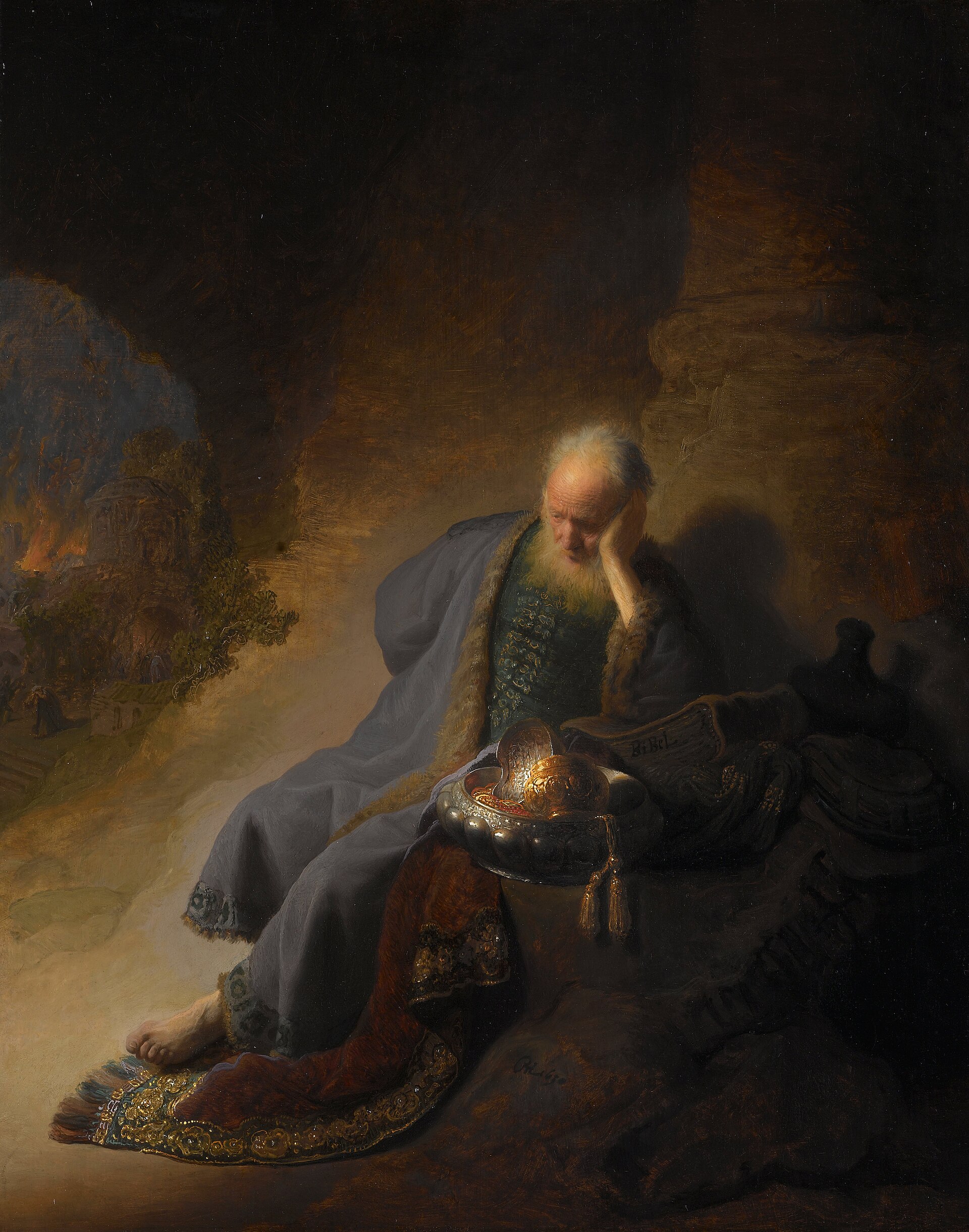
Who and where
1 name in this verse with a page on the site.
This page draws on Jamieson, Fausset & Brown, Commentary Critical and Explanatory on the Whole Bible; Jerome, Commentary on Jeremiah; John Calvin, Commentary on Jeremiah and Lamentations; John Gill, Exposition of the Old Testament (1748-1763) and Matthew Henry, Commentary on the Whole Bible.