
Genesis 4:6
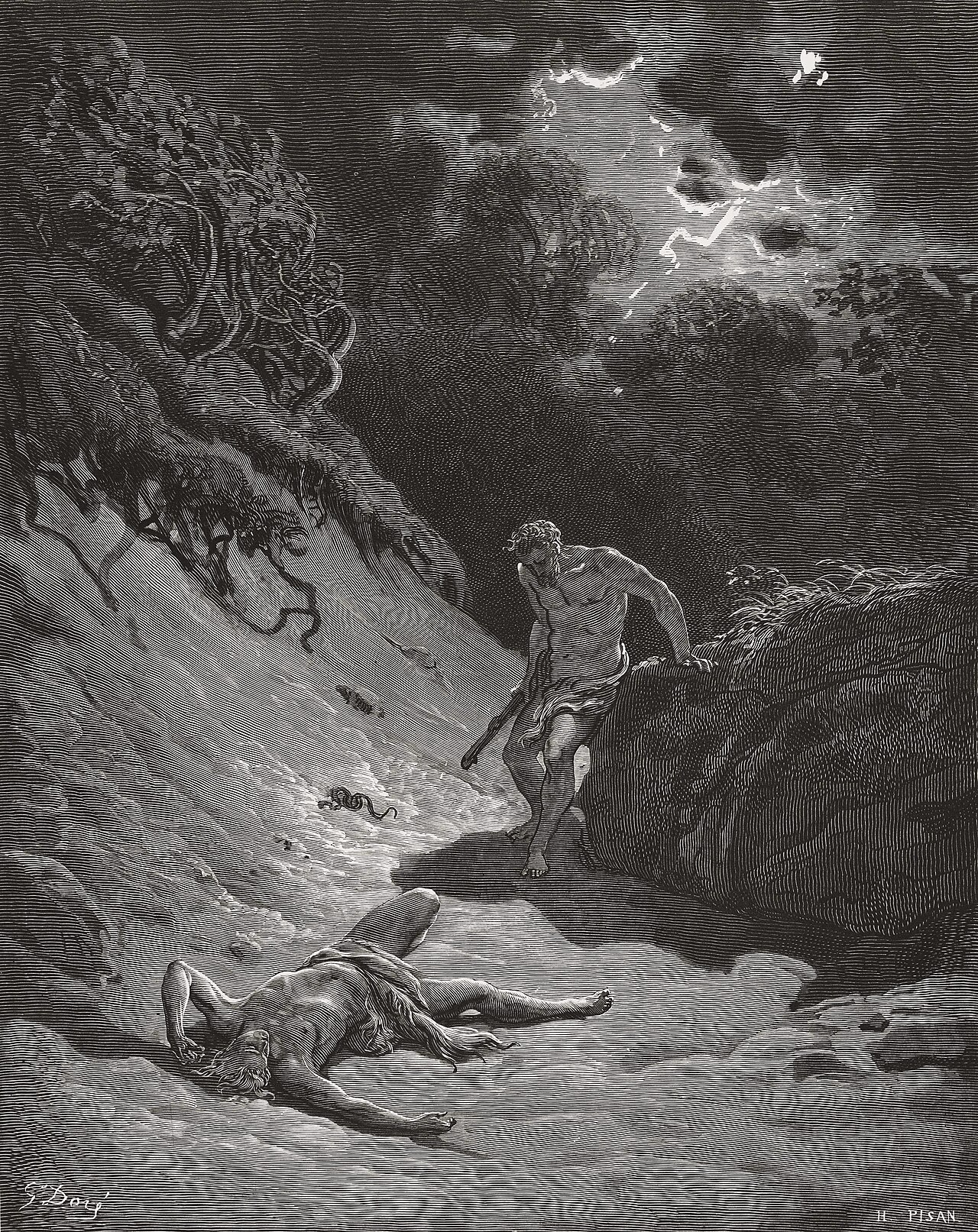
in Genesis 4“Why are you angry,” said the LORD to Cain, “and why has your countenance fallen?
BSB
The same verse in ASV and KJV ▾
ASV
And Jehovah said unto Cain, Why art thou wroth? and why is thy countenance fallen?
KJV
And the Lord said unto Cain, Why art thou wroth? and why is thy countenance fallen?
⋯
This verse in Genesis 4
Commentary
10 notes on this verseSINNERS are not all of the laughing sort—Cain's mind was angry and his heart was heavy. The short life of the vicious is not always a merry one. See, here you have a man who is utterly without God, but he is not without sorrow. His countenance has fallen, his looks are sullen—he is a miserable man. There are many ungodly people still in the world who are not happy in the condition in which they find themselves. The present does not content them and they have no future from which to borrow the light of hope.
This site's exposition
Why are you angry
on Genesis 4:6-7
God speaks to Cain before he kills. This is the first time the word sin appears in the Bible, and it appears as an animal crouching at a door and wanting him. Clarke reads the same Hebrew noun as a sin offering couching there, and Cain is told to master it.
The record, by era
The Church Fathers4 voices
God wishes to defuse the wild frenzy and remove the anger by means of his words. You see, he observed the stages of Cain's thinking and realized the savagery of his deadly intention; so he intends at this early stage to sedate his thinking and bring repose to his mind by placing his brother subject to him and not undermining his authority. But even despite such great concern and such potent remedies, Cain gained nothing from the experience. Such was the degree of difference in their attitudes and the excess of evil intent.
God said to Cain, "Why are you angry, and why is your face gloomy?" Instead of being filled with anger, you ought to be filled with distress. Instead of your face being gloomy, tears ought to be flowing from your eyes.
A commentator
John ChrysostomCommentary (church-history corpus) · Written in the 5th century.
proposed
Consider, I ask you, dearly beloved, the ineffable considerateness in his care when he saw Cain under assault, so to speak, from the passion of envy, see how out of fidelity to his own goodness he applied various remedies to him so that he might be quickly plucked from the water and not be drowned. "'For what reason are you annoyed? For what reason has your face fallen?"' Why on earth, he is saying, are you overcome with such resentment as to show the extent of your displeasure on your face? "'For what reason has your face fallen?'" Why has this event so affected you? Why have you not considered what your obligation was? You weren't making your offering to a human being, capable of being deceived, were you. Did you not realize that I wasn't looking for some offering or other of yours, but for the pure intention of the offerer? "'For what reason are you annoyed? For what reason has your face fallen? Is it not true that, even if you make your offering correctly but fail to choose the offering correctly, you commit sin?" That is to say, while your having the idea of making an offering was commendable, still your not choosing the offering correctly led to the rejection of the offering. I he one who makes an offering to God, you know, must show great care in the choice, and the greater the difference between the recipient and the offerer, the greater the distinction you should lend to your choice. You, however, gave no thought to these matters but simply offered whatever came to hand; hence they in turn could not be judged acceptable. You see, just as your intention in making the offering did not make allowance for the difference in status, and so caused the offering presented by you to be rejected; in like manner, your brother's intention, which happened to be correct and revealed great care in the choice, caused his gifts to be acceptable.
(Verse 6.) And the Lord said to Cain: Why is your face downcast? If you do what is right, will you not be accepted? But if you do not do what is right, sin is crouching at your door; it desires to have you, but you must master it. We are compelled to linger longer on each individual. For even now the meaning is very different in the Hebrew than in the translators of the Septuagint. For the Lord said to Cain: Why are you angry? Why is your face downcast?
The Medieval Church1 voice
And the Lord said to him: Why are you angry, and why has your countenance fallen? If you do well, will you not be accepted? But if you do not do well, sin lies at the door?
3 more voices on this verse
The Puritans and the Awakening1 voice
And the Lord said unto Cain, why art thou wroth? and why is thy countenance fallen?....
The Nineteenth Century2 voices
SINNERS are not all of the laughing sort—Cain's mind was angry and his heart was heavy. The short life of the vicious is not always a merry one. See, here you have a man who is utterly without God, but he is not without sorrow. His countenance has fallen, his looks are sullen—he is a miserable man. There are many ungodly people still in the world who are not happy in the condition in which they find themselves. The present does not content them and they have no future from which to borrow the light of hope. The service of sin is hard to them and yet they do not quit it for the service of the Lord. They are in danger of having two Hells—one in this life and another in the world to come! They have a religion of their own, even as Cain brought an offering of the fruit of the ground, but it yields them no comfort, for God has no respect to their offering and, therefore, they are displeased about it. The things of God bring an increase to their inward wretchedness—it was after a sacrifice that Cain's countenance fell. Many unrenewed hearts quarrel with God at His own altar—quarrel by presenting what He never commanded and then by growing angry because He rejects their will-worship! They attend the means of Grace, but they are not saved nor comforted, and they do not like it. They pray, after a fashion, but they are not heard—and they feel indignant at the slight. They read the Scriptures, but no cheering promise is ever applied to their hearts—and they grow fierce at their failure. They see another accepted, as Abel was, and this excites their jealousy and envy gnaws at their heart. They are angry with God, with their fellow man and with everything about them! Their countenance falls and they are in a morose mood which fits them for any cruel word or deed. Can you not see their sullen looks? They would very much like to have the enjoyments of religion.
Why art thou wroth? - This was designed as a gracious warning, and a preventive of the meditated crime.
The words behind it
10 Hebrew wordsEvery Hebrew word of this verse in the order it stands, with what it means and the door to its own study. The last column counts the times a word stands in the whole Bible: the rarer the word, the more the places it appears belong together.
| Hebrew | Sound | Meaning | Word study | In the Bible |
|---|---|---|---|---|
| וַיֹּ֥אמֶר | vaiyomer | and he said | H559 → | 5305 times |
| יְהוָ֖ה | yahweh | Yahweh | H3068 → | 6520 times |
| אֶל־ | ʾel- | to | H413 → | 5510 times |
| קָ֑יִן | kayin | Cain | H7014 → | 19 times |
| לָ֚מָּה | lamah | <to> why? | H4100 → | 752 times |
| חָ֣רָה | charah | does it burn | H2734 → | 91 times |
| לָ֔ךְ | lakh | to <the> you | ||
| וְלָ֖מָּה | velamah | and <to> why? | H4100 → | 752 times |
| נָפְל֥וּ | nafelu | have they fallen | H5307 → | 435 times |
| פָנֶֽיךָ׃ | faneikha | face your | H6440 → | 2123 times |
וַיֹּ֥אמֶרand he said
vaiyomerH559 →5305 times
יְהוָ֖הYahweh
yahwehH3068 →6520 times
אֶל־to
ʾel-H413 →5510 times
קָ֑יִןCain
kayinH7014 →19 times
לָ֚מָּה<to> why?
lamahH4100 →752 times
חָ֣רָהdoes it burn
charahH2734 →91 times
לָ֔ךְto <the> you
lakh
וְלָ֖מָּהand <to> why?
velamahH4100 →752 times
נָפְל֥וּhave they fallen
nafeluH5307 →435 times
פָנֶֽיךָ׃face your
faneikhaH6440 →2123 times
A shaded row is a word that stands 400 times or fewer in the Bible.
The walk
8 stopsEach card is a verse this one points to, and under it the verses that one points to in turn. Where several paths arrive at the same place, that place is listed first: the text keeps returning to it.
Through
Isaiah 1:18“Come now, let us reason together,” says the LORD. “Though your sins are like scarlet, they will be as white as snow; though they are as red as crimson, they will become like wool.
it leads to
- Isaiah 44:22
I have blotted out your transgressions like a cloud, and your sins like a mist. Return to Me, for I have redeemed you.
- Revelation 7:14
“Sir,” I answered, “you know.” So he replied, “These are the ones who have come out of the great tribulation; they have washed their robes and made them white in the blood of the…
- Psalms 51:7
Purify me with hyssop, and I will be clean; wash me, and I will be whiter than snow.
- Micah 7:18–19
Who is a God like You, who pardons iniquity and passes over the transgression of the remnant of His inheritance—who does not retain His anger forever, because He delights in loving devotion?
- Isaiah 43:24–26
You have not bought Me sweet cane with your silver, nor satisfied Me with the fat of your sacrifices. But you have burdened Me with your sins; you have wearied Me with your iniquities.
- Isaiah 44:22
Through
Matthew 20:15Do I not have the right to do as I please with what is mine? Or are you envious because I am generous?’
it leads to
- Romans 9:15–24
For He says to Moses: “I will have mercy on whom I have mercy, and I will have compassion on whom I have compassion.”
- Deuteronomy 15:9
Be careful not to harbor this wicked thought in your heart: “The seventh year, the year of release, is near,” so that you look upon your poor brother begrudgingly and give him nothing. He…
- Matthew 6:23
But if your eyes are bad, your whole body will be full of darkness. If then the light within you is darkness, how great is that darkness!
- Romans 9:15–24
Where this verse is studied
About Genesis
Who and where
1 name in this verse with a page on the site.
This page draws on 9 works. Open the list of works
This page draws on Adam Clarke, Commentary on the Bible; Bede, Commentary on Genesis (Hexaemeron); Charles Spurgeon, The Metropolitan Tabernacle Pulpit, Sermon No. 1929: “To Those Who Are Angry With Their Godly Friends” (lightly modernized text, CCEL edition); Ephrem the Syrian, COMMENTARY ON GENESIS 3.4.1-3; Jamieson, Fausset & Brown, Commentary Critical and Explanatory on the Whole Bible; Jerome, Hebrew Questions on Genesis; John Chrysostom, HOMILIES ON GENESIS 18.24; John Chrysostom, Commentary (church-history corpus) and John Gill, Exposition of the Old Testament (1748-1763).