
Genesis 4:10
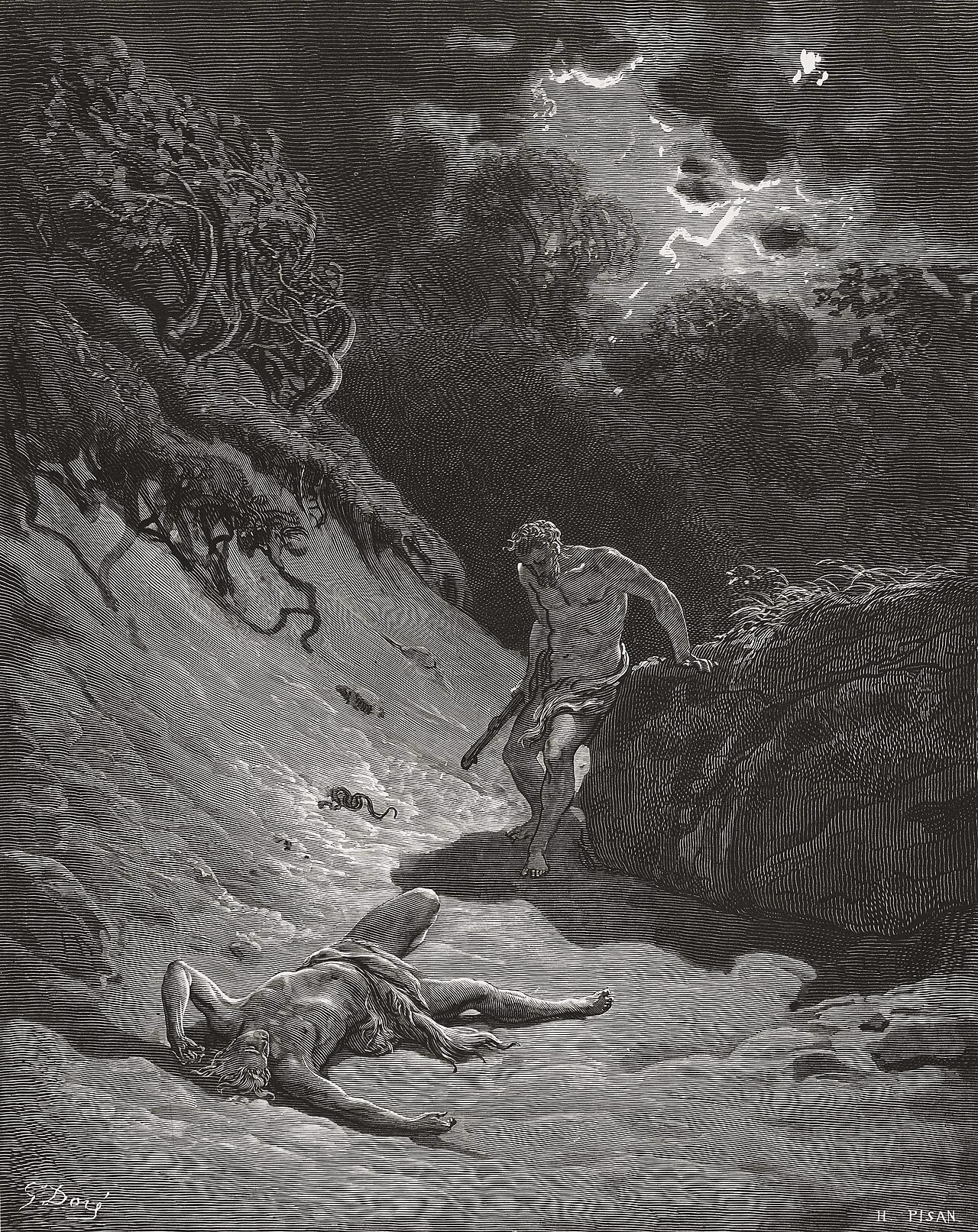
in Genesis 4“What have you done?” replied the LORD. “The voice of your brother’s blood cries out to Me from the ground.
BSB
The same verse in ASV and KJV ▾
ASV
And he said, What hast thou done? the voice of thy brother’s blood crieth unto me from the ground.
KJV
And he said, What hast thou done? the voice of thy brother’s blood crieth unto me from the ground.
⋯
This verse in Genesis 4
Commentary
18 notes on this verseWe also know that what was said of Abel, when he was slain by the wicked murderer Cain, is suitable for all whose blood has been shed wickedly. Let us suppose that the verse "The voice of your brother's blood is crying to me from the ground" is said as well for each of the martyrs, the voice of whose blood cries to God from the ground.
This site's exposition
Where is your brother Abel
on Genesis 4:9-10
God asks Cain where his brother Abel is, as He asked Adam where he was one chapter earlier. Henry notes that the Hebrew reads bloods, in the plural. The voice of Abel's blood cries from the ground, and Hebrews 12:24 says the blood of Jesus speaks a better word.
This site's exposition
cries out to Me
Origen of Alexandria applied this cry to every martyr whose blood is shed wickedly. Revelation 6:9 and 10 has the souls of the slain calling out to God for justice. Adam Clarke thought Cain had buried the body.
The record, by era
The Church Fathers4 voices
God appeared to Cain with kindness, so that if he repented, the sin of murder that his fingers had committed might be effaced by the compunction on his lips.
But Cain was filled with wrath instead of compunction. To him who knows all, who asked him about his brother in order to win him back, Cain retorted angrily and said, "I do not know, am I my brother's keeper?"
Cain was at once the most wicked and foolish of men in believing that for committing the greatest of crimes it would be sufficient if he avoided other human witnesses. In fact God was the primary witness to his fratricide.
The divine Scripture always cries out and speaks; hence God also says to Cain, "The voice of your brother's blood cries out to me."
The Medieval Church1 voice
And He said to him: What have you done? The voice of your brother's blood cries out to me from the ground. The blood has a great voice, not only of Abel, but of all those slain for the Lord: for the voice of their …
10 more voices on this verse
The Medieval Church1 voice
God said to Cain: What have you done? The voice of your brother's blood cries to me from the ground. In the same way, the divine voice in the holy Scriptures reproaches the Jews.
The Puritans and the Awakening4 voices
The patient sufferers cried for pardon ( Father, forgive them ), but their blood cries for vengeance. Though they hold their peace, their blood has a loud and constant cry, to which the ear of the righteous God is always open.
And he said,.... Not Cain, the last speaker, but the Lord God: what hast thou done? what an heinous crime hast thou committed! how aggravated is it!
And he said,.... Not Cain, the last speaker, but the Lord God: what hast thou done? what an heinous crime hast thou committed! how aggravated is it!
The patient sufferers cried for pardon ( Father, forgive them ), but their blood cries for vengeance. Though they hold their peace, their blood has a loud and constant cry, to which the ear of the righteous God is always open.
The Nineteenth Century5 voices
The voice of thy brother’s blood - It is probable that Cain, having killed his brother, dug a hole and buried him in the earth, hoping thereby to prevent the murder from being known; and that this is what is designed in the words, Thy brother’s blood crieth unto me From The Ground - which hath opened her mouth to receive it from thy hand.
The first shedding of human blood was a very terrible experiment. Whether Cain's murderous blow was premeditated or not, the sight of a bleeding human corpse must have been a terrible novelty to him. He had not been hardened by reading details of warfare, or listening to tales of murder. Killing and slaying were new terrors to mankind, and he who was the ringleader in such violence must have been filled with mingled astonishment at the result of his blow, and apprehension as to its consequences.
A commentator
Jamieson, Fausset & Brown1802–1910
Commentary Critical and Explanatory on the Whole Bible (1871)
proposed
the voice of thy brother's blood crieth unto me--Cain, to lull suspicion, had probably been engaging in the solemnities of religion when he was challenged directly from the Shekinah itself. 11, 12. now art thou cursed from the earth--a curse superadded to the general one denounced on the ground for Adam's sin.
quarantine:debris (2026-07-29) — starts-lowercase
CAIN was of the Wicked One and slew his brother. "The way of Cain" is not hard to describe. He is too proud to offer atonement for his sin. He prefers his own way of sacrifice. He presents a bloodless oblation. He hates the obedience of faith. He smites the faithful Abel. Beware of the way of Cain, O proud self-righteous ones, lest you run therein, for the steps are few from self-righteous pride to hatred of true Believers and murder is not far thereafter. There is the seed of every infamy in the proud spirit of self-justification, and it is a great mercy that it does not more often show itself in all its terrific ripeness. Look, bold boasters of your own merits, at the mangled body of the first martyr, for this is the full-blown development of your rebellious self-conceit. From all pride and vainglory, from all self-righteousness and hatred of the Cross of Christ, good Lord deliver us. This is not, however, the drift of my discourse this morning. I have rather to indicate the method in which we also may be guilty of this sin of blood-guiltiness concerning our brother. Dear Friends, I feel assured that the text of this morning, terrible as it must have been in the ears of Cain, ought to ring in your ears, and mine. And it may be that while that cry is heard again, though at the distance of many thousand years, it may awaken some here present to a sense of guilt, and to a desire for amendment. And thus the blood of Abel may speak good, though terrible things to them, and prepare their ears to listen to the voice of that other blood, "which speaks better things than that of Abel." First, we shall this morning enquire for the criminals whose brother's blood cries from the ground. Next, we will endeavor to show the hateful character of the crime. Then, thirdly, we will select the judgment.
The first shedding of human blood was a very terrible experiment. Whether Cain's murderous blow was premeditated or not, the sight of a bleeding human corpse must have been a terrible novelty to him. He had not been hardened by reading details of warfare, or listening to tales of murder. Killing and slaying were new terrors to mankind, and he who was the ringleader in such violence must have been filled with mingled astonishment at the result of his blow, and apprehension as to its consequences. I think I see him standing there by the corpse, for a moment stiff with fear, awe-struck at the sight of blood. Will the skies dart malignant fires upon him? Will the earth produce speedy avengers from her astonished soil? What questions must have flashed through the murderer's mind! And lo, the warm lifeblood flows in a crimson stream upon the earth, and some ghastly comfort arises to the mind of the guilty wretch as he observes the earth soak in the blood. It stands not in a pool, but the earth opens her mouth to receive and to conceal his brother's blood. Sad memorials bespatter the herbage and crimson the soil, but still the dreadful flood is drying up, and the murderer feels a momentary joy. Perhaps Cain went his way dreaming that the terrible matter was all over. He had done the deed and it could not be undone. He had struck the blow, rid himself of the presence of one who was obnoxious to him. But the blood had been swallowed up by the earth and that was the end to the business which need cause no further thought. There was no machinery in those days of police, and law, and judges, and gallows—and therefore Cain had little or nothing to fear.
How the passage was read
What the Jewish commentators add
Crieth unto Me is not connected to voice of ( kol ). 19 It is connected to thy brother’s blood.
1 more on this passage, in their own words ▾
CURSED ART THOU FROM THE GROUND — more than it has already been cursed on account of its sin. In this, too, it has further sinned in that it hath opened its mouth to take thy brother’s blood.
This section is reception history: how the passage was read and kept in the Jewish tradition. Where a reading parts from an essential of the Christian faith, the section says so at that point.
Texts and citation data: Sefaria; each excerpt follows its version’s licence. 3 further sources are cited on this chapter that carry no English text this site may quote or only restate the verse.
The words behind it
10 Hebrew wordsEvery Hebrew word of this verse in the order it stands, with what it means and the door to its own study. The last column counts the times a word stands in the whole Bible: the rarer the word, the more the places it appears belong together.
| Hebrew | Sound | Meaning | Word study | In the Bible |
|---|---|---|---|---|
| וַיֹּ֖אמֶר | vaiyomer | and he said | H559 → | 5305 times |
| מֶ֣ה | meh | what? | H4100 → | 752 times |
| עָשִׂ֑יתָ | ʾasita | have you done | H6213 → | 2628 times |
| ק֚וֹל | kol | [the] voice of | H6963 → | 506 times |
| דְּמֵ֣י | demei | [the] blood<s> of | H1818 → | 360 times |
| אָחִ֔יךָ | ʾachikha | brother your | H251 → | 630 times |
| צֹעֲקִ֥ים | tzoakim | [are] crying out | H6817 → | 55 times |
| אֵלַ֖י | ʾelai | to me | H413 → | 5510 times |
| מִן־ | min- | from | H4480 → | 1188 times |
| הָֽאֲדָמָֽה׃ | haadamah | the ground | H127 → | 225 times |
וַיֹּ֖אמֶרand he said
vaiyomerH559 →5305 times
מֶ֣הwhat?
mehH4100 →752 times
עָשִׂ֑יתָhave you done
ʾasitaH6213 →2628 times
ק֚וֹל[the] voice of
kolH6963 →506 times
דְּמֵ֣י[the] blood<s> of
demeiH1818 →360 times
אָחִ֔יךָbrother your
ʾachikhaH251 →630 times
צֹעֲקִ֥ים[are] crying out
tzoakimH6817 →55 times
אֵלַ֖יto me
ʾelaiH413 →5510 times
מִן־from
min-H4480 →1188 times
הָֽאֲדָמָֽה׃the ground
haadamahH127 →225 times
A shaded row is a word that stands 400 times or fewer in the Bible.
The walk
8 stopsEach card is a verse this one points to, and under it the verses that one points to in turn. Where several paths arrive at the same place, that place is listed first: the text keeps returning to it.
Through
Hebrews 12:24to Jesus the mediator of a new covenant, and to the sprinkled blood that speaks a better word than the blood of Abel.
it leads to
- Hebrews 9:15
Therefore Christ is the mediator of a new covenant, so that those who are called may receive the promised eternal inheritance, now that He has died to redeem them from the transgressions committed under…
- Hebrews 11:28
By faith he kept the Passover and the sprinkling of blood, so that the destroyer of the firstborn would not touch Israel’s own firstborn.
- Hebrews 8:6
Now, however, Jesus has received a much more excellent ministry, just as the covenant He mediates is better and is founded on better promises.
- Hebrews 11:4
By faith Abel offered God a better sacrifice than Cain did. By faith he was commended as righteous when God gave approval to his gifts. And by faith he still speaks, even though he…
- Matthew 26:28
This is My blood of the covenant, which is poured out for many for the forgiveness of sins.
- Hebrews 9:15
Through
James 5:4Look, the wages you withheld from the workmen who mowed your fields are crying out against you. The cries of the harvesters have reached the ears of the Lord of Hosts.
it leads to
- Leviticus 19:13
You must not defraud your neighbor or rob him. You must not withhold until morning the wages due a hired hand.
- Jeremiah 22:13
“Woe to him who builds his palace by unrighteousness, and his upper rooms without justice, who makes his countrymen serve without pay, and fails to pay their wages,
- Deuteronomy 24:14–15
Do not oppress a hired hand who is poor and needy, whether he is a brother or a foreigner residing in one of your towns.
- Leviticus 19:13
Where this verse is studied
On this page
Studies21
On this verse
On this chapter
- Adam to Noah
- The Designer's Fingerprint
- Cain and Abel
- Eve: The Mother of All Living
- The Hall of Faith
- Hebel: the word the Berean text renders futility
Show the next 6 titles
About Genesis
This page draws on 13 works. Open the list of works
This page draws on Adam Clarke, Commentary on the Bible; Bede, Commentary on Genesis (Hexaemeron); Charles Spurgeon, The Metropolitan Tabernacle Pulpit, Sermon No. 708: “The Blood Of Abel And The Blood Of Jesus” (lightly modernized text, CCEL edition); Charles Spurgeon, The Metropolitan Tabernacle Pulpit, Sermon No. 461: “Am I Clear Of His Blood?” (lightly modernized text, CCEL edition); Ephrem the Syrian, COMMENTARY ON GENESIS 3.6.1; Ephrem the Syrian, COMMENTARY ON GENESIS 3.6.1; 3.7.1; Jamieson, Fausset & Brown, Commentary Critical and Explanatory on the Whole Bible; John Calvin, Commentary on Genesis; John Gill, Exposition of the Old Testament (1748-1763); Matthew Henry, Commentary on the Whole Bible; Maximus of Turin, SERMONS 88.1; Origen of Alexandria, EXHORTATION TO MARTYRDOM 50 and Salvian the Presbyter, GOVERNANCE OF GOD 1.6.