
Genesis 27:42
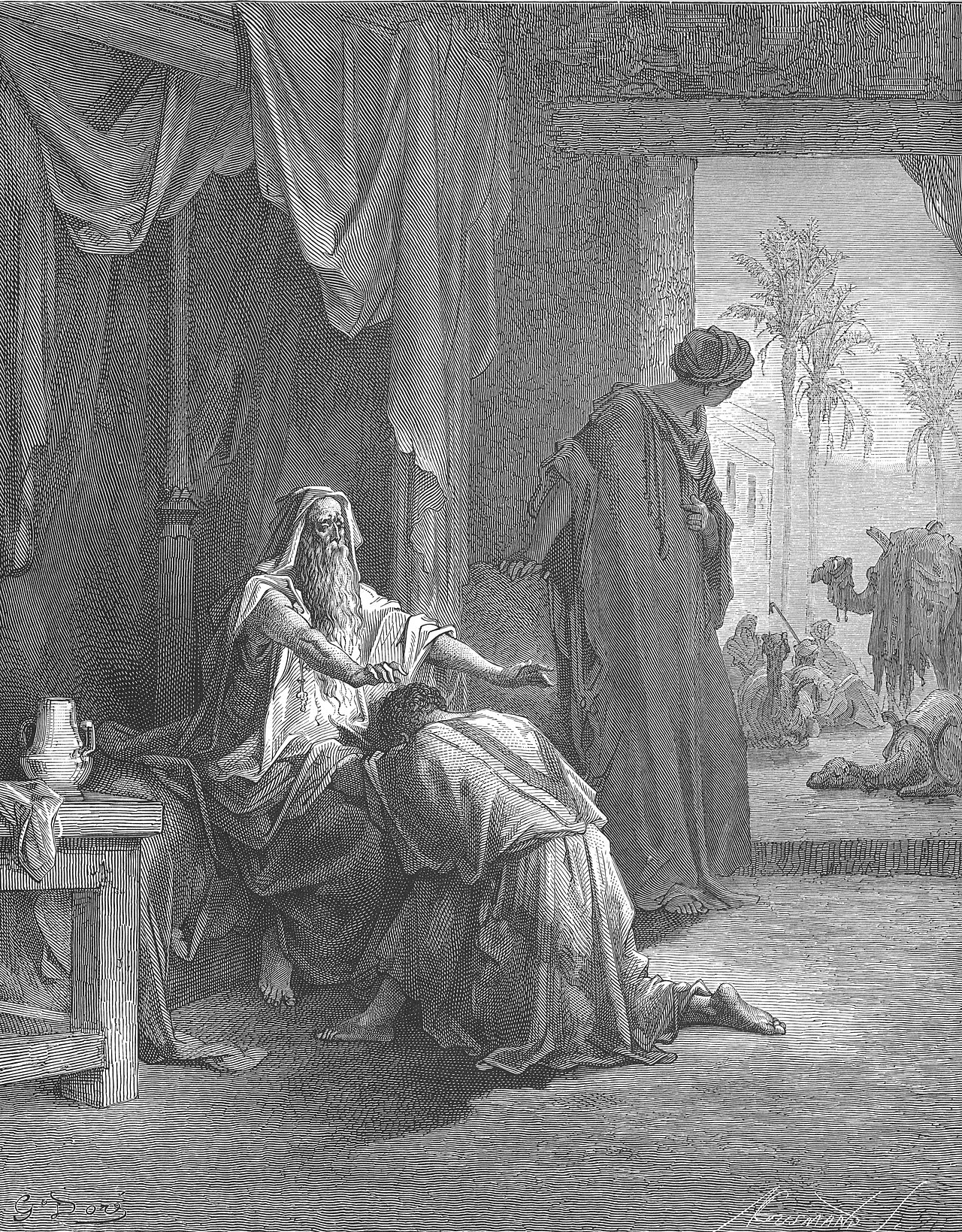
in Genesis 27When the words of her older son Esau were relayed to Rebekah, she sent for her younger son Jacob and told him, “Look, your brother Esau is consoling himself by plotting to kill you.
BSB
The same verse in ASV and KJV ▾
ASV
And the words of Esau her elder son were told to Rebekah; and she sent and called Jacob her younger son, and said unto him, Behold, thy brother Esau, as touching thee, doth comfort himself, purposing to kill thee.
KJV
And these words of Esau her elder son were told to Rebekah: and she sent and called Jacob her younger son, and said unto him, Behold, thy brother Esau, as touching thee, doth comfort himself, purposing to kill thee.
⋯
This verse in Genesis 27
Commentary
5 notes on this verseDoth comfort himself, purposing to kill thee - מתנחם לך mithnachem lecha, which Houbigant renders cogitat super te, he thinks or meditates to kill thee. This sense is natural enough here, but it does not appear to be the meaning of the original; nor does Houbigant himself give it this sense, in his Racines Hebraiques. There is no doubt that Esau, in his hatred to his brother, felt himself pleased with the thought that he should soon have the opportunity of avenging his wrongs.
The record, by era
The Church Fathers1 voice
A commentator
Clement of RomeClement's First Letter to the Corinthians, Chapters 3-4 · Written before 99.
proposed
Every kind of honour and happiness was bestowed upon you, and then was fulfilled that which is written, "My beloved ate and drank, and was enlarged and became fat, and kicked." [Deuteronomy 32:15] Hence flowed emulation and envy, strife and sedition, persecution and disorder, war and captivity. So the worthless rose up against the honoured, those of no reputation against such as were renowned, the foolish against the wise, the young against those advanced in years. For this reason righteousness and peace are now far departed from you, inasmuch as every one abandons the fear of God, and has become blind in His faith, neither walks in the ordinances of His appointment, nor acts a part becoming a Christian, but walks after his own wicked lusts, resuming the practice of an unrighteous and ungodly envy, by which death itself entered into the world. [Wisdom 2:24] For thus it is written: "And it came to pass after certain days, that Cain brought of the fruits of the earth a sacrifice unto God; and Abel also brought of the firstlings of his sheep, and of the fat thereof. And God had respect to Abel and to his offerings, but Cain and his sacrifices He did not regard. And Cain was deeply grieved, and his countenance fell. And God said to Cain, Why are you grieved, and why is your countenance fallen? If you offer rightly, but do not divide rightly, have you not sinned? Be at peace: your offering returns to yourself, and you shall again possess it. And Cain said to Abel his brother, Let us go into the field. And it came to pass, while they were in the field, that Cain rose up against Abel his brother, and slew him." [Genesis 4:3-8] You see, brethren, how envy and jealousy led to the murder of a brother. Through envy, also, our father Jacob fled from the face of Esau his brother [Genesis 27:41-45]. Envy made Joseph be persecuted unto death, and to come into bondage.
The Puritans and the Awakening2 voices
And these words of Esau her eldest son were told to Rebekah,....
Would one think that such a bloody barbarous thought as this could be a comfort to a man? If Esau could have kept his design to himself his mother would not have suspected it; but men's impudence in sin is often their infatuation; and they cannot accomplish their wickedness because their rage is too violent to be concealed, and a bird of the air carries the voice.
The Nineteenth Century1 voice
A commentator
Jamieson, Fausset & Brown1802–1910
Commentary Critical and Explanatory on the Whole Bible (1871)
proposed
these words of Esau were told Rebekah--Poor woman! she now early begins to reap the bitter fruits of her fraudulent device; she is obliged to part with her son, for whom she planned it, never, probably, seeing him again; and he felt the retributive justice of heaven fall upon him heavily in his own future family.
quarantine:debris (2026-07-29) — starts-lowercase
The words behind it
20 Hebrew wordsEvery Hebrew word of this verse in the order it stands, with what it means and the door to its own study. The last column counts the times a word stands in the whole Bible: the rarer the word, the more the places it appears belong together.
| Hebrew | Sound | Meaning | Word study | In the Bible |
|---|---|---|---|---|
| וַיֻּגַּ֣ד | vaiyugad | and it was told | H5046 → | 370 times |
| לְרִבְקָ֔ה | lerivkah | to Rebekah | H7259 → | 30 times |
| אֶת־ | ʾet- | <obj.> | H853 → | 10935 times |
| דִּבְרֵ֥י | divrei | [the] words of | H1697 → | 1440 times |
| עֵשָׂ֖ו | ʾesav | Esau | H6215 → | 97 times |
| בְּנָ֣הּ | benah | son her | H1121 → | 4930 times |
| הַגָּדֹ֑ל | hagadol | <the> old | H1419 → | 526 times |
| וַתִּשְׁלַ֞ח | vatishlach | and she sent | H7971 → | 845 times |
| וַתִּקְרָ֤א | vatikra' | and she summoned | H7121 → | 733 times |
| לְיַעֲקֹב֙ | leyaako | <to> Jacob | H3290 → | 350 times |
| בְּנָ֣הּ | benah | son her | H1121 → | 4930 times |
| הַקָּטָ֔ן | hakatan | <the> young | H6996 → | 101 times |
| וַתֹּ֣אמֶר | vatomer | and she said | H559 → | 5305 times |
| אֵלָ֔יו | ʾelav | to him | H413 → | 5510 times |
| הִנֵּה֙ | hineh | here! | H2009 → | 843 times |
| עֵשָׂ֣ו | ʾesav | Esau | H6215 → | 97 times |
| אָחִ֔יךָ | ʾachikha | brother your | H251 → | 630 times |
| מִתְנַחֵ֥ם | mitnachem | [is] comforting himself | H5162 → | 108 times |
| לְךָ֖ | lekha | to <the> you | ||
| לְהָרְגֶֽךָ׃ | leharegekha | by killing you | H2026 → | 167 times |
וַיֻּגַּ֣דand it was told
vaiyugadH5046 →370 times
לְרִבְקָ֔הto Rebekah
lerivkahH7259 →30 times
אֶת־<obj.>
ʾet-H853 →10935 times
דִּבְרֵ֥י[the] words of
divreiH1697 →1440 times
עֵשָׂ֖וEsau
ʾesavH6215 →97 times
בְּנָ֣הּson her
benahH1121 →4930 times
הַגָּדֹ֑ל<the> old
hagadolH1419 →526 times
וַתִּשְׁלַ֞חand she sent
vatishlachH7971 →845 times
וַתִּקְרָ֤אand she summoned
vatikra'H7121 →733 times
לְיַעֲקֹב֙<to> Jacob
leyaakoH3290 →350 times
בְּנָ֣הּson her
benahH1121 →4930 times
הַקָּטָ֔ן<the> young
hakatanH6996 →101 times
וַתֹּ֣אמֶרand she said
vatomerH559 →5305 times
אֵלָ֔יוto him
ʾelavH413 →5510 times
הִנֵּה֙here!
hinehH2009 →843 times
עֵשָׂ֣וEsau
ʾesavH6215 →97 times
אָחִ֔יךָbrother your
ʾachikhaH251 →630 times
מִתְנַחֵ֥ם[is] comforting himself
mitnachemH5162 →108 times
לְךָ֖to <the> you
lekha
לְהָרְגֶֽךָ׃by killing you
leharegekhaH2026 →167 times
A shaded row is a word that stands 400 times or fewer in the Bible.
The walk
8 stopsEach card is a verse this one points to, and under it the verses that one points to in turn. Where several paths arrive at the same place, that place is listed first: the text keeps returning to it.
Through
Proverbs 2:14from those who enjoy doing evil and rejoice in the twistedness of evil,
it leads to
- Romans 1:32
Although they know God’s righteous decree that those who do such things are worthy of death, they not only continue to do these things, but also approve of those who practice them.
- Proverbs 10:23
The fool delights in shameful conduct, but a man of understanding has wisdom.
- Jeremiah 11:15
What right has My beloved in My house, having carried out so many evil schemes? Can consecrated meat avert your doom, so that you can rejoice?
- Romans 1:32
Through
Psalms 64:5They hold fast to their evil purpose; they speak of hiding their snares. “Who will see them?” they say.
it leads to
- Psalms 140:5
The proud hide a snare for me; the cords of their net are spread along the path, and lures are set out for me. Selah
- Psalms 10:11
He says to himself, “God has forgotten; He hides His face and never sees.”
- Ezekiel 8:12
“Son of man,” He said to me, “do you see what the elders of the house of Israel are doing in the darkness, each at the shrine of his own idol? For they are…
- Psalms 140:5
Through
1 Samuel 30:5David’s two wives, Ahinoam of Jezreel and Abigail the widow of Nabal of Carmel, had been taken captive.
it leads to
- 1 Samuel 25:42–43
So Abigail hurried and got on a donkey, and attended by five of her maidens, she followed David’s messengers and became his wife.
- 2 Samuel 2:2
So David went there with his two wives, Ahinoam of Jezreel and Abigail the widow of Nabal of Carmel.
- 1 Samuel 25:42–43
Where this verse is studied
About Genesis
Who and where
3 names in this verse with a page on the site.
- PersonPatriarchsRebekahIsaac's bride, drawn from Abraham's kindred by providence (ch. 24); mother of the twins, who receives the oracle “the elder shall…
- PersonPatriarchsEsauIsaac's elder son who despised his birthright (Heb 12:16); father of Edom, Israel's perennial neighbor and adversary.
- PersonPatriarchsJacobThe heel-grasping supplanter reshaped at Peniel into 'Israel, he who strives with God' — father of the twelve tribes.
This page draws on Adam Clarke, Commentary on the Bible; Clement of Rome, Clement's First Letter to the Corinthians, Chapters 3-4; Jamieson, Fausset & Brown, Commentary Critical and Explanatory on the Whole Bible; John Gill, Exposition of the Old Testament (1748-1763) and Matthew Henry, Commentary on the Whole Bible.