
Genesis 27:36
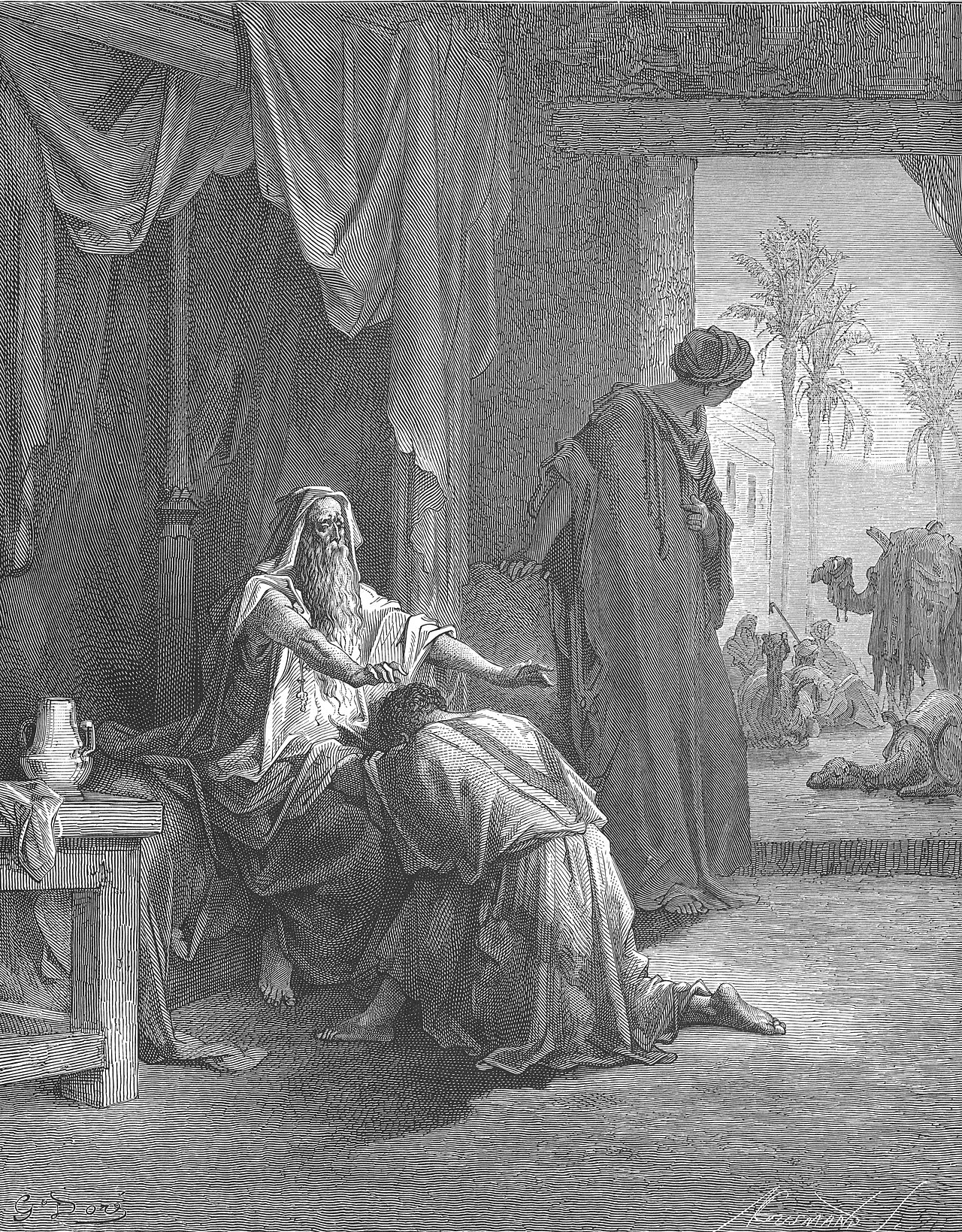
in Genesis 27So Esau declared, “Is he not rightly named Jacob? For he has cheated me twice. He took my birthright, and now he has taken my blessing.” Then he asked, “Haven’t you saved a blessing for me?”
BSB
The same verse in ASV and KJV ▾
ASV
And he said, Is not he rightly named Jacob? for he hath supplanted me these two times: he took away my birthright; and, behold, now he hath taken away my blessing. And he said, Hast thou not reserved a blessing for me?
KJV
And he said, Is not he rightly named Jacob? for he hath supplanted me these two times: he took away my birthright; and, behold, now he hath taken away my blessing. And he said, Hast thou not reserved a blessing for me?
⋯
This verse in Genesis 27
Commentary
7 notes on this verse(Verse 36.) And Esau said, rightly is his name called Jacob: for he hath supplanted me these two times. Jacob is interpreted supplanter. And therefore, because he had deceived his brother by art, he alluded to the name. Therefore, he was called Jacob before, because he had taken hold of his brother's heel in his birth.
This site's exposition
Is he not rightly named Jacob
on Genesis 27:36-37
Esau turns the name into the charge, and Jerome ties Jacob back to the hand on the heel at 25:26. He counts two thefts, the birthright and the blessing, though he sold the birthright himself at 25:33. The name he throws at his brother is taken away at 32:28. There Jacob is called Israel.
The record, by era
The Church Fathers2 voices
"And Esau said, 'Rightly is his name called Jacob.' " Tripping up is what Jacob means. And not even tripping up is empty of meaning, because it is to be taken figuratively, like guile. Jacob, you see, was not yet so malicious as to plan to trip his brother up, when he was given his name. He was called a tripper-up when as his brother was being born he held his foot with his own hand. That is when he was called "Tripper-up." Now tripping up the materialistically minded is the very life of the spiritually minded. All the materialists are tripped up when they envy the spiritual people in the church, and they thereby become worse. Listen to the apostle saying this very thing, especially because he there mentions the smell that Isaac talked about here, saying, "Behold, the smell of my son is as the smell of an abundant field, which the Lord has blessed." So the apostle says, "We are the sweet smell of Christ in every place," and he says, "For some indeed the smell of life, for life; for the others the smell of death, for death. And for this who is sufficient?" Sufficient, that is, to understand how we can be the smell of death for the death of other people, without any fault of ours. Spiritual people walk their ways, knowing nothing except how to live a good life. And those who are spiteful about their innocent lives commit grave sins, which is why God will punish them. And thus a person who is a sweet smell for life to others becomes to them a smell for death. For the Lord himself was the first to become a sweet smell for life to believers and a bad smell for death to persecutors. Because so many people had believed him, the Jews were full of spite and committed that enormous crime of killing the innocent one, the saint of saints. If they had not done this, the sweet smell of Christ would not have meant death for them. So Esau was tripped up in his father's blessing.
A commentator
Philoxenus of Mabbug13 Ascetic Discourses, Discourse 11 -- On Abstinence · Written before 523.
proposed
Now this is the first lust which conquered the world, and because of it the first transgression of the law took place. It dismissed from Esau his birthright and his blessings.
The Puritans and the Awakening2 voices
The desire of the slothful and unbelieving kills them. Many will seek to enter in, as Esau, who shall not be able, because they do not strive, Luke xiii. (2.) It is the folly of most men that they are willing to take up with any good ( Ps. iv.
quarantine:debris (2026-07-29) — unbalanced-parens
And he said, is not he rightly named Jacob?....
The Nineteenth Century1 voice
Is not he rightly named Jacob? - See note on Gen 25:26. He took away my birthright - So he might say with considerable propriety; for though he sold it to Jacob, yet as Jacob had taken advantage of his perishing situation, he considered the act as a species of robbery.
The words behind it
20 Hebrew wordsEvery Hebrew word of this verse in the order it stands, with what it means and the door to its own study. The last column counts the times a word stands in the whole Bible: the rarer the word, the more the places it appears belong together.
| Hebrew | Sound | Meaning | Word study | In the Bible |
|---|---|---|---|---|
| וַיֹּ֡אמֶר | vaiyomer | and he said | H559 → | 5305 times |
| הֲכִי֩ | hakhi | ¿ for | H3588 → | 4482 times |
| קָרָ֨א | kara' | did someone call | H7121 → | 733 times |
| שְׁמ֜וֹ | shemo | name his | H8034 → | 864 times |
| יַעֲקֹ֗ב | yaako | Jacob | H3290 → | 350 times |
| וַֽיַּעְקְבֵ֙נִי֙ | vaiya'keveni | and he has supplanted me | H6117 → | |
| זֶ֣ה | zeh | this | H2088 → | 1180 times |
| פַעֲמַ֔יִם | faamayim | two times | H6471 → | 118 times |
| אֶת־ | ʾet- | <obj.> | H853 → | 10935 times |
| בְּכֹרָתִ֣י | bekhorati | birthright my | H1062 → | 10 times |
| לָקָ֔ח | lakach | he took | H3947 → | 966 times |
| וְהִנֵּ֥ה | vehineh | and here! | H2009 → | 843 times |
| עַתָּ֖ה | ʾatah | now | H6258 → | 433 times |
| לָקַ֣ח | lakach | he has taken | H3947 → | 966 times |
| בִּרְכָתִ֑י | birkhati | blessing my | H1293 → | 69 times |
| וַיֹּאמַ֕ר | vaiyomar | and he said | H559 → | 5305 times |
| הֲלֹא־ | halo'- | ¿ not | H3808 → | 5168 times |
| אָצַ֥לְתָּ | ʾatzalta | have you reserved | H680 → | |
| לִּ֖י | li | for <the> me | ||
| בְּרָכָֽה׃ | berakhah | a blessing | H1293 → | 69 times |
וַיֹּ֡אמֶרand he said
vaiyomerH559 →5305 times
הֲכִי֩¿ for
hakhiH3588 →4482 times
קָרָ֨אdid someone call
kara'H7121 →733 times
שְׁמ֜וֹname his
shemoH8034 →864 times
יַעֲקֹ֗בJacob
yaakoH3290 →350 times
וַֽיַּעְקְבֵ֙נִי֙and he has supplanted me
vaiya'keveniH6117 →
זֶ֣הthis
zehH2088 →1180 times
פַעֲמַ֔יִםtwo times
faamayimH6471 →118 times
אֶת־<obj.>
ʾet-H853 →10935 times
בְּכֹרָתִ֣יbirthright my
bekhoratiH1062 →10 times
לָקָ֔חhe took
lakachH3947 →966 times
וְהִנֵּ֥הand here!
vehinehH2009 →843 times
עַתָּ֖הnow
ʾatahH6258 →433 times
לָקַ֣חhe has taken
lakachH3947 →966 times
בִּרְכָתִ֑יblessing my
birkhatiH1293 →69 times
וַיֹּאמַ֕רand he said
vaiyomarH559 →5305 times
הֲלֹא־¿ not
halo'-H3808 →5168 times
אָצַ֥לְתָּhave you reserved
ʾatzaltaH680 →
לִּ֖יfor <the> me
li
בְּרָכָֽה׃a blessing
berakhahH1293 →69 times
A shaded row is a word that stands 400 times or fewer in the Bible.
The walk
8 stopsEach card is a verse this one points to, and under it the verses that one points to in turn. Where several paths arrive at the same place, that place is listed first: the text keeps returning to it.
Through
Genesis 32:28Then the man said, “Your name will no longer be Jacob, but Israel, because you have struggled with God and with men, and you have prevailed.”
it leads to
- Revelation 2:17
He who has an ear, let him hear what the Spirit says to the churches. To the one who overcomes, I will give the hidden manna. I will also give him a white stone…
- Genesis 35:10
And God said to him, “Though your name is Jacob, you will no longer be called Jacob. Instead, your name will be Israel.” So God named him Israel.
- Isaiah 62:2–4
Nations will see your righteousness, and all kings your glory. You will be called by a new name that the mouth of the LORD will bestow.
- Hosea 12:3–5
In the womb he grasped his brother’s heel, and in his vigor he wrestled with God.
- Genesis 27:33–36
Isaac began to tremble violently and said, “Who was it, then, who hunted the game and brought it to me? Before you came in, I ate it all and blessed him—and indeed, he will…
- Revelation 2:17
Through
John 1:47When Jesus saw Nathanael approaching, He said of him, “Here is a true Israelite, in whom there is no deceit.”
it leads to
- Revelation 14:5
And no lie was found in their mouths; they are blameless.
- Psalms 32:2
Blessed is the man whose iniquity the LORD does not count against him, in whose spirit there is no deceit.
- Revelation 14:5
Through
Genesis 25:26After this, his brother came out grasping Esau’s heel; so he was named Jacob. And Isaac was sixty years old when the twins were born.
it leads to
- Hosea 12:3
In the womb he grasped his brother’s heel, and in his vigor he wrestled with God.
- Hosea 12:3
Where this verse is studied
On this page
About Genesis
Who and where
2 names in this verse with a page on the site.
This page draws on Adam Clarke, Commentary on the Bible; Augustine of Hippo, SERMON 4.28; Jerome, Hebrew Questions on Genesis; John Gill, Exposition of the Old Testament (1748-1763); Matthew Henry, Commentary on the Whole Bible and Philoxenus of Mabbug, 13 Ascetic Discourses, Discourse 11 -- On Abstinence.