
Genesis 27:18
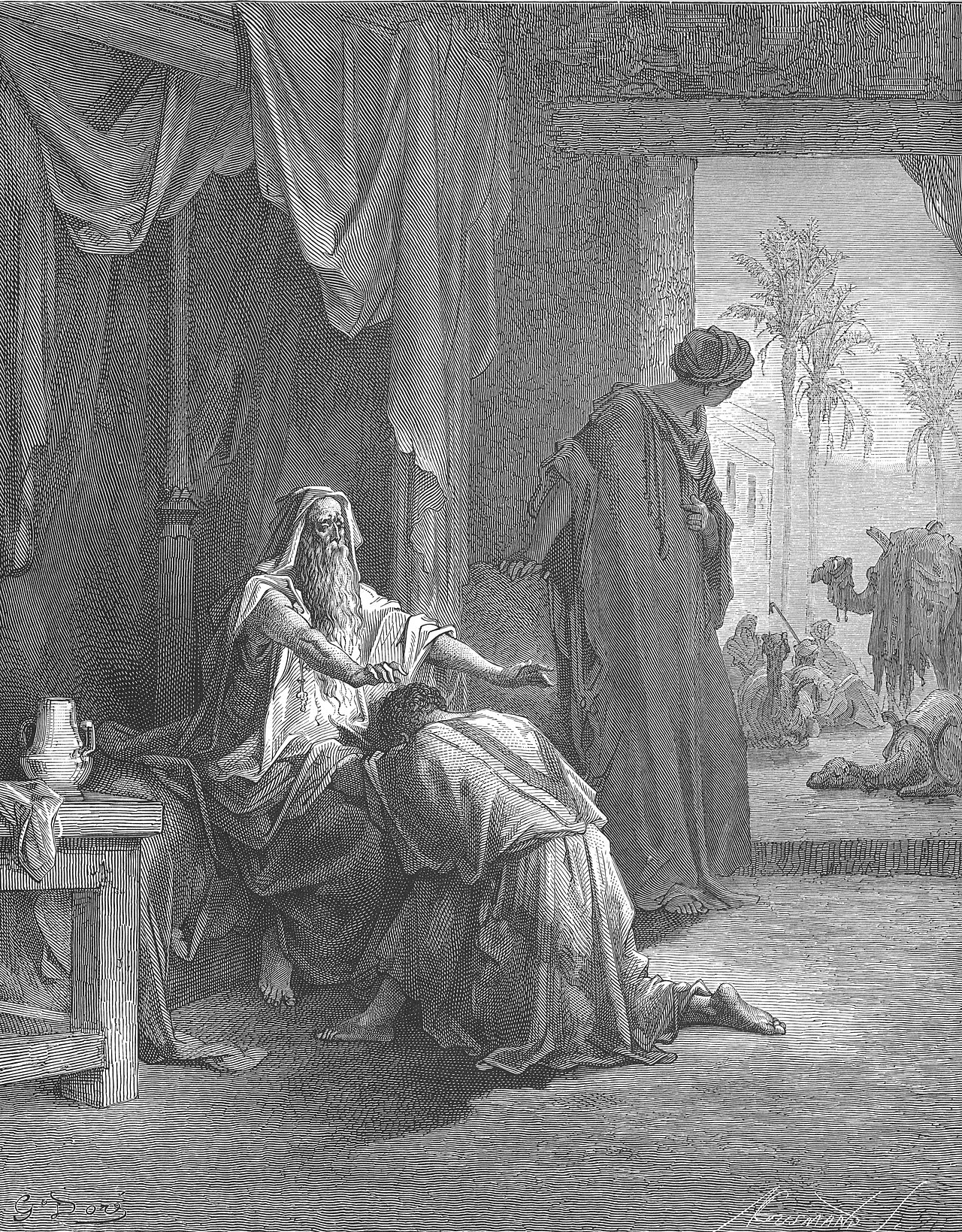
in Genesis 27So Jacob went to his father and said, “My father.” “Here I am!” he answered. “Which one are you, my son?”
BSB
The same verse in ASV and KJV ▾
ASV
And he came unto his father, and said, My father: and he said, Here am I; who art thou, my son?
KJV
And he came unto his father, and said, My father: and he said, Here am I; who art thou, my son?
⋯
This verse in Genesis 27
Commentary
3 notes on this verseThis site's exposition
Which one are you, my son
on Genesis 27:18-20
Isaac asks which son is in front of him. Jacob answers with three false statements: the name Esau, the place of the firstborn, and the claim that he hunted the meat. Pressed on the speed of the hunt, he puts the LORD behind it. Adam Clarke marks that answer as the worst of them, a lie that borrows God's name.
The record, by era
The Puritans and the Awakening1 voice
And he came unto his father,.... Into the tent and apartment where he was: and said, my father; to try whether he was awake, and to let him know that he was come, since he could not see him: and he said, here am I; what hast thou to say to me? who art thou, my son? for, from the voice and the quick dispatch made, he suspected it was not his son Esau.
The Nineteenth Century1 voice
A commentator
Jamieson, Fausset & Brown1802–1910
Commentary Critical and Explanatory on the Whole Bible (1871)
proposed
he came unto his father--The scheme planned by the mother was to be executed by the son in the father's bedchamber; and it is painful to think of the deliberate falsehoods, as well as daring profanity, he resorted to.
quarantine:debris (2026-07-29) — starts-lowercase
The words behind it
10 Hebrew wordsEvery Hebrew word of this verse in the order it stands, with what it means and the door to its own study. The last column counts the times a word stands in the whole Bible: the rarer the word, the more the places it appears belong together.
| Hebrew | Sound | Meaning | Word study | In the Bible |
|---|---|---|---|---|
| וַיָּבֹ֥א | vaiyavo' | and he went | H935 → | 2568 times |
| אֶל־ | ʾel- | to | H413 → | 5510 times |
| אָבִ֖יו | ʾaviv | father his | H1 → | 1212 times |
| וַיֹּ֣אמֶר | vaiyomer | and he said | H559 → | 5305 times |
| אָבִ֑י | ʾavi | O father my | H1 → | 1212 times |
| וַיֹּ֣אמֶר | vaiyomer | and he said | H559 → | 5305 times |
| הִנֶּ֔נִּי | hineni | here [am] I | H2009 → | 843 times |
| מִ֥י | mi | who? | H4310 → | 423 times |
| אַתָּ֖ה | ʾatah | [are] you | H859 → | 1094 times |
| בְּנִֽי׃ | beni | O son my | H1121 → | 4930 times |
וַיָּבֹ֥אand he went
vaiyavo'H935 →2568 times
אֶל־to
ʾel-H413 →5510 times
אָבִ֖יוfather his
ʾavivH1 →1212 times
וַיֹּ֣אמֶרand he said
vaiyomerH559 →5305 times
אָבִ֑יO father my
ʾaviH1 →1212 times
וַיֹּ֣אמֶרand he said
vaiyomerH559 →5305 times
הִנֶּ֔נִּיhere [am] I
hineniH2009 →843 times
מִ֥יwho?
miH4310 →423 times
אַתָּ֖ה[are] you
ʾatahH859 →1094 times
בְּנִֽי׃O son my
beniH1121 →4930 times
A shaded row is a word that stands 400 times or fewer in the Bible.
Where this verse is studied
About Genesis
Who and where
1 name in this verse with a page on the site.
This page draws on Adam Clarke, Commentary on the Bible; Jamieson, Fausset & Brown, Commentary Critical and Explanatory on the Whole Bible; John Gill, Exposition of the Old Testament and John Gill, Exposition of the Old Testament (1748-1763).