
Exodus 9:7
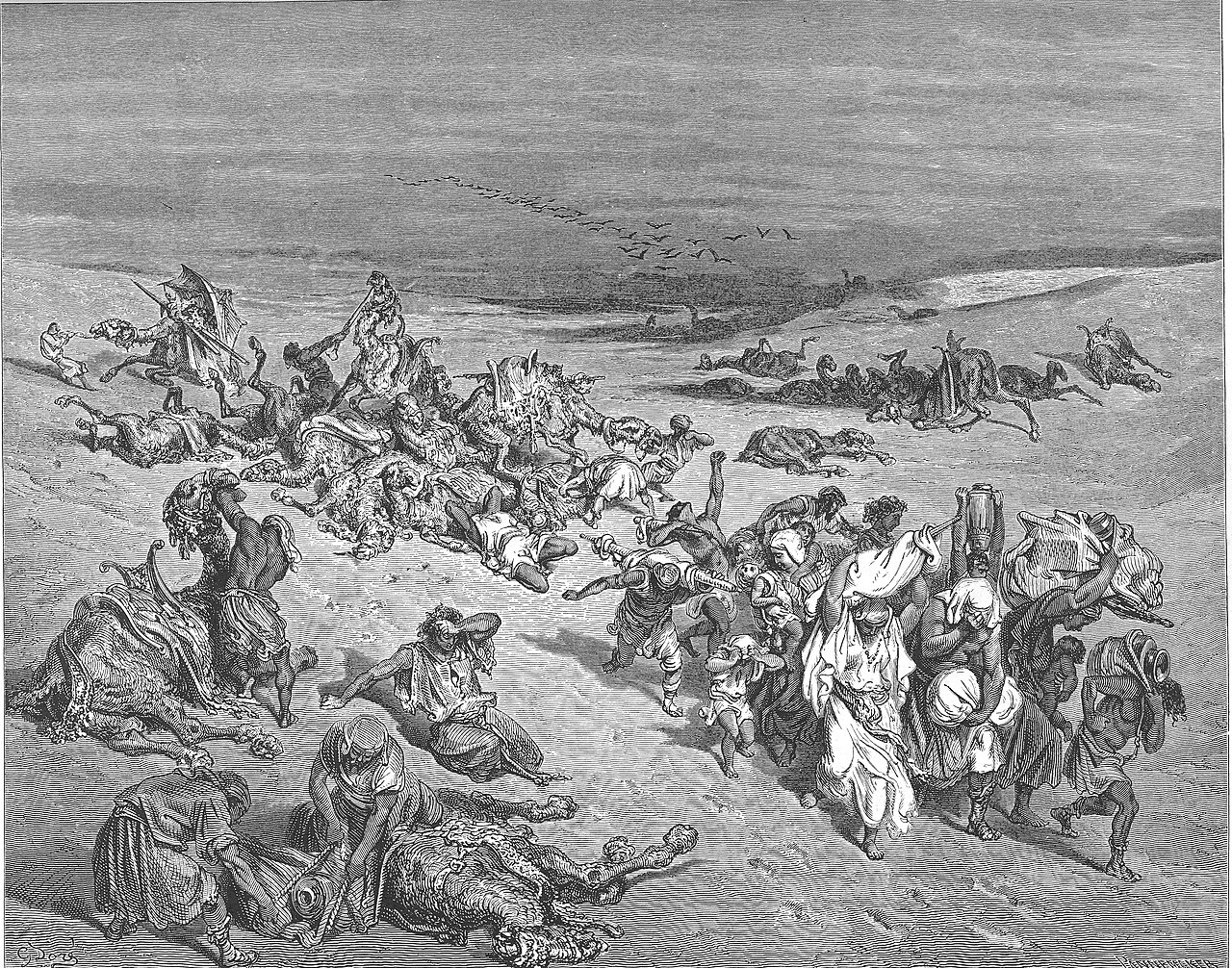
in Exodus 9Pharaoh sent officials and found that none of the livestock of the Israelites had died. But Pharaoh’s heart was hardened, and he would not let the people go.
BSB
The same verse in ASV and KJV ▾
ASV
And Pharaoh sent, and, behold, there was not so much as one of the cattle of the Israelites dead. But the heart of Pharaoh was stubborn, and he did not let the people go.
KJV
And Pharaoh sent, and, behold, there was not one of the cattle of the Israelites dead. And the heart of Pharaoh was hardened, and he did not let the people go.
⋯
This verse in Exodus 9
Commentary
3 notes on this verseAnd Pharaoh sent,.... Messengers to the land of Goshen, to see whether the murrain was upon the cattle of Israel or not, and whether any of them died or not. The Targum of Jonathan is,"he sent to Pelusium to see" and inquire about this matter; that is, to Raamses, for so that paraphrase calls Raamses in Exo 1:11 a city built by the Israelites, and where many of them might dwell.
This site's exposition
And Pharaoh sent, and, behold, there was not one
Pharaoh sends men to check whether the division held, and the report comes back that it did. Matthew Henry reads the inquiry as proof that he understood the claim well enough to test it, which makes the refusal that follows a refusal against evidence he gathered himself. This is the seventh statement about his heart and the last one before the subject changes at verse 12.
The record, by era
The Nineteenth Century1 voice
A commentator
Albert Barnes1798–1870
Notes, Explanatory and Practical, on the Old and New Testaments (1832-1869)
Was hardened - See Exo 4:21. Pharaoh probably attributed the exemption of the Israelites to natural causes. They were a pastoral race, well acquainted with all that pertained to the care of cattle; and dwelling in a healthy district probably far more than the rest of Lower Egypt.
The words behind it
16 Hebrew wordsEvery Hebrew word of this verse in the order it stands, with what it means and the door to its own study. The last column counts the times a word stands in the whole Bible: the rarer the word, the more the places it appears belong together.
| Hebrew | Sound | Meaning | Word study | In the Bible |
|---|---|---|---|---|
| וַיִּשְׁלַ֣ח | vaiyishlach | and he sent | H7971 → | 845 times |
| פַּרְעֹ֔ה | paroh | Pharaoh | H6547 → | 274 times |
| וְהִנֵּ֗ה | vehineh | and there! | H2009 → | 843 times |
| לֹא־ | lo'- | not | H3808 → | 5168 times |
| מֵ֛ת | met | it had died | H4191 → | 839 times |
| מִמִּקְנֵ֥ה | mimikneh | any of [the] livestock of | H4735 → | 76 times |
| יִשְׂרָאֵ֖ל | yisrael | Israel | H3478 → | 2507 times |
| עַד־ | ʾad- | up to | H5704 → | 1261 times |
| אֶחָ֑ד | ʾechad | one | H259 → | 971 times |
| וַיִּכְבַּד֙ | vaiyikhbad | and it was unresponsive | H3513 → | 113 times |
| לֵ֣ב | lev | [the] heart of | H3820 → | 595 times |
| פַּרְעֹ֔ה | paroh | Pharaoh | H6547 → | 274 times |
| וְלֹ֥א | velo' | and not | H3808 → | 5168 times |
| שִׁלַּ֖ח | shilach | he let go | H7971 → | 845 times |
| אֶת־ | ʾet- | <obj.> | H853 → | 10935 times |
| הָעָֽם׃ פ | haam | the people | H5971 → | 1873 times |
וַיִּשְׁלַ֣חand he sent
vaiyishlachH7971 →845 times
פַּרְעֹ֔הPharaoh
parohH6547 →274 times
וְהִנֵּ֗הand there!
vehinehH2009 →843 times
לֹא־not
lo'-H3808 →5168 times
מֵ֛תit had died
metH4191 →839 times
מִמִּקְנֵ֥הany of [the] livestock of
mimiknehH4735 →76 times
יִשְׂרָאֵ֖לIsrael
yisraelH3478 →2507 times
עַד־up to
ʾad-H5704 →1261 times
אֶחָ֑דone
ʾechadH259 →971 times
וַיִּכְבַּד֙and it was unresponsive
vaiyikhbadH3513 →113 times
לֵ֣ב[the] heart of
levH3820 →595 times
פַּרְעֹ֔הPharaoh
parohH6547 →274 times
וְלֹ֥אand not
velo'H3808 →5168 times
שִׁלַּ֖חhe let go
shilachH7971 →845 times
אֶת־<obj.>
ʾet-H853 →10935 times
הָעָֽם׃ פthe people
haamH5971 →1873 times
A shaded row is a word that stands 400 times or fewer in the Bible.
The walk
8 stopsEach card is a verse this one points to, and under it the verses that one points to in turn. Where several paths arrive at the same place, that place is listed first: the text keeps returning to it.
Through
Romans 9:18Therefore God has mercy on whom He wants to have mercy, and He hardens whom He wants to harden.
it leads to
- Exodus 4:21
The LORD instructed Moses, “When you go back to Egypt, see that you perform before Pharaoh all the wonders that I have put within your power. But I will harden his heart so that…
Reached by 2 separate paths from here.
- Joshua 11:20
For it was of the LORD to harden their hearts to engage Israel in battle, so that they would be set apart for destruction and would receive no mercy, being annihilated as the LORD…
- Romans 9:15–16
For He says to Moses: “I will have mercy on whom I have mercy, and I will have compassion on whom I have compassion.”
- 2 Thessalonians 2:10–12
and with every wicked deception directed against those who are perishing, because they refused the love of the truth that would have saved them.
- Romans 11:7–8
What then? What Israel was seeking, it failed to obtain, but the elect did. The others were hardened,
- Exodus 4:21
Through
Exodus 8:32But Pharaoh hardened his heart this time as well, and he would not let the people go.
it leads to
- Exodus 8:15
When Pharaoh saw that there was relief, however, he hardened his heart and would not listen to Moses and Aaron, just as the LORD had said.
Reached by 2 separate paths from here.
- Exodus 8:15
Through
Daniel 5:20But when his heart became arrogant and his spirit was hardened with pride, he was deposed from his royal throne, and his glory was taken from him.
it leads to
- 2 Kings 17:14
But they would not listen, and they stiffened their necks like their fathers, who did not believe the LORD their God.
- 2 Kings 17:14
Through
Job 9:4God is wise in heart and mighty in strength. Who has resisted Him and prospered?
it leads to
- Job 36:5
Indeed, God is mighty, but He despises no one; He is mighty in strength of understanding.
- Job 36:5
About Exodus
This page draws on Albert Barnes, Notes, Explanatory and Practical, on the Old and New Testaments (1832-1869); John Calvin, Commentary on the Four Last Books of Moses Arranged in the Form of a Harmony; John Gill, Exposition of the Old Testament (1748-1763) and Matthew Henry, Commentary on the Whole Bible.