
Exodus 15:22
in Exodus 15Then Moses led Israel from the Red Sea, and they went out into the Desert of Shur. For three days they walked in the desert without finding water.
BSB
The same verse in ASV and KJV ▾
ASV
And Moses led Israel onward from the Red Sea, and they went out into the wilderness of Shur; and they went three days in the wilderness, and found no water.
KJV
So Moses brought Israel from the Red sea, and they went out into the wilderness of Shur; and they went three days in the wilderness, and found no water.
⋯
This verse in Exodus 15
Commentary
8 notes on this verseA commentator
Albert Barnes1798–1870
Notes, Explanatory and Practical, on the Old and New Testaments (1832-1869)
So Moses - Literally, And Moses. The history of the journey from the Red Sea to Sinai begins in fact with this verse, which would more conveniently have been the commencement of another chapter. From the Red sea - The station where Moses and his people halted to celebrate their deliverance is generally admitted to be the Ayoun Musa, i. e. the fountains of Moses. It is the only green spot near the passage over the Red Sea.
This site's exposition
So Moses brought Israel from the Red sea
on Exodus 15:22-23
Three days out of the water and there is no water, which is the whole distance between the song and the complaint that follows it. Marah means bitter, so the first stop after the sea is a disappointment that gets named for what was wrong with it. The wilderness of Shur is the same country Genesis 16:7 put Hagar in when she ran from Sarai, where the angel of the LORD found an Egyptian slave woman by a fountain on the way to Shur.
The record, by era
The Puritans and the Awakening2 voices
So Moses brought Israel from the Red sea,....
That at Marah they had water, but it was bitter, so that though they had been three days without water they could not drink it, because it was extremely unpleasant to the taste or was likely to be prejudicial to their health, or was so brackish that it rather increased their thirst than quenched it,
The Nineteenth Century3 voices
A commentator
Jamieson, Fausset & Brown1802–1910
Commentary Critical and Explanatory on the Whole Bible (1871)
proposed
wilderness of Shur--comprehending all the western part of Arabia-Petræa. The desert of Etham was a part of it, extending round the northern portion of the Red Sea, and a considerable distance along its eastern shore; whereas the "wilderness of Shur" (now Sudhr) was the designation of all the desert region of Arabia-Petræa that lay next to Palestine.
quarantine:debris (2026-07-29) — starts-lowercase
A commentator
Charles Spurgeon1834–1892
The Metropolitan Tabernacle Pulpit, Sermon No. 2301: “Marah Better Than Elim” (lightly modernized text, CCEL edition) · Written before 1892.
proposed
AFTER I had fallen down at Mentone, and was grievously ill, a Brother in Christ called to me and said, "My dear Friend, you have now come to Marah." I replied, "Yes, and the waters are bitter." He then said, "But Marah is better than Elim, for in Elim the Israelites only drank of the water and ate of the fruit of the palm trees, and that was soon over. But at Marah we read that God, 'made for them a statute and an ordinance,' and that was never over.
A commentator
Charles Spurgeon1834–1892
The Metropolitan Tabernacle Pulpit, Sermon No. 2301: “Marah Better Than Elim” (lightly modernized text, CCEL edition) · Written before 1892.
proposed
AFTER I had fallen down at Mentone, and was grievously ill, a Brother in Christ called to me and said, "My dear Friend, you have now come to Marah." I replied, "Yes, and the waters are bitter." He then said, "But Marah is better than Elim, for in Elim the Israelites only drank of the water and ate of the fruit of the palm trees, and that was soon over. But at Marah we read that God, 'made for them a statute and an ordinance,' and that was never over. That statute and ordinance stood fast and will stand fast for Israel as long as they are a nation. There is much more benefit to be reaped from Marah than from Elim." I thanked my friend for that good word. I had found it true before. I have found it true since then and you and I, if we are, indeed, the people of God, will find it true to the end, that Marah, though it is bitter, is also better. And albeit that we do not like it, yet in the end there shall be no bitterness in it, but an unutterable sweetness which shall be ours through time and eternity! We have a long record about Marah, have we not? I have read you four verses concerning Marah. How many verses have we about Elim? Only one. Does Marah deserve to be talked about four times as much as Elim? Perhaps it does. Perhaps there is four times as much fruit to be obtained from the bitter waters of Marah than from the 12 springs of water, and 70 palm trees at Elim. Who knows? This I know, however, that we are very apt to talk more about our bitters than about our sweets—and that is a serious fault. It were well if we had fewer murmuring words for our sorrows and more songs of thanksgiving for our blessings.
1 more voice on this verse
The Nineteenth Century1 voice
The wilderness of Shur - This was on the coast of the Red Sea on their road to Mount Sinai. See the map.
The words behind it
17 Hebrew wordsEvery Hebrew word of this verse in the order it stands, with what it means and the door to its own study. The last column counts the times a word stands in the whole Bible: the rarer the word, the more the places it appears belong together.
| Hebrew | Sound | Meaning | Word study | In the Bible |
|---|---|---|---|---|
| וַיַּסַּ֨ע | vaiyasa' | and he led out | H5265 → | 146 times |
| מֹשֶׁ֤ה | mosheh | Moses | H4872 → | 765 times |
| אֶת־ | ʾet- | <obj.> | H853 → | 10935 times |
| יִשְׂרָאֵל֙ | yisrael | Israel | H3478 → | 2507 times |
| מִיַּם־ | miyam- | from [the] sea of | H3220 → | 396 times |
| ס֔וּף | suf | reed[s] | H5488 → | 28 times |
| וַיֵּצְא֖וּ | vaiyetzeu | and they went out | H3318 → | 1067 times |
| אֶל־ | ʾel- | into | H413 → | 5510 times |
| מִדְבַּר־ | midbar- | [the] wilderness of | H4057 → | 270 times |
| שׁ֑וּר | shur | Shur | H7793 → | |
| וַיֵּלְכ֧וּ | vaiyelekhu | and they went | H1980 → | 1546 times |
| שְׁלֹֽשֶׁת־ | sheloshet- | three | H7969 → | 432 times |
| יָמִ֛ים | yamim | days | H3117 → | 2304 times |
| בַּמִּדְבָּ֖ר | bamidbar | in the wilderness | H4057 → | 270 times |
| וְלֹא־ | velo'- | and not | H3808 → | 5168 times |
| מָ֥צְאוּ | matzeu | they found | H4672 → | 455 times |
| מָֽיִם׃ | mayim | water | H4325 → | 581 times |
וַיַּסַּ֨עand he led out
vaiyasa'H5265 →146 times
מֹשֶׁ֤הMoses
moshehH4872 →765 times
אֶת־<obj.>
ʾet-H853 →10935 times
יִשְׂרָאֵל֙Israel
yisraelH3478 →2507 times
מִיַּם־from [the] sea of
miyam-H3220 →396 times
ס֔וּףreed[s]
sufH5488 →28 times
וַיֵּצְא֖וּand they went out
vaiyetzeuH3318 →1067 times
אֶל־into
ʾel-H413 →5510 times
מִדְבַּר־[the] wilderness of
midbar-H4057 →270 times
שׁ֑וּרShur
shurH7793 →
וַיֵּלְכ֧וּand they went
vaiyelekhuH1980 →1546 times
שְׁלֹֽשֶׁת־three
sheloshet-H7969 →432 times
יָמִ֛יםdays
yamimH3117 →2304 times
בַּמִּדְבָּ֖רin the wilderness
bamidbarH4057 →270 times
וְלֹא־and not
velo'-H3808 →5168 times
מָ֥צְאוּthey found
matzeuH4672 →455 times
מָֽיִם׃water
mayimH4325 →581 times
A shaded row is a word that stands 400 times or fewer in the Bible.
The walk
8 stopsEach card is a verse this one points to, and under it the verses that one points to in turn. Where several paths arrive at the same place, that place is listed first: the text keeps returning to it.
Through
Exodus 3:18The elders of Israel will listen to what you say, and you must go with them to the king of Egypt and tell him, ‘The LORD, the God of the Hebrews, has met with…
it leads to
- Exodus 9:1
Then the LORD said to Moses, “Go to Pharaoh and tell him that this is what the LORD, the God of the Hebrews, says: ‘Let My people go, so that they may worship Me.
- Exodus 7:16
Then say to him, ‘The LORD, the God of the Hebrews, has sent me to tell you: Let My people go, so that they may worship Me in the wilderness. But you have not…
- Exodus 9:1
Through
Genesis 16:7Now the angel of the LORD found Hagar by a spring of water in the desert—the spring along the road to Shur.
it leads to
- Genesis 25:18
Ishmael’s descendants settled from Havilah to Shur, which is near the border of Egypt as you go toward Asshur. And they lived in hostility toward all their brothers.
Reached by 2 separate paths from here.
- Genesis 21:17
Then God heard the voice of the boy, and the angel of God called to Hagar from heaven, “What is wrong, Hagar? Do not be afraid, for God has heard the voice of the…
- Genesis 25:18
Through
Genesis 25:18Ishmael’s descendants settled from Havilah to Shur, which is near the border of Egypt as you go toward Asshur. And they lived in hostility toward all their brothers.
it leads to
- Genesis 16:12
He will be a wild donkey of a man, and his hand will be against everyone, and everyone’s hand against him; he will live in hostility toward all his brothers.”
- Genesis 20:1
Now Abraham journeyed from there to the region of the Negev and settled between Kadesh and Shur. While he was staying in Gerar,
- Genesis 16:12
Through
1 Samuel 15:7Then Saul struck down the Amalekites all the way from Havilah to Shur, which is east of Egypt.
it leads to
- Genesis 2:11
The name of the first river is Pishon; it winds through the whole land of Havilah, where there is gold.
Reached by 2 separate paths from here.
- 1 Samuel 14:48
He fought valiantly and defeated the Amalekites, delivering Israel from the hands of its plunderers.
- Genesis 2:11
Where this verse is studied
About Exodus
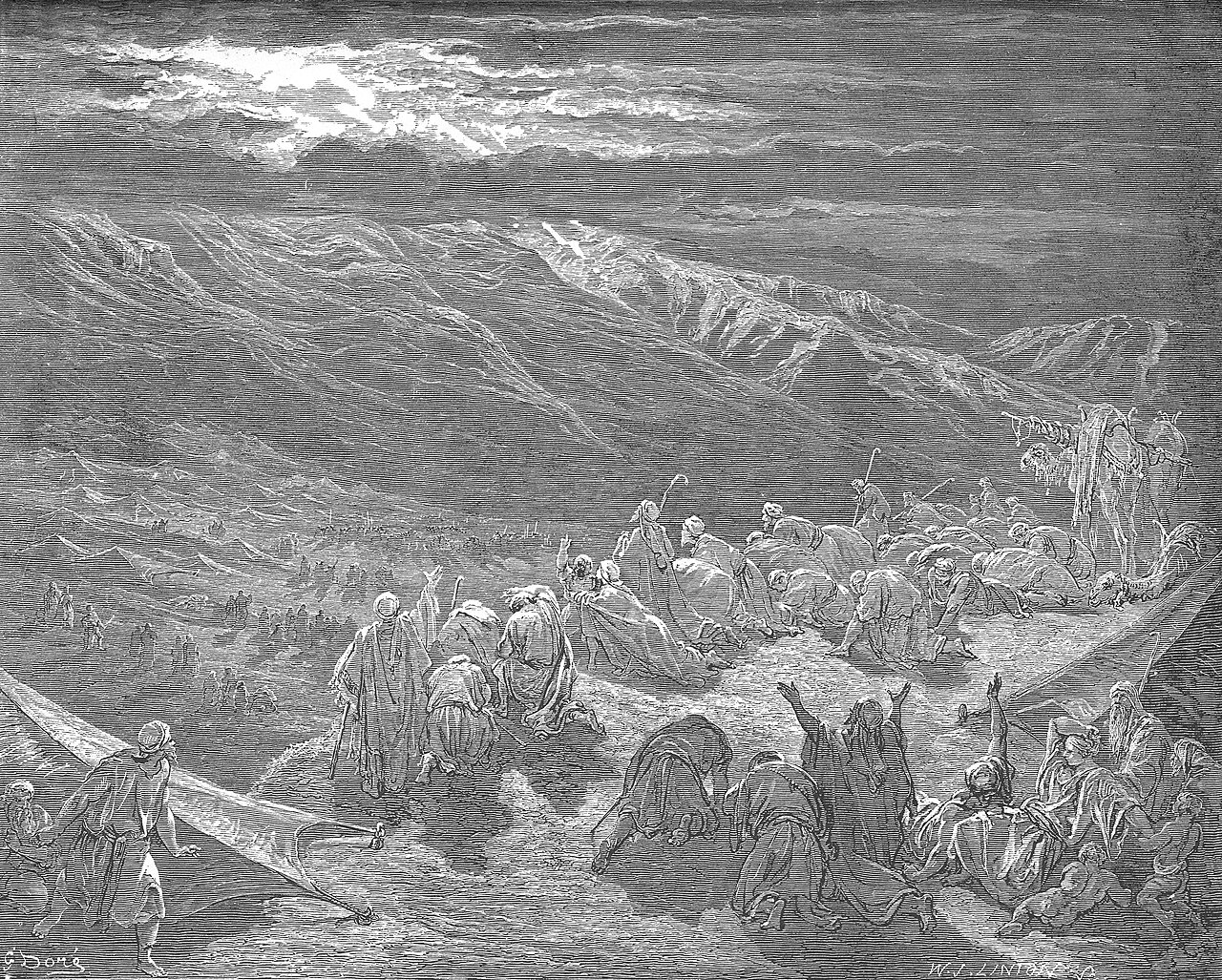
Who and where
1 name in this verse with a page on the site.
This page draws on Adam Clarke, Commentary on the Bible; Albert Barnes, Notes, Explanatory and Practical, on the Old and New Testaments (1832-1869); Charles Spurgeon, The Metropolitan Tabernacle Pulpit, Sermon No. 2301: “Marah Better Than Elim” (lightly modernized text, CCEL edition); Jamieson, Fausset & Brown, Commentary Critical and Explanatory on the Whole Bible; John Gill, Exposition of the Old Testament (1748-1763); Keil and Delitzsch, Biblical Commentary on the Old Testament: The Pentateuch and Matthew Henry, Commentary on the Whole Bible.