
Exodus 14:25
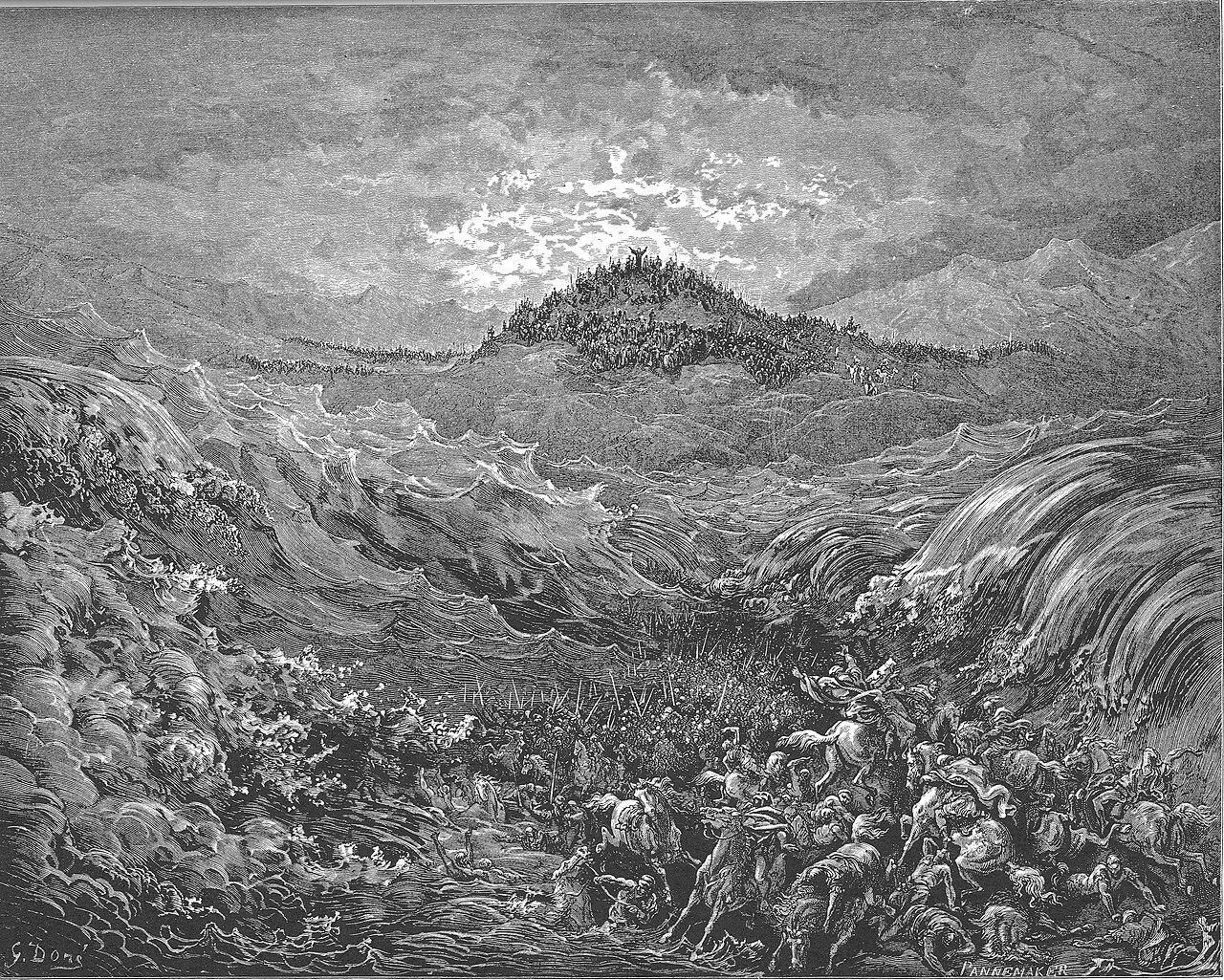
in Exodus 14He caused their chariot wheels to wobble, so that they had difficulty driving. “Let us flee from the Israelites,” said the Egyptians, “for the LORD is fighting for them against Egypt!”
BSB
The same verse in ASV and KJV ▾
ASV
And he took off their chariot wheels, and they drove them heavily; so that the Egyptians said, Let us flee from the face of Israel; for Jehovah fighteth for them against the Egyptians.
KJV
And took off their chariot wheels, that they drave them heavily: so that the Egyptians said, Let us flee from the face of Israel; for the Lord fighteth for them against the Egyptians.
⋯
This verse in Exodus 14
Commentary
6 notes on this verseAnd took off their chariot wheels,.... The Targum of Jonathan renders it "cut" or "sawed them off"; perhaps they might be broken off by the hailstones.
This site's exposition
And it came to pass, that in the morning watch
on Exodus 14:24-25
The LORD looks at the host of the Egyptians through the pillar of fire and of the cloud and the host is troubled, so the blow lands through a look rather than through a weapon. Their chariot wheels come off and they drive heavily, and the men whose king asked at 5:2 who the LORD was now say that he fighteth for them against the Egyptians. Egypt states the truth of verse 14 in its own mouth, and states it while fleeing.
This site's exposition
He caused their chariot wheels to wobble
The Berean has the wheels wobble, and older English versions say the LORD took them off. John Gill reports that the Targum of Jonathan renders the verb as cut or sawn off, and he suggests hailstones broke them. The army that overtook Israel at verse 9 now barely moves.
The record, by era
The Church Fathers1 voice
The Egyptians pursued the Hebrews with no fear of the darkness that separated them from the Hebrews and without being disturbed by the sea that was divided. During the night, through a sea that was divided, they went rushing forward to do battle with the …
The Puritans and the Awakening2 voices
Something or other they saw or heard from the pillar of cloud and fire which put them into great consternation, and gave them an apprehension of their ruin before it was brought upon them. Now it appeared that the triumphing of the wicked is short, and that God has ways to frighten sinners into despair, before he plunges them into destruction.
Note, It is very common, but very absurd and criminal, for people to repent of their good deeds; their justice and charity, and even their repentance, are repented of.
The words behind it
16 Hebrew wordsEvery Hebrew word of this verse in the order it stands, with what it means and the door to its own study. The last column counts the times a word stands in the whole Bible: the rarer the word, the more the places it appears belong together.
| Hebrew | Sound | Meaning | Word study | In the Bible |
|---|---|---|---|---|
| וַיָּ֗סַר | vaiyasar | and he turned aside | H5493 → | 299 times |
| אֵ֚ת | ʾet | <obj.> | H853 → | 10935 times |
| אֹפַ֣ן | ʾofan | [the] wheel[s] of | H212 → | |
| מַרְכְּבֹתָ֔יו | markevotav | chariots its | H4818 → | |
| וַֽיְנַהֲגֵ֖הוּ | vaynahagehu | and he caused to drive it | H5090 → | 31 times |
| בִּכְבֵדֻ֑ת | bikhvedut | with difficulty | H3517 → | |
| וַיֹּ֣אמֶר | vaiyomer | and it said | H559 → | 5305 times |
| מִצְרַ֗יִם | mitzrayim | Egypt | H4714 → | 641 times |
| אָנ֙וּסָה֙ | ʾanusah | let me flee | H5127 → | 159 times |
| מִפְּנֵ֣י | mipenei | from before | H6440 → | 2123 times |
| יִשְׂרָאֵ֔ל | yisrael | Israel | H3478 → | 2507 times |
| כִּ֣י | ki | for | H3588 → | 4482 times |
| יְהוָ֔ה | yahweh | Yahweh | H3068 → | 6520 times |
| נִלְחָ֥ם | nilcham | [is] fighting | H3898 → | 177 times |
| לָהֶ֖ם | lahem | for them | ||
| בְּמִצְרָֽיִם פ | bemitzrayim | against Egypt | H4714 → | 641 times |
וַיָּ֗סַרand he turned aside
vaiyasarH5493 →299 times
אֵ֚ת<obj.>
ʾetH853 →10935 times
אֹפַ֣ן[the] wheel[s] of
ʾofanH212 →
מַרְכְּבֹתָ֔יוchariots its
markevotavH4818 →
וַֽיְנַהֲגֵ֖הוּand he caused to drive it
vaynahagehuH5090 →31 times
בִּכְבֵדֻ֑תwith difficulty
bikhvedutH3517 →
וַיֹּ֣אמֶרand it said
vaiyomerH559 →5305 times
מִצְרַ֗יִםEgypt
mitzrayimH4714 →641 times
אָנ֙וּסָה֙let me flee
ʾanusahH5127 →159 times
מִפְּנֵ֣יfrom before
mipeneiH6440 →2123 times
יִשְׂרָאֵ֔לIsrael
yisraelH3478 →2507 times
כִּ֣יfor
kiH3588 →4482 times
יְהוָ֔הYahweh
yahwehH3068 →6520 times
נִלְחָ֥ם[is] fighting
nilchamH3898 →177 times
לָהֶ֖םfor them
lahem
בְּמִצְרָֽיִם פagainst Egypt
bemitzrayimH4714 →641 times
A shaded row is a word that stands 400 times or fewer in the Bible.
The walk
8 stopsEach card is a verse this one points to, and under it the verses that one points to in turn. Where several paths arrive at the same place, that place is listed first: the text keeps returning to it.
Through
Exodus 14:14The LORD will fight for you; you need only to be still.”
it leads to
- Deuteronomy 20:4
For the LORD your God goes with you to fight for you against your enemies, to give you the victory.”
Reached by 2 separate paths from here.
- 2 Chronicles 20:17
You need not fight this battle. Take up your positions, stand firm, and see the salvation of the LORD on your behalf, O Judah and Jerusalem. Do not be afraid or discouraged. Go out…
Reached by 2 separate paths from here.
- Deuteronomy 1:30
The LORD your God, who goes before you, will fight for you, just as you saw Him do for you in Egypt
Reached by 2 separate paths from here.
- Deuteronomy 3:22
Do not be afraid of them, for the LORD your God Himself will fight for you.”
- Joshua 23:3
“and you have seen everything that the LORD your God has done to all these nations for your sake, because it was the LORD your God who fought for you.
- Deuteronomy 20:4
Through
Deuteronomy 3:22Do not be afraid of them, for the LORD your God Himself will fight for you.”
it leads to
- Exodus 14:14
The LORD will fight for you; you need only to be still.”
- 2 Chronicles 20:29
And the fear of God came upon all the kingdoms of the lands when they heard that the LORD had fought against the enemies of Israel.
- Exodus 14:14
Through
Job 20:24Though he flees from an iron weapon, a bronze-tipped arrow will pierce him.
it leads to
- Amos 5:19
It will be like a man who flees from a lion, only to encounter a bear, or who enters his house and rests his hand against the wall, only to be bitten by a…
- Amos 5:19
Where this verse is studied
On this page
Studies4
About Exodus
Who and where
1 name in this verse with a page on the site.
This page draws on Ephrem the Syrian, COMMENTARY ON EXODUS 14:5; John Gill, Exposition of the Old Testament (1748-1763); John Gill, Exposition of the Old Testament; Keil and Delitzsch, Biblical Commentary on the Old Testament: The Pentateuch and Matthew Henry, Commentary on the Whole Bible.