
Exodus 14:23
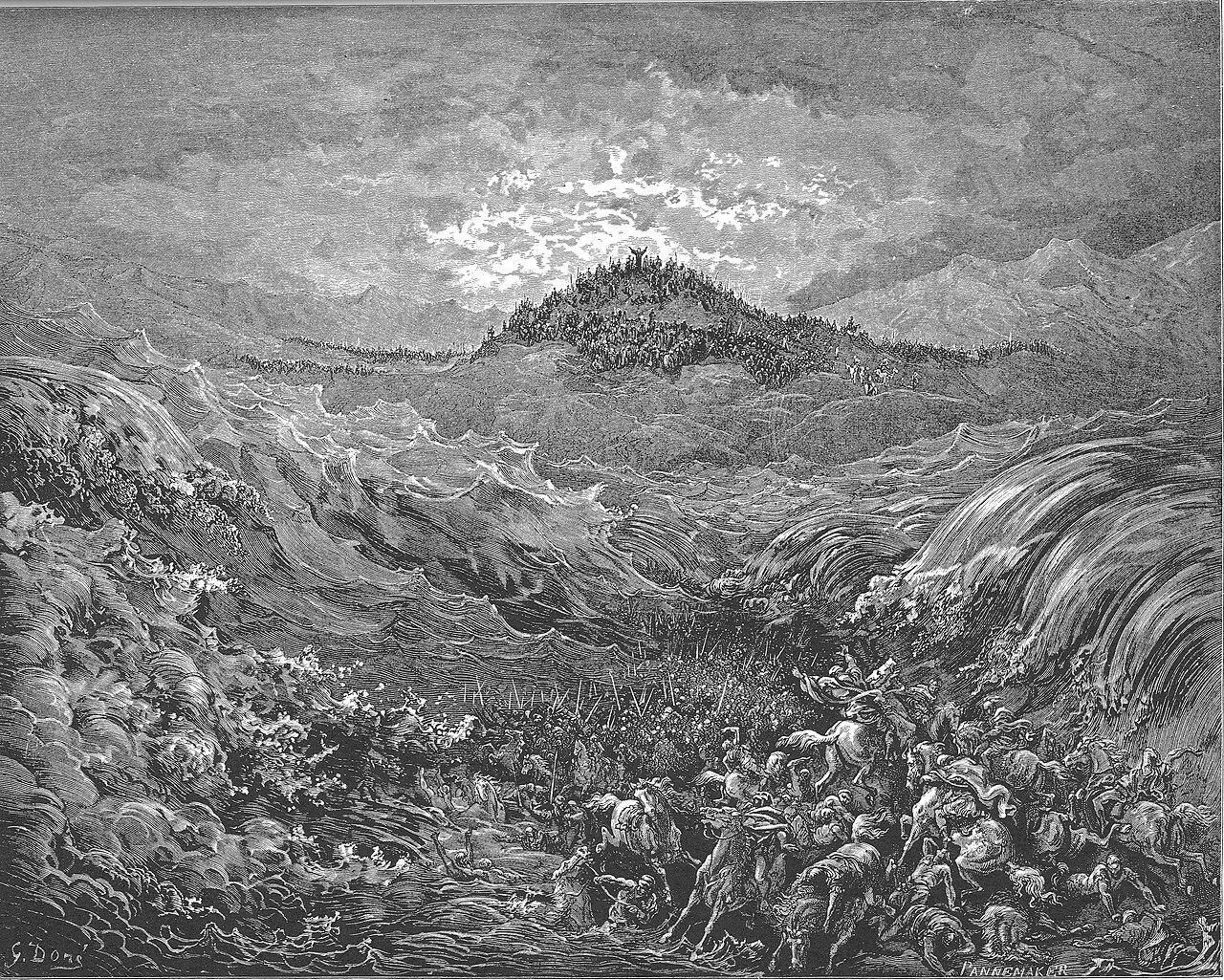
in Exodus 14And the Egyptians chased after them—all Pharaoh’s horses, chariots, and horsemen—and followed them into the sea.
BSB
The same verse in ASV and KJV ▾
ASV
And the Egyptians pursued, and went in after them into the midst of the sea, all Pharaoh’s horses, his chariots, and his horsemen.
KJV
And the Egyptians pursued, and went in after them to the midst of the sea, even all Pharaoh’s horses, his chariots, and his horsemen.
⋯
This verse in Exodus 14
Commentary
5 notes on this verseThis site's exposition
the Egyptians chased after them
Egypt follows into the corridor the wind opened, so the whole army is standing inside a road God made for somebody else. Water has run through the book in both directions, drowning the boys of 1:22, turned to blood at 7:20, and here carrying one nation across and holding another for the morning. The chapter reports the two uses of one element and treats them as one act.
The record, by era
The Puritans and the Awakening3 voices
And the Egyptians pursued,....
Surely in vain is the net spread in the sight of any bird ( Prov. i. 17 ); yet so blind where the Egyptians that they hastened to the snare, Prov. vii. Note, The ruin of sinners is brought on by their own presumption, which hurries them headlong into the pit.
Note, It is very common, but very absurd and criminal, for people to repent of their good deeds; their justice and charity, and even their repentance, are repented of.
The Nineteenth Century1 voice
A commentator
Jamieson, Fausset & Brown1802–1910
Commentary Critical and Explanatory on the Whole Bible (1871)
proposed
the Egyptians pursued, and went in after them to the midst of the sea--From the darkness caused by the intercepting cloud, it is probable that they were not aware on what ground they were driving: they heard the sound of the fugitives before them, and they pushed on with the fury of the avengers of blood, without dreaming that they were on the bared bed of the sea.
quarantine:debris (2026-07-29) — starts-lowercase
The words behind it
12 Hebrew wordsEvery Hebrew word of this verse in the order it stands, with what it means and the door to its own study. The last column counts the times a word stands in the whole Bible: the rarer the word, the more the places it appears belong together.
| Hebrew | Sound | Meaning | Word study | In the Bible |
|---|---|---|---|---|
| וַיִּרְדְּפ֤וּ | vaiyirdefu | and they pursued | H7291 → | 143 times |
| מִצְרַ֙יִם֙ | mitzrayim | Egypt | H4713 → | 70 times |
| וַיָּבֹ֣אוּ | vaiyavou | and they went | H935 → | 2568 times |
| אַחֲרֵיהֶ֔ם | ʾachareihem | after them | H310 → | 715 times |
| כֹּ֚ל | kol | every | H3605 → | 5413 times |
| ס֣וּס | sus | <the> horse of | H5483 → | 140 times |
| פַּרְעֹ֔ה | paroh | Pharaoh | H6547 → | 274 times |
| רִכְבּ֖וֹ | rikhbo | chariotry his | H7393 → | 119 times |
| וּפָרָשָׁ֑יו | ufarashav | and horsemen his | H6571 → | 57 times |
| אֶל־ | ʾel- | into | H413 → | 5510 times |
| תּ֖וֹךְ | tokh | [the] middle of | H8432 → | 418 times |
| הַיָּֽם׃ | haiyam | the sea | H3220 → | 396 times |
וַיִּרְדְּפ֤וּand they pursued
vaiyirdefuH7291 →143 times
מִצְרַ֙יִם֙Egypt
mitzrayimH4713 →70 times
וַיָּבֹ֣אוּand they went
vaiyavouH935 →2568 times
אַחֲרֵיהֶ֔םafter them
ʾachareihemH310 →715 times
כֹּ֚לevery
kolH3605 →5413 times
ס֣וּס<the> horse of
susH5483 →140 times
פַּרְעֹ֔הPharaoh
parohH6547 →274 times
רִכְבּ֖וֹchariotry his
rikhboH7393 →119 times
וּפָרָשָׁ֑יוand horsemen his
ufarashavH6571 →57 times
אֶל־into
ʾel-H413 →5510 times
תּ֖וֹךְ[the] middle of
tokhH8432 →418 times
הַיָּֽם׃the sea
haiyamH3220 →396 times
A shaded row is a word that stands 400 times or fewer in the Bible.
The walk
8 stopsEach card is a verse this one points to, and under it the verses that one points to in turn. Where several paths arrive at the same place, that place is listed first: the text keeps returning to it.
Through
Exodus 14:17And I will harden the hearts of the Egyptians so that they will go in after them. Then I will gain honor by means of Pharaoh and all his army and chariots and horsemen.
it leads to
- Exodus 14:8
And the LORD hardened the heart of Pharaoh king of Egypt so that he pursued the Israelites, who were marching out defiantly.
- Exodus 14:4
And I will harden Pharaoh’s heart so that he will pursue them. But I will gain honor by means of Pharaoh and all his army, and the Egyptians will know that I am the…
- Exodus 14:8
Through
Exodus 15:19For when Pharaoh’s horses, chariots, and horsemen went into the sea, the LORD brought the waters of the sea back over them. But the Israelites walked through the sea on dry ground.
it leads to
- Exodus 14:28–29
The waters flowed back and covered the chariots and horsemen—the entire army of Pharaoh that had chased the Israelites into the sea. Not one of them survived.
- Hebrews 11:29
By faith the people passed through the Red Sea as on dry land; but when the Egyptians tried to follow, they were drowned.
- Exodus 14:28–29
Through
Exodus 15:9The enemy declared, ‘I will pursue, I will overtake. I will divide the spoils; I will gorge myself on them. I will draw my sword; my hand will destroy them.’
it leads to
- Judges 5:30
‘Are they not finding and dividing the spoil—a girl or two for each warrior, a plunder of dyed garments for Sisera, the spoil of embroidered garments for the neck of the looter?’
- Exodus 14:5
When the king of Egypt was told that the people had fled, Pharaoh and his officials changed their minds about them and said, “What have we done? We have released Israel from serving us.”
- Judges 5:30
Through
1 Kings 22:20And the LORD said, ‘Who will entice Ahab to march up and fall at Ramoth-gilead?’ And one suggested this, and another that.
it leads to
- Ezekiel 14:9
But if the prophet is enticed to speak a message, then it was I the LORD who enticed him, and I will stretch out My hand against him and destroy him from among My…
- Job 12:16
True wisdom and power belong to Him. The deceived and the deceiver are His.
- Ezekiel 14:9
Where this verse is studied
On this page
Studies4
About Exodus
This page draws on Jamieson, Fausset & Brown, Commentary Critical and Explanatory on the Whole Bible; John Gill, Exposition of the Old Testament; John Gill, Exposition of the Old Testament (1748-1763) and Matthew Henry, Commentary on the Whole Bible.