
Exodus 14:2
in Exodus 14“Tell the Israelites to turn back and encamp before Pi-hahiroth, between Migdol and the sea. You are to encamp by the sea, directly opposite Baal-zephon.
BSB
The same verse in ASV and KJV ▾
ASV
Speak unto the children of Israel, that they turn back and encamp before Pi-hahiroth, between Migdol and the sea, before Baal-zephon: over against it shall ye encamp by the sea.
KJV
Speak unto the children of Israel, that they turn and encamp before Pi–hahiroth, between Migdol and the sea, over against Baal–zephon: before it shall ye encamp by the sea.
⋯
This verse in Exodus 14
Commentary
6 notes on this verseEncamp before Pi-hahiroth - פי ההירת pi hachiroth, the mouth, strait, or bay of Chiroth. Between Migdol, מגדל migdol, the tower, probably a fortress that served to defend the bay. Over against Baal-zephon, בעל צפן baal tsephon, the lord or master of the watch, probably an idol temple, where a continual guard, watch, or light was kept up for the defense of one part of the haven, or as a guide to ships.
This site's exposition
spake unto Moses, saying
on Exodus 14:1-3
The route is dictated rather than chosen, and it puts the sea in front of the camp with Migdol behind it. God says in advance what Pharaoh will conclude from the map, that they are entangled in the land and the wilderness hath shut them in. Israel is placed in a trap on purpose, and the trap is set for Egypt.
The record, by era
The Puritans and the Awakening2 voices
Speak unto the children of Israel, that they turn,.... Not return to Egypt, or to the place, or towards the place from whence they came, but turn off, out of the road in which they were; for, as a late traveller says (a),"there were two roads, through which the Israelites might have been conducted from Cairo (which he supposes may be Rameses) to Pihahiroth.
Note, God sometimes raises difficulties in the way of the salvation of his people, that he may have the glory of subduing them, and helping his people over them.
The Nineteenth Century2 voices
A commentator
Jamieson, Fausset & Brown1802–1910
Commentary Critical and Explanatory on the Whole Bible (1871)
proposed
A movement so unexpected, and of which the ultimate design was carefully concealed, could not but excite the astonishment of all, even of Moses himself, although, from his implicit faith in the wisdom and power of his heavenly Guide, he obeyed.
A commentator
Albert Barnes1798–1870
Notes, Explanatory and Practical, on the Old and New Testaments (1832-1869)
proposed
That they turn - i. e. away from the wilderness, and go southwards, to the west of the Bitter Lakes, which completely separated them from the desert. Pi-hahiroth - The place is generally identified with Ajrud, a fortress with a very large well of good water, situated at the foot of an elevation commanding the plain which extends to Suez, at a distance of four leagues. The journey from Etham might occupy two, or even three days. Migdol - A tower, or fort, the “Maktal” of Egyptian monuments; it is probably to be identified with Bir Suweis, about two miles from Suez. Baal-zephon - The name under which the Phoenicians, who had a settlement in Lower Egypt at a very ancient period, worshipped their chief Deity. There can be no doubt it was near Kolsum, or Suez. From the text it is clear that the encampment of the Israelites extended over the plain from Pi-hahiroth: their headquarters being between Bir Suweis and the sea opposite to Baal-Zephon. At Ajrud the road branches off in two directions, one leading to the wilderness by a tract, now dry, but in the time of Moses probably impassable (see next note); the other leading to Suez, which was doubtless followed by the Israelites.
How the passage was read
What the Jewish commentators add
On the verses either side of this one
It is truly not proper for an intelligent person to scrutinize God’s actions and ask, why did the Lord act thus?
This section is reception history: how the passage was read and kept in the Jewish tradition. Where a reading parts from an essential of the Christian faith, the section says so at that point.
Texts and citation data: Sefaria; each excerpt follows its version’s licence. 3 further sources are cited on this chapter that carry no English text this site may quote or only restate the verse.
The words behind it
20 Hebrew wordsEvery Hebrew word of this verse in the order it stands, with what it means and the door to its own study. The last column counts the times a word stands in the whole Bible: the rarer the word, the more the places it appears belong together.
| Hebrew | Sound | Meaning | Word study | In the Bible |
|---|---|---|---|---|
| דַּבֵּר֮ | daber | speak | H1696 → | 1141 times |
| אֶל־ | ʾel- | to | H413 → | 5510 times |
| בְּנֵ֣י | benei | [the] people of | H1121 → | 4930 times |
| יִשְׂרָאֵל֒ | yisrael | Israel | H3478 → | 2507 times |
| וְיָשֻׁ֗בוּ | veyashuvu | so they may turn back | H7725 → | 1056 times |
| וְיַחֲנוּ֙ | veyachanu | and they may encamp | H2583 → | 143 times |
| לִפְנֵי֙ | lifnei | <to> before | H6440 → | 2123 times |
| פִּ֣י | pi | Pi- | H6367 → | 7 times |
| הַחִירֹ֔ת | hachirot | hahiroth | H6367 → | 7 times |
| בֵּ֥ין | bein | between | H996 → | 407 times |
| מִגְדֹּ֖ל | migdol | Migdol | H4024 → | |
| וּבֵ֣ין | uvein | and between | H996 → | 407 times |
| הַיָּ֑ם | haiyam | the sea | H3220 → | 396 times |
| לִפְנֵי֙ | lifnei | <to> before | H6440 → | 2123 times |
| בַּ֣עַל | baal | Baal- | H1189 → | 6 times |
| צְפֹ֔ן | tzefon | Zephon | H1189 → | 6 times |
| נִכְח֥וֹ | nikhcho | opposite it | H5227 → | 25 times |
| תַחֲנ֖וּ | tachanu | you will encamp | H2583 → | 143 times |
| עַל־ | ʾal- | at | H5921 → | 5755 times |
| הַיָּֽם׃ | haiyam | the sea | H3220 → | 396 times |
דַּבֵּר֮speak
daberH1696 →1141 times
אֶל־to
ʾel-H413 →5510 times
בְּנֵ֣י[the] people of
beneiH1121 →4930 times
יִשְׂרָאֵל֒Israel
yisraelH3478 →2507 times
וְיָשֻׁ֗בוּso they may turn back
veyashuvuH7725 →1056 times
וְיַחֲנוּ֙and they may encamp
veyachanuH2583 →143 times
לִפְנֵי֙<to> before
lifneiH6440 →2123 times
פִּ֣יPi-
piH6367 →7 times
הַחִירֹ֔תhahiroth
hachirotH6367 →7 times
בֵּ֥יןbetween
beinH996 →407 times
מִגְדֹּ֖לMigdol
migdolH4024 →
וּבֵ֣יןand between
uveinH996 →407 times
הַיָּ֑םthe sea
haiyamH3220 →396 times
לִפְנֵי֙<to> before
lifneiH6440 →2123 times
בַּ֣עַלBaal-
baalH1189 →6 times
צְפֹ֔ןZephon
tzefonH1189 →6 times
נִכְח֥וֹopposite it
nikhchoH5227 →25 times
תַחֲנ֖וּyou will encamp
tachanuH2583 →143 times
עַל־at
ʾal-H5921 →5755 times
הַיָּֽם׃the sea
haiyamH3220 →396 times
A shaded row is a word that stands 400 times or fewer in the Bible.
The walk
8 stopsEach card is a verse this one points to, and under it the verses that one points to in turn. Where several paths arrive at the same place, that place is listed first: the text keeps returning to it.
Through
Jeremiah 44:1This is the word that came to Jeremiah concerning all the Jews living in the land of Egypt—in Migdol, Tahpanhes, and Memphis—and in the land of Pathros:
it leads to
- Jeremiah 46:14
“Announce it in Egypt, and proclaim it in Migdol; proclaim it in Memphis and Tahpanhes: ‘Take your positions and prepare yourself, for the sword devours those around you.’
- Isaiah 11:11
On that day the Lord will extend His hand a second time to recover the remnant of His people from Assyria, from Egypt, from Pathros, from Cush, from Elam, from Shinar, from Hamath, and…
- Isaiah 19:13
The princes of Zoan have become fools; the princes of Memphis are deceived. The cornerstones of her tribes have led Egypt astray.
- Jeremiah 46:14
Through
Exodus 14:9The Egyptians—all Pharaoh’s horses and chariots, horsemen and troops—pursued the Israelites and overtook them as they camped by the sea near Pi-hahiroth, opposite Baal-zephon.
it leads to
- Exodus 15:9
The enemy declared, ‘I will pursue, I will overtake. I will divide the spoils; I will gorge myself on them. I will draw my sword; my hand will destroy them.’
- Joshua 24:6
When I brought your fathers out of Egypt and you reached the Red Sea, the Egyptians pursued them with chariots and horsemen as far as the Red Sea.
- Exodus 15:9
Through
Jeremiah 46:14“Announce it in Egypt, and proclaim it in Migdol; proclaim it in Memphis and Tahpanhes: ‘Take your positions and prepare yourself, for the sword devours those around you.’
it leads to
- Jeremiah 46:10
For that day belongs to the Lord GOD of Hosts, a day of vengeance against His foes. The sword will devour until it is satisfied, until it is quenched with their blood. For the…
- Jeremiah 44:1
This is the word that came to Jeremiah concerning all the Jews living in the land of Egypt—in Migdol, Tahpanhes, and Memphis—and in the land of Pathros:
- Isaiah 1:20
But if you resist and rebel, you will be devoured by the sword.” For the mouth of the LORD has spoken.
- Jeremiah 46:10
Where this verse is studied
On this page
Studies4
About Exodus
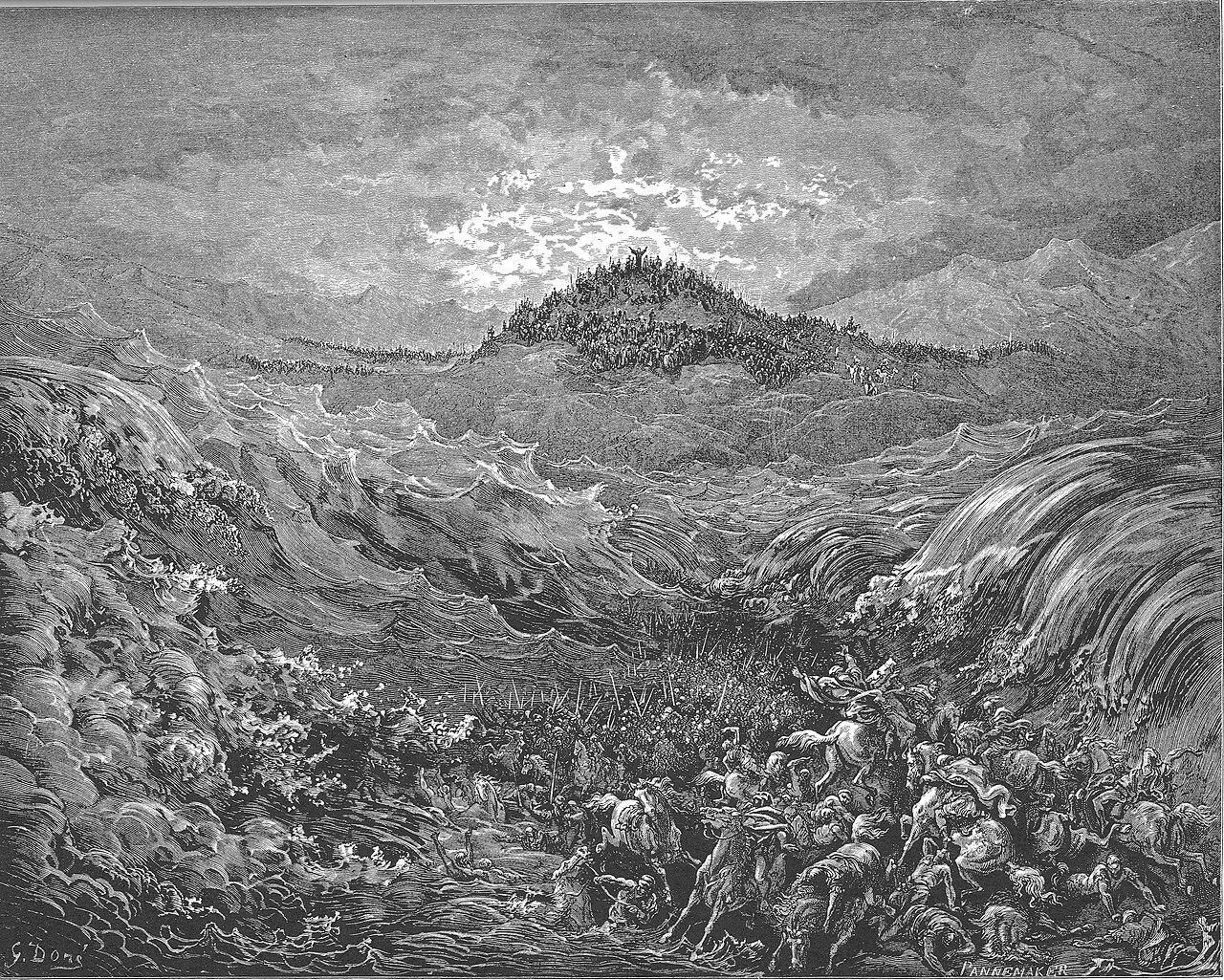
This page draws on Adam Clarke, Commentary on the Bible; Albert Barnes, Notes, Explanatory and Practical, on the Old and New Testaments (1832-1869); Jamieson, Fausset & Brown, Commentary Critical and Explanatory on the Whole Bible; John Gill, Exposition of the Old Testament (1748-1763); Keil and Delitzsch, Biblical Commentary on the Old Testament: The Pentateuch and Matthew Henry, Commentary on the Whole Bible.