
2 Samuel 6:20
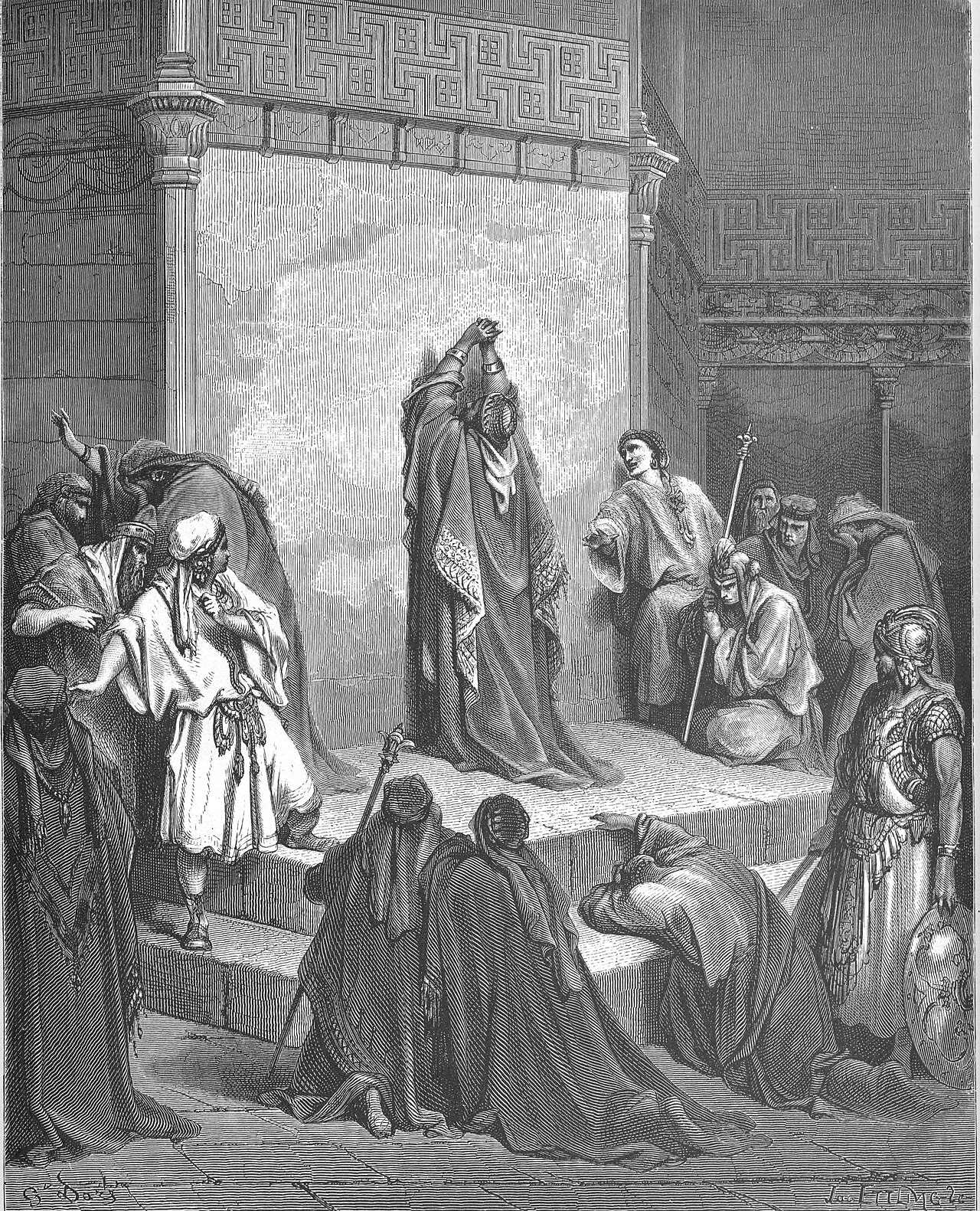
in 2 Samuel 6As soon as David returned home to bless his own household, Saul’s daughter Michal came out to meet him. “How the king of Israel has distinguished himself today!” she said. “He has uncovered himself today in the sight of the maidservants of his subjects, like a vulgar person would do.”
BSB
The same verse in ASV and KJV ▾
ASV
Then David returned to bless his household. And Michal the daughter of Saul came out to meet David, and said, How glorious was the king of Israel to-day, who uncovered himself to-day in the eyes of the handmaids of his servants, as one of the vain fellows shamelessly uncovereth himself!
KJV
Then David returned to bless his household. And Michal the daughter of Saul came out to meet David, and said, How glorious was the king of Israel to day, who uncovered himself to day in the eyes of the handmaids of his servants, as one of the vain fellows shamelessly uncovereth himself!
⋯
This verse in 2 Samuel 6
Commentary
14 notes on this verseBut the things which viewed corporeally are unseemly, when viewed in regard to holy religion become venerable, so that they who blame such things will involve their own souls in the net of blame. Thus Michal reproves David for his dancing and says to him, How glorious was the king of Israel to day, who uncovered himself to day in the eyes of his handmaids!
This site's exposition
uncovered himself to day
on 2 Samuel 6:20-22
Michal's word glorious is sarcasm, and her charge that David uncovered himself plays against the very ephod verse 14 already described; a linen ephod covered the body, and the commentators read her complaint as wounded royal dignity rather than a report of actual exposure. David's answer sets God's choice against her father's house in one breath, it was before the Lord, which chose me before thy father, and before all his house, turning her rebuke back on the reason he dances at all. His last word to her, I will yet be more vile than thus, and will be base in mine own sight, answers contempt with a deliberate choice: honour from the very maidservants she named in scorn.
The record, by era
The Puritans and the Awakening4 voices
): " How glorious was the king of Israel to-day! What a figure didst thou make to-day in the midst of the mob! How unbecoming thy post and character!" Her contempt of him and his devotion began in the heart, but out of the abundance of that the mouth spoke.
quarantine:debris (2026-07-29) — leading-punctuation+unbalanced-parens
Then David returned to bless his household,.... His wife, children, and servants, to wish all happiness to them on this occasion, and pray to God for blessings on them temporal and spiritual.
Ministers must not think that their public performances will excuse them from their family-worship; but when they have, with their instructions and prayers, blessed the solemn assemblies, they must return in the same manner to bless their households, for with them they are in a particular manner charged.
And, when we consider that the ark was both the token of God's presence and a type of Christ, we shall see that this story is very instructive. 1 Again, David gathered together all the chosen men of Israel, thirty thousand.
The Nineteenth Century1 voice
To bless his household - This was according to the custom of the patriarchs, who were priests in their own families. It is worthy of remark, that David is called patriarch by Stephen, Act 2:29, though living upwards of four hundred years after the termination of the patriarchal age. How glorious was the king of Israel - This is a strong irony. From what Michal says, it is probable that David used some violent gesticulations, by means of which some parts of his body became uncovered.
7 more voices on this verse
The Nineteenth Century6 voices
A commentator
Jamieson, Fausset & Brown1802–1910
Commentary Critical and Explanatory on the Whole Bible (1871)
proposed
Michal . . . came out to meet David, &c.--Proud of her royal extraction, she upbraided her husband for lowering the dignity of the crown and acting more like a buffoon than a king. But her taunting sarcasm was repelled in a manner that could not be agreeable to her feelings while it indicated the warm piety and gratitude of David.
DAVID had been soaring up on eagle's wings. Perhaps never in his life before had he so enjoyed the public worship of God. He had forgotten everything in the delight of bringing the Ark of the Lord home to his own city where he had prepared a tabernacle for its resting place. He had thrown himself into the gladsome service of the Lord that day. Nor had he been alone in joyful adoration—all the people had been unanimously with him in honoring Jehovah, the God of their fathers.
You will remember the remarkable passage of Sacred History which I related to you this morning, [See Sermon #307] how David sought on one occasion to bring up the Ark of God from Kirjath-Jearim to Jerusalem; but neglecting God’s Law, they put the Ark upon a cart, instead of carrying it upon the shoulders of the Levites. And as one mistake very soon leads to another, when the oxen stumbled, Uzzah put forth his hand to steady the Ark and prevent its falling, and God smote him there for his error and he died. It was an awful moment.
You will remember the remarkable passage of Sacred History which I related to you this morning, [See Sermon #307] how David sought on one occasion to bring up the Ark of God from Kirjath-Jearim to Jerusalem; but neglecting God’s Law, they put the Ark upon a cart, instead of carrying it upon the shoulders of the Levites. And as one mistake very soon leads to another, when the oxen stumbled, Uzzah put forth his hand to steady the Ark and prevent its falling, and God smote him there for his error and he died. It was an awful moment. The pulse of that vast assembly beating high with solemn festivity, receives a sudden jerk. The trumpet which erstwhile sent forth its cheerful blast, with the sacred melody of cornet, of psaltery and of harp—all are hushed in one instant! Dullness and terror seize the minds of all. They separate to their homes; the Ark is carried into a private house adjoining the residence of that eminent servant of God, Obed-edom, and there it tarried for the space of three months. David at last recovered his spirits and a second time, having carefully read over God’s Law concerning the removal of the Ark, he went down to the house of Obed-edom to carry it away. The priests, this time, lift up the Ark upon their shoulders by means of the golden staves which passed through golden rings and so uphold the Ark. Finding that they were not smitten, but that they lived and were able to carry the Ark, David paused and offered seven bullocks and seven rams as a sacrifice to God. Then, putting off his royal robe, laying aside his grown, he dressed himself like a priest, put on a linen ephod in order that he might have ease in the exercise which he meant to take and so, in the midst of all the people, like the poorest and meanest of them, he went before the Ark, and playing with his harp, he danced before the Lord with all his might.
DAVID had been soaring up on eagle's wings. Perhaps never in his life before had he so enjoyed the public worship of God. He had forgotten everything in the delight of bringing the Ark of the Lord home to his own city where he had prepared a tabernacle for its resting place. He had thrown himself into the gladsome service of the Lord that day. Nor had he been alone in joyful adoration—all the people had been unanimously with him in honoring Jehovah, the God of their fathers. It had been a high day, a day of days, such a day as the nation had not enjoyed in all its history. The king came home to bless his household, wishing that all his family might share in his joy. Exactly at that moment his wife, Michal, Saul's daughter, who had felt disgusted at seeing her husband dressed like a common Levite and leading the way in the midst of the common people, came out to meet him, full of furious scorn. Her language to him must have acted as if a man had thrown a pail of cold water into his face. With sarcastic words, villainously exaggerating what he had done and imputing to him what he had never done, she scolded the man she had scorned. How he must have felt it for the moment! We need not wonder if some have thought that his answer was somewhat bitter. Remember that David was not Jesus but only David. Always suspect some danger near when you perceive too much delight. It may sound like a paradox, but it is true, and experience proves that we never seem to be so near meeting the devil as when we have just met our God. When our Savior had been on the Mount of Transfiguration with His disciples, He met, at the foot of the hill, a father with a child possessed of the devil! Whenever you enjoy a season of peculiarly close communion with God and are full of very high joy, be on your guard.
A commentator
Albert Barnes1798–1870
Notes, Explanatory and Practical, on the Old and New Testaments (1832-1869)
proposed
Then David returned ... - He had passed his house to accompany the ark to the tabernacle he had pitched for it, when Michal saw him dancing. He now returns to bless his household. He had blessed the people 2Sa 6:18, but there were the inmates of his own house whom the customs of the age did not allow to be present, and so, with his usual considerate kindness and affection, David came to bless them also on this solemn occasion.
Modern Voices1 voice
If this is so, let them be very certain of this, that they are the kind of people who in the time of the maypole would have thought the maypole vulgar; who in the time of the Canterbury pilgrimage would have thought the Canterbury pilgrimage …
The words behind it
27 Hebrew wordsEvery Hebrew word of this verse in the order it stands, with what it means and the door to its own study. The last column counts the times a word stands in the whole Bible: the rarer the word, the more the places it appears belong together.
| Hebrew | Sound | Meaning | Word study | In the Bible |
|---|---|---|---|---|
| וַיָּ֥שָׁב | vaiyashov | and he returned | H7725 → | 1056 times |
| דָּוִ֖ד | david | David | H1732 → | 999 times |
| לְבָרֵ֣ךְ | levarekh | to bless | H1288 → | 330 times |
| אֶת־ | ʾet- | <obj.> | H853 → | 10935 times |
| בֵּית֑וֹ | beito | household his | H1004 → | 2046 times |
| וַתֵּצֵ֞א | vatetze' | and she came out | H3318 → | 1067 times |
| מִיכַ֤ל | mikhal | Michal | H4324 → | 18 times |
| בַּת־ | bat- | [the] daughter of | H1323 → | 588 times |
| שָׁאוּל֙ | shaul | Saul | H7586 → | 402 times |
| לִקְרַ֣את | likrat | to meet | H7122 → | 139 times |
| דָּוִ֔ד | david | David | H1732 → | 999 times |
| וַתֹּ֗אמֶר | vatomer | and she said | H559 → | 5305 times |
| מַה־ | mah- | how! | H4100 → | 752 times |
| נִּכְבַּ֨ד | nikhbad | he has honored himself | H3513 → | 113 times |
| הַיּ֜וֹם | haiyom | this day | H3117 → | 2304 times |
| מֶ֣לֶךְ | melekh | [the] king of | H4428 → | 2525 times |
| יִשְׂרָאֵ֗ל | yisrael | Israel | H3478 → | 2507 times |
| אֲשֶׁ֨ר | ʾasher | who | H834 → | 5497 times |
| נִגְלָ֤ה | niglah | he has uncovered himself | H1540 → | 186 times |
| הַיּוֹם֙ | haiyom | this day | H3117 → | 2304 times |
| לְעֵינֵ֨י | leeinei | to [the] eyes of | H5869 → | 887 times |
| אַמְה֣וֹת | ʾamhot | [the] maidservants of | H519 → | 56 times |
| עֲבָדָ֔יו | ʾavadav | servants his | H5650 → | 799 times |
| כְּהִגָּל֥וֹת | kehigalot | as uncovers himself | H1540 → | 186 times |
| נִגְל֖וֹת | niglot | shamelessly <uncover> | H1540 → | 186 times |
| אַחַ֥ד | ʾachad | one of | H259 → | 971 times |
| הָרֵקִֽים׃ | harekim | the worthless [men] | H7386 → |
וַיָּ֥שָׁבand he returned
vaiyashovH7725 →1056 times
דָּוִ֖דDavid
davidH1732 →999 times
לְבָרֵ֣ךְto bless
levarekhH1288 →330 times
אֶת־<obj.>
ʾet-H853 →10935 times
בֵּית֑וֹhousehold his
beitoH1004 →2046 times
וַתֵּצֵ֞אand she came out
vatetze'H3318 →1067 times
מִיכַ֤לMichal
mikhalH4324 →18 times
בַּת־[the] daughter of
bat-H1323 →588 times
שָׁאוּל֙Saul
shaulH7586 →402 times
לִקְרַ֣אתto meet
likratH7122 →139 times
דָּוִ֔דDavid
davidH1732 →999 times
וַתֹּ֗אמֶרand she said
vatomerH559 →5305 times
מַה־how!
mah-H4100 →752 times
נִּכְבַּ֨דhe has honored himself
nikhbadH3513 →113 times
הַיּ֜וֹםthis day
haiyomH3117 →2304 times
מֶ֣לֶךְ[the] king of
melekhH4428 →2525 times
יִשְׂרָאֵ֗לIsrael
yisraelH3478 →2507 times
אֲשֶׁ֨רwho
ʾasherH834 →5497 times
נִגְלָ֤הhe has uncovered himself
niglahH1540 →186 times
הַיּוֹם֙this day
haiyomH3117 →2304 times
לְעֵינֵ֨יto [the] eyes of
leeineiH5869 →887 times
אַמְה֣וֹת[the] maidservants of
ʾamhotH519 →56 times
עֲבָדָ֔יוservants his
ʾavadavH5650 →799 times
כְּהִגָּל֥וֹתas uncovers himself
kehigalotH1540 →186 times
נִגְל֖וֹתshamelessly <uncover>
niglotH1540 →186 times
אַחַ֥דone of
ʾachadH259 →971 times
הָרֵקִֽים׃the worthless [men]
harekimH7386 →
A shaded row is a word that stands 400 times or fewer in the Bible.
The walk
8 stopsEach card is a verse this one points to, and under it the verses that one points to in turn. Where several paths arrive at the same place, that place is listed first: the text keeps returning to it.
Through
Mark 3:21When His family heard about this, they went out to take custody of Him, saying, “He is out of His mind.”
it leads to
- Acts 26:24
At this stage of Paul’s defense, Festus exclaimed in a loud voice, “You are insane, Paul! Your great learning is driving you to madness!”
- John 10:20
Many of them said, “He is demon-possessed and insane. Why would you listen to Him?”
- Acts 26:24
Through
2 Samuel 6:16As the ark of the LORD was entering the City of David, Saul’s daughter Michal looked down from a window and saw King David leaping and dancing before the LORD, and she despised him…
it leads to
- 1 Corinthians 2:14
The natural man does not accept the things that come from the Spirit of God. For they are foolishness to him, and he cannot understand them, because they are spiritually discerned.
- 1 Chronicles 15:29
As the ark of the covenant of the LORD was entering the City of David, Saul’s daughter Michal looked down from a window and saw King David dancing and celebrating, and she despised him…
- Acts 2:13
But others mocked them and said, “They are drunk on new wine!”
- 2 Samuel 3:14
Then David sent messengers to say to Ish-bosheth son of Saul, “Give me back my wife, Michal, whom I betrothed to myself for a hundred Philistine foreskins.”
- 1 Corinthians 2:14
Through
2 Samuel 6:14And David, wearing a linen ephod, danced with all his might before the LORD,
it leads to
- 1 Samuel 2:18
Now Samuel was ministering before the LORD—a boy wearing a linen ephod.
- Exodus 15:20
Then Miriam the prophetess, Aaron’s sister, took a tambourine in her hand, and all the women followed her with tambourines and dancing.
- 1 Samuel 2:18
Where this verse is studied
On this page
Studies1
About 2 Samuel
Who and where
1 name in this verse with a page on the site.
This page draws on 11 works. Open the list of works
This page draws on Adam Clarke, Commentary on the Bible; Albert Barnes, Notes, Explanatory and Practical, on the Old and New Testaments (1832-1869); Ambrose of Milan, Letter 58.6; Calvin, Sermons on 2 Samuel; Charles Spurgeon, The Metropolitan Tabernacle Pulpit, Sermon No. 2031: “David Dancing Before the Ark Because of His Election” (lightly modernized text, CCEL edition); Charles Spurgeon, The New Park Street Pulpit, Sermon No. 321: “The Jeer Of Sarcasm, And The Retort Of Piety” (lightly modernized text, CCEL edition); GK Chesterton, Heretics, Ch. 6: Christmas and the Aesthetes (1905); Jamieson, Fausset & Brown, Commentary Critical and Explanatory on the Whole Bible; John Gill, Exposition of the Old Testament; John Gill, Exposition of the Old Testament (1748-1763) and Matthew Henry, Commentary on the Whole Bible.