
2 Samuel 6 · Story · Joy
David Danced Before the Ark
2 Samuel 6 records the ark of God brought into the City of David on its second attempt, with King David dancing before it.
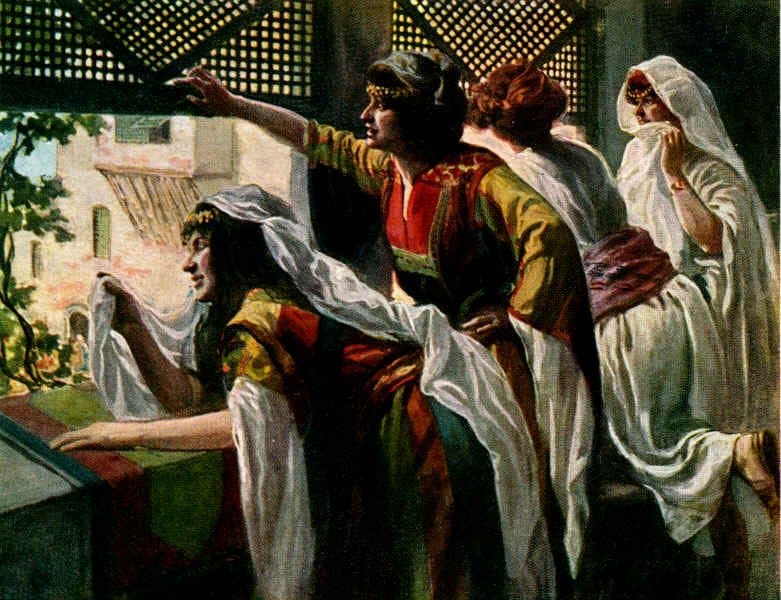
Saul's daughter watched the king from a window and despised him in her heart for the way he rejoiced.
And David, wearing a linen ephod, danced with all his might before the LORD,
- Where
- Jerusalem
- Who
- David, Michal
- When
- after David took the fortress of Zion (2 Samuel 5:7 to 9)
Summary
In 2 Samuel 6 David brought the ark of God, called by the name of the LORD of Hosts, into Jerusalem. The first attempt, on a new cart, ended when Uzzah took hold of the ark and God struck him down. Three months later the ark was carried up with sacrifice, shouting and the ram's horn, and David danced before the LORD. Michal despised him for it, and David answered her by naming the God who had chosen him. The account sets the fear of God before joy in Him and rests that joy on His choice.
- The ark's first procession to the City of David ended at the threshing floor of Nacon, where Uzzah took hold of it and died (2 Samuel 6:6 to 7).
- On the second attempt the Levites carried the ark on their shoulders with the poles, as Moses had commanded (1 Chronicles 15:15). An ox and a fattened calf were sacrificed after six paces (2 Samuel 6:13).
- David, wearing a linen ephod, danced with all his might before the LORD while all Israel brought the ark up with shouting and the ram's horn (2 Samuel 6:14 to 15).
- David told Michal that he danced before the LORD who chose him over her father's house, so the ground of his joy was God's choice (2 Samuel 6:21).
The King Who Danced
The story shows a king's joy before God and the contempt it met in his own house.
David Danced Before the Ark is the story of 2 Samuel 6, in which the ark came up to Jerusalem and its coming moved the king to whirl and leap before the LORD. It belongs to the Bible's teaching on joy, the gladness in God that Scripture commands of His people and records in their worship. The story speaks to every reader who comes before God in worship, because one chapter holds both the fear of God and joy in Him.
The question at its centre is why the same ark brought death on the first procession and dancing on the second, and on what ground David rejoiced when Saul's daughter despised him. The law of Moses for carrying the ark, the Hebrew words the narrator chose for the dance and David's answer to Michal each bear on that question.
The narrator and David himself say five times that the celebrating and the dancing were before the LORD (2 Samuel 6:5, 14, 16 and 21). The joy of the chapter is joy in His presence.
The Two Processions
The ark set out twice for the City of David, and the narrator records each procession in its own verses.
The first procession ended in a death beside the ark, and the second, carried on shoulders and honoured with sacrifice, ended with the ark in its tent and the people blessed.
| What the text records | The first procession | The second procession |
|---|---|---|
| How the ark travelled | On a new cart from the house of Abinadab, with Uzzah and Ahio guiding it (2 Samuel 6:3) | Carried by men, whom the Chronicler names as the Levites with the poles on their shoulders (2 Samuel 6:13; 1 Chronicles 15:15) |
| Who went | David with thirty thousand chosen men of Israel (2 Samuel 6:1 to 2) | David with all the house of Israel (2 Samuel 6:15) |
| The sound | Harps, stringed instruments, tambourines, sistrums and cymbals (2 Samuel 6:5) | Shouting and the sounding of the ram's horn (2 Samuel 6:15) |
| The offerings | No offering recorded on the way (2 Samuel 6:3 to 6) | An ox and a fattened calf after six paces, then burnt offerings and peace offerings at the tent (2 Samuel 6:13; 2 Samuel 6:17) |
| On the way | The oxen stumbled, Uzzah took hold of the ark and God struck him down (2 Samuel 6:6 to 7) | David, in a linen ephod, danced before the LORD (2 Samuel 6:14) |
| Where it ended | Three months at the house of Obed-edom the Gittite (2 Samuel 6:10 to 11) | In its place inside the tent David had pitched, with the people blessed and fed (2 Samuel 6:17 to 19) |
From Fear to Rejoicing
Between the two processions David was angry, then afraid, and then he heard what the ark had brought to the house where it stayed.
Uzzah's death turned the celebration into anger, and David named the place Perez-uzzah because the LORD had burst forth there (2 Samuel 6:8).
That day David feared the LORD and asked, “How can the ark of the LORD ever come to me?”David's question shows that the death taught him to fear the LORD, and the next verse records that he would not take the ark into his city.
The news that changed his mind was the blessing on the household where the ark had stayed.
Now it was reported to King David, “The LORD has blessed the house of Obed-edom and all that belongs to him, because of the ark of God.” So David went and had the ark of God brought up from the house of Obed-edom into the City of David with rejoicing.The report of blessing sent David back for the ark, and the narrator says he brought it up with rejoicing.
The account puts fear before joy in one man. David feared the LORD on the day Uzzah died, and three months later he rejoiced before Him.
The Words for the Dance
The narrator uses four Hebrew words for David's joy between 2 Samuel 6:12 and 6:21.
SIMCHAH, REJOICING
David brought the ark up with simchah, which Strong's gives as blithesomeness or glee, religious or festival. The noun occurs 94 times.
KARAR, TO WHIRL
Mekharker, dancing, comes from karar, which Strong's defines as to dance, that is, to whirl. The Hebrew Bible uses the verb twice, both times of David in this chapter.
PAZAZ, TO LEAP
Mefazzez, leaping, is what Michal saw from the window. The verb occurs twice, here and in Genesis 49:24.
SACHAQ, TO CELEBRATE
Ve-sichakti, I will celebrate, is David's word to Michal. Sachaq is to laugh, in pleasure or in detraction, and the interlinear gloss reads it here as and I will play.
Pazaz, to leap, Sachaq, to celebrate
Strong's notes give where a word comes from, and the sentence it stands in gives its meaning.
The Ark and the Law for Carrying It
The law of Moses set down how the ark was to be moved and who was to move it.
The law had given the ark poles that were never to be taken from its rings (Exodus 25:14 to 15). It warned the men who carried the holy things that touching them meant death (Numbers 4:15).
But he did not give any to the Kohathites, since they were to carry on their shoulders the holy objects for which they were responsible.The verse sets the shoulder against the cart, and David's men chose the cart in 2 Samuel 6:3.
Before the second procession David himself told the heads of the Levites why the first had failed.
It was because you Levites were not with us the first time that the LORD our God burst forth in anger against us. For we did not consult Him about the proper order.”This is David's own account of why Uzzah died, given to the men who would carry the ark the second time.
The ark stood at Kiriath-jearim until David took Zion1 Samuel 7:1; 1 Chronicles 13:6; 2 Samuel 5:7 to 9
The ark had been kept in the house of Abinadab on the hill since the men of Kiriath-jearim took it there (1 Samuel 7:1). Chronicles calls the town Baalah of Judah and names it as Kiriath-jearim (1 Chronicles 13:6). David had lately taken the fortress of Zion and called it the City of David (2 Samuel 5:7 to 9).
Saul's Daughter at the Window
Michal was David's wife and the daughter of the king the LORD had rejected.
Michal had loved David when he served her father (1 Samuel 18:20). Saul later gave her to Palti son of Laish (1 Samuel 25:44). David required her return before he would make a covenant with Abner, and she was taken from a husband who followed her weeping to Bahurim (2 Samuel 3:13 to 16).
The narrator calls her Saul's daughter at the window, at the door of David's house and in the chapter's last verse (2 Samuel 6:16, 20 and 23).
What the Chapter Leaves Unsaid
The narrator leaves the cause of Michal's childlessness and the end of her quarrel with David unstated.
The last verse says that Michal had no children to the day of her death, and it gives no cause (2 Samuel 6:23). The narrator does not say whether the LORD withheld children from her or whether David kept apart from her.
The chapter records no reply from Michal to David's answer. Chronicles keeps her contempt at the window and has David go home to bless his household, and it records neither her words to him nor his answer (1 Chronicles 15:29; 1 Chronicles 16:43).
Before the LORD Who Chose Him
David's answer to Michal rests his joy on the LORD's choice of him.
But David said to Michal, “I was dancing before the LORD, who chose me over your father and all his house when He appointed me ruler over the LORD’s people Israel. I will celebrate before the LORD, and I will humiliate and humble myself even more than this. Yet I will be honored by the maidservants of whom you have spoken.”David's answer gives the ground of the dance, the LORD who chose him, and his resolve to be humbled further before Him.
David shared the joy with the people. When the offerings were done he blessed them in the name of the LORD of Hosts. He gave every man and woman a loaf of bread, a date cake and a raisin cake (2 Samuel 6:18 to 19).
and you shall rejoice before the LORD your God in the place He will choose as a dwelling for His Name—you, your sons and daughters, your menservants and maidservants, and the Levite within your gates, as well as the foreigner, the fatherless, and the widows among you.The law of the feasts set rejoicing before the LORD at the place He would choose, with every member of the household in it.
Michal's contempt has a likeness in Jesus' parable of the lost son, where the older son heard music and dancing at his brother's return, became angry and refused to go in (Luke 15:25 and 28).
Teachers on the Dance
Gregory the Great, Matthew Henry and Charles Spurgeon each read the dance as the king's joy before God.
died 604 · Gregory the Dialogist
Gregory the Great, preaching on the Gospels, held up the dance as a king setting aside the power of his throne.
“On the contrary, when David despised the power of his kingdom by dancing before the ark of the Lord's covenant, he said: ‘I will play and become more vile than I have become, and I will be humble in my own eyes.’”
Gregory the Dialogist · Forty Gospel Homilies, Homily 7 · on 2 Samuel 6:22Patristic
1662 to 1714 · Matthew Henry
Matthew Henry saw in the dance a man glad to be set right after the failure of the first procession.
“It is a pleasure to a good man to see his errors rectified and himself in the way of his duty. His dancing, I suppose, was not artificial, by any certain rule or measure, nor do we find that any danced with him; but it was a natural expression of his great joy and exultation of mind.”
Matthew Henry · Commentary on the Whole Bible · on 2 Samuel 6:14Puritan
Charles Spurgeon preached on the scene in 1888 under the title David Dancing Before the Ark Because of His Election. The title names his election as the ground of the dance.
Michal's Charge
Michal said the king had uncovered himself before the maidservants, and readers divide on how to weigh her words.
A shameful exposure before the maidservantsMichal, Saul's daughter, in 2 Samuel 6:20
Michal told David that he had "uncovered himself today in the sight of the maidservants of his subjects, like a vulgar person would do" (2 Samuel 6:20). Her reading counts the dance as shame to a king.
Matthew Henry set out what Michal saw in the king's zeal.
“She thought this mighty zeal of his for the ark of God, and the transport of joy he was in upon its coming home to him, was but a foolish thing, and unbecoming so great a soldier, and statesman, and monarch, as he was.”
Matthew Henry · Commentary on the Whole Bible · on 2 Samuel 6:16Puritan
A dance made honourable by worshipAmbrose of Milan
Ambrose of Milan took up the scene in his Letter 58. He wrote that things which look unseemly when viewed bodily "when viewed in regard to holy religion become venerable", and he gave Michal's reproof of David's dancing as his example. He placed the blame on the one who gave it.
Now David was dressed in a robe of fine linen, as were all the Levites who were carrying the ark, as well as the singers and Chenaniah, the director of music for the singers. David also wore a linen ephod.The king was dressed as the men who carried the ark were dressed, and this reading rests on that dress.
Mourning Into Dancing
The chapter that began with a death beside the ark ends with the ark at rest in the city and the people sent home blessed.
The fear of the LORD and joy in Him belong to one worship. David learned the first at Perez-uzzah and showed the second before the ark, and the God who struck Uzzah is the God who blessed the house of Obed-edom.
You turned my mourning into dancing; You peeled off my sackcloth and clothed me with joy,The psalmist gives the LORD the credit for turning mourning into dancing, the turn this chapter records between Perez-uzzah and the City of David.
Sources
Scripture is the Berean Standard Bible.
- STEP Bible TBESH, Tyndale House, CC BY 4.0.
- Matthew Henry, Commentary on the Whole Bible (1710)
- Gregory the Great, Forty Gospel Homilies, Homily 7.
- Ambrose of Milan, Letter 58.6.
Keep Studying
In this value7
People and groups3
Places2
Symbols1
Doctrines1