
2 Samuel 3:33
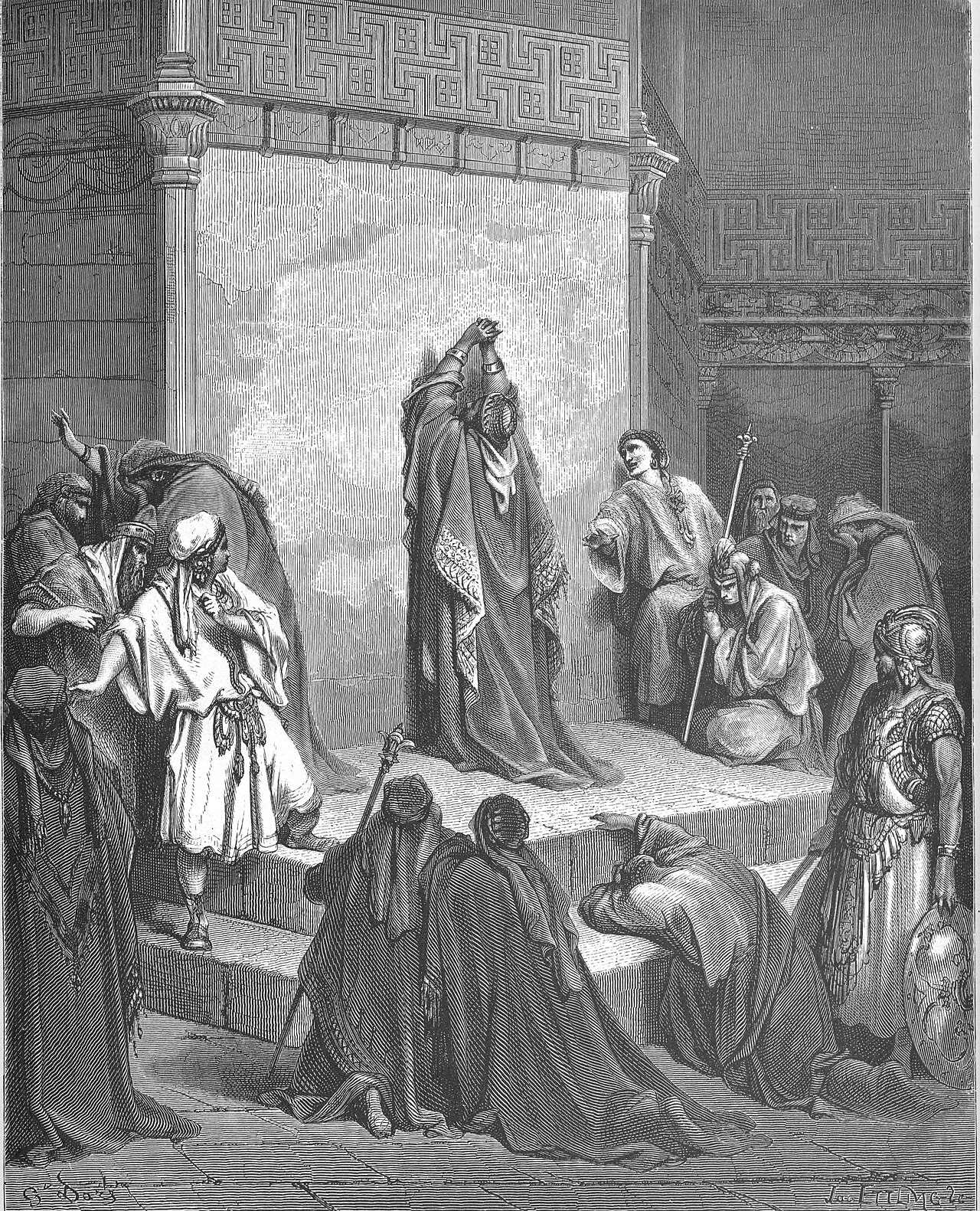
in 2 Samuel 3And the king sang this lament for Abner: “Should Abner die the death of a fool?
BSB
The same verse in ASV and KJV ▾
ASV
And the king lamented for Abner, and said, Should Abner die as a fool dieth?
KJV
And the king lamented over Abner, and said, Died Abner as a fool dieth?
⋯
This verse in 2 Samuel 3
Commentary
7 notes on this verseA commentator
Albert Barnes1798–1870
Notes, Explanatory and Practical, on the Old and New Testaments (1832-1869)
Lamented - i. e. composed and sang the funeral dirge which follows (compare 2Sa 1:17). Died Abner ... - i. e. The great and noble and valiant Abner had died as ignobly and as helplessly as the meanest churl!
This site's exposition
Died Abner as a fool dieth
on 2 Samuel 3:33-34
David composes a dirge over Abner, the second such lament the book records after the one over Saul and Jonathan at 1:19-27, and its question answers itself in the next line: thy hands were not bound, nor thy feet put into fetters, a man cut down by treachery rather than by any justice he had earned. Barnes reads the whole lament as the deliberate opposite of a fool's death, since Abner was neither guilty nor helpless but simply unwarned, and Wesley reads the line as a general warning against any death a man brings nearer by his own folly, applied here to the man who struck rather than the man who fell.
The record, by era
The Puritans and the Awakening4 voices
Was he cut off by the hand of justice for his crimes? Nothing less; but by Joab's malice and treachery. It is a sad thing to die as a fool dieth, as they do that any way shorten their own days: and indeed all they that make no provision for another world.
David's Wives and Children. 1 Now there was long war between the house of Saul and the house of David: but David waxed stronger and stronger, and the house of Saul waxed weaker and weaker. 2 And unto David were sons born in Hebron: and his firstborn was Amnon, of Ahinoam the Jezreelitess;
quarantine:scripture (2026-07-29) — scripture-overlap:92%@v1-3
And the king lamented over Abner,....
A man may have his life, and all that is dear to him, taken from him, and not be able to prevent it with all his wisdom, care, and integrity; but there is that which no thief can break through to steal. See here how much more we are beholden to God's providence than to our own prudence for the continuance of our lives and comforts.
The Nineteenth Century1 voice
The king lamented over Abner - This lamentation, though short, is very pathetic. It is a high strain of poetry; but the measure cannot be easily ascertained. Our own translation may be measured thus: - Died Abner as a fool dieth? Thy hands were not bound, Nor thy feet put into fetters. As a man falleth before the wicked. So hast thou fallen! Or thus: - Shall Abner die a death like to a villain’s? Thy hands not bound, Nor were the fetters to thy feet applied. Like as one falls before the sons of guilt, So hast thou fallen! He was not taken away by the hand of justice, nor in battle, nor by accident: he died the death of a culprit by falling into the hands of a villain. This song was a heavy reproof to Joab; and must have galled him extremely, being sung by all the people.
The words behind it
9 Hebrew wordsEvery Hebrew word of this verse in the order it stands, with what it means and the door to its own study. The last column counts the times a word stands in the whole Bible: the rarer the word, the more the places it appears belong together.
| Hebrew | Sound | Meaning | Word study | In the Bible |
|---|---|---|---|---|
| וַיְקֹנֵ֥ן | vaykonen | and he lamented | H6969 → | |
| הַמֶּ֛לֶךְ | hamelekh | the king | H4428 → | 2525 times |
| אֶל־ | ʾel- | because of | H413 → | 5510 times |
| אַבְנֵ֖ר | ʾavner | Abner | H74 → | 63 times |
| וַיֹּאמַ֑ר | vaiyomar | and he said | H559 → | 5305 times |
| הַכְּמ֥וֹת | hakemot | ¿ like [the] death of | H4194 → | 156 times |
| נָבָ֖ל | naval | a fool | H5036 → | |
| יָמ֥וּת | yamut | will he die | H4191 → | 839 times |
| אַבְנֵֽר׃ | ʾavner | Abner | H74 → | 63 times |
וַיְקֹנֵ֥ןand he lamented
vaykonenH6969 →
הַמֶּ֛לֶךְthe king
hamelekhH4428 →2525 times
אֶל־because of
ʾel-H413 →5510 times
אַבְנֵ֖רAbner
ʾavnerH74 →63 times
וַיֹּאמַ֑רand he said
vaiyomarH559 →5305 times
הַכְּמ֥וֹת¿ like [the] death of
hakemotH4194 →156 times
נָבָ֖לa fool
navalH5036 →
יָמ֥וּתwill he die
yamutH4191 →839 times
אַבְנֵֽר׃Abner
ʾavnerH74 →63 times
A shaded row is a word that stands 400 times or fewer in the Bible.
The walk
8 stopsEach card is a verse this one points to, and under it the verses that one points to in turn. Where several paths arrive at the same place, that place is listed first: the text keeps returning to it.
Through
Proverbs 18:7A fool’s mouth is his ruin, and his lips are a snare to his soul.
it leads to
- Proverbs 13:3
He who guards his mouth protects his life, but the one who opens his lips invites his own ruin.
- Proverbs 10:14
The wise store up knowledge, but the mouth of the fool invites destruction.
- Proverbs 12:13
An evil man is trapped by his rebellious speech, but a righteous man escapes from trouble.
- Psalms 64:8
They will be made to stumble, their own tongues turned against them. All who see will shake their heads.
- Psalms 140:9
May the heads of those who surround me be covered in the trouble their lips have caused.
- Proverbs 13:3
Through
2 Chronicles 35:25Then Jeremiah lamented over Josiah, and to this day all the choirs of men and women sing laments over Josiah. They established them as a statute for Israel, and indeed they are written in…
it leads to
- Jeremiah 9:17–21
This is what the LORD of Hosts says: “Take note, and summon the wailing women; send for the most skillful among them.
Reached by 2 separate paths from here.
- Jeremiah 22:10
Do not weep for the dead king; do not mourn his loss. Weep bitterly for the one who is exiled, for he will never return to see his native land.
- Jeremiah 9:17–21
Through
2 Samuel 1:17Then David took up this lament for Saul and his son Jonathan,
it leads to
- 2 Chronicles 35:25
Then Jeremiah lamented over Josiah, and to this day all the choirs of men and women sing laments over Josiah. They established them as a statute for Israel, and indeed they are written in…
- 2 Chronicles 35:25
Where this verse is studied
On this page
Studies1
About 2 Samuel
This page draws on Adam Clarke, Commentary on the Bible; Albert Barnes, Notes, Explanatory and Practical, on the Old and New Testaments (1832-1869); Albert Barnes, Notes on the Old Testament; John Gill, Exposition of the Old Testament (1748-1763); John Wesley, Explanatory Notes upon the Old Testament and Matthew Henry, Commentary on the Whole Bible.