
2 Samuel 24:13
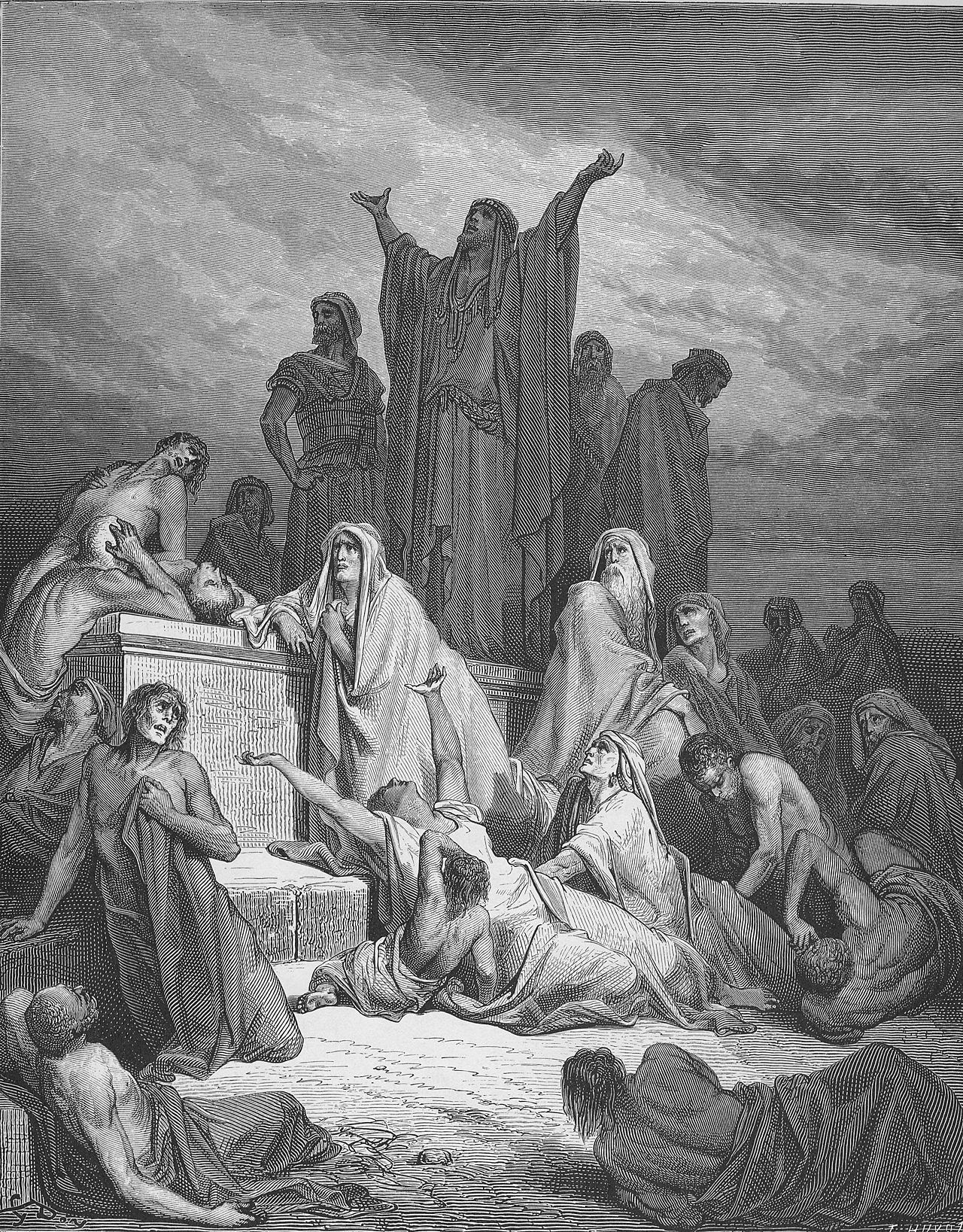
in 2 Samuel 24So Gad went and said to David, “Do you choose to endure three years of famine in your land, three months of fleeing the pursuit of your enemies, or three days of plague upon your land? Now then, think it over and decide how I should reply to Him who sent me.”
BSB
The same verse in ASV and KJV ▾
ASV
So Gad came to David, and told him, and said unto him, Shall seven years of famine come unto thee in thy land? or wilt thou flee three months before thy foes while they pursue thee? or shall there be three days’ pestilence in thy land? now advise thee, and consider what answer I shall return to him that sent me.
KJV
So Gad came to David, and told him, and said unto him, Shall seven years of famine come unto thee in thy land? or wilt thou flee three months before thine enemies, while they pursue thee? or that there be three days’ pestilence in thy land? now advise, and see what answer I shall return to him that sent me.
⋯
This verse in 2 Samuel 24
Commentary
8 notes on this verseA commentator
Albert Barnes1798–1870
Notes, Explanatory and Practical, on the Old and New Testaments (1832-1869)
Compare Eze 14:13-21. The “seven” years of famine correspond with the “seven” years of famine in Gen 41:27, Gen 41:30, and with the same number of years in 2Ki 8:1. But in Chronicles, it is “three years,” which agrees better with the “three” months and “three” days. The whole passage is amplified in Chronicles, which has less the aspect of an original text than this.
This site's exposition
the word of the Lord came unto the prophet Gad
on 2 Samuel 24:11-14
Gad is named David's seer, and the word of the Lord reaches the king through him rather than through the dream, Urim or prophet that failed Saul at 1 Samuel 28:6. Three judgments are offered, famine, flight before enemies, or pestilence, and Albert Barnes notes that Chronicles gives three years of famine where this text gives seven, a difference stated honestly rather than smoothed away. David will not choose between armies of men and settles on the third term by trusting the judge rather than bargaining the sentence, let us fall now into the hand of the Lord, for his mercies are great. Adam Clarke reads the choice as David's own nobility, since pestilence exposed him and his household to the same danger as the poorest man in Israel.
This site's exposition
three years of famine
Gad offers David three years of famine, three months of fleeing and three days of plague, and the Berean text follows 1 Chronicles 21:12 and the Septuagint in the first. The Hebrew of Samuel reads seven years, and Adam Clarke blames a copyist's confusion of two letters. Jamieson, Fausset and Brown keep seven, counting past famine years.
The record, by era
The Puritans and the Awakening2 voices
God, by putting him thus to his choice, designed, [1.] To humble him the more for his sin, which we would see to be exceedingly sinful when he came to consider each of these judgments as exceedingly dreadful. Or, [2.] To upbraid him with the proud conceit he had of his own sovereignty over Israel. He that is so great a prince begins to think he may have what he will.
So Gad came to David, and told him,....
The Nineteenth Century3 voices
A commentator
Jamieson, Fausset & Brown1802–1910
Commentary Critical and Explanatory on the Whole Bible (1871)
Shall seven years of famine come unto thee--that is, in addition to the three that had been already, with the current year included (see on 1Ch 21:11).
A commentator
Jamieson, Fausset & Brown1802–1910
Commentary Critical and Explanatory on the Whole Bible (1871)
proposed
David's heart smote him after that he had numbered the people. And David said unto the Lord, I have sinned--The act of numbering the people was not in itself sinful; for Moses did it by the express authority of God.
quarantine:scripture (2026-07-29) — verbatim-run:21w-of-42
Shall seven years of famine - In 1Ch 21:12, the number is three, not seven; and here the Septuagint has three, the same as in Chronicles: this is no doubt the true reading, the letter ז zain, Seven, being mistaken for ג gimel, Three. A mistake of this kind might be easily made from the similarity of the letters.
The words behind it
35 Hebrew wordsEvery Hebrew word of this verse in the order it stands, with what it means and the door to its own study. The last column counts the times a word stands in the whole Bible: the rarer the word, the more the places it appears belong together.
| Hebrew | Sound | Meaning | Word study | In the Bible |
|---|---|---|---|---|
| וַיָּבֹא־ | vaiyavo'- | and he went | H935 → | 2568 times |
| גָ֥ד | gad | Gad | H1410 → | 72 times |
| אֶל־ | ʾel- | to | H413 → | 5510 times |
| דָּוִ֖ד | david | David | H1732 → | 999 times |
| וַיַּגֶּד־ | vaiyaged- | and he told | H5046 → | 370 times |
| ל֑וֹ | lo | to <the> him | ||
| וַיֹּ֣אמֶר | vaiyomer | and he said | H559 → | 5305 times |
| ל֡וֹ | lo | to <the> him | ||
| הֲתָב֣וֹא | hatavo' | ¿ will it come | H935 → | 2568 times |
| לְךָ֣ | lekha | to <the> you | ||
| שֶֽׁבַע | sheva' | seven | H7651 → | 394 times |
| שָׁנִ֣ים׀ | shanim | years | H8141 → | 877 times |
| רָעָ֣ב׀ | raav | famine | H7458 → | |
| בְּאַרְצֶ֡ךָ | beartzekha | in land your | H776 → | 2504 times |
| אִם־ | ʾim- | or? | H518 → | 1069 times |
| שְׁלֹשָׁ֣ה | sheloshah | three | H7969 → | 432 times |
| חֳ֠דָשִׁים | chodashim | months | H2320 → | 284 times |
| נֻסְךָ֨ | nuskha | fleeing you | H5127 → | 159 times |
| לִפְנֵֽי־ | lifnei- | <to> before | H6440 → | 2123 times |
| צָרֶ֜יךָ | tzareikha | opponents your | H6862 → | 109 times |
| וְה֣וּא | vehu' | and he | H1931 → | 1879 times |
| רֹדְפֶ֗ךָ | rodefekha | [will be] pursuing you | H7291 → | 143 times |
| וְאִם־ | veim- | and or? | H518 → | 1069 times |
| הֱ֠יוֹת | heyot | to be | H1961 → | 3559 times |
| שְׁלֹ֨שֶׁת | sheloshet | three | H7969 → | 432 times |
| יָמִ֥ים | yamim | days | H3117 → | 2304 times |
| דֶּ֙בֶר֙ | dever | pestilence | H1698 → | |
| בְּאַרְצֶ֔ךָ | beartzekha | in land your | H776 → | 2504 times |
| עַתָּה֙ | ʾatah | now | H6258 → | 433 times |
| דַּ֣ע | da' | know | H3045 → | 945 times |
| וּרְאֵ֔ה | ureeh | and see | H7200 → | 1300 times |
| מָה־ | mah- | what? | H4100 → | 752 times |
| אָשִׁ֥יב | ʾashiv | will I bring back | H7725 → | 1056 times |
| שֹׁלְחִ֖י | sholechi | [the] [one who] sent me | H7971 → | 845 times |
| דָּבָֽר׃ ס | davar | word | H1697 → | 1440 times |
וַיָּבֹא־and he went
vaiyavo'-H935 →2568 times
גָ֥דGad
gadH1410 →72 times
אֶל־to
ʾel-H413 →5510 times
דָּוִ֖דDavid
davidH1732 →999 times
וַיַּגֶּד־and he told
vaiyaged-H5046 →370 times
ל֑וֹto <the> him
lo
וַיֹּ֣אמֶרand he said
vaiyomerH559 →5305 times
ל֡וֹto <the> him
lo
הֲתָב֣וֹא¿ will it come
hatavo'H935 →2568 times
לְךָ֣to <the> you
lekha
שֶֽׁבַעseven
sheva'H7651 →394 times
שָׁנִ֣ים׀years
shanimH8141 →877 times
רָעָ֣ב׀famine
raavH7458 →
בְּאַרְצֶ֡ךָin land your
beartzekhaH776 →2504 times
אִם־or?
ʾim-H518 →1069 times
שְׁלֹשָׁ֣הthree
sheloshahH7969 →432 times
חֳ֠דָשִׁיםmonths
chodashimH2320 →284 times
נֻסְךָ֨fleeing you
nuskhaH5127 →159 times
לִפְנֵֽי־<to> before
lifnei-H6440 →2123 times
צָרֶ֜יךָopponents your
tzareikhaH6862 →109 times
וְה֣וּאand he
vehu'H1931 →1879 times
רֹדְפֶ֗ךָ[will be] pursuing you
rodefekhaH7291 →143 times
וְאִם־and or?
veim-H518 →1069 times
הֱ֠יוֹתto be
heyotH1961 →3559 times
שְׁלֹ֨שֶׁתthree
sheloshetH7969 →432 times
יָמִ֥יםdays
yamimH3117 →2304 times
דֶּ֙בֶר֙pestilence
deverH1698 →
בְּאַרְצֶ֔ךָin land your
beartzekhaH776 →2504 times
עַתָּה֙now
ʾatahH6258 →433 times
דַּ֣עknow
da'H3045 →945 times
וּרְאֵ֔הand see
ureehH7200 →1300 times
מָה־what?
mah-H4100 →752 times
אָשִׁ֥יבwill I bring back
ʾashivH7725 →1056 times
שֹׁלְחִ֖י[the] [one who] sent me
sholechiH7971 →845 times
דָּבָֽר׃ סword
davarH1697 →1440 times
A shaded row is a word that stands 400 times or fewer in the Bible.
The walk
8 stopsEach card is a verse this one points to, and under it the verses that one points to in turn. Where several paths arrive at the same place, that place is listed first: the text keeps returning to it.
Through
Deuteronomy 28:22The LORD will strike you with wasting disease, with fever and inflammation, with scorching heat and drought, and with blight and mildew; these will pursue you until you perish.
it leads to
- Leviticus 26:16
then this is what I will do to you: I will bring upon you sudden terror, wasting disease, and fever that will destroy your sight and drain your life. You will sow your seed…
- Amos 4:9
“I struck you with blight and mildew in your growing gardens and vineyards; the locust devoured your fig and olive trees, yet you did not return to Me,” declares the LORD.
- 1 Kings 8:37
When famine or plague comes upon the land, or blight or mildew or locusts or grasshoppers, or when their enemy besieges them in their cities, whatever plague or sickness may come,
- Haggai 2:17
I struck you—all the work of your hands—with blight, mildew, and hail, but you did not turn to Me, declares the LORD.
- Leviticus 26:16
Through
2 Samuel 21:1During the reign of David there was a famine for three successive years, and David sought the face of the LORD. And the LORD said, “It is because of the blood shed by Saul…
it leads to
- Joshua 7:11–12
Israel has sinned; they have transgressed My covenant that I commanded them, and they have taken some of what was devoted to destruction. Indeed, they have stolen and lied, and they have put these…
- Joshua 7:11–12
Through
Leviticus 26:25And I will bring a sword against you to execute the vengeance of the covenant. Though you withdraw into your cities, I will send a plague among you, and you will be delivered into…
it leads to
- Ezekiel 5:17
I will send famine and wild beasts against you, and they will leave you childless. Plague and bloodshed will sweep through you, and I will bring a sword against you. I, the LORD, have…
- Numbers 14:12
I will strike them with a plague and destroy them—and I will make you into a nation greater and mightier than they are.”
- Deuteronomy 28:21
The LORD will make the plague cling to you until He has exterminated you from the land that you are entering to possess.
- Ezekiel 5:17
Where this verse is studied
On this page
About 2 Samuel
Who and where
1 name in this verse with a page on the site.
This page draws on Adam Clarke, Commentary on the Bible; Albert Barnes, Notes, Explanatory and Practical, on the Old and New Testaments (1832-1869); Albert Barnes, Notes on the Old Testament; Jamieson, Fausset & Brown, Commentary Critical and Explanatory on the Whole Bible; John Gill, Exposition of the Old Testament (1748-1763) and Matthew Henry, Commentary on the Whole Bible.