
2 Kings 25:1
in 2 Kings 25So in the ninth year of Zedekiah’s reign, on the tenth day of the tenth month, Nebuchadnezzar king of Babylon marched against Jerusalem with his entire army. They encamped outside the city and built a siege wall all around it.
BSB
The same verse in ASV and KJV ▾
ASV
And it came to pass in the ninth year of his reign, in the tenth month, in the tenth day of the month, that Nebuchadnezzar king of Babylon came, he and all his army, against Jerusalem, and encamped against it; and they built forts against it round about.
KJV
And it came to pass in the ninth year of his reign, in the tenth month, in the tenth day of the month, that Nebuchadnezzar king of Babylon came, he, and all his host, against Jerusalem, and pitched against it; and they built forts against it round about.
⋯
This verse in 2 Kings 25
Commentary
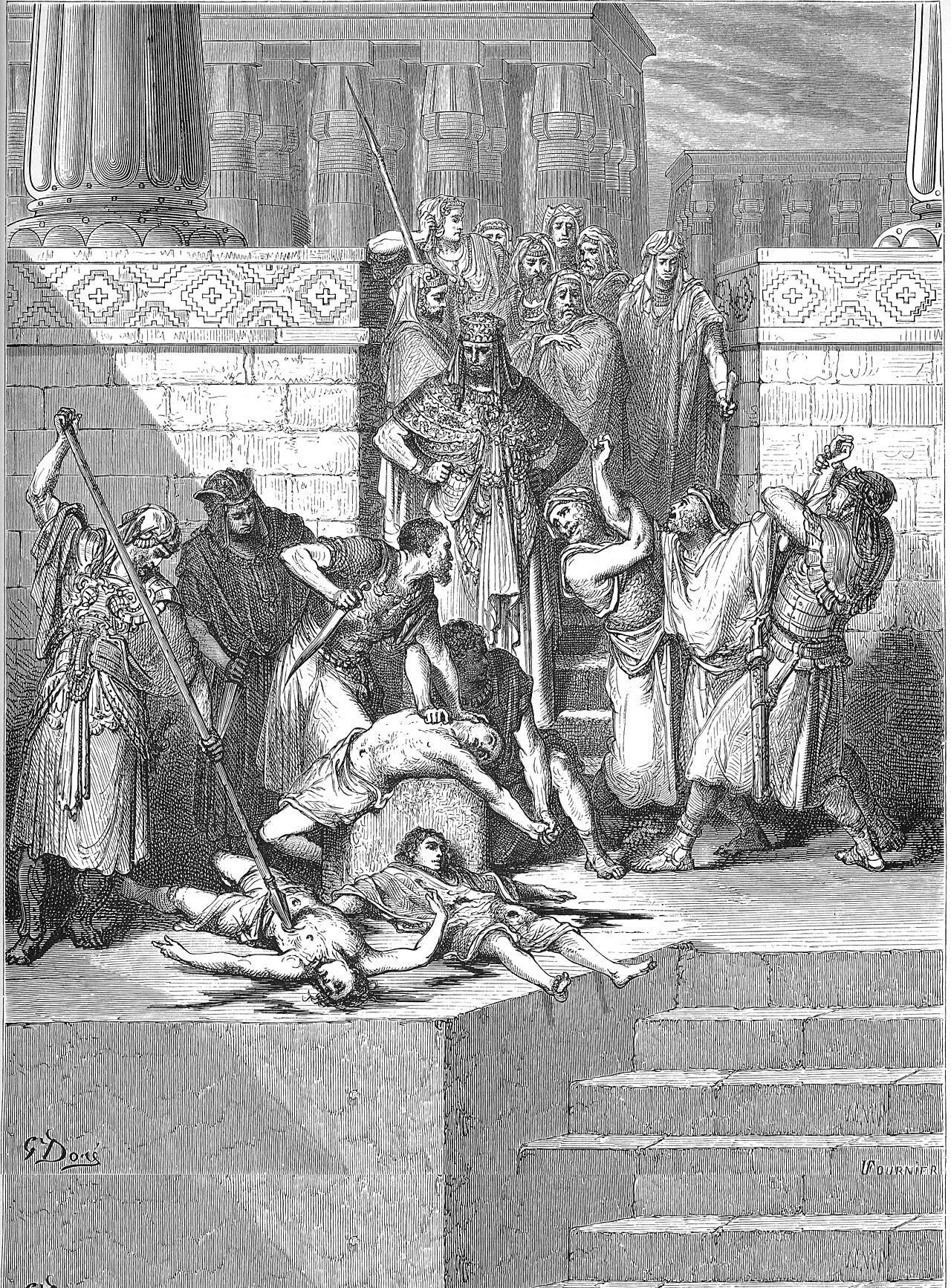
7 notes on this verseWhat think you of Nebuchadnezzar? Have you not heard from Scripture that he was bloodthirsty, fierce, with the disposition of a lion? Have you not heard that he disinterred the kings? Have you not heard that he brought the people away into captivity? Have you not heard that he put the king's sons to the sword before Zedekiah's eyes and then blinded him? Have you not heard that he shattered the cherubim?
This site's exposition
in the tenth month
on 2 Kings 25:1-3
The siege's date is fixed to the day, matching Jer 52:4 almost word for word, and Ezek 24:1-2 has the prophet in Babylon commanded to write down this same day as a sign: son of man, write thee the name of this day, for the king of Babylon set himself against Jerusalem this same day. Two witnesses in two places mark one date. The famine that follows by the eleventh year's fourth month leaves no bread before the wall itself gives way.
The record, by era
The Puritans and the Awakening2 voices
And it came to pass in the ninth year of his reign,.... Of the reign of Zedekiah king of Judah. From hence to the end of 2Ki 25:7, the account exactly agrees with Jer 52:4.
Formerly Jerusalem had been compassed with the favour of God as with a shield, but now their defence had departed from them and their enemies surrounded them on every side. Those that by sin have provoked God to leave them will find that innumerable evils will compass them about.
The Nineteenth Century3 voices
A commentator
Albert Barnes1798–1870
Notes, Explanatory and Practical, on the Old and New Testaments (1832-1869)
In the ninth year ... - As the final catastrophe approaches, the historian becomes more close and exact in his dates, marking not only the year, but the month and the day, on which the siege began, no less than those on which it closed 2Ki 25:3. From Eze 24:1 we find that on the very day when the host of Nebuchadnezzar made its appearance before Jerusalem the fact was revealed to Ezekiel in Babylonia, and the fate of the city announced to him Eze 24:6-14. The army seems to have at first spread itself over all Judaea.
A commentator
Jamieson, Fausset & Brown1802–1910
Commentary Critical and Explanatory on the Whole Bible (1871)
proposed
Having overrun the northern parts of the country and taken almost all the fenced cities (Jer 34:7), he marched direct to Jerusalem to invest it. The date of the beginning as well as the end of the siege is here carefully marked (compare Eze 24:1;
quarantine:debris (2026-07-29) — unbalanced-parens
In the ninth year of his reign - Zedekiah, having revolted against the Chaldeans, Nebuchadnezzar, wearied with his treachery, and the bad faith of the Jews, determined the total subversion of the Jewish state. Having assembled a numerous army, he entered Judea on the tenth day of the tenth month of the ninth year of the reign of Zedekiah; this, according to the computation of Archbishop Usher, was on Thursday, January 30, A.M. 3414, which was a sabbatical year: whereon the men of Jerusalem hearing that the Chaldean army was approaching, proclaimed liberty to their servants; see Jer 34:8-10, according to the law, Exo 21:2; Deu 15:1, Deu 15:2, Deu 15:12: for Nebuchadnezzar, marching with his army against Zedekiah, having wasted all the country, and taken their strong holds, except Lachish, Azekah, and Jerusalem, came against the latter with all his forces. See Jer 34:1-7. On the very day, as the same author computes, the siege and utter destruction of Jerusalem were revealed to Ezekiel the prophet, then in Chaldea, under the type of a seething pot; and his wife died in the evening, and he was charged not to mourn for her, because of the extraordinary calamity that had fallen upon the land. See Eze 24:1, Eze 24:2, etc. Jeremiah, having predicted the same calamities, Jer 34:1-7, was by the command of Zedekiah shut up in prison, Jeremiah 32:1-16. Pharaoh Hophra, or Vaphris, hearing how Zedekiah was pressed, and fearing for the safety of his own dominions should the Chaldeans succeed against Jerusalem, determined to succor Zedekiah. Finding this, the Chaldeans raised the siege of Jerusalem, and went to meet the Egyptian army, which they defeated and put to flight. Joseph. Antiq., lib. 10, cap. 10. In the interim the Jews, thinking their danger was passed, reclaimed their servants, and put them again under the yoke; Jer 34:8, etc.
How the passage was read
What the Jewish commentators add
In the ninth year of his reign. Of Tzidkiyohu. 1 Which corresponds to Nevuchadnetzar's seventeenth year.—Radak
This section is reception history: how the passage was read and kept in the Jewish tradition. Where a reading parts from an essential of the Christian faith, the section says so at that point.
Texts and citation data: Sefaria; each excerpt follows its version’s licence. 5 further sources are cited on this chapter that carry no English text this site may quote or only restate the verse.
The words behind it
23 Hebrew wordsEvery Hebrew word of this verse in the order it stands, with what it means and the door to its own study. The last column counts the times a word stands in the whole Bible: the rarer the word, the more the places it appears belong together.
| Hebrew | Sound | Meaning | Word study | In the Bible |
|---|---|---|---|---|
| וַיְהִי֩ | vayhi | and it was | H1961 → | 3559 times |
| בִשְׁנַ֨ת | vishnat | in [the] year | H8141 → | 877 times |
| הַתְּשִׁיעִ֜ית | hateshiit | <of the> ninth | H8671 → | |
| לְמָלְכ֗וֹ | lemalekho | of reigning his | H4427 → | 348 times |
| בַּחֹ֣דֶשׁ | bachodesh | in the month | H2320 → | 284 times |
| הָעֲשִׂירִי֮ | haasiri | <the> tenth | H6224 → | |
| בֶּעָשׂ֣וֹר | beasor | on the ten | H6218 → | |
| לַחֹדֶשׁ֒ | lachodesh | of the month | H2320 → | 284 times |
| בָּ֠א | ba' | he came | H935 → | 2568 times |
| נְבֻכַדְנֶאצַּ֨ר | nevukhadnetzar | Nebuchadnezzar | H5019 → | 60 times |
| מֶֽלֶךְ־ | melekh- | [the] king of | H4428 → | 2525 times |
| בָּבֶ֜ל | bavel | Babylon | H894 → | 262 times |
| ה֧וּא | hu' | he | H1931 → | 1879 times |
| וְכָל־ | vekhol | and all | H3605 → | 5413 times |
| חֵיל֛וֹ | cheilo | army his | H2428 → | 246 times |
| עַל־ | ʾal- | on | H5921 → | 5755 times |
| יְרוּשָׁלִַ֖ם | yerushalim | Jerusalem | H3389 → | 643 times |
| וַיִּ֣חַן | vaiyichan | and he encamped | H2583 → | |
| עָלֶ֑יהָ | ʾaleiha | on it | H5921 → | 5755 times |
| וַיִּבְנ֥וּ | vaiyivnu | and they built | H1129 → | 376 times |
| עָלֶ֖יהָ | ʾaleiha | on it | H5921 → | 5755 times |
| דָּיֵ֥ק | dayek | a siege-wall | H1785 → | |
| סָבִֽיב׃ | saviv | all around | H5439 → | 336 times |
וַיְהִי֩and it was
vayhiH1961 →3559 times
בִשְׁנַ֨תin [the] year
vishnatH8141 →877 times
הַתְּשִׁיעִ֜ית<of the> ninth
hateshiitH8671 →
לְמָלְכ֗וֹof reigning his
lemalekhoH4427 →348 times
בַּחֹ֣דֶשׁin the month
bachodeshH2320 →284 times
הָעֲשִׂירִי֮<the> tenth
haasiriH6224 →
בֶּעָשׂ֣וֹרon the ten
beasorH6218 →
לַחֹדֶשׁ֒of the month
lachodeshH2320 →284 times
בָּ֠אhe came
ba'H935 →2568 times
נְבֻכַדְנֶאצַּ֨רNebuchadnezzar
nevukhadnetzarH5019 →60 times
מֶֽלֶךְ־[the] king of
melekh-H4428 →2525 times
בָּבֶ֜לBabylon
bavelH894 →262 times
ה֧וּאhe
hu'H1931 →1879 times
וְכָל־and all
vekholH3605 →5413 times
חֵיל֛וֹarmy his
cheiloH2428 →246 times
עַל־on
ʾal-H5921 →5755 times
יְרוּשָׁלִַ֖םJerusalem
yerushalimH3389 →643 times
וַיִּ֣חַןand he encamped
vaiyichanH2583 →
עָלֶ֑יהָon it
ʾaleihaH5921 →5755 times
וַיִּבְנ֥וּand they built
vaiyivnuH1129 →376 times
עָלֶ֖יהָon it
ʾaleihaH5921 →5755 times
דָּיֵ֥קa siege-wall
dayekH1785 →
סָבִֽיב׃all around
savivH5439 →336 times
A shaded row is a word that stands 400 times or fewer in the Bible.
The walk
8 stopsEach card is a verse this one points to, and under it the verses that one points to in turn. Where several paths arrive at the same place, that place is listed first: the text keeps returning to it.
Through
Jeremiah 43:10Then tell them that this is what the LORD of Hosts, the God of Israel, says: ‘I will send for My servant Nebuchadnezzar king of Babylon, and I will set his throne over these…
it leads to
- Isaiah 44:28
who says of Cyrus, ‘My shepherd will fulfill all that I desire,’ who says of Jerusalem, ‘She will be rebuilt,’ and of the temple, ‘Let its foundation be laid.’”
- Ezekiel 29:18–20
“Son of man, Nebuchadnezzar king of Babylon caused his army to labor strenuously against Tyre. Every head was made bald and every shoulder made raw. But he and his army received no wages from…
- Jeremiah 1:15
For I am about to summon all the clans and kingdoms of the north,” declares the LORD. “Their kings will come and set up their thrones at the entrance of the gates of Jerusalem.…
- Isaiah 44:28
Through
1 Chronicles 6:15Jehozadak went into captivity when the LORD sent Judah and Jerusalem into exile by the hand of Nebuchadnezzar.
it leads to
- 2 Kings 25:18
The captain of the guard also took away Seraiah the chief priest, Zephaniah the priest of second rank, and the three doorkeepers.
- Haggai 2:2
“Speak to Zerubbabel son of Shealtiel, governor of Judah, and to Joshua son of Jehozadak, the high priest, and also to the remnant of the people. Ask them,
- Haggai 1:1
In the second year of the reign of Darius, on the first day of the sixth month, the word of the LORD came through Haggai the prophet to Zerubbabel son of Shealtiel, governor of…
- 2 Kings 25:21
There at Riblah in the land of Hamath, the king of Babylon struck them down and put them to death. So Judah was taken into exile, away from its own land.
- 2 Kings 25:18
Through
Isaiah 29:3I will camp in a circle around you; I will besiege you with towers and set up siege works against you.
it leads to
- Luke 19:43–44
For the days will come upon you when your enemies will barricade you and surround you and hem you in on every side.
- Luke 19:43–44
Where this verse is studied
On this page
Studies5
About 2 Kings
Who and where
2 names in this verse with a page on the site.
- PlaceBabil Governorate (archaeological site)BabylonAncient Mesopotamian city and imperial capital; site of the Israelite exile and a recurring biblical symbol of worldly power.
- PlaceJerusalemJerusalemThe city David took from the Jebusites and made his capital, where Solomon built the temple, where Christ was crucified and rose,…
This page draws on Adam Clarke, Commentary on the Bible; Albert Barnes, Notes, Explanatory and Practical, on the Old and New Testaments (1832-1869); Cyril of Jerusalem, Catechetical Lecture 2:17-19; Jamieson, Fausset & Brown, Commentary Critical and Explanatory on the Whole Bible; John Gill, Exposition of the Old Testament; John Gill, Exposition of the Old Testament (1748-1763) and Matthew Henry, Commentary on the Whole Bible.