
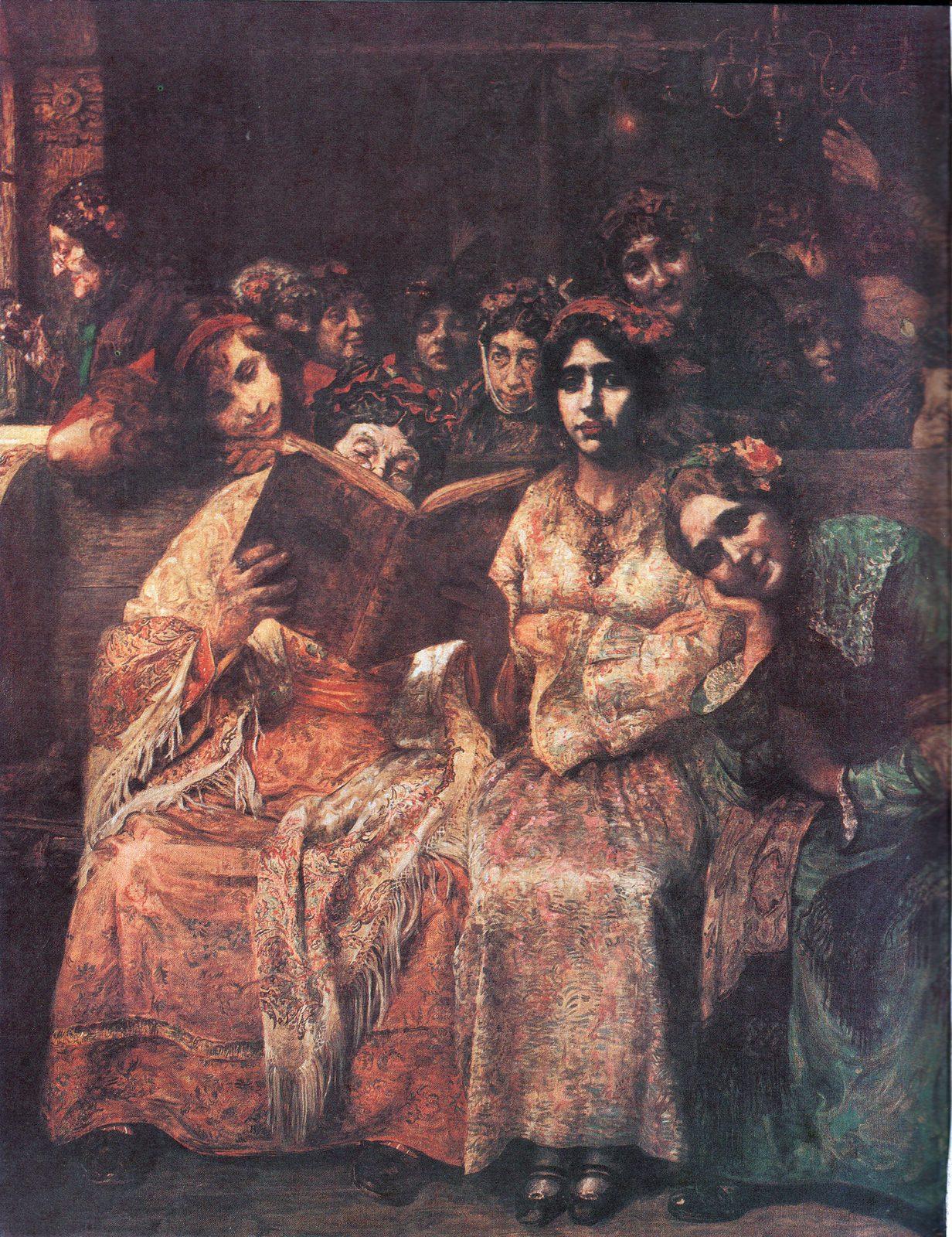
Leopold Pilichowski, Remembrance of the Destruction, 1925. Public domain.
Zechariah 7 and 8 · Subject · Featured Study
The Fasts of the Exile
Judah kept four fasts in the exile, for the siege, the fall of Jerusalem and the murder that followed.
Men from Bethel asked whether to keep weeping in the fifth month, and the LORD answered with a question of His own.
“This is what the LORD of Hosts says: The fasts of the fourth, the fifth, the seventh, and the tenth months will become times of joy and gladness, cheerful feasts for the house of Judah. Therefore you are to love both truth and peace.”
“This is what the LORD of Hosts says: The fasts of the fourth, the fifth, the seventh, and the tenth months will become times of joy and gladness, cheerful feasts for the house of Judah. Therefore you are to love both truth and peace.”
- Books
- Zechariah, 2 Kings, Jeremiah
- Hold in memory
- Zechariah 8:19
Summary
The answer to the delegation fills two chapters of Zechariah. It holds a question about motive, a call to justice and mercy, and a promise for every one of the days of mourning.
- Each fast mourned one blow that fell on Jerusalem and its people.
- The Talmud gives each fast its day of the month.
- Two readings differ on when the promise holds.
The Question from Bethel
A delegation came to the house of the LORD with one question for its priests and prophets.
Now the people of Bethel had sent Sharezer and Regem-melech, along with their men, to plead before the LORDThe delegation is the occasion of Zechariah 7 and 8.
by asking the priests of the house of the LORD of Hosts, as well as the prophets, “Should I weep and fast in the fifth month, as I have done these many years?”This is the question the rest of the two chapters answer.
C. F. Keil wrote that the delegates asked only about the fast of the fifth month, kept for the burning of the temple. With the new temple nearly finished, the fast seemed out of place.
Four Fasts for One Siege
Each fast marks a day from the start of the siege to the murder of the governor.
The four days run from the siege wall to the months after the city fell.
- Tenth month, tenth day, Zedekiah's ninth yearNebuchadnezzar camps round Jerusalem and builds a siege wall. This is the fast of the tenth month.2 Kings 25:1
- Fourth month, ninth day, Zedekiah's eleventh yearFamine is severe and the wall is breached. This is the fast of the fourth month.Jeremiah 52:6 to 7
- Fifth month, the seventh day in 2 Kings 25:8 and the tenth in Jeremiah 52:12Nebuzaradan burns the house of the LORD and the houses of Jerusalem. This is the fast of the fifth month.Jeremiah 52:12 to 13
- Seventh monthIshmael son of Nethaniah kills Gedaliah, the governor Babylon set over the land. This is the fast of the seventh month.2 Kings 25:25
Four events in the order they happened, each with the month of its fast and its verse. The months are counted from Nisan, the first month.
Was It for Me?
The answer comes back as a question and then a command.
“Ask all the people of the land and the priests, ‘When you fasted and mourned in the fifth and seventh months for these seventy years, was it really for Me that you fasted?The LORD's first answer is a question in return.
“This is what the LORD of Hosts says: ‘Administer true justice. Show loving devotion and compassion to one another. Do not oppress the widow or the fatherless, the foreigner or the poor. And do not plot evil in your hearts against one another.’The second answer gives what the LORD asks in place of the fast.
The Four Days in the Talmud
Rabbi Akiva gave each of the four fasts its day of the month.
The Babylonian Talmud, Rosh Hashanah 18b, reports Rabbi Akiva's reading of the four fasts. He set the fast of the fourth month on the ninth of Tammuz and the fast of the fifth on the Ninth of Av.
He set the fast of the seventh on the third of Tishrei and the fast of the tenth on the tenth of Tevet, with Ezekiel 24:1 to 2 as his proof for the last. The same page gives the Ninth of Av alone as obligatory, and the other three as optional, for the calamities that fell on that day.
When the Fasts Become Feasts
Two readings tie the promise to different conditions.
In times of peace, with the temple standingRav Pappa, in the Babylonian Talmud, Rosh Hashanah 18b
Rav Pappa read the promise as depending on the time. When there is peace and the temple stands, the days are days of joy, and in times of persecution they are fast days.
When Judah obeys after the returnJohn Wesley, Explanatory Notes upon the Old Testament (1765)
Wesley called the verse a final decision of the case from Bethel. If the people did what Zechariah 8:16 to 17 require, the fasts would cease and turn into feasts.
Books to Read Next
Two older commentaries on Zechariah 7 and 8 are free to read.
The Minor Prophets with a Commentary, volume 8, Zechariah
E. B. Pusey · 1907 reprint
Pusey dates the fasts of the fourth and tenth months by the siege in the reign of Zedekiah.
Read it free at the Internet ArchiveBiblical Commentary on the Old Testament: The Twelve Minor Prophets, volume 2
C. F. Keil · 1878
Keil gives each of the four fasts its day from Kings, Jeremiah and Jewish tradition.
Read it free at the Internet ArchiveWhere the Answer Ends
Zechariah 8 ends with the nations coming to Jerusalem to seek the LORD.
Sources
Scripture is the Berean Standard Bible.
- Babylonian Talmud, Rosh Hashanah 18b, William Davidson Edition, English (CC-BY-NC)
- John Wesley, Explanatory Notes upon the Old Testament (1765), on Zechariah 8:19.
- E. B. Pusey, The Minor Prophets with a Commentary, vol. viii, Zechariah (Nisbet, 1907 reprint); public domain.
- C. F. Keil, Biblical Commentary on the Old Testament: The Twelve Minor Prophets, vol. 2 (T. and T. Clark, 1878); public domain.
Keep Studying
Studies6
People and groups3
Subjects1
Go further1