
2 Kings 25:19
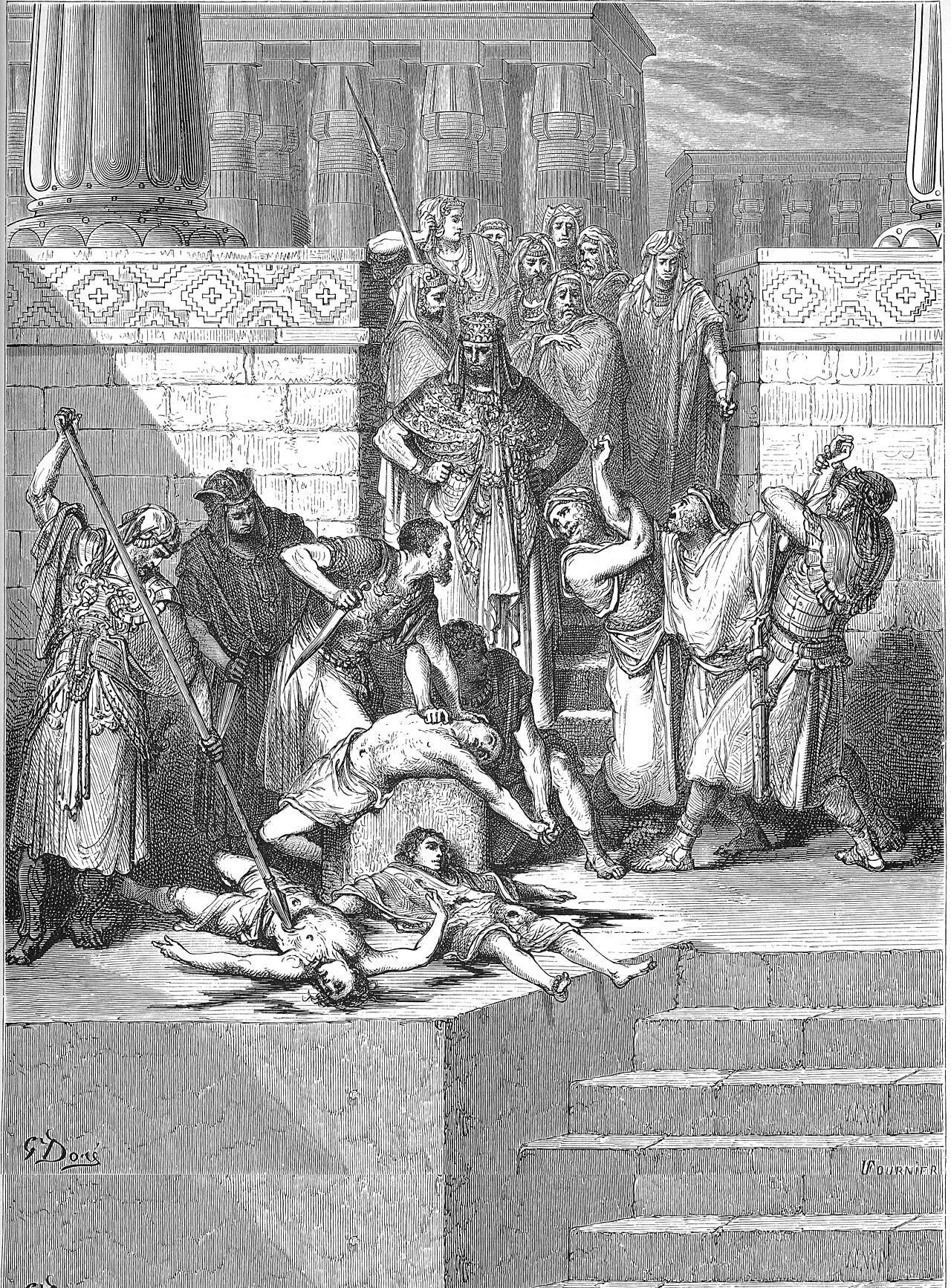
in 2 Kings 25Of those still in the city, he took a court official who had been appointed over the men of war, as well as five royal advisors. He also took the scribe of the captain of the army, who had enlisted the people of the land, and sixty men who were found in the city.
BSB
The same verse in ASV and KJV ▾
ASV
and out of the city he took an officer that was set over the men of war; and five men of them that saw the king’s face, who were found in the city; and the scribe, the captain of the host, who mustered the people of the land; and threescore men of the people of the land, that were found in the city.
KJV
And out of the city he took an officer that was set over the men of war, and five men of them that were in the king’s presence, which were found in the city, and the principal scribe of the host, which mustered the people of the land, and threescore men of the people of the land that were found in the city:
⋯
This verse in 2 Kings 25
Commentary
6 notes on this verseA commentator
Albert Barnes1798–1870
Notes, Explanatory and Practical, on the Old and New Testaments (1832-1869)
Out of the city - This clause shows that the five persons mentioned in 2Ki 25:18 were taken out of the temple. Five men - Or, “seven men,” according to Jer 52:25. It is impossible to say which of the two numbers is correct. Of them that were in the king’s presence - See the margin. A mode of speech arising from the custom of Eastern rulers to withdraw themselves as much as possible from the view of their subjects.
This site's exposition
took away Seraiah the chief priest
on 2 Kings 25:18-21
Seraiah "the chief priest" is named as Jehozadak's father at 1 Chronicles 6:14-15, and Ezra 7:1 traces Ezra's priestly line back through this same Seraiah. All are struck down at Riblah, and the verse closes the kingdom: "So Judah was taken into exile, away from its own land."
This site's exposition
five royal advisors
Jeremiah 52:25 counts seven of these royal advisors, and this verse counts five. Jamieson, Fausset and Brown suppose that two more were found later, and Albert Barnes leaves the number open. The Hebrew calls them men who saw the king's face.
The record, by era
The Puritans and the Awakening1 voice
That it was the holy city, where was the testimony of Israel; but that glory has departed, for Solomon's temple is burnt to the ground (
quarantine:debris (2026-07-29) — unbalanced-parens
The Nineteenth Century2 voices
A commentator
Jamieson, Fausset & Brown1802–1910
Commentary Critical and Explanatory on the Whole Bible (1871)
proposed
five men of them that were in the king's presence--that is, who belonged to the royal retinue. It is probable that there were five at first, and that other two were found afterwards (Jer 52:25).
quarantine:debris (2026-07-29) — starts-lowercase
And five men of them that were in the king’s presence - These were principal counselors, and confidential officers. In Jer 52:25, it is said he took seven men who were near the king’s person, and the same number is found in the Arabic in this place; and the Chaldee has no less than fifty men; but in Jeremiah this, as well as all the rest of the versions, reads seven. Probably they were no more than five at first, or, perhaps Jeremiah reckoned with the five the officer that was set over the men of war, and the principal scribe of the host mentioned here, as two with the five; and thus made seven in the whole.
The words behind it
33 Hebrew wordsEvery Hebrew word of this verse in the order it stands, with what it means and the door to its own study. The last column counts the times a word stands in the whole Bible: the rarer the word, the more the places it appears belong together.
| Hebrew | Sound | Meaning | Word study | In the Bible |
|---|---|---|---|---|
| וּמִן־ | umin- | and from | H4480 → | 1188 times |
| הָעִ֡יר | hair | the city | H5892 → | 1090 times |
| לָקַח֩ | lakach | he took | H3947 → | 966 times |
| סָרִ֨יס | saris | a court-official | H5631 → | 42 times |
| אֶחָ֜ד | ʾechad | one | H259 → | 971 times |
| אֲֽשֶׁר־ | ʾasher- | who | H834 → | 5497 times |
| ה֥וּא | hu' | he | H1931 → | 1879 times |
| פָקִ֣יד׀ | fakid | [was] overseer | H6496 → | |
| עַל־ | ʾal- | over | H5921 → | 5755 times |
| אַנְשֵׁ֣י | ʾanshei | [the] men of | H582 → | 566 times |
| הַמִּלְחָמָ֗ה | hamilchamah | <the> war | H4421 → | 320 times |
| וַחֲמִשָּׁ֨ה | vachamishah | and five | H2568 → | 343 times |
| אֲנָשִׁ֜ים | ʾanashim | men | H582 → | 566 times |
| מֵרֹאֵ֤י | meroei | from [those who] saw | H7200 → | 1300 times |
| פְנֵֽי־ | fenei- | <of> [the] face of | H6440 → | 2123 times |
| הַמֶּ֙לֶךְ֙ | hamelekh | the king | H4428 → | 2525 times |
| אֲשֶׁ֣ר | ʾasher | who | H834 → | 5497 times |
| נִמְצְא֣וּ | nimtzeu | they were found | H4672 → | 455 times |
| בָעִ֔יר | vair | in the city | H5892 → | 1090 times |
| וְאֵ֗ת | veet | and <obj.> | H853 → | 10935 times |
| הַסֹּפֵר֙ | hasofer | the scribe | H5608 → | 159 times |
| שַׂ֣ר | sar | [the] commander of | H8269 → | 421 times |
| הַצָּבָ֔א | hatzava' | the army | H6635 → | 485 times |
| הַמַּצְבִּ֖א | hamatzbi' | who mustered | H6633 → | |
| אֶת־ | ʾet- | <obj.> | H853 → | 10935 times |
| עַ֣ם | ʾam | [the] people of | H5971 → | 1873 times |
| הָאָ֑רֶץ | haaretz | the land | H776 → | 2504 times |
| וְשִׁשִּׁ֥ים | veshishim | and sixty | H8346 → | |
| אִישׁ֙ | ʾish | man | H376 → | 1663 times |
| מֵעַ֣ם | meam | from [the] people of | H5971 → | 1873 times |
| הָאָ֔רֶץ | haaretz | the land | H776 → | 2504 times |
| הַֽנִּמְצְאִ֖ים | hanimtzeim | who were found | H4672 → | 455 times |
| בָּעִֽיר׃ | bair | in the city | H5892 → | 1090 times |
וּמִן־and from
umin-H4480 →1188 times
הָעִ֡ירthe city
hairH5892 →1090 times
לָקַח֩he took
lakachH3947 →966 times
סָרִ֨יסa court-official
sarisH5631 →42 times
אֶחָ֜דone
ʾechadH259 →971 times
אֲֽשֶׁר־who
ʾasher-H834 →5497 times
ה֥וּאhe
hu'H1931 →1879 times
פָקִ֣יד׀[was] overseer
fakidH6496 →
עַל־over
ʾal-H5921 →5755 times
אַנְשֵׁ֣י[the] men of
ʾansheiH582 →566 times
הַמִּלְחָמָ֗ה<the> war
hamilchamahH4421 →320 times
וַחֲמִשָּׁ֨הand five
vachamishahH2568 →343 times
אֲנָשִׁ֜יםmen
ʾanashimH582 →566 times
מֵרֹאֵ֤יfrom [those who] saw
meroeiH7200 →1300 times
פְנֵֽי־<of> [the] face of
fenei-H6440 →2123 times
הַמֶּ֙לֶךְ֙the king
hamelekhH4428 →2525 times
אֲשֶׁ֣רwho
ʾasherH834 →5497 times
נִמְצְא֣וּthey were found
nimtzeuH4672 →455 times
בָעִ֔ירin the city
vairH5892 →1090 times
וְאֵ֗תand <obj.>
veetH853 →10935 times
הַסֹּפֵר֙the scribe
hasoferH5608 →159 times
שַׂ֣ר[the] commander of
sarH8269 →421 times
הַצָּבָ֔אthe army
hatzava'H6635 →485 times
הַמַּצְבִּ֖אwho mustered
hamatzbi'H6633 →
אֶת־<obj.>
ʾet-H853 →10935 times
עַ֣ם[the] people of
ʾamH5971 →1873 times
הָאָ֑רֶץthe land
haaretzH776 →2504 times
וְשִׁשִּׁ֥יםand sixty
veshishimH8346 →
אִישׁ֙man
ʾishH376 →1663 times
מֵעַ֣םfrom [the] people of
meamH5971 →1873 times
הָאָ֔רֶץthe land
haaretzH776 →2504 times
הַֽנִּמְצְאִ֖יםwho were found
hanimtzeimH4672 →455 times
בָּעִֽיר׃in the city
bairH5892 →1090 times
A shaded row is a word that stands 400 times or fewer in the Bible.
The walk
3 stopsEach card is a verse this one points to, and under it the verses that one points to in turn. Where several paths arrive at the same place, that place is listed first: the text keeps returning to it.
Through
Esther 1:14His closest advisors were Carshena, Shethar, Admatha, Tarshish, Meres, Marsena, and Memucan, the seven princes of Persia and Media who had personal access to the king and ranked highest in the kingdom.
it leads to
- Ezra 7:14
You are sent by the king and his seven counselors to evaluate Judah and Jerusalem according to the Law of your God, which is in your hand.
- Matthew 18:10
See that you do not look down on any of these little ones. For I tell you that their angels in heaven always see the face of My Father in heaven.
- Revelation 22:4
They will see His face, and His name will be on their foreheads.
- Ezra 7:14
Where this verse is studied
On this page
Studies12
On this verse
On this chapter
About 2 Kings
This page draws on Adam Clarke, Commentary on the Bible; Albert Barnes, Notes, Explanatory and Practical, on the Old and New Testaments (1832-1869); Jamieson, Fausset & Brown, Commentary Critical and Explanatory on the Whole Bible; John Gill, Exposition of the Old Testament and Matthew Henry, Commentary on the Whole Bible.