
2 Kings 25:6
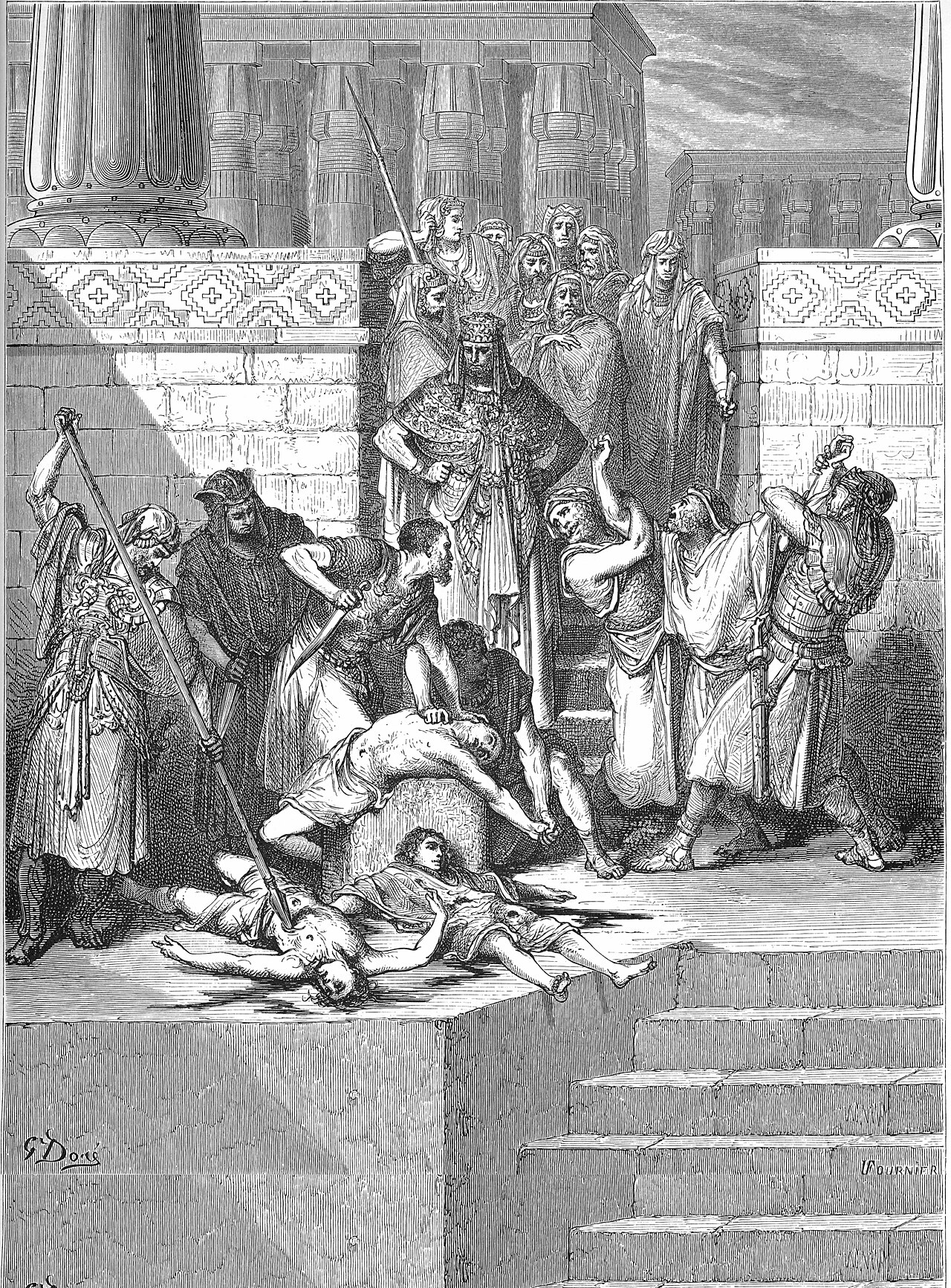
in 2 Kings 25The Chaldeans seized the king and brought him up to the king of Babylon at Riblah, where they pronounced judgment on him.
BSB
The same verse in ASV and KJV ▾
ASV
Then they took the king, and carried him up unto the king of Babylon to Riblah; and they gave judgment upon him.
KJV
So they took the king, and brought him up to the king of Babylon to Riblah; and they gave judgment upon him.
⋯
This verse in 2 Kings 25
Commentary
3 notes on this verseA commentator
Albert Barnes1798–1870
Notes, Explanatory and Practical, on the Old and New Testaments (1832-1869)
To Riblah - See 2Ki 23:33 note. A position from where Nebuchadnezzar could most conveniently superintend the operations against Tyre and Jerusalem. In the absence of the monarch, the siege of Jerusalem was conducted by a number of his officers, the chief of whom were Nebuzar-adan, the captain of the guard, and Nergal-shar-ezer (Neriglissar), the Rab-mag Jer 39:3, Jer 39:13.
This site's exposition
they pronounced judgment on him
on 2 Kings 25:6-7
They "slaughtered the sons of Zedekiah before his eyes," then "put out his eyes," an order that fulfils two prophecies. Jeremiah 32:4 said he would see the king of Babylon with his own eyes. Ezekiel 12:13 said he would be brought to Babylon and not see it.
The record, by era
The Church Fathers1 voice
What think you of Nebuchadnezzar? Have you not heard from Scripture that he was bloodthirsty, fierce, with the disposition of a lion? Have you not heard that he disinterred the kings? Have you not heard that he brought the people away into captivity? Have you not heard that he put the king's sons to the sword before Zedekiah's eyes and then blinded him? Have you not heard that he shattered the cherubim?
The words behind it
12 Hebrew wordsEvery Hebrew word of this verse in the order it stands, with what it means and the door to its own study. The last column counts the times a word stands in the whole Bible: the rarer the word, the more the places it appears belong together.
| Hebrew | Sound | Meaning | Word study | In the Bible |
|---|---|---|---|---|
| וַֽיִּתְפְּשׂוּ֙ | vaiyitpesu | and they seized | H8610 → | 65 times |
| אֶת־ | ʾet- | <obj.> | H853 → | 10935 times |
| הַמֶּ֔לֶךְ | hamelekh | the king | H4428 → | 2525 times |
| וַיַּעֲל֥וּ | vaiyaalu | and they brought up | H5927 → | 890 times |
| אֹת֛וֹ | ʾoto | <obj.> him | H853 → | 10935 times |
| אֶל־ | ʾel- | to | H413 → | 5510 times |
| מֶ֥לֶךְ | melekh | [the] king of | H4428 → | 2525 times |
| בָּבֶ֖ל | bavel | Babylon | H894 → | 262 times |
| רִבְלָ֑תָה | rivlatah | Riblah towards | H7247 → | 11 times |
| וַיְדַבְּר֥וּ | vaydaberu | and they spoke | H1696 → | 1141 times |
| אִתּ֖וֹ | ʾito | with him | H854 → | 929 times |
| מִשְׁפָּֽט׃ | mishpat | judgment | H4941 → | 422 times |
וַֽיִּתְפְּשׂוּ֙and they seized
vaiyitpesuH8610 →65 times
אֶת־<obj.>
ʾet-H853 →10935 times
הַמֶּ֔לֶךְthe king
hamelekhH4428 →2525 times
וַיַּעֲל֥וּand they brought up
vaiyaaluH5927 →890 times
אֹת֛וֹ<obj.> him
ʾotoH853 →10935 times
אֶל־to
ʾel-H413 →5510 times
מֶ֥לֶךְ[the] king of
melekhH4428 →2525 times
בָּבֶ֖לBabylon
bavelH894 →262 times
רִבְלָ֑תָהRiblah towards
rivlatahH7247 →11 times
וַיְדַבְּר֥וּand they spoke
vaydaberuH1696 →1141 times
אִתּ֖וֹwith him
ʾitoH854 →929 times
מִשְׁפָּֽט׃judgment
mishpatH4941 →422 times
A shaded row is a word that stands 400 times or fewer in the Bible.
The walk
8 stopsEach card is a verse this one points to, and under it the verses that one points to in turn. Where several paths arrive at the same place, that place is listed first: the text keeps returning to it.
Through
Jeremiah 38:23All your wives and children will be brought out to the Chaldeans. And you yourself will not escape their grasp, for you will be seized by the king of Babylon, and this city will…
it leads to
- Jeremiah 41:10
Then Ishmael took captive all the remnant of the people of Mizpah—the daughters of the king along with all the others who remained in Mizpah—over whom Nebuzaradan captain of the guard had appointed Gedaliah…
- Jeremiah 39:6
There at Riblah the king of Babylon slaughtered the sons of Zedekiah before his eyes, and he also killed all the nobles of Judah.
- Jeremiah 38:18
But if you do not surrender to the officers of the king of Babylon, then this city will be delivered into the hands of the Chaldeans. They will burn it down, and you yourself…
- Jeremiah 52:8–13
but the army of the Chaldeans pursued the king and overtook Zedekiah in the plains of Jericho, and all his army was separated from him.
- Jeremiah 41:10
Through
2 Kings 23:33And Pharaoh Neco imprisoned Jehoahaz at Riblah in the land of Hamath so that he could not reign in Jerusalem, and he imposed on Judah a levy of a hundred talents of silver and…
it leads to
- 1 Kings 8:65
So at that time Solomon and all Israel with him—a great assembly of people from Lebo-hamath to the Brook of Egypt—kept the feast before the LORD our God for seven days and seven more…
- Jeremiah 52:9–10
The Chaldeans seized the king and brought him up to the king of Babylon at Riblah in the land of Hamath, where he pronounced judgment on Zedekiah.
- Jeremiah 39:5–6
But the army of the Chaldeans pursued them and overtook Zedekiah in the plains of Jericho. They seized him and brought him up to Nebuchadnezzar king of Babylon at Riblah in the land of…
- Jeremiah 52:26–27
Nebuzaradan captain of the guard took them and brought them to the king of Babylon at Riblah.
- 1 Kings 8:65
Where this verse is studied
On this page
Studies12
On this verse
On this chapter
About 2 Kings
Who and where
2 names in this verse with a page on the site.
- PlaceBabil Governorate (archaeological site)BabylonAncient Mesopotamian city and imperial capital; site of the Israelite exile and a recurring biblical symbol of worldly power.
- PlaceSyriaRiblahNebuchadnezzar's headquarters on the Orontes where Zedekiah was sentenced and watched his sons killed before his own eyes were put…
This page draws on Albert Barnes, Notes, Explanatory and Practical, on the Old and New Testaments (1832-1869); Cyril of Jerusalem, Catechetical Lecture 2:17-19; John Wesley, Explanatory Notes upon the Old Testament and Matthew Henry, Commentary on the Whole Bible.