
1 Samuel 14:27
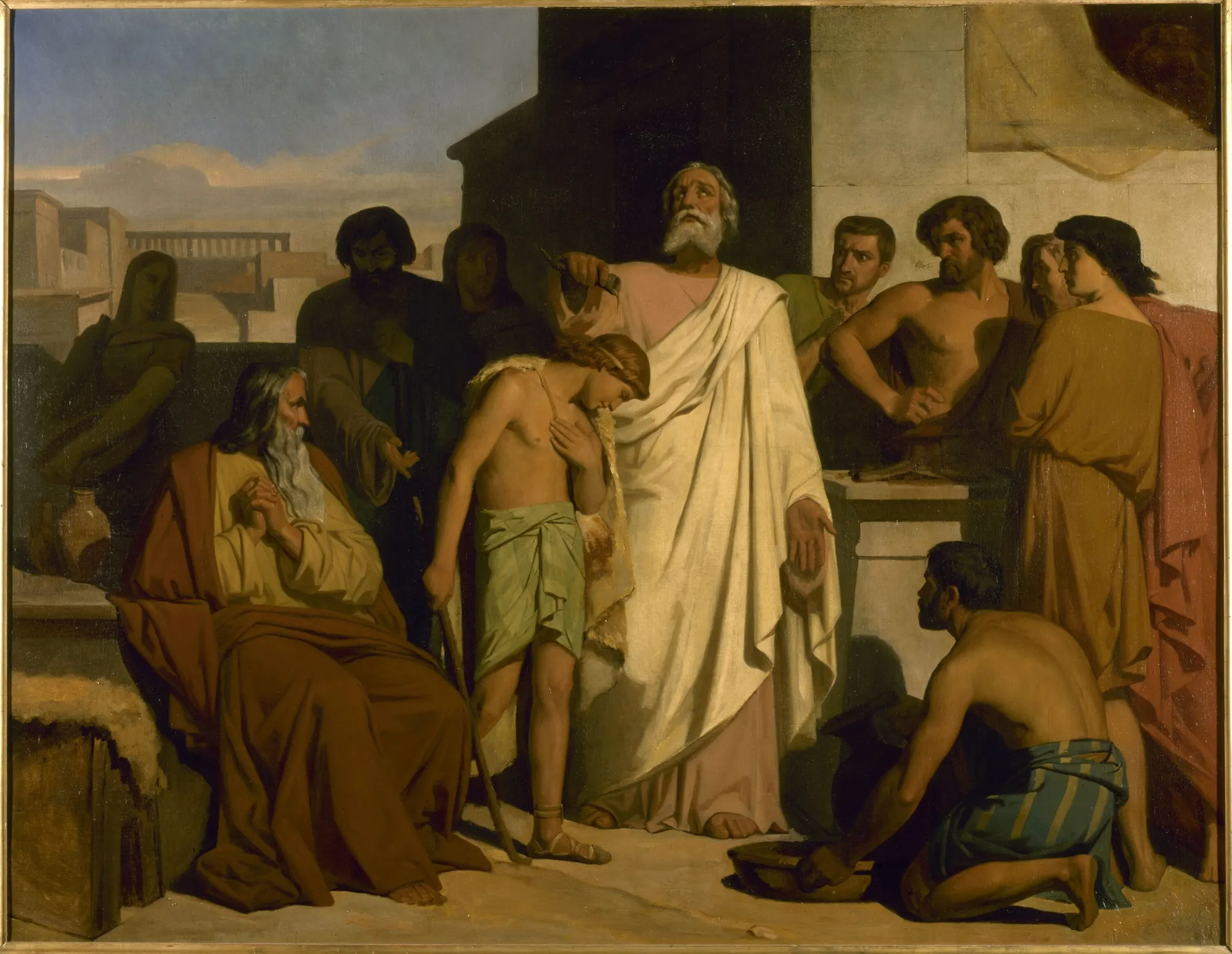
in 1 Samuel 14Jonathan, however, had not heard that his father had charged the people with the oath. So he reached out the end of the staff in his hand, dipped it into the honeycomb, and put his hand to his mouth; and his eyes brightened.
BSB
The same verse in ASV and KJV ▾
ASV
But Jonathan heard not when his father charged the people with the oath: wherefore he put forth the end of the rod that was in his hand, and dipped it in the honeycomb, and put his hand to his mouth; and his eyes were enlightened.
KJV
But Jonathan heard not when his father charged the people with the oath: wherefore he put forth the end of the rod that was in his hand, and dipped it in an honeycomb, and put his hand to his mouth; and his eyes were enlightened.
⋯
This verse in 1 Samuel 14
Commentary
7 notes on this verseHis eyes were enlightened - Hunger and fatigue affect and dim the sight; on taking food, this affection is immediately removed. This most people know to be a fact.
This site's exposition
Jonathan, however, had not heard that his father had charged the people with the oath
Jonathan never heard the oath, so he dips the end of his staff in the honeycomb and eats. The narrator's verdict is "his eyes brightened," strength returning to a man who kept fighting while the army starved under his father's word. The son who won the battle by faith is the one his father's vow condemns.
The record, by era
The Medieval Church2 voices
Jonathan, however, had not heard, when his father adjured the people, etc. He speaks of eyes being illuminated, refreshed, and renewed for gazing, which had already begun to fade due to the customary long fasting or toil. Therefore Jonathan, who had previously conquered the teeth …
A commentator
Gregory the DialogistCommentary on 1 Kings, Book 5, Chapter 4 · Written before 604.
proposed
There follows: (Verse 27.) But Jonathan had not heard when his father adjured the people, and he stretched out the tip of the staff that he had in his hand, and dipped it in the honeycomb, and brought his hand back to his mouth, and his eyes were brightened. Whom does Jonathan represent in this place, if not those who are great in word and deed, yet are not great in the zeal of circumspection? They preach lofty things indeed, they perform mighty works, but they do not manfully hold themselves in the circumspection of humility.
The Puritans and the Awakening2 voices
), and was sensibly refreshed by it: His eyes were enlightened, which began to grow dim through hunger and faintness; it made his countenance look pleasant and cheerful, for it was such as a stander-by might discern (
quarantine:debris (2026-07-29) — leading-punctuation
But Jonathan heard not when his father charged the people with the oath,....
The Nineteenth Century1 voice
A commentator
Albert Barnes1798–1870
Notes, Explanatory and Practical, on the Old and New Testaments (1832-1869)
proposed
Were enlightened - i. e., he was refreshed, when he was faint.
The words behind it
23 Hebrew wordsEvery Hebrew word of this verse in the order it stands, with what it means and the door to its own study. The last column counts the times a word stands in the whole Bible: the rarer the word, the more the places it appears belong together.
| Hebrew | Sound | Meaning | Word study | In the Bible |
|---|---|---|---|---|
| וְיוֹנָתָ֣ן | veyonatan | and Jonathan | H3129 → | 43 times |
| לֹֽא־ | lo'- | not | H3808 → | 5168 times |
| שָׁמַ֗ע | shama' | he had heard | H8085 → | 1159 times |
| בְּהַשְׁבִּ֣יעַ | behashbia' | when made to swear an oath | H7650 → | 186 times |
| אָבִיו֮ | ʾaviv | father his | H1 → | 1212 times |
| אֶת־ | ʾet- | <obj.> | H853 → | 10935 times |
| הָעָם֒ | haam | the people | H5971 → | 1873 times |
| וַיִּשְׁלַ֗ח | vaiyishlach | and he stretched out | H7971 → | 845 times |
| אֶת־ | ʾet- | <obj.> | H853 → | 10935 times |
| קְצֵ֤ה | ketzeh | [the] end of | H7097 → | 97 times |
| הַמַּטֶּה֙ | hamateh | the staff | H4294 → | |
| אֲשֶׁ֣ר | ʾasher | which | H834 → | 5497 times |
| בְּיָד֔וֹ | beyado | [was] in hand his | H3027 → | 1618 times |
| וַיִּטְבֹּ֥ל | vaiyitbol | and he dipped | H2881 → | |
| אוֹתָ֖הּ | ʾotah | <obj.> it | H853 → | 10935 times |
| בְּיַעְרַ֣ת | beya'rat | in [the] honeycomb of | H3295 → | |
| הַדְּבָ֑שׁ | hadevash | the honey | H1706 → | 54 times |
| וַיָּ֤שֶׁב | vaiyashev | and he brought back | H7725 → | 1056 times |
| יָדוֹ֙ | yado | hand his | H3027 → | 1618 times |
| אֶל־ | ʾel- | to | H413 → | 5510 times |
| פִּ֔יו | piv | mouth his | H6310 → | 498 times |
| וַתָּאֹ֖רְנָה | vataronah | and they brightened | H215 → | 43 times |
| עֵינָֽיו׃ | ʾeinav | eyes his | H5869 → | 887 times |
וְיוֹנָתָ֣ןand Jonathan
veyonatanH3129 →43 times
לֹֽא־not
lo'-H3808 →5168 times
שָׁמַ֗עhe had heard
shama'H8085 →1159 times
בְּהַשְׁבִּ֣יעַwhen made to swear an oath
behashbia'H7650 →186 times
אָבִיו֮father his
ʾavivH1 →1212 times
אֶת־<obj.>
ʾet-H853 →10935 times
הָעָם֒the people
haamH5971 →1873 times
וַיִּשְׁלַ֗חand he stretched out
vaiyishlachH7971 →845 times
אֶת־<obj.>
ʾet-H853 →10935 times
קְצֵ֤ה[the] end of
ketzehH7097 →97 times
הַמַּטֶּה֙the staff
hamatehH4294 →
אֲשֶׁ֣רwhich
ʾasherH834 →5497 times
בְּיָד֔וֹ[was] in hand his
beyadoH3027 →1618 times
וַיִּטְבֹּ֥לand he dipped
vaiyitbolH2881 →
אוֹתָ֖הּ<obj.> it
ʾotahH853 →10935 times
בְּיַעְרַ֣תin [the] honeycomb of
beya'ratH3295 →
הַדְּבָ֑שׁthe honey
hadevashH1706 →54 times
וַיָּ֤שֶׁבand he brought back
vaiyashevH7725 →1056 times
יָדוֹ֙hand his
yadoH3027 →1618 times
אֶל־to
ʾel-H413 →5510 times
פִּ֔יוmouth his
pivH6310 →498 times
וַתָּאֹ֖רְנָהand they brightened
vataronahH215 →43 times
עֵינָֽיו׃eyes his
ʾeinavH5869 →887 times
A shaded row is a word that stands 400 times or fewer in the Bible.
The walk
8 stopsEach card is a verse this one points to, and under it the verses that one points to in turn. Where several paths arrive at the same place, that place is listed first: the text keeps returning to it.
Through
1 Samuel 30:12a piece of a fig cake and two clusters of raisins. So he ate and was revived, for he had not had any food or water for three days and three nights.
it leads to
- Judges 15:19
So God opened up the hollow place in Lehi, and water came out of it. When Samson drank, his strength returned, and he was revived. That is why he named it En-hakkore, and it…
- Judges 15:19
Through
1 Samuel 14:43“Tell me what you have done,” Saul commanded him. So Jonathan told him, “I only tasted a little honey with the end of the staff that was in my hand. And now I must…
it leads to
- Joshua 7:19
So Joshua said to Achan, “My son, give glory to the LORD, the God of Israel, and make a confession to Him. I urge you to tell me what you have done; do not…
- Joshua 7:19
Through
Proverbs 25:26Like a muddied spring or a polluted well is a righteous man who gives way to the wicked.
it leads to
- Ezekiel 34:18–19
Is it not enough for you to feed on the good pasture? Must you also trample the rest of the pasture with your feet? Is it not enough for you to drink the clear…
- 1 Samuel 22:14–18
Ahimelech answered the king, “Who among all your servants is as faithful as David, the king’s son-in-law, the captain of your bodyguard who is honored in your house?
- 1 Thessalonians 2:15
who killed both the Lord Jesus and their own prophets, and drove us out as well. They are displeasing to God and hostile to all men,
- Genesis 4:8
Then Cain said to his brother Abel, “Let us go out to the field.” And while they were in the field, Cain rose up against his brother Abel and killed him.
- 2 Chronicles 24:21–22
But they conspired against Zechariah, and by order of the king, they stoned him in the courtyard of the house of the LORD.
- Ezekiel 34:18–19
Through
1 Samuel 14:29“My father has brought trouble to the land,” Jonathan replied. “Just look at how my eyes have brightened because I tasted a little of this honey.
it leads to
- 1 Kings 18:18
“I have not troubled Israel,” Elijah replied, “but you and your father’s house have, for you have forsaken the commandments of the LORD and have followed the Baals.
- 1 Kings 18:18
Where this verse is studied
On this page
Studies1
About 1 Samuel
Who and where
1 name in this verse with a page on the site.
This page draws on Adam Clarke, Commentary on the Bible; Albert Barnes, Notes on the Old Testament; Albert Barnes, Notes, Explanatory and Practical, on the Old and New Testaments (1832-1869); Bede, Commentary on Samuel; Gregory the Dialogist, Commentary on 1 Kings, Book 5, Chapter 4; John Gill, Exposition of the Old Testament; John Gill, Exposition of the Old Testament (1748-1763) and Matthew Henry, Commentary on the Whole Bible.