
1 Samuel 1:28
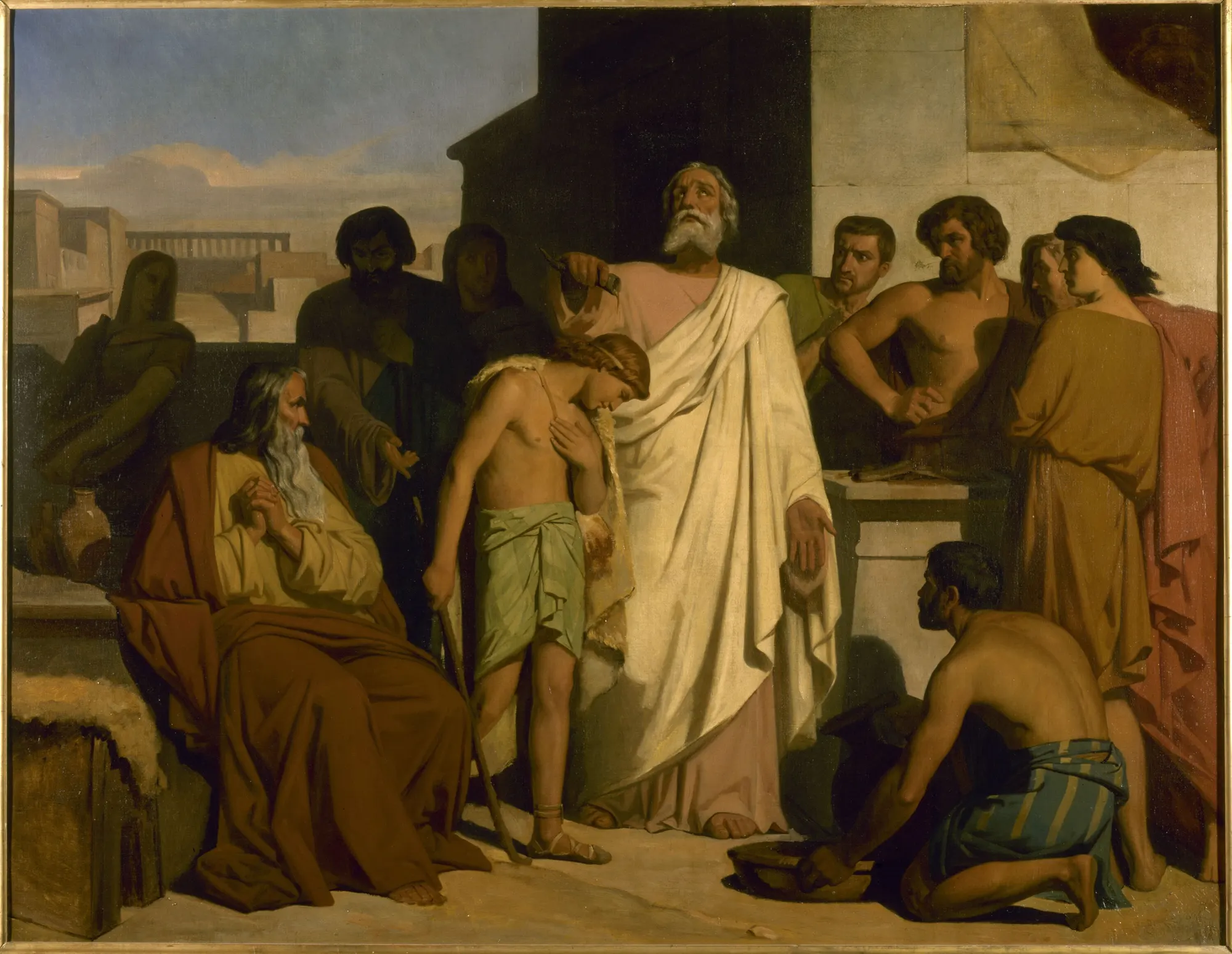
in 1 Samuel 1I now dedicate the boy to the LORD. For as long as he lives, he is dedicated to the LORD.” So they worshiped the LORD there.
BSB
The same verse in ASV and KJV ▾
ASV
therefore also I have granted him to Jehovah; as long as he liveth he is granted to Jehovah. And he worshipped Jehovah there.
KJV
Therefore also I have lent him to the Lord; as long as he liveth he shall be lent to the Lord. And he worshipped the Lord there.
⋯
This verse in 1 Samuel 1
Commentary
10 notes on this verseTherefore also I have lent him to the Lord - There is here a continual reference to her vow, and to the words which she used in making that vow. The word Samuel, as we have already seen, is a contraction of the words שאול מאל Shaul meEl, that is, asked or lent of God; for his mother said, 1Sa 1:27, The Lord hath given me my petition, which שאלתי Shaalti, I Asked of him.
This site's exposition
I am the woman who stood here beside you
on 1 Samuel 1:26-28
Her words “I prayed for this boy” answer the vow of verse 11. “For as long as he lives, he is dedicated to the LORD” makes the gift permanent. The chapter that opened with a barren woman closes with a boy at Shiloh, and the next chapter is her song.
This site's exposition
I now dedicate the boy to the LORD
The word dedicate comes from the same root as asked, and Adam Clarke and Matthew Henry hear Hannah echoing her vow and the boy's name. The one she asked for she now gives. John Gill notes that the gift holds for his whole life.
The record, by era
The Medieval Church3 voices
And they worshipped the Lord there. The Lord commands to pray without remission and not to faint (I Thess. V) under the figure of Anna, which the Church performs, which in the beginning of its vows, in its progress, and even in its embrace does …
A commentator
Gregory the DialogistCommentary on 1 Kings, Book 1, Chapter 2 · Written before 604.
proposed
(Moral Exposition) In the house of the Lord they adore the Lord, who both raise themselves with lofty mind to the contemplation of the heavenly homeland, yet through humility prostrate themselves before almighty God, and with all their heart are so sublimely elevated in the power of the Spirit. We have touched upon these things not in order, but summarily in expounding the historical or moral sense, so that we might investigate somewhat more extensively the words of the spiritual canticle which follows according to the moral and typological explanation.
A commentator
Gregory the DialogistCommentary on 1 Kings, Book 1, Chapter 1 · Written before 604.
proposed
(Verse 28.) "And they worshipped the Lord there." We also, members of the holy Church, when through the scriptures of the Old Testament we are submitted to the veneration and precept of the Creator, there indeed we worship the Lord, because we hold the faith of the ancient Fathers, and we exercise that same faith through love in good work.
The Puritans and the Awakening2 voices
Whatever we give to God, may upon this account be said to be lent to him, that tho' we may not recall it, yet he will certainly repay it, to our unspeakable advantage. He worshipped - Not Eli, but young Samuel, who is spoken of in this and the foregoing verse, and who was capable of worshipping God in some sort, at least with external adoration.
): I have lent him to the Lord as long as he liveth. And she repeats it, because she will never revoke it: He shall be (a deodand) lent or given to the Lord. Not that she designed to call for him back, as we do what we lend, but she uses this word Shaol, lent, because it is the same word that she had used before (
quarantine:debris (2026-07-29) — leading-punctuation
2 more voices on this verse
The Puritans and the Awakening2 voices
Therefore also I have lent him to the Lord,.... To be employed in his service, not for a few days, months, or years, but for his whole life.
When he sacrificed he worshipped, joining prayers and thanksgivings with his sacrifices. In this course of religion he was constant, for he went up yearly. And that which made it the more commendable in him was, 1.
The words behind it
14 Hebrew wordsEvery Hebrew word of this verse in the order it stands, with what it means and the door to its own study. The last column counts the times a word stands in the whole Bible: the rarer the word, the more the places it appears belong together.
| Hebrew | Sound | Meaning | Word study | In the Bible |
|---|---|---|---|---|
| וְגַ֣ם | vegam | and also | H1571 → | 769 times |
| אָנֹכִ֗י | ʾanokhi | I | H595 → | 359 times |
| הִשְׁאִלְתִּ֙הוּ֙ | hishiltihu | I entrust him | H7592 → | 171 times |
| לַֽיהוָ֔ה | layahweh | to Yahweh | H3068 → | 6520 times |
| כָּל־ | kol- | all | H3605 → | 5413 times |
| הַיָּמִים֙ | haiyamim | the days | H3117 → | 2304 times |
| אֲשֶׁ֣ר | ʾasher | which | H834 → | 5497 times |
| הָיָ֔ה | hayah | he has been | H1961 → | 3559 times |
| ה֥וּא | hu' | he | H1931 → | 1879 times |
| שָׁא֖וּל | shaul | [is] asked | H7592 → | 171 times |
| לַֽיהוָ֑ה | layahweh | by Yahweh | H3068 → | 6520 times |
| וַיִּשְׁתַּ֥חוּ | vaiyishtachu | and he bowed down | H7812 → | 172 times |
| שָׁ֖ם | sham | there | H8033 → | 834 times |
| לַיהוָֽה׃ פ | layahweh | to Yahweh | H3068 → | 6520 times |
וְגַ֣םand also
vegamH1571 →769 times
אָנֹכִ֗יI
ʾanokhiH595 →359 times
הִשְׁאִלְתִּ֙הוּ֙I entrust him
hishiltihuH7592 →171 times
לַֽיהוָ֔הto Yahweh
layahwehH3068 →6520 times
כָּל־all
kol-H3605 →5413 times
הַיָּמִים֙the days
haiyamimH3117 →2304 times
אֲשֶׁ֣רwhich
ʾasherH834 →5497 times
הָיָ֔הhe has been
hayahH1961 →3559 times
ה֥וּאhe
hu'H1931 →1879 times
שָׁא֖וּל[is] asked
shaulH7592 →171 times
לַֽיהוָ֑הby Yahweh
layahwehH3068 →6520 times
וַיִּשְׁתַּ֥חוּand he bowed down
vaiyishtachuH7812 →172 times
שָׁ֖םthere
shamH8033 →834 times
לַיהוָֽה׃ פto Yahweh
layahwehH3068 →6520 times
A shaded row is a word that stands 400 times or fewer in the Bible.
The walk
8 stopsEach card is a verse this one points to, and under it the verses that one points to in turn. Where several paths arrive at the same place, that place is listed first: the text keeps returning to it.
Through
2 Timothy 3:15From infancy you have known the Holy Scriptures, which are able to make you wise for salvation through faith in Christ Jesus.
it leads to
- Psalms 119:98–99
Your commandments make me wiser than my enemies, for they are always with me.
- Luke 24:45
Then He opened their minds to understand the Scriptures.
- Proverbs 22:6
Train up a child in the way he should go, and when he is old he will not depart from it.
- 2 Peter 1:20–21
Above all, you must understand that no prophecy of Scripture comes from one’s own interpretation.
- Matthew 22:29
Jesus answered, “You are mistaken because you do not know the Scriptures or the power of God.
- Psalms 119:98–99
Through
Genesis 24:26Then the man bowed down and worshiped the LORD,
it leads to
- Genesis 24:48
Then I bowed down and worshiped the LORD; and I blessed the LORD, the God of my master Abraham, who led me on the right road to take the granddaughter of my master’s brother…
Reached by 2 separate paths from here.
- Genesis 24:48
Through
1 Samuel 1:11And she made a vow, pleading, “O LORD of Hosts, if only You will look upon the affliction of Your maidservant and remember me, not forgetting Your maidservant but giving her a son, then…
it leads to
- Judges 13:5
For behold, you will conceive and give birth to a son. And no razor shall come over his head, because the boy will be a Nazirite to God from the womb, and he will…
- Numbers 6:5
For the entire period of his vow of separation, no razor shall pass over his head. He must be holy until the time of his separation to the LORD is complete; he must let…
- Judges 13:5
Where this verse is studied
On this page
Studies13
On this verse
About 1 Samuel
This page draws on 9 works. Open the list of works
This page draws on Adam Clarke, Commentary on the Bible; Bede, Commentary on Samuel; Gregory the Dialogist, Commentary on 1 Kings, Book 1, Chapter 2; Gregory the Dialogist, Commentary on 1 Kings, Book 1, Chapter 1; John Gill, Exposition of the Old Testament (1748-1763); John Wesley, Explanatory Notes upon the Old Testament; Keil and Delitzsch, Biblical Commentary on the Books of Samuel; Matthew Henry, Commentary on the Whole Bible and W. G. Blaikie, The First Book of Samuel (Expositor's Bible).