
1 Kings 22:20
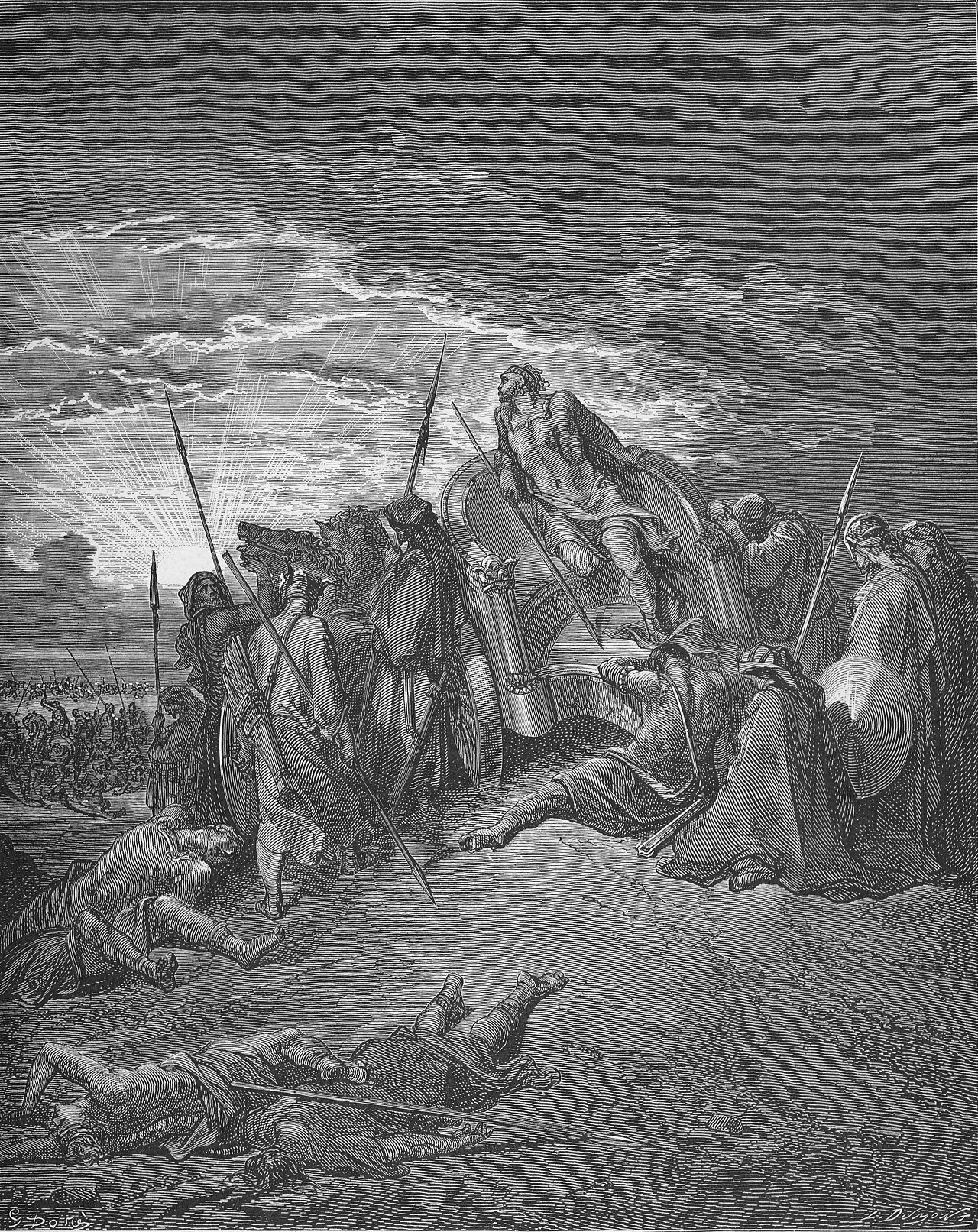
in 1 Kings 22And the LORD said, ‘Who will entice Ahab to march up and fall at Ramoth-gilead?’ And one suggested this, and another that.
BSB
The same verse in ASV and KJV ▾
ASV
And Jehovah said, Who shall entice Ahab, that he may go up and fall at Ramoth-gilead? And one said on this manner; and another said on that manner.
KJV
And the Lord said, Who shall persuade Ahab, that he may go up and fall at Ramoth–gilead? And one said on this manner, and another said on that manner.
⋯
This verse in 1 Kings 22
Commentary
4 notes on this verseA commentator
Jamieson, Fausset & Brown1802–1910
Commentary Critical and Explanatory on the Whole Bible (1871)
Did I not tell thee that he would prophesy no good concerning me, but evil?--Since Ahab was disposed to trace this unwelcome truth to personal enmity, Micaiah proceeded fearlessly to tell the incensed monarch in full detail what had been revealed to him. The Hebrew prophets, borrowing their symbolic pictures from earthly scenes, described God in heaven as a king in His kingdom.
This site's exposition
I saw the Lord sitting
on 1 Kings 22:19-20
Micaiah answers Ahab's contempt with a second vision, the Lord sitting on his throne with the host of heaven standing on his right hand and on his left, weighing who shall persuade Ahab to go up and fall at Ramoth-gilead. The scene is court imagery, and readers differ on how far to press its literalness: some take it as a true throne-room disclosure shown to the prophet, others as a dramatic form clothing a judgment already settled, and both readings are held without the page choosing between them.
The record, by era
The Puritans and the Awakening2 voices
Who shall - This is not to be grossly understood, as if God were at a loss to find out an expedient to accomplish his own will; but only to bring down divine things to our shallow capacities, and to express the various means which God hath to execute his own designs.
And the Lord said, who shall persuade Ahab, that he may go up and fall at Ramothgilead?....
How the passage was read
What the Jewish commentators add
On the verses either side of this one
To His right and to His left. Is there “left” in Heaven? Is it not stated, “The right hand of Adonoy’s is exalted, the right hand of Adonoy performs deeds of valor,” 10 Tehillim:16.
This section is reception history: how the passage was read and kept in the Jewish tradition. Where a reading parts from an essential of the Christian faith, the section says so at that point.
Texts and citation data: Sefaria; each excerpt follows its version’s licence. 5 further sources are cited on this chapter that carry no English text this site may quote or only restate the verse.
The words behind it
16 Hebrew wordsEvery Hebrew word of this verse in the order it stands, with what it means and the door to its own study. The last column counts the times a word stands in the whole Bible: the rarer the word, the more the places it appears belong together.
| Hebrew | Sound | Meaning | Word study | In the Bible |
|---|---|---|---|---|
| וַיֹּ֣אמֶר | vaiyomer | and he said | H559 → | 5305 times |
| יְהוָ֗ה | yahweh | Yahweh | H3068 → | 6520 times |
| מִ֤י | mi | who? | H4310 → | 423 times |
| יְפַתֶּה֙ | yefateh | will he deceive | H6601 → | 28 times |
| אֶת־ | ʾet- | <obj.> | H853 → | 10935 times |
| אַחְאָ֔ב | ʾachav | Ahab | H256 → | 92 times |
| וְיַ֕עַל | veyaal | so he may go up | H5927 → | 890 times |
| וְיִפֹּ֖ל | veyipol | and he may fall | H5307 → | 435 times |
| בְּרָמֹ֣ת | beramot | at Ramoth | H7418 → | 22 times |
| גִּלְעָ֑ד | gilad | Gilead | H1568 → | 134 times |
| וַיֹּ֤אמֶר | vaiyomer | and it said | H559 → | 5305 times |
| זֶה֙ | zeh | this [one] | H2088 → | 1180 times |
| בְּכֹ֔ה | bekhoh | by thus | H3541 → | 577 times |
| וְזֶ֥ה | vezeh | and this [one] | H2088 → | 1180 times |
| אֹמֵ֖ר | ʾomer | [was] saying | H559 → | 5305 times |
| בְּכֹֽה׃ | bekhoh | by thus | H3541 → | 577 times |
וַיֹּ֣אמֶרand he said
vaiyomerH559 →5305 times
יְהוָ֗הYahweh
yahwehH3068 →6520 times
מִ֤יwho?
miH4310 →423 times
יְפַתֶּה֙will he deceive
yefatehH6601 →28 times
אֶת־<obj.>
ʾet-H853 →10935 times
אַחְאָ֔בAhab
ʾachavH256 →92 times
וְיַ֕עַלso he may go up
veyaalH5927 →890 times
וְיִפֹּ֖לand he may fall
veyipolH5307 →435 times
בְּרָמֹ֣תat Ramoth
beramotH7418 →22 times
גִּלְעָ֑דGilead
giladH1568 →134 times
וַיֹּ֤אמֶרand it said
vaiyomerH559 →5305 times
זֶה֙this [one]
zehH2088 →1180 times
בְּכֹ֔הby thus
bekhohH3541 →577 times
וְזֶ֥הand this [one]
vezehH2088 →1180 times
אֹמֵ֖ר[was] saying
ʾomerH559 →5305 times
בְּכֹֽה׃by thus
bekhohH3541 →577 times
A shaded row is a word that stands 400 times or fewer in the Bible.
The walk
8 stopsEach card is a verse this one points to, and under it the verses that one points to in turn. Where several paths arrive at the same place, that place is listed first: the text keeps returning to it.
Through
Ezekiel 14:9But if the prophet is enticed to speak a message, then it was I the LORD who enticed him, and I will stretch out My hand against him and destroy him from among My…
it leads to
- Ezekiel 20:25
I also gave them over to statutes that were not good and ordinances by which they could not live.
- Jeremiah 4:10
Then I said, “Ah, Lord GOD, how completely You have deceived this people and Jerusalem by saying, ‘You will have peace,’ while a sword is at our throats.”
- Isaiah 10:4
Nothing will remain but to crouch among the captives or fall among the slain. Despite all this, His anger is not turned away; His hand is still upraised.
- Psalms 81:11–12
But My people would not listen to Me, and Israel would not obey Me.
- 1 Kings 22:20–23
And the LORD said, ‘Who will entice Ahab to march up and fall at Ramoth-gilead?’ And one suggested this, and another that.
- Ezekiel 20:25
Through
Jeremiah 4:10Then I said, “Ah, Lord GOD, how completely You have deceived this people and Jerusalem by saying, ‘You will have peace,’ while a sword is at our throats.”
it leads to
- 2 Thessalonians 2:9–12
The coming of the lawless one will be accompanied by the working of Satan, with every kind of power, sign, and false wonder,
- Jeremiah 5:12
They have lied about the LORD and said: “He will not do anything; harm will not come to us; we will not see sword or famine.
- 2 Thessalonians 2:9–12
Through
Job 12:16True wisdom and power belong to Him. The deceived and the deceiver are His.
it leads to
- 1 Kings 22:22–23
And he replied, ‘I will go out and be a lying spirit in the mouths of all his prophets.’ ‘You will surely entice him and prevail,’ said the LORD. ‘Go and do it.’
- 1 Kings 22:22–23
Where this verse is studied
On this page
About 1 Kings
Who and where
1 name in this verse with a page on the site.
This page draws on Jamieson, Fausset & Brown, Commentary Critical and Explanatory on the Whole Bible; John Gill, Exposition of the Old Testament (1748-1763); John Wesley, Explanatory Notes upon the Old Testament; Keil, The Books of the Kings and Matthew Henry, Commentary on the Whole Bible.