
1 Kings 22:18
in 1 Kings 22Then the king of Israel said to Jehoshaphat, “Did I not tell you that he never prophesies good for me, but only bad?”
BSB
The same verse in ASV and KJV ▾
ASV
And the king of Israel said to Jehoshaphat, Did I not tell thee that he would not prophesy good concerning me, but evil?
KJV
And the king of Israel said unto Jehoshaphat, Did I not tell thee that he would prophesy no good concerning me, but evil?
⋯
This verse in 1 Kings 22
Commentary
5 notes on this verseA commentator
Jamieson, Fausset & Brown1802–1910
Commentary Critical and Explanatory on the Whole Bible (1871)
Did I not tell thee that he would prophesy no good concerning me, but evil?--Since Ahab was disposed to trace this unwelcome truth to personal enmity, Micaiah proceeded fearlessly to tell the incensed monarch in full detail what had been revealed to him. The Hebrew prophets, borrowing their symbolic pictures from earthly scenes, described God in heaven as a king in His kingdom.
This site's exposition
Did I not tell thee
Ahab's aside to Jehoshaphat, Did I not tell thee that he would prophesy no good concerning me, but evil, judges the man's reputation rather than weighing what he has just said. It is the verdict of a king who wanted a favorable word more than a true one, and who had already decided against Micaiah before the vision came.
The record, by era
The Puritans and the Awakening2 voices
And the king of Israel said unto Jehoshaphat,....
What evil did Micaiah prophesy to Ahab in telling him that, if he proceeded in this expedition, it would be fatal to him, while he might choose whether he would proceed in it or no? The greatest kindness we can do to one that is going a dangerous way is to tell him of his danger.
The Nineteenth Century1 voice
A commentator
Albert Barnes1798–1870
Notes, Explanatory and Practical, on the Old and New Testaments (1832-1869)
proposed
See 1Ki 22:8. Ahab implies that he believes Micaiah to have spoken out of pure malevolence, without any authority for his prediction from God. By implication he invites Jehoshaphat to disregard this pseudo-prophecy, and to put his trust in the unanimous declaration of the 400. Micaiah, therefore, proceeds to explain the contradiction between himself and the 400, by recounting another vision.
How the passage was read
What the Jewish commentators add
On the verses either side of this one
These have no masters. You alone will die in the war, as the matter is stated below, “Do not battle the small or the great, but only with the king of Yisroel himself.” 7 Below v.
1 more on this passage, in their own words ▾
To His right and to His left. Is there “left” in Heaven? Is it not stated, “The right hand of Adonoy’s is exalted, the right hand of Adonoy performs deeds of valor,” 10 Tehillim:16.
This section is reception history: how the passage was read and kept in the Jewish tradition. Where a reading parts from an essential of the Christian faith, the section says so at that point.
Texts and citation data: Sefaria; each excerpt follows its version’s licence. 5 further sources are cited on this chapter that carry no English text this site may quote or only restate the verse.
The words behind it
15 Hebrew wordsEvery Hebrew word of this verse in the order it stands, with what it means and the door to its own study. The last column counts the times a word stands in the whole Bible: the rarer the word, the more the places it appears belong together.
| Hebrew | Sound | Meaning | Word study | In the Bible |
|---|---|---|---|---|
| וַיֹּ֥אמֶר | vaiyomer | and he said | H559 → | 5305 times |
| מֶֽלֶךְ־ | melekh- | [the] king of | H4428 → | 2525 times |
| יִשְׂרָאֵ֖ל | yisrael | Israel | H3478 → | 2507 times |
| אֶל־ | ʾel- | to | H413 → | 5510 times |
| יְהוֹשָׁפָ֑ט | yehoshafat | Jehoshaphat | H3092 → | 84 times |
| הֲלוֹא֙ | halo' | ¿ not | H3808 → | 5168 times |
| אָמַ֣רְתִּי | ʾamarti | did I say | H559 → | 5305 times |
| אֵלֶ֔יךָ | ʾeleikha | to you | H413 → | 5510 times |
| לֽוֹא־ | lo'- | not | H3808 → | 5168 times |
| יִתְנַבֵּ֥א | yitnabe' | he prophesies | H5012 → | 115 times |
| עָלַ֛י | ʾalai | on me | H5921 → | 5755 times |
| ט֖וֹב | tov | good | H2896 → | 538 times |
| כִּ֥י | ki | that | H3588 → | 4482 times |
| אִם־ | ʾim- | except | H518 → | 1069 times |
| רָֽע׃ | ra' | evil | H7451 → | 662 times |
וַיֹּ֥אמֶרand he said
vaiyomerH559 →5305 times
מֶֽלֶךְ־[the] king of
melekh-H4428 →2525 times
יִשְׂרָאֵ֖לIsrael
yisraelH3478 →2507 times
אֶל־to
ʾel-H413 →5510 times
יְהוֹשָׁפָ֑טJehoshaphat
yehoshafatH3092 →84 times
הֲלוֹא֙¿ not
halo'H3808 →5168 times
אָמַ֣רְתִּיdid I say
ʾamartiH559 →5305 times
אֵלֶ֔יךָto you
ʾeleikhaH413 →5510 times
לֽוֹא־not
lo'-H3808 →5168 times
יִתְנַבֵּ֥אhe prophesies
yitnabe'H5012 →115 times
עָלַ֛יon me
ʾalaiH5921 →5755 times
ט֖וֹבgood
tovH2896 →538 times
כִּ֥יthat
kiH3588 →4482 times
אִם־except
ʾim-H518 →1069 times
רָֽע׃evil
ra'H7451 →662 times
A shaded row is a word that stands 400 times or fewer in the Bible.
The walk
8 stopsEach card is a verse this one points to, and under it the verses that one points to in turn. Where several paths arrive at the same place, that place is listed first: the text keeps returning to it.
Through
Proverbs 29:1A man who remains stiff-necked after much reproof will suddenly be shattered beyond recovery.
it leads to
- Proverbs 6:15
Therefore calamity will come upon him suddenly; in an instant he will be shattered beyond recovery.
- 1 Samuel 2:25
If a man sins against another man, God can intercede for him; but if a man sins against the LORD, who can intercede for him?” But they would not listen to their father, since…
- Proverbs 28:18
He who walks with integrity will be kept safe, but whoever is perverse in his ways will suddenly fall.
- Proverbs 1:24–31
Because you refused my call, and no one took my outstretched hand,
- Zechariah 7:11–14
But they refused to pay attention and turned a stubborn shoulder; they stopped up their ears from hearing.
- Proverbs 6:15
Through
Proverbs 10:24What the wicked man dreads will overtake him, but the desire of the righteous will be granted.
it leads to
- Psalms 145:19
He fulfills the desires of those who fear Him; He hears their cry and saves them.
- Isaiah 66:4
So I will choose their punishment and I will bring terror upon them, because I called and no one answered, I spoke and no one listened. But they did evil in My sight and…
- Matthew 5:6
Blessed are those who hunger and thirst for righteousness, for they will be filled.
- Psalms 145:19
Where this verse is studied
On this page
About 1 Kings
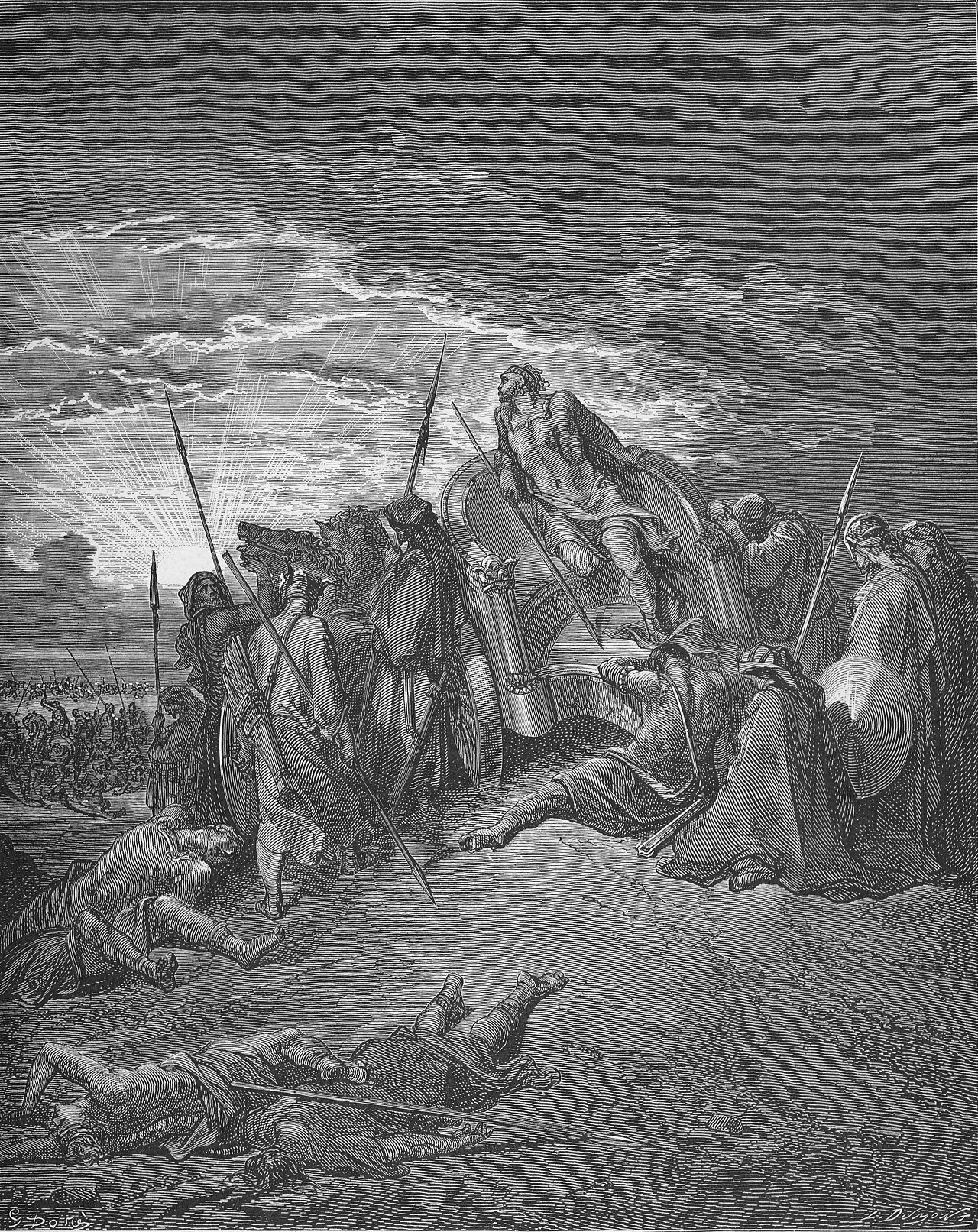
This page draws on Albert Barnes, Notes, Explanatory and Practical, on the Old and New Testaments (1832-1869); Jamieson, Fausset & Brown, Commentary Critical and Explanatory on the Whole Bible; John Gill, Exposition of the Old Testament; John Gill, Exposition of the Old Testament (1748-1763); Keil, The Books of the Kings and Matthew Henry, Commentary on the Whole Bible.