
1 Kings 21:10
in 1 Kings 21But seat two scoundrels opposite him and have them testify, ‘You have cursed both God and the king!’ Then take him out and stone him to death.”
BSB
The same verse in ASV and KJV ▾
ASV
and set two men, base fellows, before him, and let them bear witness against him, saying, Thou didst curse God and the king. And then carry him out, and stone him to death.
KJV
And set two men, sons of Belial, before him, to bear witness against him, saying, Thou didst blaspheme God and the king. And then carry him out, and stone him, that he may die.
⋯
This verse in 1 Kings 21
Commentary
6 notes on this verseSet two men - For life could not be attainted but on the evidence of two witnesses at least. Sons of Belial - Men who will not scruple to tell lies and take a false oath. Thou didst blaspheme God and the king - Thou art an atheist and a rebel. Thou hast spoken words injurious to the perfections and nature of God; and thou hast spoken words against the crown and dignity of the king.
This site's exposition
Proclaim a fast, and set Naboth on high
on 1 Kings 21:9-10
The letters order a fast, the outward form of national repentance, to stage Naboth's death as a righteous verdict rather than a murder. Two sons of Belial are set to accuse him of blaspheming God and the king, satisfying on paper the two-witness requirement of Deuteronomy 19:15 that no man be put to death on the word of one witness alone. The law meant to protect the innocent becomes the exact instrument of Naboth's death, and Wesley reads the fast itself as theater, meant to make Ahab look zealous for God rather than guilty of murder.
The record, by era
The Puritans and the Awakening3 voices
Blaspheme God and the king - Indeed his blaspheming God would only be the forfeiture of his life, not his estate. Therefore he is charged with treason also, that his estate may be confiscated, and so Ahab have his vineyard.
She borrows the privy-seal, but the king shall not know what she will do with it. It is probable this was not the first time he had lent it to her, but that with it she had signed warrants for the slaying of the prophets.
And set two men, sons of Belial, before him, to bear witness against him,....
The Nineteenth Century1 voice
A commentator
Albert Barnes1798–1870
Notes, Explanatory and Practical, on the Old and New Testaments (1832-1869)
proposed
Sons of Belial - i. e., “worthless persons” (Deu 13:13 note). Witnesses must be two in number according to the Law Num 35:30; Deu 17:6; Deu 19:15. The word rendered “blaspheme” is that which commonly means “bless.” The opposite sense of “cursing,” seems, however, to be required here and in Job 1:5, Job 1:11; Job 2:5. Perhaps the best explanation of the bad sense of the original word is to be found in the practice of blessing by way of salutation, not only on meeting, but also on taking leave Gen 47:7, Gen 47:10. From the latter custom the word came to mean “bidding farewell to,” and so “renouncing,” “casting off,” “cursing.” Carry him out and stone him - Naboth’s offence would be twofold, and in both cases capital; blasphemy against God being punishable with death by the Law (marginal reference), and blasphemy against the king being a capital offence by custom 1Ki 2:8; 2Sa 16:9; 2Sa 19:21. The punishment would be stoning, since the greater crime would absorb the lesser, and the Law made stoning the punishment for blasphemy against God. As stoning always took place outside the city (see Act 7:58), Jezebel told the elders to “carry Naboth out.”
The words behind it
14 Hebrew wordsEvery Hebrew word of this verse in the order it stands, with what it means and the door to its own study. The last column counts the times a word stands in the whole Bible: the rarer the word, the more the places it appears belong together.
| Hebrew | Sound | Meaning | Word study | In the Bible |
|---|---|---|---|---|
| וְ֠הוֹשִׁיבוּ | vehoshivu | and make sit | H3427 → | 1079 times |
| שְׁנַ֨יִם | shenayim | two | H8147 → | 768 times |
| אֲנָשִׁ֥ים | ʾanashim | men | H582 → | 566 times |
| בְּנֵֽי־ | benei- | sons of | H1121 → | 4930 times |
| בְלִיַּעַל֮ | veliyaal | worthlessness | H1100 → | 27 times |
| נֶגְדּוֹ֒ | negdo | before him | H5048 → | 151 times |
| וִיעִדֻ֣הוּ | viiduhu | and let them testify against him | H5749 → | 44 times |
| לֵאמֹ֔ר | lemor | <to> saying | H559 → | 5305 times |
| בֵּרַ֥כְתָּ | berakhta | you have blessed | H1288 → | 330 times |
| אֱלֹהִ֖ים | ʾelohim | God | H430 → | 2601 times |
| וָמֶ֑לֶךְ | vamelekh | and [the] king | H4428 → | 2525 times |
| וְהוֹצִיאֻ֥הוּ | vehotziuhu | and take out him | H3318 → | 1067 times |
| וְסִקְלֻ֖הוּ | vesikluhu | and stone him | H5619 → | 22 times |
| וְיָמֹֽת׃ | veyamot | so may he die | H4191 → | 839 times |
וְ֠הוֹשִׁיבוּand make sit
vehoshivuH3427 →1079 times
שְׁנַ֨יִםtwo
shenayimH8147 →768 times
אֲנָשִׁ֥יםmen
ʾanashimH582 →566 times
בְּנֵֽי־sons of
benei-H1121 →4930 times
בְלִיַּעַל֮worthlessness
veliyaalH1100 →27 times
נֶגְדּוֹ֒before him
negdoH5048 →151 times
וִיעִדֻ֣הוּand let them testify against him
viiduhuH5749 →44 times
לֵאמֹ֔ר<to> saying
lemorH559 →5305 times
בֵּרַ֥כְתָּyou have blessed
berakhtaH1288 →330 times
אֱלֹהִ֖יםGod
ʾelohimH430 →2601 times
וָמֶ֑לֶךְand [the] king
vamelekhH4428 →2525 times
וְהוֹצִיאֻ֥הוּand take out him
vehotziuhuH3318 →1067 times
וְסִקְלֻ֖הוּand stone him
vesikluhuH5619 →22 times
וְיָמֹֽת׃so may he die
veyamotH4191 →839 times
A shaded row is a word that stands 400 times or fewer in the Bible.
The walk
8 stopsEach card is a verse this one points to, and under it the verses that one points to in turn. Where several paths arrive at the same place, that place is listed first: the text keeps returning to it.
Through
Deuteronomy 19:15A lone witness is not sufficient to establish any wrongdoing or sin against a man, regardless of what offense he may have committed. A matter must be established by the testimony of two or…
it leads to
- Numbers 35:30
If anyone kills a person, the murderer is to be put to death on the testimony of the witnesses. But no one is to be put to death based on the testimony of a…
- 2 Corinthians 13:1
This is the third time I am coming to you. “Every matter must be established by the testimony of two or three witnesses.”
- Deuteronomy 17:6
On the testimony of two or three witnesses a man shall be put to death, but he shall not be executed on the testimony of a lone witness.
- Hebrews 10:28
Anyone who rejected the law of Moses died without mercy on the testimony of two or three witnesses.
- Matthew 18:16
But if he will not listen, take one or two others along, so that ‘every matter may be established by the testimony of two or three witnesses.’
- Numbers 35:30
Through
Exodus 22:28You must not blaspheme God or curse the ruler of your people.
it leads to
- Acts 23:5
“Brothers,” Paul replied, “I was not aware that he was the high priest, for it is written: ‘Do not speak evil about the ruler of your people.’”
- Ecclesiastes 10:20
Do not curse the king even in your thoughts, or curse the rich even in your bedroom, for a bird of the air may carry your words, and a winged creature may report your…
- Acts 23:5
Through
Acts 6:11Then they prompted some men to say, “We heard Stephen speak words of blasphemy against Moses and against God.”
it leads to
- Matthew 26:59–60
Now the chief priests and the whole Sanhedrin were seeking false testimony against Jesus in order to put Him to death.
- Matthew 26:59–60
Where this verse is studied
On this page
Studies1
About 1 Kings
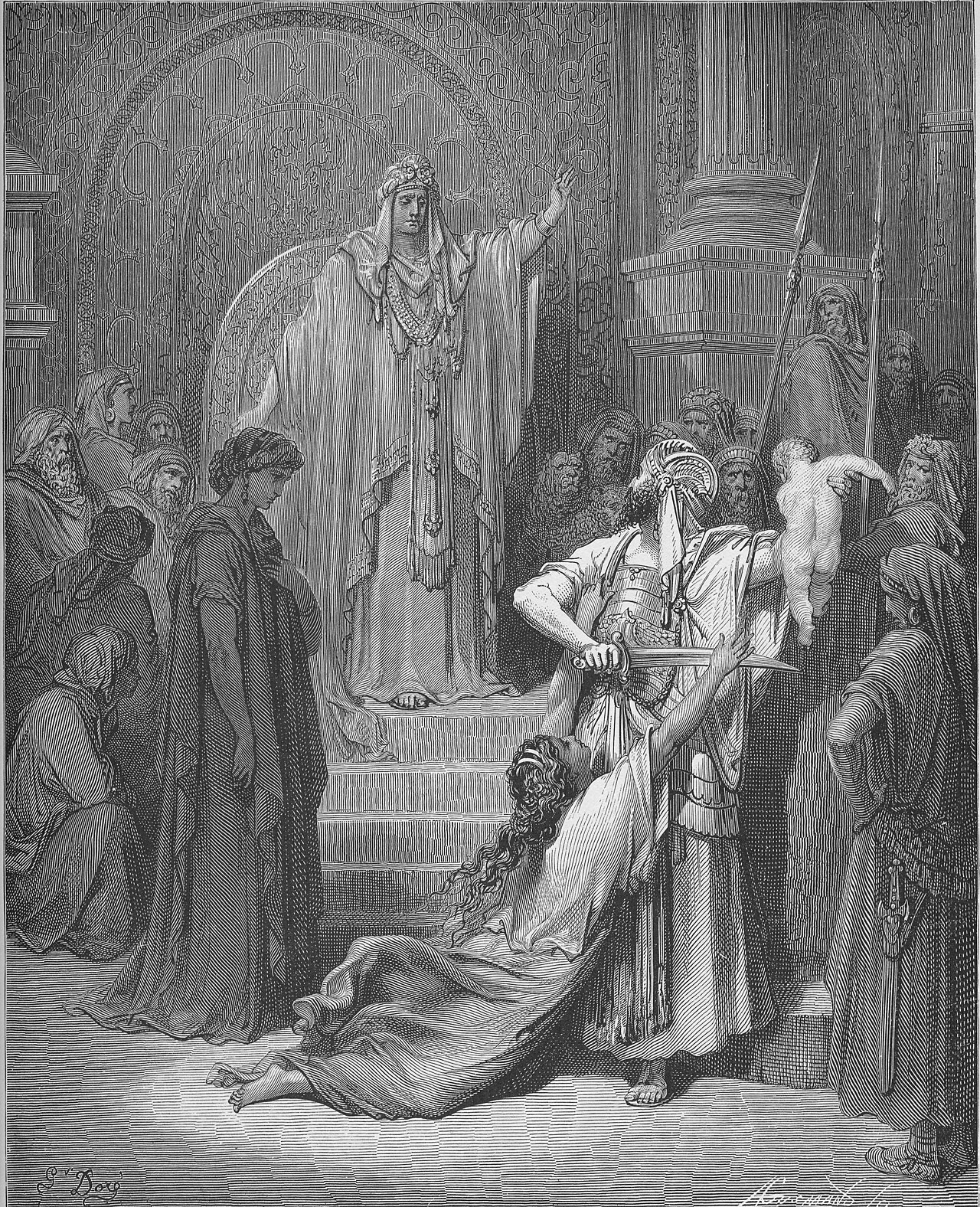
This page draws on Adam Clarke, Commentary on the Bible; Albert Barnes, Notes, Explanatory and Practical, on the Old and New Testaments (1832-1869); John Gill, Exposition of the Old Testament (1748-1763); John Wesley, Explanatory Notes upon the Old Testament and Matthew Henry, Commentary on the Whole Bible.