
1 Kings 21:26
in 1 Kings 21He committed the most detestable acts by going after idols, just like the Amorites whom the LORD had driven out before the Israelites.)
BSB
The same verse in ASV and KJV ▾
ASV
And he did very abominably in following idols, according to all that the Amorites did, whom Jehovah cast out before the children of Israel.)
KJV
And he did very abominably in following idols, according to all things as did the Amorites, whom the Lord cast out before the children of Israel.
⋯
This verse in 1 Kings 21
Commentary
6 notes on this verseAnd he did very abominably in following idols,.... Which were abominable to the Lord; "dunghill gods", as the Tigurine version: according to all things as did the Amorites, whom the Lord cast out before the children of Israel; meaning the seven nations that formerly inhabited Canaan, but were driven out for their sins, to make way for the children of Israel, of which the Amorites were one, and here put for all the rest.
This site's exposition
who sold himself to do evil
on 1 Kings 21:25-26
The historian gives his own judgment of the reign: “Surely there was never one like Ahab”. Jezebel is named as the one who incited him. Ahab's idols are set beside “the Amorites”, of whom Genesis 15:16 said “the iniquity of the Amorites is not yet complete”.
This site's exposition
by going after idols
John Gill records that the Tigurine version rendered the word for idols as dunghill gods. Albert Barnes takes the Amorites as the name for all the old nations of Canaan. Barnes finds the same gods in Ahab's Phoenician worship.
The record, by era
The Puritans and the Awakening2 voices
He was wholly given up to sin, and, upon condition he might have the pleasures of it, he would take the wages of it, which is death, Rom. vi. Blessed Paul complained that he was sold under sin ( Rom. vii. 14 ), as a poor captive against his will; but Ahab was voluntary: he sold himself to sin; of choice, and as his own act and deed, he submitted to the dominion of sin.
Naboth's Vineyard Refused to Ahab. 1 And it came to pass after these things, that Naboth the Jezreelite had a vineyard, which was in Jezreel, hard by the palace of Ahab king of Samaria.
quarantine:scripture (2026-07-29) — scripture-overlap:94%@v1-2
The Nineteenth Century1 voice
A commentator
Albert Barnes1798–1870
Notes, Explanatory and Practical, on the Old and New Testaments (1832-1869)
The Amorites appear here as representatives of the old Canaanite nations (Gen 15:16 note). It seems to be implied here that their idolatries were in the main identical with those of the Phoenicians which Ahab had adopted.
The words behind it
15 Hebrew wordsEvery Hebrew word of this verse in the order it stands, with what it means and the door to its own study. The last column counts the times a word stands in the whole Bible: the rarer the word, the more the places it appears belong together.
| Hebrew | Sound | Meaning | Word study | In the Bible |
|---|---|---|---|---|
| וַיַּתְעֵ֣ב | vaiyatev | and he acted abominably | H8581 → | |
| מְאֹ֔ד | meod | exceedingly | H3966 → | 300 times |
| לָלֶ֖כֶת | lalekhet | by walking | H1980 → | 1546 times |
| אַחֲרֵ֣י | ʾacharei | after | H310 → | 715 times |
| הַגִּלֻּלִ֑ים | hagilulim | the idols | H1544 → | |
| כְּכֹל֙ | kekhol | according to all | H3605 → | 5413 times |
| אֲשֶׁ֣ר | ʾasher | that | H834 → | 5497 times |
| עָשׂ֣וּ | ʾasu | they had done | H6213 → | 2628 times |
| הָאֱמֹרִ֔י | haemori | the Amorite[s] | H567 → | 87 times |
| אֲשֶׁר֙ | ʾasher | whom | H834 → | 5497 times |
| הוֹרִ֣ישׁ | horish | he dispossessed | H3423 → | 231 times |
| יְהוָ֔ה | yahweh | Yahweh | H3068 → | 6520 times |
| מִפְּנֵ֖י | mipenei | from before | H6440 → | 2123 times |
| בְּנֵ֥י | benei | [the] people of | H1121 → | 4930 times |
| יִשְׂרָאֵֽל׃ ס | yisrael | Israel | H3478 → | 2507 times |
וַיַּתְעֵ֣בand he acted abominably
vaiyatevH8581 →
מְאֹ֔דexceedingly
meodH3966 →300 times
לָלֶ֖כֶתby walking
lalekhetH1980 →1546 times
אַחֲרֵ֣יafter
ʾachareiH310 →715 times
הַגִּלֻּלִ֑יםthe idols
hagilulimH1544 →
כְּכֹל֙according to all
kekholH3605 →5413 times
אֲשֶׁ֣רthat
ʾasherH834 →5497 times
עָשׂ֣וּthey had done
ʾasuH6213 →2628 times
הָאֱמֹרִ֔יthe Amorite[s]
haemoriH567 →87 times
אֲשֶׁר֙whom
ʾasherH834 →5497 times
הוֹרִ֣ישׁhe dispossessed
horishH3423 →231 times
יְהוָ֔הYahweh
yahwehH3068 →6520 times
מִפְּנֵ֖יfrom before
mipeneiH6440 →2123 times
בְּנֵ֥י[the] people of
beneiH1121 →4930 times
יִשְׂרָאֵֽל׃ סIsrael
yisraelH3478 →2507 times
A shaded row is a word that stands 400 times or fewer in the Bible.
The walk
8 stopsEach card is a verse this one points to, and under it the verses that one points to in turn. Where several paths arrive at the same place, that place is listed first: the text keeps returning to it.
Through
1 Peter 4:3For you have spent enough time in the past carrying out the same desires as the Gentiles: living in debauchery, lust, drunkenness, orgies, carousing, and detestable idolatry.
it leads to
- 1 Corinthians 6:11
And that is what some of you were. But you were washed, you were sanctified, you were justified, in the name of the Lord Jesus Christ and by the Spirit of our God.
- Ephesians 5:18
Do not get drunk on wine, which leads to reckless indiscretion. Instead, be filled with the Spirit.
- 1 Thessalonians 4:5
not in lustful passion like the Gentiles who do not know God;
- 1 Peter 1:14
As obedient children, do not conform to the passions of your former ignorance.
- 1 Corinthians 6:11
Through
Genesis 15:16In the fourth generation your descendants will return here, for the iniquity of the Amorites is not yet complete.”
it leads to
- Daniel 8:23
In the latter part of their reign, when the rebellion has reached its full measure, an insolent king, skilled in intrigue, will come to the throne.
- Exodus 12:40
Now the duration of the Israelites’ stay in Egypt was 430 years.
- Matthew 23:32–35
Fill up, then, the measure of the sin of your fathers.
- 1 Thessalonians 2:16
hindering us from telling the Gentiles how they may be saved. As a result, they continue to heap up their sins to full capacity; the utmost wrath has come upon them.
- Daniel 8:23
Where this verse is studied
About 1 Kings
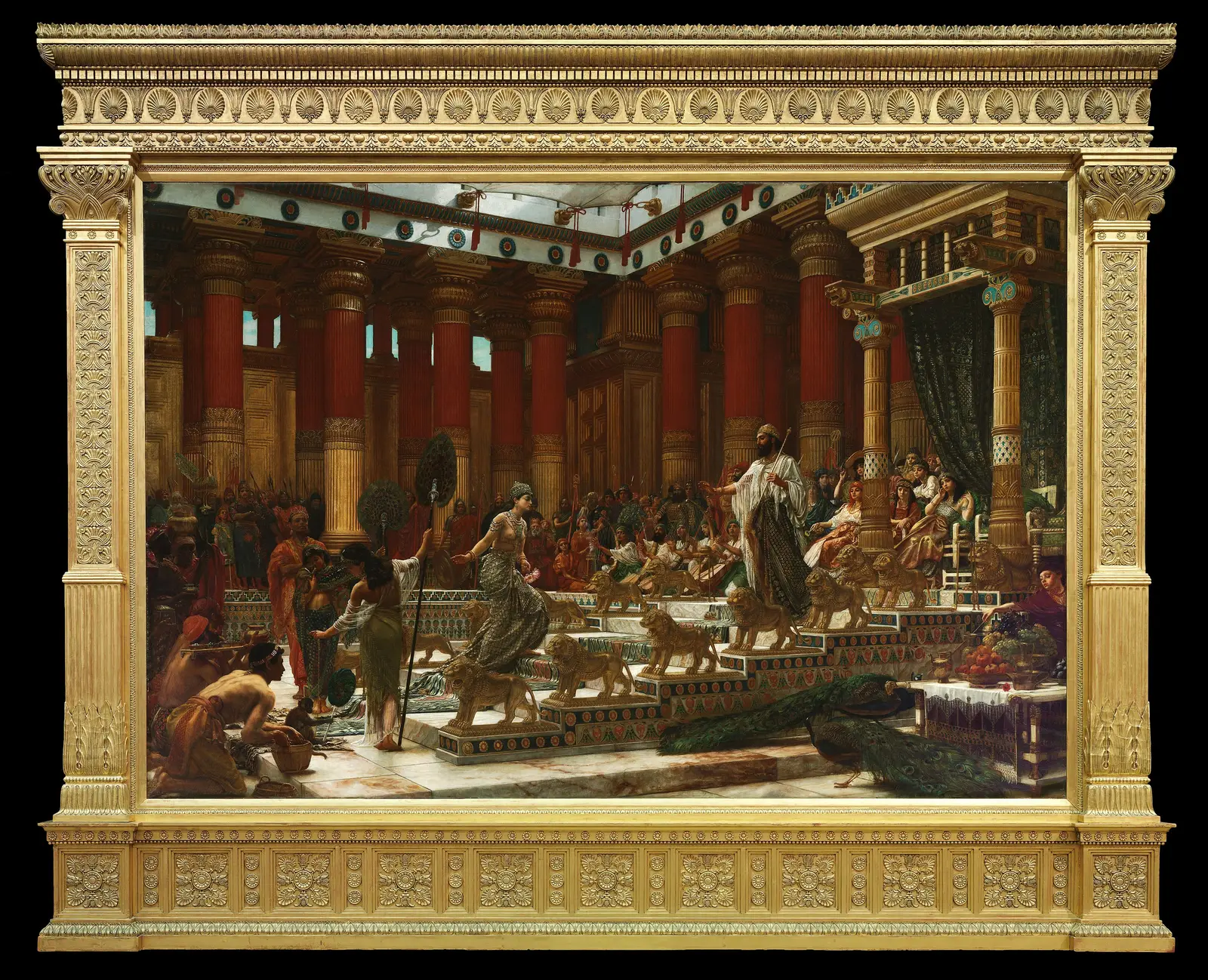
This page draws on Albert Barnes, Notes on the Old Testament; Albert Barnes, Notes, Explanatory and Practical, on the Old and New Testaments (1832-1869); John Gill, Exposition of the Old Testament (1748-1763); John Gill, Exposition of the Old Testament and Matthew Henry, Commentary on the Whole Bible.