
Also called: haughty, arrogance, lifted up, boasting, self-exalted, high looks
This subject covers the self enthroned where God belongs, from the oldest fall to the warnings against it. Seeing yourself the size you actually are belongs to Humility. Wanting what another man has belongs to Envy.
What Pride covers, and where it stops
This subject covers the self enthroned where God belongs, from the oldest fall to the warnings against it. Seeing yourself the size you actually are belongs to Humility. Wanting what another man has belongs to Envy.
On this page, 6 sections
The one drawing
Across the canon
Old Testament
New Testament
The other 56 books of the canon carry none.
12 passages
Where Scripture speaks
The passages this subject stands on, in canon order.
“For God knows that in the day you eat of it, your eyes will be opened and you will be like God, knowing good and evil.”“Come,” they said, “let us build for ourselves a city with a tower that reaches to the heavens, that we may make a name for ourselves and not be scattered over the face of all the earth.”But when Uzziah grew powerful, his arrogance led to his own destruction. He was unfaithful to the LORD his God, for he entered the temple of the LORD to burn incense on the altar of incense.When pride comes, disgrace follows, but with humility comes wisdom.Pride goes before destruction, and a haughty spirit before a fall.You said in your heart: “I will ascend to the heavens; I will raise my throne above the stars of God. I will sit on the mount of assembly, in the far reaches of the north.Your heart grew proud of your beauty; you corrupted your wisdom because of your splendor; so I cast you to the earth; I made you a spectacle before kings.the king exclaimed, “Is this not Babylon the Great, which I myself have built by the might of my power as a royal residence and for the glory of my majesty?”The pride of your heart has deceived you, O dwellers in the clefts of the rocks whose habitation is the heights, who say in your heart, ‘Who can bring me down to the ground?’I tell you, this man, rather than the Pharisee, went home justified. For everyone who exalts himself will be humbled, but the one who humbles himself will be exalted.”For by the grace given me I say to every one of you: Do not think of yourself more highly than you ought, but think of yourself with sober judgment, according to the measure of faith God has given you.But He gives us more grace. This is why it says: “God opposes the proud, but gives grace to the humble.”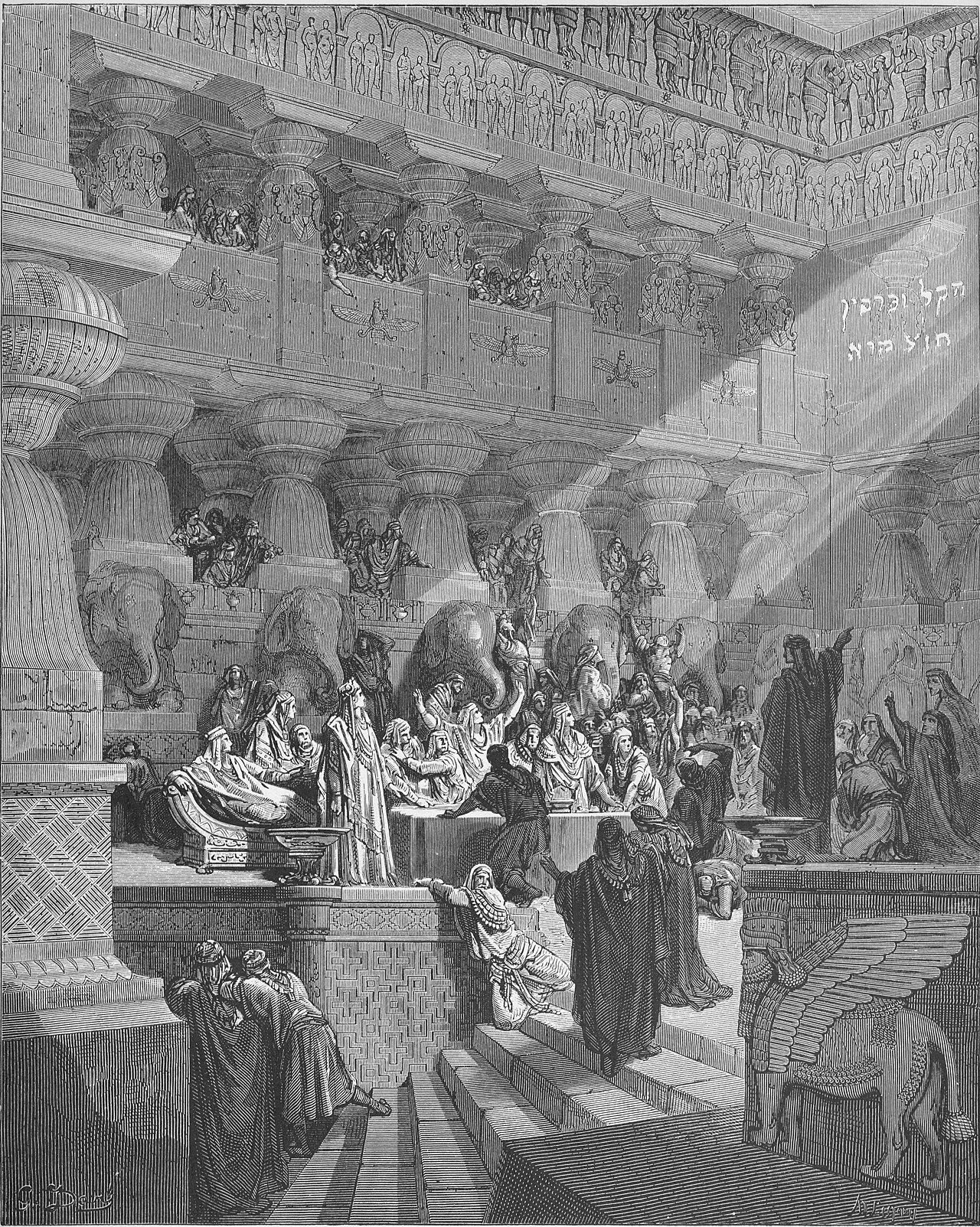
Pride in Scripture, in full
Pride is the sin that needs no help getting started. It was there before the first apple was eaten and before the first city was built. Scripture calls it the sin that turns a good gift (strength, beauty, intelligence, position), into a private throne.
The serpent's temptation in Eden ran straight through pride. He told Eve that eating the fruit would make her like God, knowing good and evil (Genesis 3:5). The desire was not for food. It was for a higher seat than the one God had given her.
A few chapters later, a whole city tried the same thing together. The builders of Babel wanted a tower that reached heaven, and their own reason was blunt: they wanted to make a name for themselves (Genesis 11:4). God did not need to strike the tower down with force. He simply confused their language, and the ambition of pride came apart on its own.
Israel's kings gave pride a long history of case studies. Uzziah was a strong and successful king until his heart lifted itself up, and that same pride led straight to his downfall (2 Chronicles 26:16). Proverbs turned the pattern into a proverb of its own: pride goes before destruction, and a haughty spirit before a fall (Proverbs 16:18).
The prophets pushed pride even further back than any human king. Isaiah describes a heavenly being who said in his heart that he would ascend above the stars of God and be like the Most High (Isaiah 14:13). Ezekiel describes a heart lifted up because of its own beauty (Ezekiel 28:17). Both passages use an earthly ruler as a mirror for something older and darker: pride as the first sin of all, present before humanity ever existed to commit it.
Daniel gives pride its most famous single sentence in the Bible. Nebuchadnezzar stood on his palace roof and asked whether this was not the great Babylon that he himself had built by his own power, for the honor of his own majesty (Daniel 4:30). The words were barely out of his mouth before judgment fell. Obadiah says almost the same thing about Edom: pride had deceived the nation into thinking no one could bring it down (Obadiah 1:3).
Jesus met pride constantly, usually wearing religious clothing. He told a parable about a Pharisee who prayed about how good he was, and a tax collector who would not even lift his eyes toward heaven. Jesus said the humble man went home right with God, because everyone who exalts himself will be brought low, and everyone who humbles himself will be lifted up (Luke 18:14).
Paul told the Roman church not to think of themselves more highly than they should (Romans 12:3), and James put the whole biblical verdict on pride into a single line: God opposes the proud, but gives grace to the humble (James 4:6).
Christ is pride's exact opposite. Though he was God, he did not treat that status as something to cling to. He emptied himself, took on the nature of a servant, and humbled himself all the way to death on a cross (Philippians 2:6-8). Every proud heart in Scripture reaches for a throne it was never meant to have. Jesus already sat on one, and gave it up.
4 voices
What teachers have said
There is hardly a page in the holy books in which it is not shown that God resists the proud but to the humble offers grace.
Augustine of Hippo · Christian Instruction 3:23.33
Written before 430.
and pride and arrogance, either in states or individuals, have the peculiar abhorrence of God. Pride does not suit the sons of men; it made devils of angels, and makes fiends of men.
Adam Clarke · Commentary on the Bible
Written before 1832.
The minds of the arrogant are doubtless so very mad, that even in what they think rightly, they are disfigured by the deformity of their pride.
Gregory the Dialogist · Morals on the Book of Job, Book XXIII
Written before 604.
But he giveth greater grace - To all who shun those tempers. Therefore it - The scripture. Saith, God resisteth the proud - And pride is the great root of all unkind affections.
John Wesley · Explanatory Notes upon the New Testament, 1755
The words underneath
Each card is one Hebrew or Greek word behind pride. It gives the sense, the count across the canon, and the number in Strong's 1890 concordance.
gaon: pride
Hebrew · H1347Strong's entry: {arrogance or majesty; by implication, (concretely) ornament}
the standard Hebrew noun for pride
49 times in the Old Testament · gaon, in full →
hyperephanos: arrogant
Greek · G5244Strong's entry: appearing above others (conspicuous), i.e. (figuratively) haughty
the Greek word for the proud
5 times in the New Testament · hyperephanos, in full →
gabahh: to exult
Hebrew · H1361Strong's entry: to soar, i.e. be lofty; figuratively, to be haughty
figuratively, to be haughty and self-exalted
34 times in the Old Testament · gabahh, in full →
rum: to exalt
Hebrew · H7311Strong's entry: to be high actively, to rise or raise (in various applications, literally or figuratively)
the root behind being 'high' or haughty
190 times in the Old Testament · rum, in full →
Character
The subjects beside it
On this page
Subjects28