
On this page, 7 sections
The one drawing
Across the canon
Old Testament
New Testament
The other 54 books of the canon carry none.
12 passages
Where Scripture speaks
The passages this subject stands on, in canon order.
“Take your son,” God said, “your only son Isaac, whom you love, and go to the land of Moriah. Offer him there as a burnt offering on one of the mountains, which I will show you.”The blood on the houses where you are staying will distinguish them; when I see the blood, I will pass over you. No plague will fall on you to destroy you when I strike the land of Egypt.For the life of the flesh is in the blood, and I have given it to you to make atonement for your souls upon the altar; for it is the blood that makes atonement for the soul.But Samuel declared: “Does the LORD delight in burnt offerings and sacrifices as much as in obedience to His voice? Behold, obedience is better than sacrifice, and attentiveness is better than the fat of rams.The sacrifices of God are a broken spirit; a broken and a contrite heart, O God, You will not despise.To do righteousness and justice is more desirable to the LORD than sacrifice.For I desire mercy, not sacrifice, and the knowledge of God rather than burnt offerings.He has shown you, O man, what is good. And what does the LORD require of you but to act justly, to love mercy, and to walk humbly with your God?But go and learn what this means: ‘I desire mercy, not sacrifice.’ For I have not come to call the righteous, but sinners.”Therefore I urge you, brothers, on account of God’s mercy, to offer your bodies as living sacrifices, holy and pleasing to God, which is your spiritual service of worship.and walk in love, just as Christ loved us and gave Himself up for us as a fragrant sacrificial offering to God.Otherwise, Christ would have had to suffer repeatedly since the foundation of the world. But now He has appeared once for all at the end of the ages to do away with sin by the sacrifice of Himself.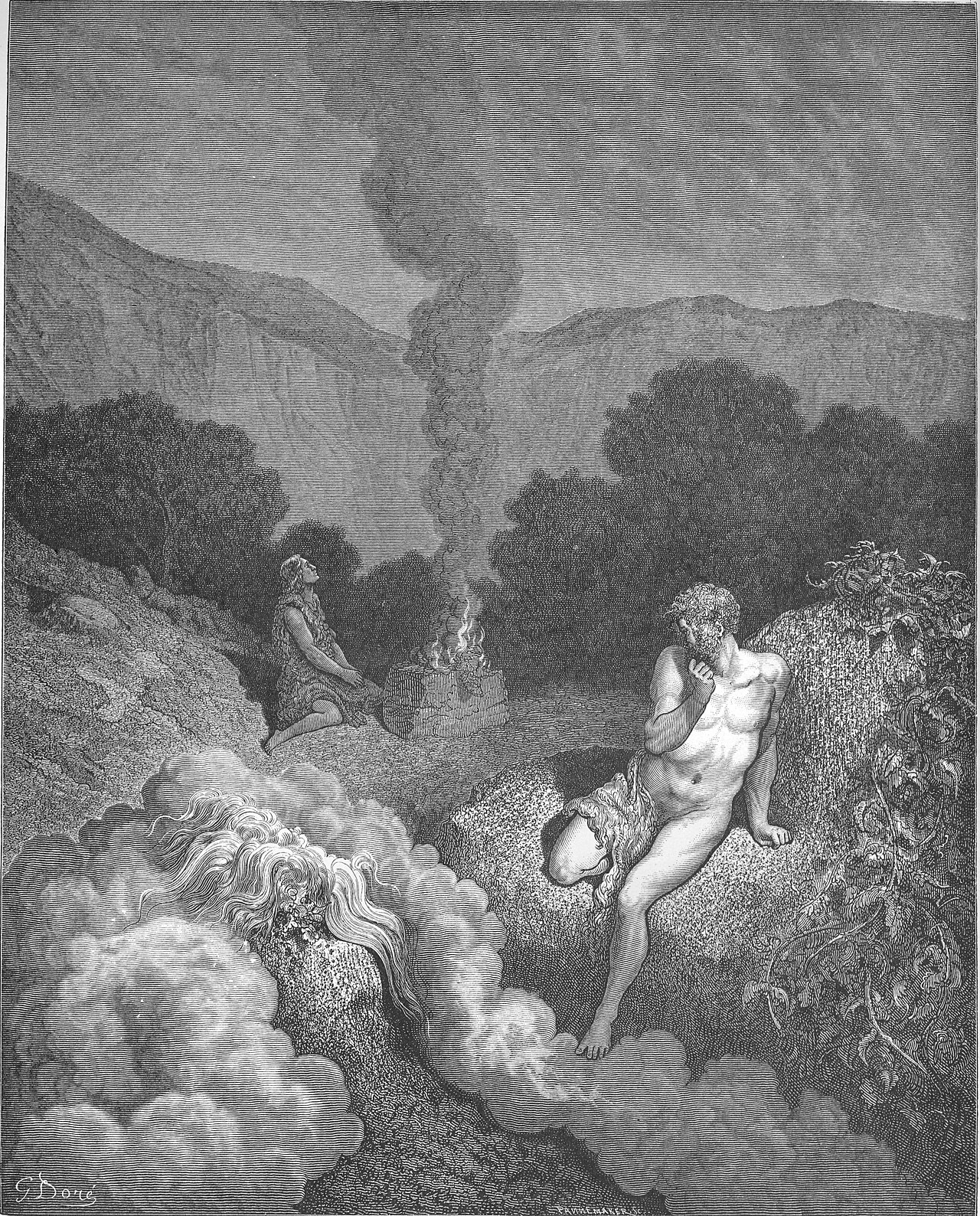
Sacrifice in Scripture, in full
The first sacrifice in Scripture happens just outside Eden's gate. After Adam and Eve sinned, God clothed them with skins (Genesis 3:21), which meant an animal had to die so they could be covered. Sacrifice enters the Bible's story at the exact moment sin does, and the two never separate again.
Sacrifice, at its root, means giving up something valuable because something else matters more. Cain and Abel both understood this instinctively; they both brought offerings before the LORD (Genesis 4:4). But sacrifice was never just about the object on the altar. It was about the heart behind it. God accepted Abel's offering and rejected Cain's, and the difference was not the type of gift but the person giving it.
Abraham's sacrifice on Mount Moriah is the sharpest test of this principle in the whole Old Testament. God asked him to offer his only son, Isaac, the son of the promise (Genesis 22:2). Abraham did not understand it, but he obeyed, trusting that God would provide. At the last moment, God stopped his hand and supplied a ram instead (Genesis 22:13). The test was never really about Isaac's life. It was about whether Abraham loved God more than the promise itself.
The sacrificial system God gave Israel through Moses turned this principle into a daily rhythm. Blood was central to nearly every part of it, because, as Leviticus states plainly, the life of the flesh is in the blood (Leviticus 17:11). The blood on the altar stood in for the life of the worshiper. It was a constant, physical reminder that sin costs something, and that something has to die in the sinner's place.
But even inside that system, God made clear that the sacrifices were never the point by themselves. Samuel told King Saul that to obey is better than sacrifice (1 Samuel 15:22). The prophet Hosea said God desired mercy, not sacrifice (Hosea 6:6): not because sacrifice was wrong, but because a person could go through every motion of the ritual with a heart that never changed. David understood this after his own sin. He did not bring an animal to the altar first; he brought himself, admitting that the sacrifice God truly wanted was a broken and a contrite heart (Psalm 51:17).
All of that Old Testament sacrifice was pointing forward, and Jesus is where it lands. Hebrews says that Christ appeared once, at the climax of the ages, to put away sin by the sacrifice of himself (Hebrews 9:26). Every lamb, every ram, every bull offered for centuries could only cover sin for a time. Christ's sacrifice, offered once, needed no repeating (Hebrews 10:12). He did not bring an offering to the altar. He was the offering: the priest and the sacrifice in the same person, giving what was dear because people mattered more.
That is why the New Testament can turn the word around and hand it back to believers. Paul asks Christians to present their bodies as a living sacrifice (Romans 12:1): not because anything still needs to be paid for sin, but because a life shaped by Christ's sacrifice starts giving up its own comfort, its own plans, its own dear things, for something that matters more. Sacrifice did not end at the cross. It changed shape, from something offered to earn favor into something offered because favor has already, completely, been given.
5 voices
What teachers have said
Christ is both our altar and our sacrifice, to whom we must look with an eye of faith in all our approaches to God, and he is salvation in the midst of the earth
Matthew Henry · Commentary on the Whole Bible, 1710
If you want to exercise the priesthood of your soul, do not let the fire depart from your altar.
Origen of Alexandria · Sermons on Leviticus 4.6
Written before 253.
Old things are passed away and are made new in Christ, so that altar yields to altar, sword to sword, fire to fire, bread to bread, victim to Victim, blood to Blood.
Augustine of Hippo · Letter 36
Written before 430.
The presence of God was indicated in some visible form and His acceptance of the sacrifice shown by the miraculous descent of fire from heaven, consuming it on the altar.
Jamieson, Fausset & Brown · Commentary Critical and Explanatory on the Whole Bible, 1871
That Peter is struck, that Stephen is overwhelmed by stones, that James is slain as is a victim at the altar, that Paul is beheaded has been written in their own blood.
Tertullian · Scorpiace
Written before 220.
The words underneath
Each card is one Hebrew or Greek word behind sacrifice. It gives the sense, the count across the canon, and the number in Strong's 1890 concordance.
chattaah: sin
Hebrew · H2403Strong's entry: an offence (sometimes habitual sinfulness), and its penalty, occasion, sacrifice, or expiation; also (concretely) an offender
the sacrifice that covered a specific, named sin
295 times in the Old Testament · chattaah, in full →
olah: burnt offering
Hebrew · H5930Strong's entry: a step or (collectively, stairs, as ascending); usually a holocaust (as going up in smoke)
olah — a whole burnt offering, wholly given up, nothing kept back
287 times in the Old Testament · olah, in full →
zebach: sacrifice
Hebrew · H2077Strong's entry: properly, a slaughter, i.e. the flesh of an animal; by implication, a sacrifice (the victim or the act)
the noun behind Israel's altar sacrifices
162 times in the Old Testament · zebach, in full →
zabach: to sacrifice
Hebrew · H2076Strong's entry: to slaughter an animal (usually in sacrifice)
the verb of giving up a life for worship
134 times in the Old Testament · zabach, in full →
1 verses
The complete list
This subject carries 13 curated verses. 12 of them are quoted above, and the other 1 stand here, book by book. Open a book to read the references with a clause of each verse.
Character
The subjects beside it
On this page
Subjects28