
On this page, 6 sections
The one drawing
Across the canon
12 passages
Where Scripture speaks
The passages this subject stands on, in canon order.
The LORD God also said, “It is not good for the man to be alone. I will make for him a suitable helper.”After David had finished speaking with Saul, the souls of Jonathan and David were knit together, and Jonathan loved him as himself.Then Jonathan made a covenant with David because he loved him as himself.And Jonathan had David reaffirm his vow out of love for him, for Jonathan loved David as he loved himself.I grieve for you, Jonathan, my brother. You were delightful to me; your love to me was extraordinary, surpassing the love of women.A friend loves at all times, and a brother is born for adversity.A man of many companions may come to ruin, but there is a friend who stays closer than a brother.As iron sharpens iron, so one man sharpens another.Two are better than one, because they have a good return for their labor.Greater love has no one than this, that he lay down his life for his friends.No longer do I call you servants, for a servant does not understand what his master is doing. But I have called you friends, because everything I have learned from My Father I have made known to you.And the Scripture was fulfilled that says, “Abraham believed God, and it was credited to him as righteousness,” and he was called a friend of God.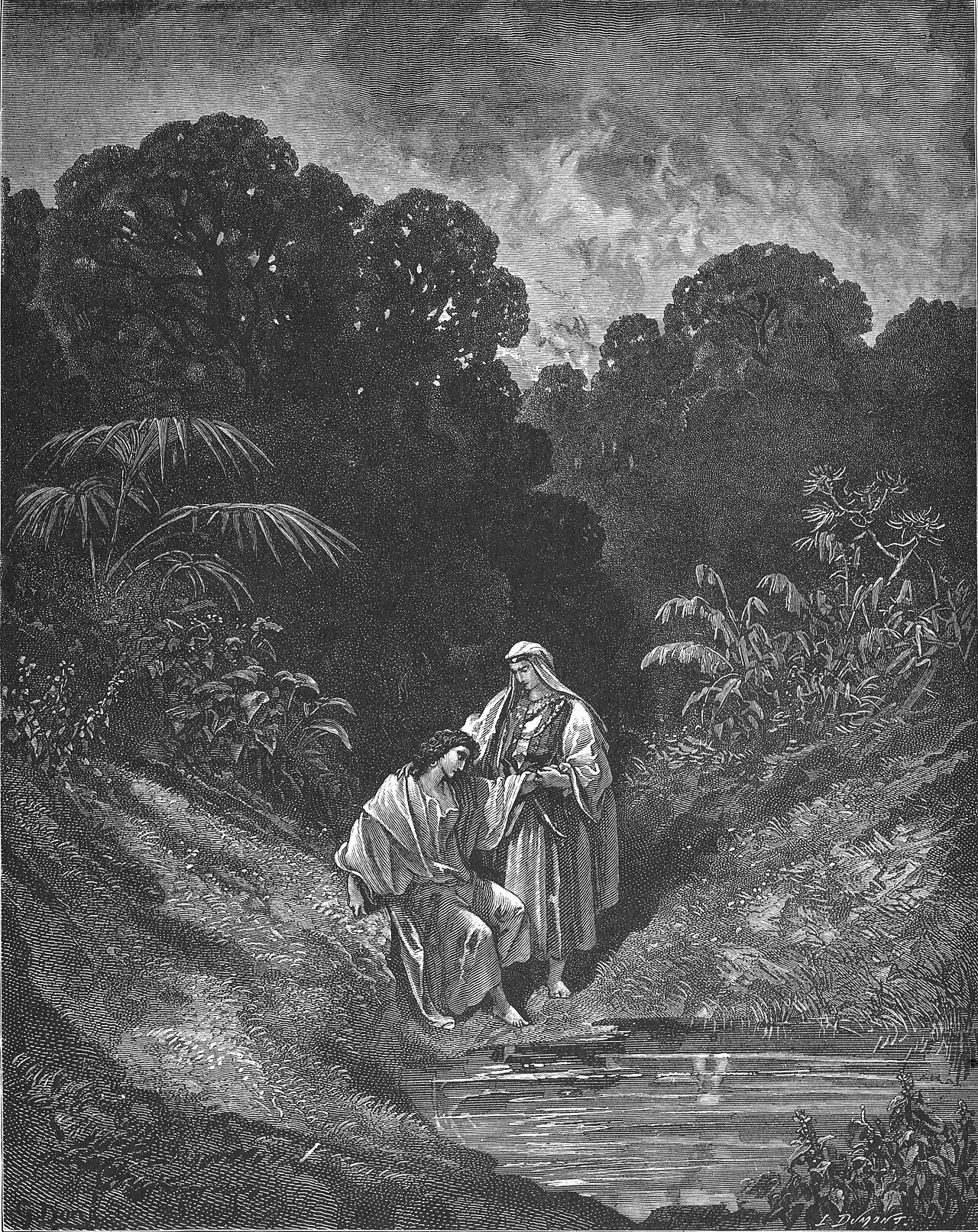
Friendship in Scripture, in full
Friendship runs through Scripture as one of its quietest, steadiest threads. Long before the word "friend" is fully spoken, its need is named. When God looks at the first man alone in a finished creation, he declares something not good: "It is not good that the man should be alone" (Genesis 2:18). Companionship is built into the design, not added as decoration.
The clearest earthly friendship in the Bible belongs to David and Jonathan. Jonathan, heir to Saul's throne, gives his loyalty to the shepherd boy who will replace him. "The soul of Jonathan was knit with the soul of David, and Jonathan loved him as his own soul" (1 Samuel 18:1). He makes a covenant with David, risking his father's fury to warn his friend of danger (1 Samuel 20:17). When Jonathan dies, David's grief pours out in a line that has outlived both of them: his love was wonderful, surpassing the love of women (2 Samuel 1:26).
Proverbs gives friendship its proverbs. "A friend loveth at all times, and a brother is born for adversity" (Proverbs 17:17). "There is a friend that sticketh closer than a brother" (Proverbs 18:24). "Iron sharpeneth iron; so a man sharpeneth the countenance of his friend" (Proverbs 27:17): friendship as something that shapes character, not just company. Ecclesiastes adds the practical case for it: two are better than one, because they have a good reward for their labor (Ecclesiastes 4:9).
But the Bible's deepest word on friendship belongs to Jesus. On the night before his death, he tells his disciples plainly what they are to him: "Henceforth I call you not servants... but I have called you friends" (John 15:15). A servant obeys without being told why; a friend is let into the reasoning. Jesus opens his purposes to the people he loves.
Then he defines friendship at its highest possible cost. "Greater love hath no man than this, that a man lay down his life for his friends" (John 15:13). He says this the same night he goes to do exactly that. The cross is friendship carried all the way through: not admiration from a distance, but a life laid down for people who could offer nothing back.
That is not a new idea invented at Calvary. It reaches back to Abraham, who believed God and was counted righteous, and whom Scripture calls, simply, "the Friend of God" (James 2:23). If Abraham could be named God's friend on the strength of trust, the door was already open long before Jesus walked through it and widened it for everyone who would come after.
Friendship in Scripture, then, is never sentimental. It costs Jonathan his father's favor and his claim to a throne. It costs David tears that never fully dry. It costs Jesus everything. And it offers, on the other side of that cost, something the whole Bible treats as one of life's great goods: another soul who will not leave when the road gets hard, and a Savior who has already proven he will not either.
5 voices
What teachers have said
Just as we are careful to keep material which is easily inflammable as far away as possible from fire, so we must refrain insofar as we can from contracting friendships in circles of which envious persons are members.
Basil of Caesarea · Homily Concerning Envy
Written before 379.
A man without a companion is like a left hand without the right.
Jamieson, Fausset & Brown · Commentary Critical and Explanatory on the Whole Bible, 1871
Where David is, whether in life or death, safe or in peril, there will this faithful friend of his be; and he confirms this resolution with an oath, that he might not be tempted to break it.
Matthew Henry · Commentary on the Whole Bible, 1710
He says not this of our limbs, but of our intimate friends, whom as being necessary to us we look upon as our limbs; for nothing is so hurtful as mischievous society.
John Chrysostom · Catena Aurea by Aquinas
Written before 407.
Since evil forms a friendship with the world and virtue a friendship with God, virtue and evil cannot coexist.
Origen of Alexandria · Catena
Written before 253.
The words underneath
Each card is one Hebrew or Greek word behind friendship. It gives the sense, the count across the canon, and the number in Strong's 1890 concordance.
alluph: tame
Hebrew · H441Strong's entry: familiar; a friend, also gentle; hence, a bullock (as being tame; applied, although masculine, to a cow); and so, a chieftain (as notable, like neat cattle)
intimacy trusted like family
69 times in the Old Testament · alluph, in full →
chaber: companion
Hebrew · H2270Strong's entry: an associate
one bound to another in shared life
12 times in the Old Testament · chaber, in full →
ahab: to love: lover
Hebrew · H157Strong's entry: to have affection for (sexually or otherwise)
the verb behind covenant friendship
211 times in the Old Testament · ahab, in full →
rea: neighbor
Hebrew · H7453Strong's entry: an associate (more or less close)
the Bible's ordinary word for friend
188 times in the Old Testament · rea, in full →
Character
The subjects beside it
On this page
Subjects28