
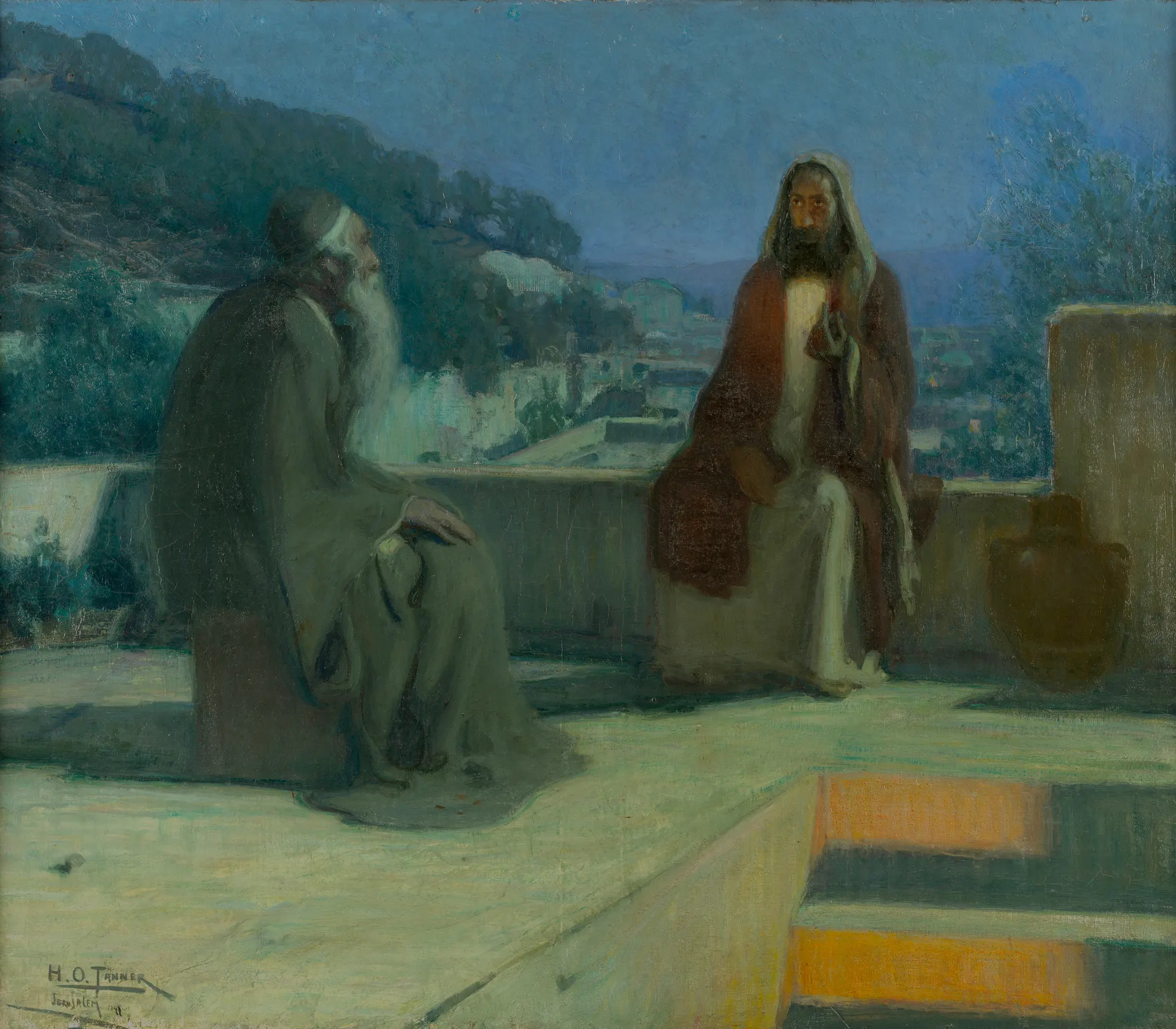
Johnchapter 20
31 verses · John, by tradition · AD 85 to 95 · The Gospels
But these are written so that you may believe that Jesus is the Christ, the Son of God, and that by believing you may have life in His name.
Introduction
John, by tradition, The Gospels, John Overview.
This chapter tells of the first day of the new week in the Gospel of the disciple Jesus loved, who was one of the first two men to reach the tomb. He writes for readers who live after the eyewitnesses, and at the close he states why he wrote. The chapter is built from meetings, each with a different person and a different kind of evidence. Listen for what each one sees, hears or is offered to touch before believing. Listen also for the names Jesus uses and the names given to Him. Read it as the Gospel's answer to how a later reader comes to faith.
Context
- Who
- Readers deciding whether to stake their lives on a report
- What
- The empty tomb, the appearance of the risen Jesus to Mary Magdalene, to the disciples on the first evening and to Thomas eight days later, and the statement of the Gospel's purpose.
- Where
- Jerusalem, at the tomb in the garden near the place of the crucifixion and in a room where the disciples met behind locked doors.
- When
- The first day of the week after the crucifixion and the same day of the following week, in about AD 30 or 33 on the usual datings.
- Why
- To show how the first witnesses came to believe that Jesus had risen, so that later readers who have not seen Him may believe and have life in His name.
Historical context
The first witnesses are the detail no one inventing a story in that culture would choose. A woman's testimony carried little weight in Jewish legal settings and was often not accepted at all, so building the central claim of the faith on Mary Magdalene's word was a liability, not a selling point. It is in every Gospel anyway.
Show the rest of the historical context, 3 more paragraphs
The grave clothes are described with unusual care, and the description matters. The linen wrappings were lying there and the cloth that had been on his head was folded up in a place by itself, not unwound and thrown aside as a robbery would leave them, and not gone with the body.
The locked doors are explained in the text: for fear of the Jewish leaders. The disciples were the associates of a man executed for sedition, in a city where the authorities had just proved willing to act, during a festival with extra troops in town.
Thomas asks for the specific evidence a crucified body would carry, the mark of the nails in the hands and a wound in the side, and the wound in the side exists because a soldier checked that he was dead with a spear rather than breaking his legs. Thomas is asking to inspect the coroner's findings.
Significance
Mary does not recognise him until he says her name, and readers who had come through chapter 10 knew why that detail was there: the sheep hear his voice, and he calls his own by name.
Show the rest of the significance, 1 more paragraph
The book's purpose is stated at the end of this chapter, and it names the reader directly: blessed are those who have not seen and yet have believed. These things are written so that you may believe that Jesus is the Christ, the Son of God, and that believing you may have life in his name. Everything in the Gospel has been evidence for a verdict the reader has to reach alone.
The heads below are this chapter's scenes. The numbered points under each are its verses.
The Stone Rolled Away and a Race to the Tomb
John 20:1-2
while it was still dark: Mary Magdalene comes to the tomb while it is still dark and sees the stone removed from the entrance. She runs to Simon Peter and the disciple Jesus loved with one message, that the Lord has been taken out of the tomb. Her grief reads an empty grave as theft.
John 20:1
“Observe that the blessed Evangelist, John, when he tells us the time of the Resurrection, says: On the first day of the week early, while it was yet dark, cometh Mary Magdalene unto the tomb; while Matthew, also, wishing to indicate the time to us, says that the Resurrection took place when the night was far spent. No one, I suppose, will imagine that the inspired writers are at variance, or that they fix the time of the Resurrection differently.”
Cyril of Alexandria · written before 444 · Commentary on the Gospel of John 12patristic
we do not know where they: Her words we do not know imply other women with her. Clarke joins the accounts: she ran after the women had seen the angels of Luke 24:4. Bonaventure notes that the disciple whom Jesus loved is John, who leaves out his own name.
John 20:2
“Then she runneth - This was after the women had seen the angels, who said he was risen from the dead, Luk 24:4. She told, not only Peter and John, but the other apostles also, Mat 28:8; but only the two disciples above mentioned went to the tomb to see whether what she had said was true.”
Adam Clarke · Commentary on the Bible (1810-1826)evangelical
1 more voice on this verse
John 20:2
“This excellent and pious woman would never have endured to remain at home and leave the sepulchre, had not her fear of the law for the Sabbath, and the penalty which impended upon those who transgressed it, curbed the vehemence of her zeal, and had she not, allowing ancient custom to prevail, thought she ought to withdraw her thoughts from the object of her most earnest longings.”
Cyril of Alexandria · written before 444 · Commentary on the Gospel of John 12patristic
John 20:3-5
set out for the tomb: Peter and the other disciple run to the tomb, and the other outruns him and arrives first. He stoops at the entrance, sees the linen cloths lying there, and waits outside. The grave clothes are in view before anyone steps in.
John 20:3
“Peter therefore went forth, and that other disciple, and came first to the sepulchre--These particulars have a singular air of artless truth about them. Mary, in her grief, runs to the two apostles who were soon to be so closely associated in proclaiming the Saviour's resurrection, and they, followed by Mary, hasten to see with their own eyes.”
Jamieson, Fausset & Brown · Commentary Critical and Explanatory on the Whole Bible (1871)reformed
1 more voice on this verse
John 20:3
“The love of Christ will constrain us more than any thing to abound in duty. (2.) He that was cast behind was Peter, who had denied his Master, and was in sorrow and shame for it, and this clogged him as a weight; sense of guilt cramps us, and hinders our enlargement in the service of God.”
Matthew Henry · Commentary on the Whole Bible (1707-1721)puritan
the other disciple outran Peter: Clarke gives the plain cause, that he was the younger man. Gregory the Dialogist reads the two runners as a figure, John for the synagogue that came first and Peter for the Gentile church.
John 20:4
“But this account of the Evangelist must not be thought to be without some mystical meaning. By John, the younger of the two, the synagogue; by Peter, the elder, the Gentile Church is represented: for though the synagogue was before the Gentile Church as regards the worship of God, as regards time the Gentile world was before the synagogue. They ran together, because the Gentile world ran side by side with the synagogue from first to last, in respect of purity and community of life, though a purity and community of understanding they had not.”
Gregory the Dialogist · written before 604 · Catena Aurea by Aquinaspatristic
1 more voice on this verse
John 20:4
“Outrun Peter - Not because he had a greater desire to see into the truth of these things; but because he was younger, and lighter of foot.”
Adam Clarke · Commentary on the Bible (1810-1826)evangelical
He bent down and looked in: He stopped at the entrance of the tomb. Gill describes such a tomb, with graves four cubits below its floor, so the linen cloths could be seen from the door. Clarke takes the pause as the judgment of a man sure the body was gone.
John 20:5
“The Synagogue came first to the tomb, but did not enter, because although it received the commandments of the law and heard the prophecies concerning the incarnation and passion of the Lord, it refused to believe in the one who died. For John saw the linen cloths lying there, yet did not enter, because the Synagogue both recognized the mysteries of sacred Scripture and yet delayed entering through faith by believing in the Lord's passion.”
Gregory the Dialogist · written before 604 · Forty Gospel Homilies, Homily 22patristic
1 more voice on this verse
John 20:5
“Went he not in - Why? Because he was fully satisfied that the body was not there. But why did he not seize upon the linen clothes, and keep them as a most precious relic? Because he had too much religion and too much sense; and the time of superstition and nonsense was not yet arrived, in which bits of rotten wood, rags of rotten cloth, decayed bones (to whom originally belonging no one knows) and bramble bushes, should become objects of religious adoration.”
Adam Clarke · Commentary on the Bible (1810-1826)evangelical
John 20:6-7
He entered the tomb: Peter goes in and finds the linen cloths lying where the body had been. The cloth from around the head of Jesus is rolled up and lying apart from the rest, in its own place. Nothing in the tomb is disturbed.
John 20:6
“But Simon Peter came following him and entered the tomb, because the Church of the Gentiles, coming after, both recognized the mediator between God and men, the man Jesus Christ, dead in the flesh, and believed him to be the living God.”
Gregory the Dialogist · written before 604 · Forty Gospel Homilies, Homily 22patristic
2 more voices on this verse
John 20:6
“Seeth the linen clothes lie - Θεωπει: from θεαομαι, to behold, and ὁραω, to see - to look steadily at any thing, so as to discover what it is, and to be satisfied with viewing it.”
Adam Clarke · Commentary on the Bible (1810-1826)evangelical
John 20:6
“Lazarus came out with his grave-clothes on, for he was to use them again; but Christ, rising to an immortal life, came out free from those incumbrances. Secondly, because he was going to be clothed with the robes of glory, therefore he lays aside these rags; in the heavenly paradise there will be no more occasion for clothes than there was in the earthly.”
Matthew Henry · Commentary on the Whole Bible (1707-1721)puritan
The cloth that had been around: The head cloth lay rolled up apart from the linen. Clarke sees in the order an answer to the story of theft at Matthew 28:13. Men taking a body in haste would leave its cloths in disorder.
John 20:7
“He saw the linen cloths lying there, and the cloth that had been over his head, not lying with the linen cloths but rolled up separately in one place. What do we believe it means, brothers, that the cloth from the Lord's head is not found with the linen cloths in the tomb, except that, as Paul attests, God is the head of Christ, and the incomprehensible mysteries of his divinity are separated from the knowledge of our weakness, and his power transcends the nature of creation?”
Gregory the Dialogist · written before 604 · Forty Gospel Homilies, Homily 22patristic
1 more voice on this verse
John 20:7
“Wrapped together in a place by itself - The providence of God ordered these very little matters, so that they became the fullest proofs against the lie of the chief priests, that the body had been stolen away by the disciples. If the body had been stolen away, those who took it would not have stopped to strip the clothes from it, and to wrap them up, and lay them by in separate places.”
Adam Clarke · Commentary on the Bible (1810-1826)evangelical
John 20:8-10
he saw and believed: The other disciple goes in, sees the same cloths, and believes. Faith comes from the grave clothes alone, before any appearance of the risen Lord and before the Scripture on the rising is understood. The two walk home.
John 20:8
“That other disciple - John. Saw - That the body was not there. And believed - That it had been taken away, as Mary had said; but he did not believe that he was risen from the dead. See what follows.”
Adam Clarke · Commentary on the Bible (1810-1826)evangelical
1 more voice on this verse
John 20:8
“When these men (I mean Peter, and John the writer of this book, for he gives himself the name of the other disciple) heard these tidings from the woman's mouth, they ran with all the speed they could, and came to the sepulchre in haste, and saw the marvel with their own eyes, being in themselves competent to testify to the event, for they were two in number, as the Law enjoined.”
Cyril of Alexandria · written before 444 · Commentary on the Gospel of John, Book 12patristic
did not understand from the Scripture: Adam Clarke names the Scripture as Psalm 16:10, where the Holy One is kept from decay. It is the verse Peter preaches of the resurrection at Acts 2:27 to 31.
John 20:9
"For they did not yet know the Scriptures, that he must rise from the dead." In this matter the greatness of divine providence must be considered, that the hearts of the disciples are both kindled to seek and yet delayed from finding, so that the weakness of the soul, tormented by its own sorrow, might become purer for finding, and might hold on more firmly when it found, the later it found what it was seeking.
Gregory the Dialogist · written before 604 · Forty Gospel Homilies, Homily 22patristic
3 more voices on this verse
John 20:9
“For as yet they knew--that is, understood. not the scripture that he must rise again from the dead--In other words, they believed in His resurrection at first, not because they were prepared by Scripture to expect it; but facts carried resistless conviction of it in the first instance to their minds, and furnished a key to the Scripture predictions of it.”
Jamieson, Fausset & Brown · Commentary Critical and Explanatory on the Whole Bible (1871)reformed
John 20:9
“The Old Testament spoke of the resurrection of the Messiah; they believed him to be the Messiah; he himself had often told them that, according to the scriptures of the Old Testament, he should rise again; but they had not presence of mind sufficient by these to explain the present appearances.”
Matthew Henry · Commentary on the Whole Bible (1707-1721)puritan
John 20:9
“They knew not the scripture - Viz. Psa 16:9, Psa 16:10: Thou wilt not leave my soul in hell - כי לא תעזב נפשי לשאול ki lo taazob naphshi l'sheol - For thou wilt not abandon my life to the grave, nor suffer thy Holy One to see corruption. It was certainly a reproach to the disciples that they had not understood this prophecy, when our Lord had given them often the most direct information concerning it. Christ had referred to the history of Jonah, Mat 12:40, which was at once the type and the proof of his own resurrection.”
Adam Clarke · Commentary on the Bible (1810-1826)evangelical
Cross references
John 20:9
- Quoted inJohn 20:9“For they still did not understand from the Scripture that Jesus had to rise from the dead.”
oudepo gar edeisan ten graphen ('they knew not yet the scripture, that he must rise'), graphe-frame with a diffuse resurrection source; marks a citation-consciousness moment
the disciples returned to their homes: Gill records that the Greek says to themselves, and Clarke takes the homes as lodgings where the disciples met, the room of verse 19. Bonaventure sets their going beside Mary, who stood at the tomb weeping.
John 20:10
“Unto their own home - Either to their own houses, if they still had any; or to those of their friends, or to those where they had a hired lodging, and where they met together for religious purposes. See Joh 20:19.”
Adam Clarke · Commentary on the Bible (1810-1826)evangelical
1 more voice on this verse
John 20:10
“They went away, (1.) For fear of being taken up upon suspicion of a design to steal away the body, or of being charged with it now that it was gone Instead of improving their faith, their care is to secure themselves, to shift for their own safety. In difficult dangerous times it is hard even for good men to go on in their work with the resolution that becomes them.”
Matthew Henry · Commentary on the Whole Bible (1707-1721)puritan
Mary, Weeping, Hears Him Speak Her Name
John 20:11-13
stood outside the tomb weeping: Mary stays at the tomb weeping and stoops to look inside. Two angels in white sit at the head and the feet where the body had lain, the posture of the cherubim over the mercy seat. She answers the angels with the same grief she brought to Peter.
John 20:11
“What they were looking at was the first day of a new creation, with a new heaven and a new earth; and in a semblance of the gardener God walked again in the garden, in the cool not of the evening but the dawn.”
G.K. Chesterton · The Everlasting Man, Part II Ch. 3 "The Strangest Story in the World" (1925)High-Church Anglican
two angels in white sitting: Adam Clarke notes that Matthew and Mark mention one angel, and he takes that as the one who spoke. Cyril of Alexandria reads the two as a sign to Mary that no hand had touched the body while angels kept watch over it.
John 20:12
“The angels appeared sitting at the head and at the feet where the Body of Jesus had lain; thereby, as it were, signifying to the woman, who thought that the Lord had been taken away, that no one could have done despite unto the holy Body while angels kept watch and holy powers encompassed the Temple of God, for they knew their Lord.”
Cyril of Alexandria · written before 444 · Commentary on the Gospel of John, Book 12patristic
2 more voices on this verse
John 20:12
“Seeth two angels - See on Joh 20:6 (note). She knew these to be angels by their white and glistening robes. Matthew and Mark mention but one angel - probably that one only that spoke, Joh 20:13. One at the head, and the other at the feet - So were the cherubim placed at each end of the mercy-seat: Exo 25:18, Exo 25:19. Lightfoot.”
Adam Clarke · Commentary on the Bible (1810-1826)evangelical
John 20:12
“But she is in tears, and these suit not the scene of so glorious an Exit. They are going to point out to her the incongruity.”
Jamieson, Fausset & Brown · Commentary Critical and Explanatory on the Whole Bible (1871)reformed
Mary answers the angels as she answered Peter. Barnes suggests the burial of 19:42 was made in haste before the Sabbath, so she may have thought the body moved to another tomb.
John 20:13
“Woman, why weepest thou?--You would think the vision too much for a lone woman. But absorbed in the one Object of her affection and pursuit, she speaks out her grief without fear. Because, &c.--that is, Can I choose but weep, when "they have taken away," &c., repeating her very words to Peter and John.”
Jamieson, Fausset & Brown · Commentary Critical and Explanatory on the Whole Bible (1871)reformed
2 more voices on this verse
John 20:13
“Observe that the tears let fall for Christ do not lose their reward, nor is it long before love for Him bears fruit; rather will His grace and rich requital follow closely in the wake of pain. For, behold, as Mary was sitting there, her cheeks bedewed with mourning for her beloved Lord Whom she had lost, the Saviour vouchsafed unto her the knowledge of the mystery concerning Him, by the mouth of holy angels.”
Cyril of Alexandria · written before 444 · Commentary on the Gospel of John 12patristic
John 20:13
“They have taken away - That is the disciples or friends of Jesus who had laid him there. Perhaps it was understood that the body was deposited there only to remain over the Sabbath, with an intention then of removing it to some other place of burial. Hence, they hastened early in the morning to make preparation, and Mary supposed they had arrived before her and had taken him away.”
John 20:14-16
saw Jesus standing there: Mary turns and sees Jesus standing there without knowing Him, and takes Him for the gardener of the burial garden. He speaks one word, her name, and she knows Him at once and calls Him Rabboni, Teacher. The shepherd of John 10:3 calls His own sheep by name.
John 20:14
“Was he one person when he was not known and another when he was known? He was surely one and the same. Whether, therefore, they knew him or not depended on their sight. It did not depend on him who was seen. And yet, it did depend on him in this sense, that he held their eyes so that they might not know him.”
Jerome · written before 420 · Against John of Jerusalems 35patristic
1 more voice on this verse
John 20:14
“Note, First, The Lord is nigh unto them that are of a broken heart ( Ps. xxxiv. 18 ), nearer than they are aware. Those that seek Christ, though they do not see him, may yet be sure he is not far from them.”
Matthew Henry · Commentary on the Whole Bible (1707-1721)puritan
Thinking He was the gardener: Jesus asks, Woman, why are you weeping? Clarke explains the gardener as the man in charge of the garden, and hears love in her offer, I will get Him. Jerome finds truth inside her mistake, for Jesus is the gardener of His own paradise.
John 20:15
“IN the Garden of Eden, immediately after the Fall, the sentence of sorrow and of sorrow multiplied, fell upon the woman. In the garden where Christ had been buried, after His Resurrection, the news of comfort—comfort rich and Divine—came to a woman through the woman's promised Seed, the Lord Jesus Christ. If the sentence must fall heavily upon the woman, so must the comfort come most sweetly to her. I will not say that the Resurrection reversed the curse of the Fall, but, at any rate, it took the sting out of it, lifted it up and sanctified it!”
Charles Spurgeon · written before 1892 · The Metropolitan Tabernacle Pulpit, Sermon No. 2956: “A Handkerchief” (lightly modernized text, CCEL edition)Particular Baptist
3 more voices on this verse
John 20:15
“When Mary Magdalene had seen the Lord and thought that he was the gardener … she was mistaken, indeed, in her vision, but the very error had its prototype. Truly, indeed, Jesus was the gardener of his paradise, of his trees of paradise. "She thought that he was the gardener" and wanted to fall at his feet. What does the Lord say to her? "Do not touch me, for I have not yet ascended to my Father." Do not touch me. You do not deserve to touch the one you looked for in a grave.”
Jerome · written before 420 · Homily 87, on John 1.1-14patristic
John 20:15
“It should seem, this was the first word Christ spoke after his resurrection: " Why weepest thou? I am risen." The resurrection of Christ has enough in it to ally all our sorrows, to check the streams, and dry up the fountains, of our tears.”
Matthew Henry · Commentary on the Whole Bible (1707-1721)puritan
John 20:15
“Supposing him to be the gardener - Κηπουρος, the inspector or overseer of the garden, from κηπος, a garden, and ουρος, an inspector - the person who had the charge of the workmen, and the care of the produce of the garden; and who rendered account to the owner. And I will take him away - How true is the proverb, Love feels no load!”
Adam Clarke · Commentary on the Bible (1810-1826)evangelical
Jesus said to her, Mary, and she knew Him. Clarke holds the name was said in the voice she knew, proof that it was Jesus. Henry draws the lesson that the word of Christ works when a hearer puts his own name into it.
John 20:16
“Jesus saith unto her, Mary--It is not now the distant, though respectful, "Woman." It is the oft-repeated name, uttered, no doubt, with all the wonted manner, and bringing a rush of unutterable and overpowering associations with it. She turned herself, and saith to him, Rabboni!--But that single word of transported recognition was not enough for woman's full heart.”
Jamieson, Fausset & Brown · Commentary Critical and Explanatory on the Whole Bible (1871)reformed
2 more voices on this verse
John 20:16
“He invites the recognition of the woman, whose mind had already been enlightened, and, allowing her to gaze upon Him without let or hindrance (for indeed she loved Him ardently), He almost rebukes her for having been so slow to perceive that He was Christ, for there is some such implied meaning in His calling her by name.”
Cyril of Alexandria · written before 444 · Commentary on the Gospel of John, Book 12patristic
John 20:16
“Mary - This word was no doubt spoken with uncommon emphasis; and the usual sound of Christ’s voice accompanied it, so as immediately to prove that it must be Jesus. What transports of joy must have filled this woman’s heart! Let it be remarked that Mary Magdalene sought Jesus more fervently, and continued more affectionately attached to him than any of the rest: therefore to her first, Jesus is pleased to show himself, and she is made the first herald of the Gospel of a risen Savior.”
Adam Clarke · Commentary on the Bible (1810-1826)evangelical
Mary has hold of Him and is told to let go, with the ascension to the Father still ahead. Thomas is invited to touch it eight days later. Jesus sends her to His brothers with a message that names His Father as theirs and His God as theirs.
John 20:17
“And a fellowship with God the Father, some way resembling his own, he bestows upon his brethren. Yet he does not say, Our God: for no creature can be raised to an equality with him: but my God and your God: intimating that the Father is his in a singular and incommunicable manner; and ours through him, in such a kind as a creature is capable of.”
John Wesley · Explanatory Notes upon the New Testament (1755)evangelical
1 more voice on this verse
John 20:17
“Touch me not ... - This passage has given rise to a variety of interpretations. Jesus required Thomas to touch him Joh 20:27, and it has been difficult to ascertain why he forbade this now to Mary. The reason why he directed Thomas to do this was, that he doubted whether he had been restored to life. Mary did not doubt that. The reason why he forbade her to touch him now is to be sought in the circumstances of the case.”
announced to the disciples: Mary Magdalene brings the news to the disciples with the words I have seen the Lord. A woman's testimony held no legal weight in the courts of that day, and the Gospel gives her the announcement all the same. The first herald of the risen Lord is a woman.
John 20:18
“Mary Magdalene came and told the disciples that she had seen the Lord, and that he had spoken these things unto her--To a woman was this honor given to be the first that saw the risen R edeemer, and that woman was not His mother.”
Jamieson, Fausset & Brown · Commentary Critical and Explanatory on the Whole Bible (1871)reformed
2 more voices on this verse
John 20:18
“That race which is specially subject to weakness----I mean the race of women----is restored by the loving-kindness of our Saviour, Who, in a manner, rolled up in one the source and origin of our infirmities, and ameliorated them for the future. For Mary announced that she had seen the Lord, Who had escaped from the bonds of death, and had heard His Voice, and brought to the disciples the words of life, and the firstfruits of the Divine Gospel.”
Cyril of Alexandria · written before 444 · Commentary on the Gospel of John, Book 12patristic
John 20:18
“Told the disciples - that he had spoken these things - St. Mark says, Mar 16:11, that the afflicted apostles could not believe what she had said. They seem to have considered it as an effect of her troubled imagination.”
Adam Clarke · Commentary on the Bible (1810-1826)evangelical
Peace Be Unto You: Receive Ye the Holy Spirit
John 20:19-20
the doors locked for fear of the Jews: The disciples are behind locked doors for fear of the Jews, and Jesus stands among them. His greeting is the ordinary shalom, peace be with you, and He shows them the hands and the side. Their sorrow turns to joy, as He promised at John 16:22.
John 20:19
“The same day at evening - On the first day of the week, the day of the resurrection of Christ. When the doors were shut - This does not mean that the doors were fastened, though that might have been the case, but only that they were closed. Jesus had been taken from them, and it was natural that they should apprehend that the Jews would next attempt to wreak their vengeance on his followers.”
2 more voices on this verse
John 20:19
“By his unexpected entry through closed doors Christ proved once more that by nature he was God and also that he was none other than the one who had lived among them. By showing his wounded side and the marks of the nails, he convinced us beyond a doubt that he had raised the temple of his body, the very body that had hung on the cross. He restored that body that he had worn, destroying death's power over all flesh, for as God, he was life itself.”
Cyril of Alexandria · written before 444 · Commentary on the Gospel of John, Book 12patristic
John 20:19
“Peace be unto you - This is the foundation of the mission of a true Gospel minister, peace in his own soul, 2 Cor. iv, 1. As the Father hath sent me, so send I you - Christ was the apostle of the Father, Heb. iii, 1. Peter and the rest, the apostles of Christ.”
John Wesley · Explanatory Notes upon the New Testament (1755)evangelical
showed them His hands and His side: Jesus shows the disciples His hands and His side. Irenaeus takes the wounds as proof that He rose in the same flesh, and rests the raising of believers on it. Gill notes that the showing let the disciples know who stood among them.
John 20:20
“And when he had so said,.... The above salutation, in the most kind, tender, and affectionate manner: and to put them out of all pain, and that they might know certainly who he was, he showed them his hands and his side; his hands, which had been pierced with the nails, the marks of which were then to be seen; and which they all knew must be the case, since he was crucified; and his side, which was pierced with a spear, and which left a wide open wound, and which John, who was among them, was an eyewitness of.”
2 more voices on this verse
John 20:20
“And when he had so said, he showed them his hands and his side--not only as ocular and tangible evidence of the reality of His resurrection (See on Lu 24:37-43), but as through "the power of that resurrection" dispensing all His peace to men.”
Jamieson, Fausset & Brown · Commentary Critical and Explanatory on the Whole Bible (1871)reformed
John 20:20
“In the same manner, therefore, as Christ did rise in the substance of flesh, and pointed out to His disciples the mark of the nails and the opening in His side (now these are the tokens of that flesh which rose from the dead), so "shall He also," it is said, "raise us up by His own power." And again to the Romans he says, "But if the Spirit of Him that raised up Jesus from the dead dwell in you, He that raised up Christ from the dead shall also quicken your mortal bodies." What, then, are mortal bodies?”
Irenaeus · written before 202 · Against Heresies Book Vpatristic
John 20:21-23
As the Father has sent Me: The church's sending copies the Son's own. He breathes on them and gives the Holy Spirit, the act of Genesis 2:7, where God breathed life into the man of dust. The Roman church reads the words as priestly absolution, and the Reformers as authority to announce whose sins are forgiven.
John 20:21
“As my Father hath sent me - As God sent me to preach, to be persecuted, and to suffer; to make known his will, and to offer pardon to men, so I send you. This is the design and the extent of the commission of the ministers of the Lord Jesus. He is their model; and they will be successful only as they study his character and imitate his example. This commission he proceeds to confirm by endowing them all with the gift of the Holy Spirit.”
1 more voice on this verse
John 20:21
“Hereby our Lord Jesus Christ ordained the disciples to be guides and teachers of the world, and to be ministers of His Divine mysteries, and also bade them, for the time was now come, like lights to illuminate and enlighten, not merely the country of Judaea, according to the limit of the commandment of the Law, which extended from Dan even unto Beersheba, according to the Scripture, but rather also all under the sun, and men scattered throughout all lands, wheresoever they dwelt.”
Cyril of Alexandria · written before 444 · Commentary on the Gospel of John, Book 12patristic
He breathed on them and said: Jesus breathes on the disciples and gives the Holy Spirit. Augustine, quoted by Bonaventure, reads the breathing as a sign that the Spirit is the Son's own as well as the Father's. Athanasius cites the verse for the Lord as the giver of the Spirit.
John 20:22
“He breathed on them - New life and vigour, and saith, as ye receive this breath out of my mouth, so receive ye the Spirit out of my fulness: the Holy Ghost influencing you in a peculiar manner, to fit you for your great embassy. This was an earnest of pentecost.”
John Wesley · Explanatory Notes upon the New Testament (1755)evangelical
2 more voices on this verse
John 20:22
“What is there to wonder at, what to disbelieve, if the Lord who gives the Spirit, is here said Himself to be anointed with the Spirit, at a time when, necessity requiring it, He did not refuse in respect of His manhood to call Himself inferior to the Spirit? For the Jews saying that He cast out devils in Beelzebub, He answered and said to them, for the exposure of their blasphemy, 'But if I through the Spirit of God cast out demons.'”
Athanasius of Alexandria · written before 373 · Four Discourses Against the Arians, Discourse 1, Section 50patristic
John 20:22
“He breathed on them - Intimating, by this, that they were to be made new men, in order to be properly qualified for the work to which he had called them; for in this breathing he evidently alluded to the first creation of man, when God breathed into him the breath of lives, and he became a living soul: the breath or Spirit of God (רוח אלהים ruach Elohim) being the grand principle and cause of his spiritual and Divine life.”
Adam Clarke · Commentary on the Bible (1810-1826)evangelical
If you forgive anyone his sins: The disciples receive power to forgive and withhold. Barnes sets the verse beside Matthew 16:19 and 18:18, and notes that no one disciple is singled out. Ambrose of Milan used it against those who denied the church any office of forgiving sins.
John 20:23
They affirm that they are showing great reverence for God, to whom alone they reserve the power of forgiving sins. But in truth no one does him greater injury than those who choose to prune his commandments and reject the office entrusted to them. For the Lord Jesus himself said in the Gospel, "Receive the Holy Spirit; whoever's sins you forgive they are forgiven to them, and whoever's sins you retain, they are retained."
Ambrose of Milan · written before 397 · Concerning Repentance 1.2.6-7patristic
3 more voices on this verse
John 20:23
“Whose soever sins ... - See the notes at Mat 16:19; Mat 18:18. It is worthy of remark here that Jesus confers the same power on all the apostles. He gives to no one of them any special authority. If Peter, as the Papists pretend, had been appointed to any special authority, it is wonderful that the Saviour did not here hint at any such pre-eminence.”
John 20:23
“Whosoever sins ye remit - (According to the tenor of the Gospel, that is, supposing them to repent and believe) they are remitted, and whosoever sins ye retain (supposing them to remain impenitent) they are retained. But here arises a difficulty. Are not the sins of one who truly repents, and unfeignedly believes in Christ, remitted, without sacerdotal absolution?”
John Wesley · Explanatory Notes upon the New Testament (1755)evangelical
John 20:23
“Whose soever sins ye remit, they are remitted unto them, &c.--In any literal and authoritative sense this power was never exercised by one of the apostles, and plainly was never understood by themselves as possessed by them or conveyed to them.”
Jamieson, Fausset & Brown · Commentary Critical and Explanatory on the Whole Bible (1871)reformed
Thomas Doubts, Then Cries: My Lord and My God
John 20:24-25
Thomas called Didymus: s, misses the evening in the room and hears the report from the ten. He asks to put his finger in the nail marks and his hand into the side, more than the sight verse 20 gave the others. He refuses their word.
John 20:24
“But Thomas, one of the twelve, called Didymus,.... The person here spoken of, is described by his Hebrew name Thomas, and his Greek one Didymus, which both signify a twin; and perhaps he was one.”
2 more voices on this verse
John 20:24
“Thomas - called Didymus - See this name explained, Joh 11:16 (note). Was not with them - And, by absenting himself from the company of the disciples, he lost this precious opportunity of seeing and hearing Christ; and of receiving (at this time) the inestimable blessing of the Holy Ghost. Where two or three are assembled in the name of Christ, he is in the midst of them. Christ had said this before: Thomas should have remembered it, and not have forsaken the company of the disciples. What is the consequence? - His unbelief becomes 1st. Utterly unreasonable.”
Adam Clarke · Commentary on the Bible (1810-1826)evangelical
John 20:24
“The story of the unbelief of Thomas, related in these verses, is a narrative peculiar to the Gospel of John. For wise and good reasons it is passed over in silence by Matthew, Mark, and Luke, and was probably not given to the world until Thomas was dead. It is precisely one of those passages of Scripture which supply strong internal evidence of the honesty of the inspired writers.”
The other disciples told Thomas, We have seen the Lord. Barnes suggests grief lay behind his doubt, the grief of a lost hope. Cyril reads his demand to see the nail marks in His hands as the response a marvel draws until the eyes see it.
John 20:25
“The greatest marvels are always attended by incredulity, and any action which seems to exceed the measure of probability is ill-received by those who hear of it. But the sight of the eyes succeeds in banishing these doubts, and, as it were, compels a man by force to assent to the evidence before him. This was the state of mind of the wise Thomas, who did not readily accept the true testimony of the other disciples to our Saviour's Resurrection, although, according to the Mosaic Law, in the mouth of two or three witnesses every word shall be established.”
Cyril of Alexandria · written before 444 · Commentary on the Gospel of John, Book 12patristic
2 more voices on this verse
John 20:25
“Except I shall see ... - It is not known what was the ground of the incredulity of Thomas. It is probable, however, that it was, in part, at least, the effect of deep grief, and of that despondency which fills the mind when a long-cherished hope is taken away. In such a case it requires proof of uncommon clearness and strength to overcome the despondency, and to convince us that we may obtain the object of our desires. Thomas has been much blamed by expositors, but he asked only for proof that would be satisfactory in his circumstances.”
John 20:25
“How Christ Himself viewed this state of mind, we know from Mr 16:14, "He upbraided them with their unbelief and hardness of heart because they believed not them which had seen Him after He was risen." But whence sprang this pertinacity of resistance in such minds?”
Jamieson, Fausset & Brown · Commentary Critical and Explanatory on the Whole Bible (1871)reformed
John 20:26-27
Eight days later: the disciples meet again on the first day of the week, and Thomas is with them. Jesus answers the demand word for word, though no one had carried Thomas's words to Him. Stop doubting and believe turns the test into an appeal.
John 20:26
“After eight days - It seems likely that this was precisely on that day se’nnight, on which Christ had appeared to them before; and from this we may learn that this was the weekly meeting of the apostles; and, though Thomas was not found at the former meeting, he was determined not to be absent from this. According to his custom, Jesus came again; for he cannot forget his promise - two or three are assembled in his name; and he has engaged to be among them.”
Adam Clarke · Commentary on the Bible (1810-1826)evangelical
2 more voices on this verse
John 20:26
“And after eight days,.... That is, after another week, the same day a week later, which taking in the day in which Christ rose and appeared to Mary Magdalene, and his disciples, and the day in which he now appeared to the disciples with Thomas, made eight days; a like way of speaking see in Luk 9:28 compared with Mat 17:1. And Dr. Hammond has proved from Josephus (w), that the Jews used to express a week by eight days.”
John 20:26
“They probably met every day during the preceding week, but their Lord designedly reserved His second appearance among them till the recurrence of His resurrection day, that He might thus inaugurate the delightful sanctities of THE LORD'S DAY (Re 1:10). disciples were within, and Thomas with them . . .”
Jamieson, Fausset & Brown · Commentary Critical and Explanatory on the Whole Bible (1871)reformed
Jesus offers Thomas the proof he asked for. Clarke holds that Thomas very probably put his finger in the wounds, while verse 29 speaks of his having seen. Jerome takes the offered hands and side as proof that the risen body keeps its own flesh, glorified and real.
John 20:27
“Then saith he to Thomas, Reach hither . . . behold . . . put it into my side, and be not faithless, but believing--"There is something rhythmical in these words, and they are purposely couched in the words of Thomas himself, to put him to shame" [LUTHARDT]. But with what condescension and gentleness is this done!”
Jamieson, Fausset & Brown · Commentary Critical and Explanatory on the Whole Bible (1871)reformed
2 more voices on this verse
John 20:27
“After the resurrection we shall have the same members that we now use, the same flesh and blood and bones, for it is not the nature of these that is condemned in Holy Scripture but their works.… The true confession of the resurrection declares that the flesh will be glorious, but without destroying its reality. And so, when the apostle says, "This [flesh] is corruptible and mortal," his words denote this very body, in other words, the flesh that was then seen.”
Jerome · written before 420 · Against John of Jerusalem 28-29patristic
John 20:27
“Then saith he to Thomas - Through his infinite compassion, he addressed him in a particular manner; condescending in this case to accommodate himself to the prejudices of an obstinate, though sincere, disciple. Reach hither thy finger, etc. - And it is very probable that Thomas did so; for his unbelief was too deeply rooted to be easily cured.”
Adam Clarke · Commentary on the Bible (1810-1826)evangelical
Thomas answers the sight of the hands and the side with My Lord and my God. The confession is spoken to Jesus and He receives it, the highest word about Christ in the four Gospels. The book that opened at the Word was God ends here.
John 20:28
Let them therefore confess, even they who previously denied that the crucified was God, that they have erred. For the divine Scriptures bid them, and especially Thomas, who, after seeing upon him the print of the nails, cried out, "My Lord and my God."
Athanasius of Alexandria · written before 373 · Letter 59.10, to Epictetuspatristic
3 more voices on this verse
John 20:28
“And Thomas answered and said unto him,.... Without examining his hands and side, and as astonished at his condescension and grace, and ashamed of his unbelief: my Lord and my God; he owns him to be Lord, as he was both by creation and redemption; and God, of which he was fully assured from his omniscience, which he had given a full proof of, and from the power that went along with his words to his heart, and from a full conviction he now had of his resurrection from the dead.”
John 20:28
“Thomas answered and said unto him, My Lord and my God--That Thomas did not do what Jesus invited him to do, and what he had made the condition of his believing, seems plain from Joh 20:29 ("Because thou hast seen Me, thou hast believed"). He is overpowered, and the glory of Christ now breaks upon him in a flood.”
Jamieson, Fausset & Brown · Commentary Critical and Explanatory on the Whole Bible (1871)reformed
John 20:28
“WHEN the Apostles met on the first Lord's Day after Jesus had risen, Thomas was the only disciple absent out of the eleven. On the second Lord's Day, Thomas was there and he was the only disciple doubting out of the eleven.”
ConnectionsJohn 1:1
you have seen Me: Thomas believes at the sight of Jesus, and the word to him carries no rebuke for the faith itself. The blessing then falls on those who have not seen and still believe, which is every reader of this book. The apostles' own sight becomes the ground of later faith.
John 20:29
“Jesus saith unto him, Thomas,.... The word Thomas is omitted in the Alexandrian copy, and in Beza's ancient copy, and in some others, and in the Syriac, Arabic, and Ethiopic versions. Because thou hast seen me, thou hast believed; which carries in it a tacit and gentle reproof for his unbelief, and suggests, that if he had not seen, he would not have believed; but is not so harsh as if that had been expressed; and which the Jews were wont to do in a severe manner (y). "One said to R.”
2 more voices on this verse
John 20:29
“Because thou hast seen me - Because you have looked upon my body, and seen the proofs that I am the same Saviour that was crucified. Jesus here approves the faith of Thomas, but more highly commends the faith of those who should believe without having seen. Blessed - Happy, or worthy of the divine approbation. The word has here the force of the comparative degree, signifying that they would be in some respects more blessed than Thomas. They would evince higher faith.”
John 20:29
“FIRST CLOSE OF THIS GOSPEL. The connection of these verses with the last words of Joh 20:29 is beautiful: that is, And indeed, as the Lord pronounced them blessed who not having seen Him have yet believed, so for that one end have the whole contents of this Gospel been recorded, that all who read it may believe on Him, and believing, have life in that blessed name.”
Jamieson, Fausset & Brown · Commentary Critical and Explanatory on the Whole Bible (1871)reformed
John 20:30-31
many other signs: John says plainly that many other signs stand outside this book. The signs he wrote down are set there for one purpose, that the reader believe Jesus to be the Christ and the Son of God. The end of believing is life in His name.
John 20:30
“He sums up the book in a manner, and makes plain to His hearers the object of the preaching of the Gospel. For, he says, this book was composed that ye may believe, and believing might have eternal life. He says that the signs were many, and does not limit the actions and marvellous works of our Saviour to those which were accurately known by him personally, and recorded by him, and leaves the other disciples to publish, if they chose, whatever was vividly impressed on their memory.”
Cyril of Alexandria · written before 444 · Commentary on the Gospel of John, Book 12patristic
1 more voice on this verse
John 20:30
“Many other signs truly did Jesus, etc. - That is, besides the two mentioned here. Joh 20:19, Joh 20:26, viz. Christ’s entering into the house in a miraculous manner twice, notwithstanding the doors were fast shut: see on Joh 20:19 (note). The other miracles which our Lord did, and which are not related here, were such as were necessary to the disciples only, and therefore not revealed to mankind at large.”
Adam Clarke · Commentary on the Bible (1810-1826)evangelical
But these are written so that: These signs are written for belief and life. Barnes calls the verse the key to the Gospel, written to prove that Jesus is the Christ and to bring the reader to eternal life. Bonaventure reads the Christ and the Son of God as His humanity and divinity.
John 20:31
“But these are written--as sufficient specimens. the Christ, the Son of God--the one His official, the other His personal, title. believing . . . may have life--(See on Joh 6:51-54).”
Jamieson, Fausset & Brown · Commentary Critical and Explanatory on the Whole Bible (1871)reformed
3 more voices on this verse
John 20:31
“Therefore did the Lord also say to His disciples after the resurrection, "O thoughtless ones, and slow of heart to believe all that the prophets have spoken! Ought not Christ to have suffered these things, and to enter into His glory?" And again does He say to them: "These are the words which I spoke unto you while I was yet with you, that all things must be fulfilled which were written in the law of Moses, and in the prophets, and in the Psalms, concerning Me.”
Irenaeus · written before 202 · Irenaeus Against Heresies Book 3patristic
John 20:31
“But these things are written that ye may believe - That ye may be confirmed in believing. Faith cometh sometimes by reading; though ordinarily by hearing.”
John Wesley · Explanatory Notes upon the New Testament (1755)evangelical
John 20:31
“These are written - Those recorded in this gospel. That ye might believe ... - This is a clue to the design which John had in view in writing this gospel. The whole scope or end of the book is to accomplish two objects: 1. To prove that Jesus was the Messiah; and, 2. That they who looked at the proof might be convinced and have eternal life. This design is kept in view throughout the book. The miracles, facts, arguments, instructions, and conversations of our Lord all tend to this.”
How this psalm is built
The form: A chapter of meetings with the risen Lord, closed by the statement of the design of the whole Gospel, as Barnes classes it.
The patterns in this chapter
| Device | What it does | Where to see it |
|---|---|---|
| The ways the witnesses come to believe | The other disciple sees the cloths and believes at verse 8, Mary knows Jesus when He speaks her name at verse 16, the disciples see His hands and side at verse 20, and Thomas is offered the wounds at verse 27. Verse 29 then blesses those who believe without seeing. Augustine states the rule behind the sequence at 19:35, that the one who saw writes so that those who have not seen may believe, and believing belongs to faith more than seeing does.Augustine of Hippo, Tractates on John 120, on John 19:35. | John 20:8, John 20:16, John 20:20, John 20:27, John 20:29 |
| The first day and eight days later | Verses 1 and 19 set the chapter on the first day of the week, and verse 26 returns eight days later with the same locked doors and the same greeting of peace. John Gill records that the Jews used to express a week as eight days, counting both ends. The Constitutions of the Holy Apostles keep that eighth day as a feast for the assurance given to Thomas.John Gill, Exposition of the New Testament, 1746 to 1748, on John 20:26. | John 20:1, John 20:19, John 20:26 |
The debated readings in this chapter
5 more paragraphs on the patterns
What the other disciple believed. Verse 8 says he saw and believed. Adam Clarke reads it as belief that the body had been taken away, as Mary had said, and holds that he did not yet believe Jesus had risen (Commentary on the Bible, 1832, on John 20:8). Matthew Henry reads it as the beginning of belief that Jesus was risen, though that faith was still weak and wavering (Commentary on the Whole Bible, 1710, on John 20:8). The site's published note on verses 8 to 10 reads it as faith from the grave clothes alone.
The authority of verse 23. The site's published note on verses 21 to 23 records that the Roman church reads the words as priestly absolution and the Reformers as authority to announce whose sins are forgiven. Albert Barnes marks that the authority is given to all the disciples together and to no one of them alone (Notes, Explanatory and Practical, on the Old and New Testaments, 1832 to 1869, on John 20:23). Ambrose of Milan used the verse against those who denied the church any office of forgiveness (Concerning Repentance 1.2.6 to 7).
Whether Thomas touched the wounds. Verse 27 offers them to him. Adam Clarke holds that he very probably did (Commentary on the Bible, 1832, on John 20:27), while the answer of Jesus at verse 29 speaks of his having seen. Each position is stated by its holder and the page settles none of them.
What the chapter hands forward
Verses 30 and 31 read as the close of the book, and chapter 21 follows with a further appearance beside the Sea of Tiberias. The confession of verse 28, My Lord and my God, answers the opening line of the Gospel, where the Word was God.
Keep studying
Studies27
People and groups1
Words12
Trails1
Subjects3
Sources for this chapter
The summary
Jamieson, Fausset & Brown, Commentary Critical and Explanatory; John Calvin, Commentaries; John Wesley, Explanatory Notes Upon the New Testament and Matthew Henry, Complete Commentary.
The form and classifications
Albert Barnes, Notes, Explanatory and Practical, on the Old and New Testaments, 1832 to 1869, on John 20:31.
The exposition
Adam Clarke, Commentary on the Bible; Albert Barnes, Notes, Explanatory and Practical, on the Gospels; Ambrose of Milan, Concerning Repentance 1.2.6-7; Athanasius of Alexandria, Four Discourses Against the Arians, Discourse 1, Section 50; Augustine, Tractates on the Gospel of John; Augustine of Hippo, Tractates on John 121; B. F. Westcott, The Gospel according to St. John; Bonaventure, Commentary on John, Chapter 20; Cyril of Alexandria; Gregory the Dialogist, Catena Aurea by Aquinas; Irenaeus, Against Heresies Book V; J. C. Ryle, Expository Thoughts on the Gospels, John; Jamieson, Fausset & Brown, Commentary Critical and Explanatory on the Whole Bible; Jerome; John Calvin, Commentary on the Gospel according to John; John Chrysostom, Homilies on St. John; John Gill, Exposition of the New Testament; Matthew Henry, Commentary on the Whole Bible and Thomas Aquinas, Commentary on John.