
1 Samuelchapter 17
58 verses · BSB1 Samuel book hub →
Speaks with:1 Samuel 17×191 Samuel 16×11Joshua 15×4Genesis 37×4Matthew 10×31 Samuel 13×2
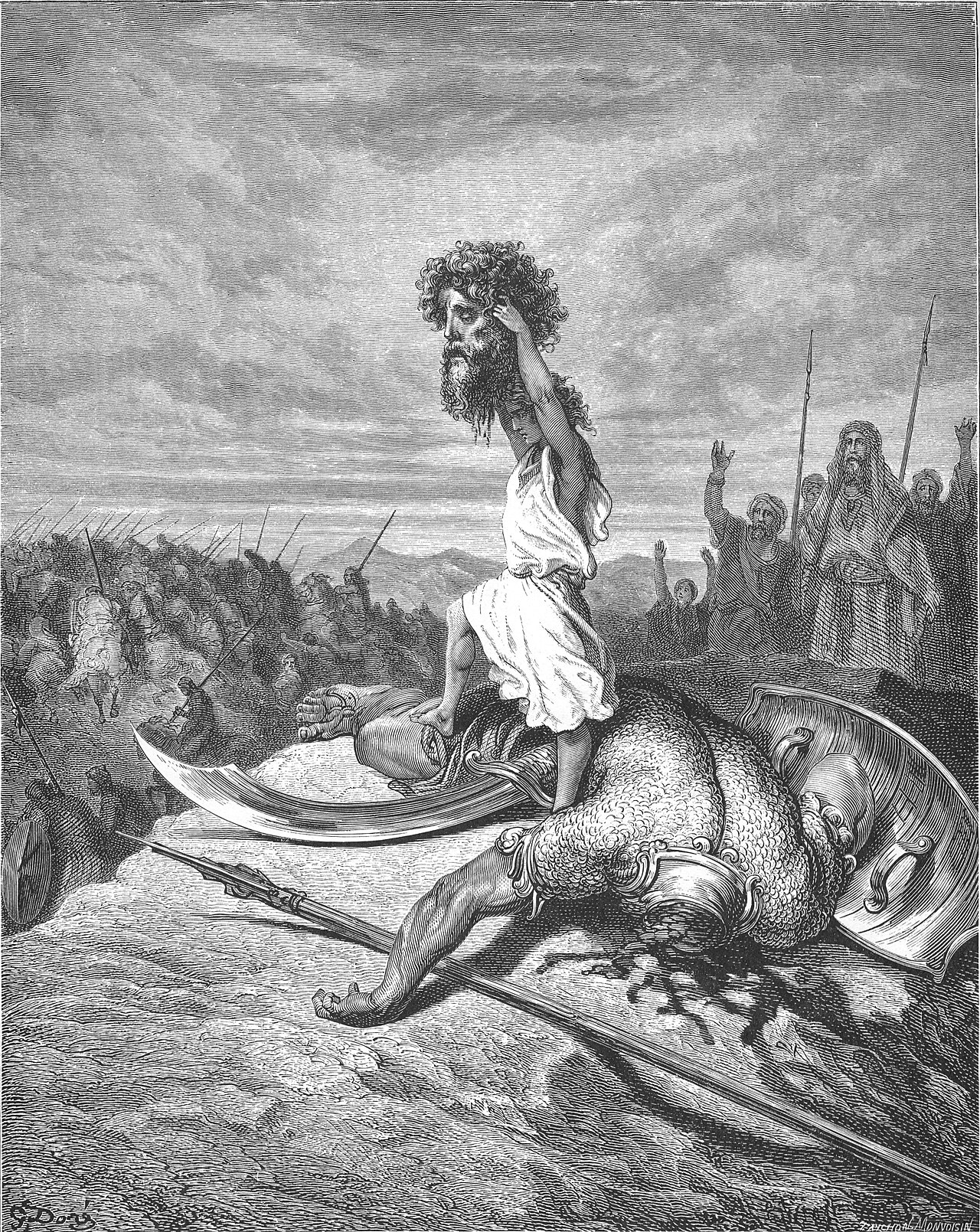
David Slays Goliath — Gustave Doré, Doré's English Bible (1866), public domain
A.The champion of Gath defies the armies of Israelvv. 1–11
1Now the Philistines gathered their forces for war at Socoh in Judah, and they camped between Socoh and Azekah in Ephes-dammim.
3The Philistines stood on one hill and the Israelites stood on another, with the valley between them.
4Then a champion named Goliath, who was from Gath, came out from the Philistine camp. He was six cubits and a span in height,
8And Goliath stood and shouted to the ranks of Israel, “Why do you come out and array yourselves for battle? Am I not a Philistine, and are you not servants of Saul? Choose one of your men and have him come down against me.
B.David comes with bread and cheeses, and hears the tauntvv. 12–30
12Now David was the son of a man named Jesse, an Ephrathite from Bethlehem of Judah who had eight sons in the days of Saul. And Jesse was old and well along in years.
17One day Jesse said to his son David, “Take this ephah of roasted grain and these ten loaves of bread for your brothers and hurry to their camp.
20So David got up early in the morning, left the flock with a keeper, loaded up, and set out as Jesse had instructed him. He reached the camp as the army was marching out to its position and shouting the battle cry.
23And as he was speaking with them, suddenly the champion named Goliath, the Philistine from Gath, came forward from the Philistines and shouted his usual words, which David also heard.
25Now the men of Israel had been saying, “Do you see this man who keeps coming out to defy Israel? To the man who kills him the king will give great riches. And he will give him his daughter in marriage and exempt his father’s house from taxation in Israel.”
28Now when David’s oldest brother Eliab heard him speaking to the men, his anger burned against David. “Why have you come down here?” he asked. “And with whom did you leave those few sheep in the wilderness? I know your pride and wickedness of heart—you have come down to see the battle!”
C.Armor refused; five smooth stones from the brookvv. 31–40
34David replied, “Your servant has been tending his father’s sheep, and whenever a lion or a bear came and carried off a lamb from the flock,
38Then Saul clothed David in his own tunic, put a bronze helmet on his head, and dressed him in armor.
40And David took his staff in his hand, selected five smooth stones from the brook, and put them in the pouch of his shepherd’s bag. And with his sling in hand, he approached the Philistine.
D.The battle is Jehovah's — a stone in the foreheadvv. 41–54
45But David said to the Philistine, “You come against me with sword and spear and javelin, but I come against you in the name of the LORD of Hosts, the God of the armies of Israel, whom you have defied.
48As the Philistine started forward to attack him, David ran quickly toward the battle line to meet him.
50Thus David prevailed over the Philistine with a sling and a stone; without a sword in his hand he struck down the Philistine and killed him.
52Then the men of Israel and Judah charged forward with a shout and pursued the Philistines to the entrance of Gath and to the gates of Ekron. And the bodies of the Philistines were strewn along the Shaaraim road to Gath and Ekron.
E.Whose son is this youth?vv. 55–58
55As Saul had watched David going out to confront the Philistine, he said to Abner the commander of the army, “Abner, whose son is this young man?” “As surely as you live, O king,” Abner replied, “I do not know.”
The exposition on this chapter draws on 10 works.
The exposition on this chapter draws on Adam Clarke, Commentary on the Bible; Albert Barnes, Notes on the Old Testament; Bede, Commentary on Samuel; Chuck Missler, Return of the Nephilim; John Gill, Exposition of the Old Testament; John Wesley, Explanatory Notes upon the Old Testament; Keil and Delitzsch, Biblical Commentary on the Books of Samuel; Matthew Henry, Commentary on the Whole Bible; Michael Heiser, The Unseen Realm and W. G. Blaikie, The First Book of Samuel (Expositor's Bible).
Words in this chapter
Counted by lemma: every form of one word counts as one use. The article, the object marker, the negatives and the common prepositions are left out.
- EkronH6138×2 uses
עֶקְר֑וֹןekron · עֶקְרֽוֹן׃ekron
- [the] wickedness ofH7455×1 use
רֹ֣עַroa'
- another [person]H312×1 use
אַחֵ֔רʾacher
- [the] PhilistinesH6430×40 uses
פְלִשְׁתִּ֤יםfelishtim · פְּלִשְׁתִּֽים׃pelishtim · וּפְלִשְׁתִּ֞יםufelishtim · פְּלִשְׁתִּ֔יםpelishtim · הַפְּלִשְׁתִּ֗יhapelishti · הַפְּלִשְׁתִּ֔יhapelishti · הַפְּלִשְׁתִּ֖יhapelishti · וּפְלִשְׁתִּ֔יםufelishtim · הַפְּלִשְׁתִּ֨יhapelishti · הַפְּלִשְׁתִּ֣יhapelishti · הַפְּלִשְׁתִּ֤יhapelishti · הַפְּלִשְׁתִּ֥יhapelishti · הַפְּלִשְׁתִּֽי׃hapelishti · הַפְּלִשְׁתִּ֛יhapelishti · הַפְּלִשְׁתִּי֙hapelishti · פְלִשְׁתִּים֙felishtim · הַפְּלִשְׁתִּ֜יhapelishti · הַפְּלִשְׁתִּ֛יםhapelishtim · הַפְּלִשְׁתִּ֔יםhapelishtim · פְלִשְׁתִּ֑יםfelishtim
- and DavidH1732×36 uses
וְדָוִד֩vedavid · וְדָוִ֖דvedavid · וְדָוִ֛דvedavid · לְדָוִ֣דledavid · דָּוִ֜דdavid · דָּוִ֨דdavid · דָּוִֽד׃david · דָּוִ֗דdavid · בְּדָוִ֜דbedavid · דָּוִ֔דdavid · דָּוִ֑דdavid · דָּוִד֙david · דָּוִד֒david · דָּוִ֣דdavid · דָּוִ֖דdavid · דָּוִ֤דdavid · דָּ֠וִדdavid
- and he saidH559×25 uses
וַיֹּ֣אמֶרvaiyomer · וַיֹּ֙אמֶר֙vaiyomer · וַיֹּ֨אמֶרvaiyomer · וַיֹּ֣אמֶר׀vaiyomer · לֵאמֹר֒lemor · וַיֹּ֤אמֶרvaiyomer · לֵאמֹ֑רlemor · וַיֹּ֖אמֶרvaiyomer · וַיֹּאמֶר֮vaiyomer · וַיֹּ֥אמֶרvaiyomer · אָמַ֗רʾamar
- and SaulH7586×18 uses
וְשָׁא֤וּלveshaul · לְשָׁא֔וּלleshaul · שָׁאוּל֙shaul · שָׁא֔וּלshaul · שָׁא֖וּלshaul · שָׁאֽוּל׃ סshaul · שָׁא֑וּלshaul · שָׁא֜וּלshaul · שָׁא֤וּלshaul · שָׁא֗וּלshaul
- and [the] man ofH376×17 uses
וְאִֽישׁ־veish- · אִֽישׁ־ʾish- · אִ֖ישׁʾish · אִ֔ישׁʾish · אִ֨ישׁʾish · וְהָאִישׁ֙vehaish · אִ֣ישׁʾish · הָאִ֑ישׁhaish · הָאִ֤ישׁhaish · הָאִ֨ישׁhaish · לָאִישׁ֙laish · לָאִ֖ישׁlaish · אִ֥ישׁʾish · וְהָאִ֛ישׁvehaish
- IsraelH3478×16 uses
יִשְׂרָאֵל֙yisrael · וְיִשְׂרָאֵ֛לveyisrael · יִשְׂרָאֵ֔לyisrael · יִשְׂרָאֵ֖לyisrael · יִשְׂרָאֵ֗לyisrael · בְּיִשְׂרָאֵֽל׃beyisrael · יִשְׂרָאֵ֑לyisrael · לְיִשְׂרָאֵֽל׃leyisrael · יִשְׂרָאֵ֨לyisrael
- [was] walkingH1980×16 uses
הֹלֵ֥ךְholekh · וַיֵּ֨לְכ֜וּvaiyelekhu · הָלְכ֥וּhalekhu · הָלְכוּ֙halekhu · הָלְכ֖וּhalekhu · וַיֵּ֔לֶךְvaiyelekh · יֵלֵ֔ךְyelekh · לָלֶ֙כֶת֙lalekhet · לֵ֔ךְlekh · לָלֶכֶת֮lalekhet · לָלֶ֥כֶתlalekhet · וַיֵּ֙לֶךְ֙vaiyelekh · לְכָ֣הlekhah · וַיֵּ֥לֶךְvaiyelekh
- and he will strike down meH5221×12 uses
וְהִכָּ֔נִיvehikani · וְהִכִּיתִ֔יוvehikitiv · יַכֶּ֜נּוּyakenu · יַכֶּה֙yakeh · יַכֶּֽנּוּ׃yakenu · וְהִכִּתִ֖יוvehikitiv · הִכָּ֣הhikah · וְהִכִּיתִ֗ךָvehikitikha · וַיַּ֥ךְvaiyakh · מֵֽהַכּוֹת֙mehakot
- [the] battle lines ofH4634×11 uses
מַעַרְכֹ֣תmaarkhot · מַעַרְכ֥וֹתmaarkhot · הַמַּ֣עֲרָכָ֔הhamaarakhah · מַעֲרָכָ֖הmaarakhah · מַעֲרָכָֽה׃maarakhah · הַמַּעֲרָכָ֑הhamaarakhah · מִמַּעַרְכ֣וֹתmimaarkhot · מַעַרְכ֖וֹתmaarkhot · מַעַרְכֹ֖תmaarkhot · הַמַּעֲרָכָ֖הhamaarakhah
- he had goneH935×11 uses
בָּ֥אba' · תָּבִ֖יאtavi' · וַיָּבֹא֙vaiyavo' · וַיָּבֹ֕אvaiyavo' · וּבָ֤אuva' · בָֽא־va'- · בָּ֣אba' · בּוֹאֲךָ֣boakha · וַיְבִאֵ֖הוּvayviehu
- [the] hand ofH3027×11 uses
יַד֙yad · מִיַּ֤דmiyad · וּמִיַּ֣דumiyad · מִיַּ֥דmiyad · בְּיָד֗וֹbeyado · בְיָד֑וֹveyado · בְּיָדִ֜יbeyadi · בְּיָדֵֽנוּ׃beyadenu · יָד֜וֹyado · בְּיַד־beyad- · בְּיָדֽוֹ׃beyado
- [was] a son ofH1121×10 uses
בֶּן־ben- · בָנִ֑יםvanim · בְּנֵֽי־benei- · בָּנָ֗יוbanav · בְּנ֗וֹbeno · בְּנֵ֣יbenei · בֶּֽן־ben-
- for <the> battleH4421×9 uses
לַמִּלְחָמָ֔הlamilchamah · מִלְחָמָ֖הmilchamah · מִלְחָמָ֑הmilchamah · לַמִּלְחָמָ֑הlamilchamah · בַּמִּלְחָמָ֔הbamilchamah · בַּמִּלְחָמָֽה׃bamilchamah · הַמִּלְחָמָ֖הhamilchamah · הַמִּלְחָמָ֔הhamilchamah
- [the] words ofH1697×8 uses
דִּבְרֵ֥יdivrei · כַּדְּבָרִ֣יםkadevarim · כַּדָּבָ֥רkadavar · דָּבָ֥רdavar · כַּדָּבָ֣רkadavar · דָּבָ֔רdavar · כַּדָּבָ֖רkadavar · הַדְּבָרִ֔יםhadevarim
- takeH3947×8 uses
קַח־kach- · תִּקָּֽח׃tikach · וַיִּקָּחֵֽהוּ׃vaiyikachehu · וַיִּקַּ֨חvaiyikach · וַיִּקַּ֣חvaiyikach · וַיִּקַּ֤חvaiyikach
- servantsH5650×7 uses
עֲבָדִ֣יםʾavadim · לַעֲבָדִ֑יםlaavadim · לַעֲבָדִ֔יםlaavadim · עַבְדְּךָ֣ʾavdekha · עַבְדְּךָ֛ʾavdekha · עַבְדֶּ֑ךָʾavdekha · עַבְדְּךָ֥ʾavdekha
- head hisH7218×6 uses
רֹאשׁ֔וֹrosho · רֹאשׁ֑וֹrosho · רֹֽאשְׁךָ֙roshekha · רֹ֣אשׁrosh · וְרֹ֥אשׁverosh
- giveH5414×6 uses
תְּנוּ־tenu- · יִתֶּן־yiten- · וְנָתַ֛ןvenatan · וְאֶתְּנָה֙veetenah · וְנָ֨תַתִּ֜יvenatati · וְנָתַ֥ןvenatan
- when saw theyH7200×6 uses
בִּרְאוֹתָ֖םbirotam · הַרְּאִיתֶם֙hareitem · רְא֥וֹתreot · וַיִּרְאֶ֥הvaiyireh · וַיִּרְא֧וּvaiyiru · וְכִרְא֨וֹתvekhirot
- YahwehH3068×6 uses
יְהוָ֗הyahweh · וַֽיהוָ֖הvayahweh · יְהוָ֣הyahweh · יְהוָ֨הyahweh · יְהוָ֑הyahweh · לַֽיהוָה֙layahweh
- armies theirH4264×5 uses
מַֽחֲנֵיהֶם֙machaneihem · מִמַּחֲנ֣וֹתmimachanot · הַֽמַּחֲנֶ֖הhamachaneh · מַחֲנֵ֤הmachaneh · מַחֲנֵיהֶֽם׃machaneihem