
Genesis 8:1
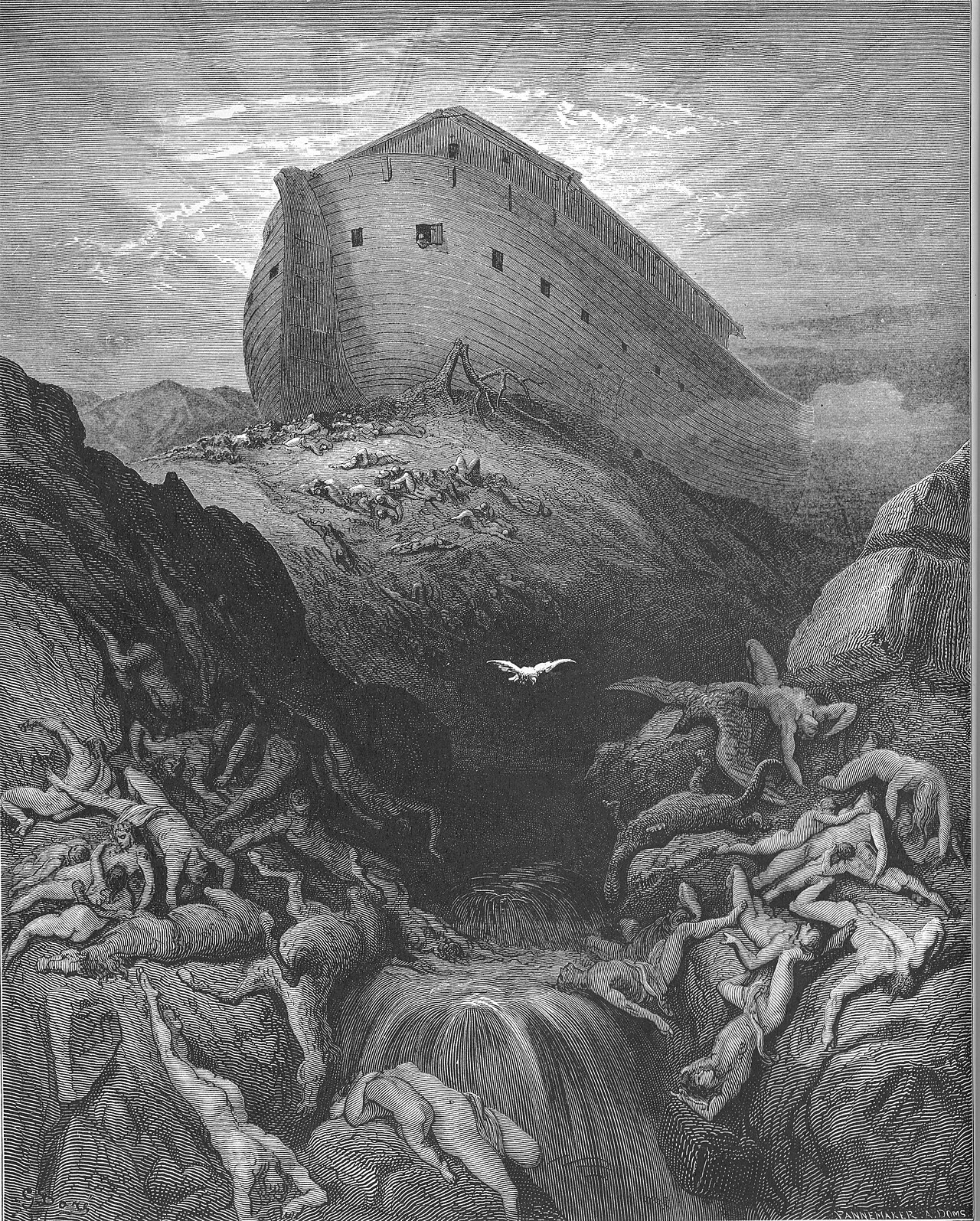
in Genesis 8But God remembered Noah and all the animals and livestock that were with him in the ark. And God sent a wind over the earth, and the waters began to subside.
BSB
The same verse in ASV and KJV ▾
ASV
And God remembered Noah, and all the beasts, and all the cattle that were with him in the ark: and God made a wind to pass over the earth, and the waters assuaged;
KJV
And God remembered Noah, and every living thing, and all the cattle that was with him in the ark: and God made a wind to pass over the earth, and the waters asswaged;
⋯
This verse in Genesis 8
Commentary
8 notes on this verseAnd the Lord brought a spirit upon the earth, and the water ceased (Genesis VIII, 1). I do not think this is said in such a way that we should understand the spirit as the name for wind. For the wind could not have dried up the flood. Otherwise, since the sea is stirred up daily by winds, it would certainly be emptied.
This site's exposition
God remembered Noah
The verb remembered marks God moving on a promise already made. Genesis uses it again when Lot is pulled out of Sodom at 19:29 and when Rachel's barrenness ends at 30:22. The wind God sends over the waters is ruach, the Hebrew word for the Spirit hovering over the deep at Genesis 1:2. The waters subside and the dry ground comes back, as it did on the third day.
The record, by era
The Church Fathers2 voices
Hippolytus, the expositor of the Targum, and my master, Jacobus Rohaviensis, have said: On the twenty-seventh day of the month Jiar, which is the second Hebrew month, the ark rose from the base of the holy mount; and already the waters bore it, and it was carried upon them round about towards the four cardinal points of the world. The ark accordingly held off from the holy mount towards the east, then returned towards the west, then turned to the south, and finally, bearing off eastwards, neared Mount Kardu on the first day of the tenth month. And that is the second month Kanun. And Noah came out of the ark on the twenty-seventh day of the month Jiar, in the second year: for the ark continued sailing live whole months, and moved to and fro upon the waters, and in a period of fifty-one days neared the land. Nor thereafter did it float about any longer. But it only moved successively toward the four cardinal points of the earth, and again finally stood toward the east. We say, moreover, that that was a sign of the cross. And the ark was a symbol of the Christ who was expected. For that ark was the means of the salvation of Noah and his sons, and also of the cattle, the wild beasts, and the birds.
See how God did everything out of his esteem for the human being. As in the case of the destruction of human beings in the flood he destroyed also along with them the whole range of brute beasts, so in this case too, when he intends to show his characteristic love for the good man out of his regard for him, he extends his goodness to the animal kingdom as well, the wild beasts, the birds and the reptiles. "God was mindful of Noah," the text says, "and of all the wild beasts, all the cattle and all the reptiles that were with him in the ark. God sent a wind upon the earth, and the water subsided." Being mindful of Noah, the text says, and of those with him in the ark, he directed the flood of water to halt so that little by little he might show his characteristic love and now give the good man a breath of fresh air, free him from the turmoil of his thoughts and restore him to a state of tranquility by granting him the enjoyment of daylight and a breath of fresh air. "God sent a wind upon the earth, and the water subsided. The torrents of the depths and the sluice gates of heaven were shut off."
The Medieval Church1 voice
But the Lord remembered Noah, and all the living creatures, and all the cattle that were with him in the ark, and caused a wind to pass over the earth, and the waters were diminished.
The Puritans and the Awakening1 voice
And God remembered Noah, and every living thing, and all the cattle that was with him in the ark,....
The Nineteenth Century1 voice
And God made a wind to pass over the earth - Such a wind as produced a strong and sudden evaporation. The effects of these winds, which are frequent in the east, are truly astonishing. A friend of mine, who had been bathing in the Tigris, not far from the ancient city of Ctesiphon, and within five days’ journey of Bagdad, having on a pair of Turkish drawers, one of these hot winds, called by the natives samiel, passing rapidly across the river just as he had got out of the water, so effectually dried him in a moment, that not one particle of moisture was left either on his body or in his bathing dress! With such an electrified wind as this, how soon could God dry the whole of the earth’s surface! An operation something similar to the conversion of water into its two constituent airs, oxygen and hydrogen, by means of the galvanic fluid, as these airs themselves may be reconverted into water by means of the electric spark. See the note Gen 7:11. And probably this was the agent that restored to the atmosphere the quantity of water which it had contributed to this vast inundation. The other portion of waters, which had proceeded from the breaking up of the fountains of the great deep, would of course subside more slowly, as openings were made for them to run off from the higher lands, and form seas. By the first cause, the hot wind, the waters were assuaged, and the atmosphere having its due proportion of vapours restored, the quantity below must be greatly lessened. By the second, the earth was gradually dried, the waters, as they found passage, lessening by degrees till the seas and gulfs were formed, and the earth completely drained. This appears to be what is intended in the third and fifth verses by the waters decreasing continually, or, according to the margin, they were in going and decreasing, Gen 8:5.
1 more voice on this verse
The Nineteenth Century1 voice
A commentator
Albert Barnes1798–1870
Notes, Explanatory and Practical, on the Old and New Testaments (1832-1869)
proposed
- The Land Was Dried 1. שׁכך shākak “stoop, assuage.” 3. חסר chāsar “want, fail, be abated.” 4. אררט 'ărārāṭ, “Ararat,” a land forming part of Armenia. It is mentioned in 2Ki 19:37, and Isa 37:38, as the retreat of Adrammelek and Sharezer after the murder of their father; and in Jer 51:27 as a kingdom.
How the passage was read
What the Jewish commentators add
The remembrance of Noah was because he was a perfectly righteous man, and He had made a covenant with him to save him. The word “Noah” here includes his children that were there with him. Scripture did not mention them specifically, though, for they were saved by his merit.
This section is reception history: how the passage was read and kept in the Jewish tradition. Where a reading parts from an essential of the Christian faith, the section says so at that point.
Texts and citation data: Sefaria; each excerpt follows its version’s licence. 3 further sources are cited on this chapter that carry no English text this site may quote or only restate the verse.
The words behind it
20 Hebrew wordsEvery Hebrew word of this verse in the order it stands, with what it means and the door to its own study. The last column counts the times a word stands in the whole Bible: the rarer the word, the more the places it appears belong together.
| Hebrew | Sound | Meaning | Word study | In the Bible |
|---|---|---|---|---|
| וַיִּזְכֹּ֤ר | vaiyizkor | and he remembered | H2142 → | 230 times |
| אֱלֹהִים֙ | ʾelohim | God | H430 → | 2601 times |
| אֶת־ | ʾet- | <obj.> | H853 → | 10935 times |
| נֹ֔חַ | noach | Noah | H5146 → | 46 times |
| וְאֵ֤ת | veet | and <obj.> | H853 → | 10935 times |
| כָּל־ | kol- | every | H3605 → | 5413 times |
| הַֽחַיָּה֙ | hachaiyah | <the> animal | H2416 → | 498 times |
| וְאֶת־ | veet | and <obj.> | H853 → | 10935 times |
| כָּל־ | kol- | all | H3605 → | 5413 times |
| הַבְּהֵמָ֔ה | habehemah | the livestock | H929 → | 190 times |
| אֲשֶׁ֥ר | ʾasher | which | H834 → | 5497 times |
| אִתּ֖וֹ | ʾito | [were] with him | H854 → | 929 times |
| בַּתֵּבָ֑ה | batevah | in the ark | H8392 → | 28 times |
| וַיַּעֲבֵ֨ר | vaiyaaver | and he made to pass | H5674 → | 556 times |
| אֱלֹהִ֥ים | ʾelohim | God | H430 → | 2601 times |
| ר֙וּחַ֙ | ruach | a wind | H7307 → | 378 times |
| עַל־ | ʾal- | over | H5921 → | 5755 times |
| הָאָ֔רֶץ | haaretz | the earth | H776 → | 2504 times |
| וַיָּשֹׁ֖כּוּ | vaiyashoku | and they subsided | H7918 → | |
| הַמָּֽיִם׃ | hamayim | the waters | H4325 → | 581 times |
וַיִּזְכֹּ֤רand he remembered
vaiyizkorH2142 →230 times
אֱלֹהִים֙God
ʾelohimH430 →2601 times
אֶת־<obj.>
ʾet-H853 →10935 times
נֹ֔חַNoah
noachH5146 →46 times
וְאֵ֤תand <obj.>
veetH853 →10935 times
כָּל־every
kol-H3605 →5413 times
הַֽחַיָּה֙<the> animal
hachaiyahH2416 →498 times
וְאֶת־and <obj.>
veetH853 →10935 times
כָּל־all
kol-H3605 →5413 times
הַבְּהֵמָ֔הthe livestock
habehemahH929 →190 times
אֲשֶׁ֥רwhich
ʾasherH834 →5497 times
אִתּ֖וֹ[were] with him
ʾitoH854 →929 times
בַּתֵּבָ֑הin the ark
batevahH8392 →28 times
וַיַּעֲבֵ֨רand he made to pass
vaiyaaverH5674 →556 times
אֱלֹהִ֥יםGod
ʾelohimH430 →2601 times
ר֙וּחַ֙a wind
ruachH7307 →378 times
עַל־over
ʾal-H5921 →5755 times
הָאָ֔רֶץthe earth
haaretzH776 →2504 times
וַיָּשֹׁ֖כּוּand they subsided
vaiyashokuH7918 →
הַמָּֽיִם׃the waters
hamayimH4325 →581 times
A shaded row is a word that stands 400 times or fewer in the Bible.
The walk
8 stopsEach card is a verse this one points to, and under it the verses that one points to in turn. Where several paths arrive at the same place, that place is listed first: the text keeps returning to it.
Through
Exodus 2:24So God heard their groaning, and He remembered His covenant with Abraham, Isaac, and Jacob.
it leads to
- Genesis 26:3
Stay in this land as a foreigner, and I will be with you and bless you. For I will give all these lands to you and your offspring, and I will confirm the oath…
- Psalms 105:42
For He remembered His holy promise to Abraham His servant.
- Exodus 6:5
Furthermore, I have heard the groaning of the Israelites, whom the Egyptians are enslaving, and I have remembered My covenant.
- Genesis 15:14–18
But I will judge the nation they serve as slaves, and afterward they will depart with many possessions.
- Psalms 22:24
For He has not despised or detested the torment of the afflicted. He has not hidden His face from him, but has attended to his cry for help.
- Genesis 26:3
Through
Genesis 30:22Then God remembered Rachel. He listened to her and opened her womb,
it leads to
- Genesis 29:31
When the LORD saw that Leah was unloved, He opened her womb; but Rachel was barren.
- Psalms 113:9
He settles the barren woman in her home as a joyful mother to her children. Hallelujah!
- 1 Samuel 1:19–20
The next morning Elkanah and Hannah got up early to bow in worship before the LORD, and then returned home to Ramah. And Elkanah had relations with his wife Hannah, and the LORD remembered…
- Genesis 29:31
Where this verse is studied
On this page
Studies3
On this verse
On this chapter
About Genesis
Who and where
1 name in this verse with a page on the site.
This page draws on 9 works. Open the list of works
This page draws on Adam Clarke, Commentary on the Bible; Albert Barnes, Notes, Explanatory and Practical, on the Old and New Testaments (1832-1869); Ambrose of Milan, On Noah and the Ark, 16.58; Bede, Commentary on Genesis (Hexaemeron); Hippolytus of Rome, Hippolytus Exegetical Fragments; Jamieson, Fausset & Brown, Commentary Critical and Explanatory on the Whole Bible; John Chrysostom, HOMILIES ON GENESIS 26.10; John Gill, Exposition of the Old Testament (1748-1763) and Matthew Henry, Commentary on the Whole Bible.