
Place
Ararat
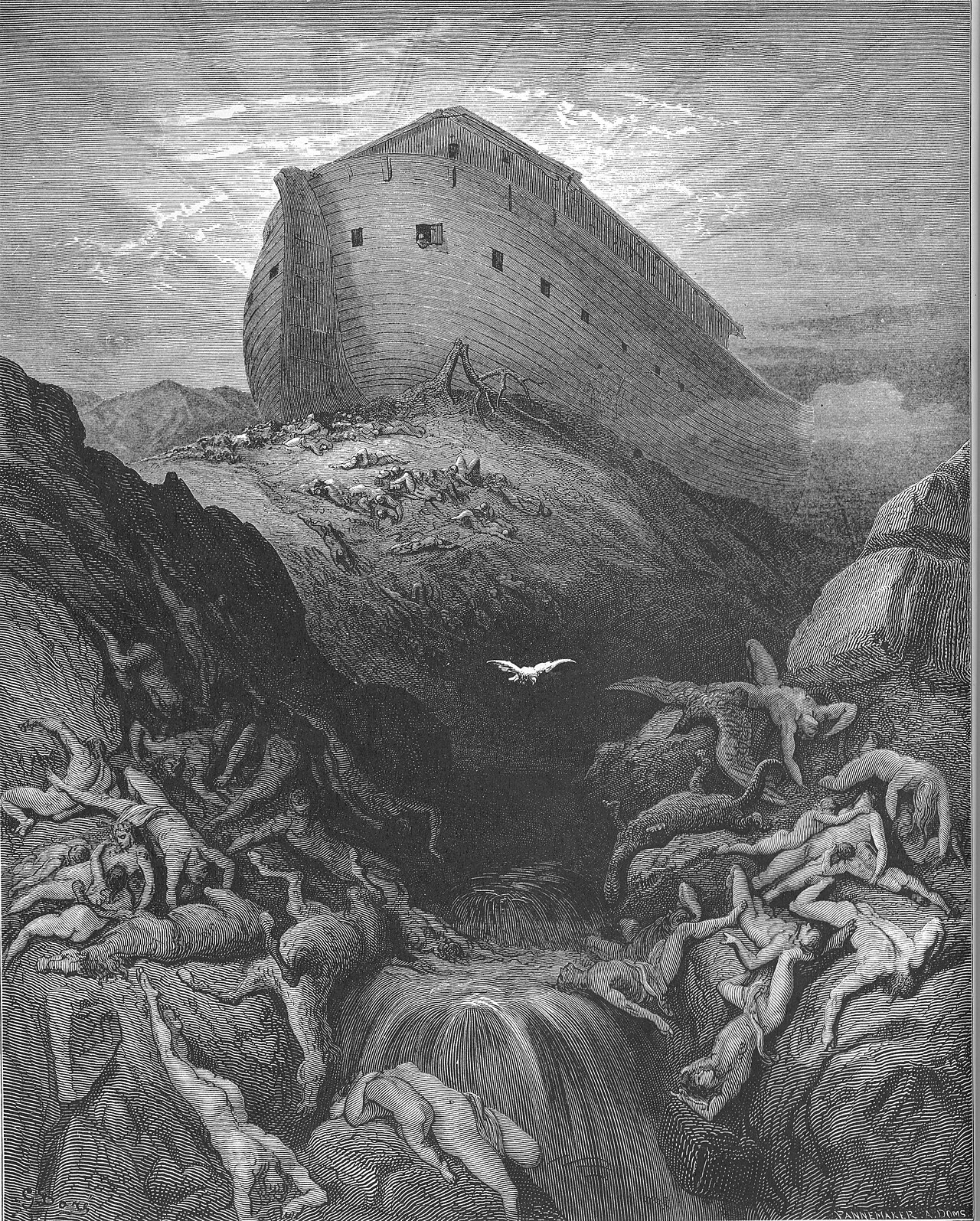
Gustave Doré, La Sainte Bible (Tours: Alfred Mame et fils, 1866). Public domain.
Summary
The mountains of the old kingdom of Urartu where the ark came to rest as the waters went down, where Noah built his altar and saw the bow, and where a later king’s sons fled after killing Sennacherib.
- Ararat is not a peak in the Bible. Genesis 8:4 says the ark came to rest on the mountains of Ararat, and the plural is doing what a region name does.
- The same word names a country in 2 Kings 19:37 and a kingdom in Jeremiah 51:27. Assyrian records call that kingdom Urartu, and it has been excavated around Lake Van.
- Three mountains carry the tradition. Masis, now Ağrı Dağı, is the popular identification. Qardu, now Cudi Dağı, is the older attested one. Baris is a third name preserved in Josephus. The text names none of them.
- 1 Enoch says the flood answered what the Watchers taught, and that Uriel was sent to warn Noah. On this site 1 Enoch is a labeled Second Temple study resource and never Scripture.
- The first thing built in the new world was an altar, and the first thing God did after it was bind Himself by covenant to every living creature (Genesis 8:20, 9:10).
On this page
In Scripture
- Verses
- 4
- Books
- 4
Where it is
the country around it
- Coordinates
- 39.7029° N, 44.2982° Eopen the Atlas →
- Region
- Eastern Anatolia
- Located: the gazetteer fixes one site
Not located: The Temple. The gazetteer records no location for it, so it is not marked.
Why Ararat matters
What has been found
the evidence, and where it is disputed
The ark comes to rest, and the earth dries
Genesis 8:1 to 8:22, in the order it happens
Read Genesis 8:1 to 8:22, in the order it happens
- God remembers NoahGenesis 8:1But God remembered Noah and all the animals and livestock that were with him in the ark. And God sent a wind over the earth, and the waters began to subside.
- The ark comes to restGenesis 8:4On the seventeenth day of the seventh month, the ark came to rest on the mountains of Ararat.
- Seventy-three days later, landGenesis 8:5And the waters continued to recede until the tenth month, and on the first day of the tenth month the tops of the mountains became visible.
- The raven, going out and coming backGenesis 8:7and sent out a raven. It kept flying back and forth until the waters had dried up from the earth.
- The dove brings the olive leafGenesis 8:11And behold, the dove returned to him in the evening with a freshly plucked olive leaf in her beak. So Noah knew that the waters had receded from the earth.
- Noah opens the ark and looks outGenesis 8:13In Noah’s six hundred and first year, on the first day of the first month, the waters had dried up from the earth. So Noah removed the covering from the ark and saw that the surface of the ground was dry.
- God opens the doorGenesis 8:16“Come out of the ark, you and your wife, along with your sons and their wives.
- The first thing built in the new worldGenesis 8:20Then Noah built an altar to the LORD. And taking from every kind of clean animal and clean bird, he offered burnt offerings on the altar.
- The promise that holds the seasonsGenesis 8:22As long as the earth endures, seedtime and harvest, cold and heat, summer and winter, day and night shall never cease.”
Count the dates the chapter gives. The ark grounds on 8:4 and the mountaintops appear on 8:5, seventy-three days later. The ground is dry on 8:14 and Noah does not step out until God says so on 8:16, fifty-seven days after that.
The Flood: the full study of Genesis 6 to 9What happened here, in order
in the order the canon tells it
- God tells Noah the end has comeGenesis 6:13Then God said to Noah, “The end of all living creatures has come before Me, because through them the earth is full of violence. Now behold, I will destroy both them and the earth.
- The ark is commissionedGenesis 6:14Make for yourself an ark of gopher wood; make rooms in the ark and coat it with pitch inside and out.
- The fountains of the great deep burst openGenesis 7:11In the six hundredth year of Noah’s life, on the seventeenth day of the second month, all the fountains of the great deep burst forth, and the floodgates of the heavens were opened.
- The high mountains are coveredGenesis 7:19Finally, the waters completely inundated the earth, so that all the high mountains under all the heavens were covered.
- God remembers Noah and sends a windGenesis 8:1But God remembered Noah and all the animals and livestock that were with him in the ark. And God sent a wind over the earth, and the waters began to subside.
- The ark rests on the mountains of AraratGenesis 8:4On the seventeenth day of the seventh month, the ark came to rest on the mountains of Ararat.
- The mountaintops become visibleGenesis 8:5And the waters continued to recede until the tenth month, and on the first day of the tenth month the tops of the mountains became visible.
- The dove returns with an olive leafGenesis 8:11And behold, the dove returned to him in the evening with a freshly plucked olive leaf in her beak. So Noah knew that the waters had receded from the earth.
- Noah builds an altar on the mountainGenesis 8:20Then Noah built an altar to the LORD. And taking from every kind of clean animal and clean bird, he offered burnt offerings on the altar.
- Never again a flood to destroy the earthGenesis 9:11And I establish My covenant with you: Never again will all life be cut off by the waters of a flood; never again will there be a flood to destroy the earth.”
- The bow in the clouds is made the signGenesis 9:13I have set My rainbow in the clouds, and it will be a sign of the covenant between Me and the earth.
- The whole earth repopulated from three sonsGenesis 9:19These three were the sons of Noah, and from them the whole earth was populated.
- Sennacherib's sons escape to the land of Ararat2 Kings 19:37One day, while he was worshiping in the temple of his god Nisroch, his sons Adrammelech and Sharezer put him to the sword and escaped to the land of Ararat. And his son Esar-haddon reigned in his place.
- Ararat summoned as a kingdom against BabylonJeremiah 51:27“Raise a banner in the land! Blow the ram’s horn among the nations! Prepare the nations against her. Summon the kingdoms against her— Ararat, Minni, and Ashkenaz. Appoint a captain against her; bring up horses like swarming locusts.
- Jesus points back to the days of NoahMatthew 24:37As it was in the days of Noah, so will it be at the coming of the Son of Man.
- Noah listed among the faithfulHebrews 11:7By faith Noah, when warned about things not yet seen, in godly fear built an ark to save his family. By faith he condemned the world and became heir of the righteousness that comes by faith.
- Eight souls saved through water1 Peter 3:20who disobeyed long ago when God waited patiently in the days of Noah while the ark was being built. In the ark a few people, only eight souls, were saved through water.
- The world of that time perished in the flood2 Peter 3:6through which the world of that time perished in the flood.
Where it points
The voices
each quoted from the work named
The mountains of Ararat - That Ararat was a mountain of Armenia is almost universally agreed. What is commonly thought to be the Ararat of the Scriptures, has been visited by many travelers, and on it there are several monasteries. For a long time the world has been amused with reports that the remains of the ark were still visible there; but Mr. Tournefort, a famous French naturalist, who was on the spot, assures us that nothing of the kind is there to be seen.
Into the land of Armenia - Hebrew, as Margin, ‘Ararat.’ The Chaldee renders this, ‘The land of קרדוּ qaredû, that is, Kardi-anum, or, the mountains of the Kurds. The modern Kurdistan includes a considerable part of the ancient Assyria and Media, together with a large portion of Armenia. This expression is generally substituted for Ararat by the Syriac, Chaldee, and Arabic translators, when they do not retain the original word Ararat. It is a region among the mountains of Ararat or Armenia.
Hippolytus, the expositor of the Targum, and my master, Jacobus Rohaviensis, have said: On the twenty-seventh day of the month Jiar, which is the second Hebrew month, the ark rose from the base of the holy mount; and already the waters bore it, and it was carried upon them round about towards the four cardinal points of the world. The ark accordingly held off from the holy mount towards the east, then returned towards the west, then turned to the south, and finally, bearing off eastwards, neared Mount Kardu on the first day of the tenth month. And that is the second month Kanun.
4 more teachers on these versesAdam Clarke · John Wesley · Charles Spurgeon · Jamieson, Fausset & Brown
He sent forth a dove - The dove was sent forth thrice; the first time she speedily returned, having, in all probability, gone but a little way from the ark, as she must naturally be terrified at the appearance of the waters. After seven days, being sent out a second time, she returned with an olive leaf pluckt off, Gen 8:11, an emblem of the restoration of peace between God and the earth; and from this circumstance the olive has been the emblem of peace among all civilized nations.
And Noah builded an altar - Hitherto he had done nothing without particular instructions and commands from God but altars and sacrifices being already of Divine institution, he did not stay for a particular command thus to express his thankfulness.
THE story of Noah's preservation in the ark is a suggestive representation of salvation by our Lord Jesus Christ. It is, we think, especially intended to depict that part of our salvation which lies in the washing of regeneration. In the same way as Baptism is the outward symbol of regeneration, so also is the ark, "wherein few, that is, eight souls were saved by water." The ark was immersed in those dreadful rains and awful waterfalls which deluged the earth, and Noah's family were buried in that ark to all the world.
Though the antediluvian world and the cities of the plain were awfully wicked, it is not their wickedness, but their worldliness, their unbelief and indifference to the future, their unpreparedness, that is here held up as a warning. Note.--These recorded events of Old Testament history--denied or explained away nowadays by not a few--are referred to here as facts.
Ararat in Scripture
4 verses name it, in 4 books
Open a book to read its mentions here. Text: Berean Standard Bible.
Old TestamentNew Testamentsegment width = share of mentions
Old Testament4 books · 4 mentions
Genesis1 mention
2 Kings1 mention
Isaiah1 mention
The account
Read the account as one telling
Common questions
Where exactly did the ark land?
Readers differ; the positions are named
Genesis says "the mountains of Ararat," and the noun is plural because Ararat is a region rather than a peak. The same word names a country in 2 Kings 19:37 and a kingdom in Jeremiah 51:27, and it matches Urartu, an Iron Age kingdom around Lake Van that has been excavated.
Three mountains have been proposed. Masis, the great volcanic cone now called Ağrı Dağı, is the popular identification and became prominent in the medieval period. Qardu, now Cudi Dağı near Cizre, is named by Targum Onkelos, the Syriac Peshitta, Berossus by way of Josephus and the Islamic tradition, and it is the older attested reading. Baris is a third name, given by Nicolaus of Damascus and preserved in Josephus. The text supports the region. It does not name the peak.
Has anyone found Noah's ark on Ararat?
No find has held up. Fernand Navarra brought back hand-tooled oak from high on the mountain in 1955 and again in 1969, and radiocarbon results from five laboratories placed the wood in the medieval period rather than the ancient world.
The boat-shaped Durupınar formation, promoted by Ron Wyatt from 1977, was identified as a natural geological structure in a 1996 study co-authored by David Fasold, who had once promoted the site himself. A 2010 announcement by a Hong Kong group was publicly challenged as staged by Randall Price, an evangelical archaeologist who had worked with them. A linear feature under the summit ice, photographed by a US Air Force mission in 1949 and declassified in 1995, has never been reached and identified.
Was the flood worldwide?
Readers differ; the positions are named
Genesis says the waters covered "all the high mountains under all the heavens" and stood fifteen cubits above them, and that every living thing on the face of the earth was destroyed. 2 Peter 3:6 says the world of that time perished in the flood. A flood over the whole globe is the reading held through most of church history and it is the widely held belief today.
Some believing scholars, among them Bernard Ramm, Davis Young and Hugh Ross, read the universal language as covering the whole world known to Noah. This page names both readings and rules between them nowhere. Genesis was written by Moses for Israel in the exodus to teach them who the LORD is, and it does not set out to answer every question a modern reader brings to it.
What does 1 Enoch say about Noah and the flood, and is it Scripture?
1 Enoch is a Jewish work older than the New Testament. It is canonical in the Ethiopian Orthodox Tewahedo Church and it is a labeled study resource on this site, never canon.
In it God sends the angel Uriel to warn Noah: "Go to Noah and tell him in my name “Hide thyself!”" (1 Enoch 10:2). The flood there answers what the Watchers taught and did, and Noah's own vision gives that as the reason (1 Enoch 65:6 and 65:10). Its closing chapters tell of Noah's birth, when Lamech feared the child was not his (1 Enoch 106:5). None of it adds a mountain to Genesis. What it shows is the frame a first-century reader already carried, and it is the frame 2 Peter 2:4-5 and Jude 6 write inside.
Why did the ark rest two months before anyone could see land?
The ark grounds on the seventeenth day of the seventh month, and the mountaintops only appear on the first day of the tenth month, seventy-three days later. Noah is aground and cannot see it, and he waits another forty days before he even opens the window.
The whole voyage runs about a year and ten days by the dates Genesis gives, from Genesis 7:11 to Genesis 8:14. Augustine used that precision to argue the years counted here are ordinary years, in City of God 15.14.
Why did Noah send out a raven and then a dove?
The raven went first, and in the Hebrew it went forth and returned, which the Berean Standard Bible renders "It kept flying back and forth." Adam Clarke points out that the common retelling, in which the raven flies off and is never seen again, is not what the Hebrew says.
The dove went out three times, seven days apart. She found no place to rest, then came back with a freshly plucked olive leaf, then did not return at all. The olive is a low tree, so a green leaf meant the valleys were clear and not only the peaks.
What is the rainbow actually for?
God says the bow is the sign of a covenant He is making with Noah, with his descendants, and with every living creature, the animals included. The remarkable line is Genesis 9:16: "I will see it and remember." The sign is given to God, not to us.
The promise is also specific. It retires the flood and not the judgment. 2 Peter 3:7 says the present heavens and earth are reserved for fire, being kept for the day of judgment.
Why does Jesus talk about the days of Noah?
Because He is asked what His coming will look like, and He answers with this story. The thing He picks out is not the wickedness. It is that nobody noticed: "they were oblivious, until the flood came and swept them all away."
Luke records the same saying. Jamieson, Fausset and Brown put the point exactly, that what is held up as a warning is their worldliness, their unbelief and indifference to the future, their unpreparedness.
Why is Ararat mentioned again centuries later?
Because it was a real country. Sennacherib of Assyria was killed by two of his sons while he worshipped, and they escaped to the land of Ararat. Isaiah 37:38 carries the same sentence.
A century later Jeremiah calls up the kingdoms against Babylon, "Ararat, Minni, and Ashkenaz." That is the kingdom Assyrian records call Urartu, with its capital at Tushpa on Lake Van. Those two verses are the strongest proof inside Scripture that Genesis 8:4 names a region rather than a summit.
Notable art
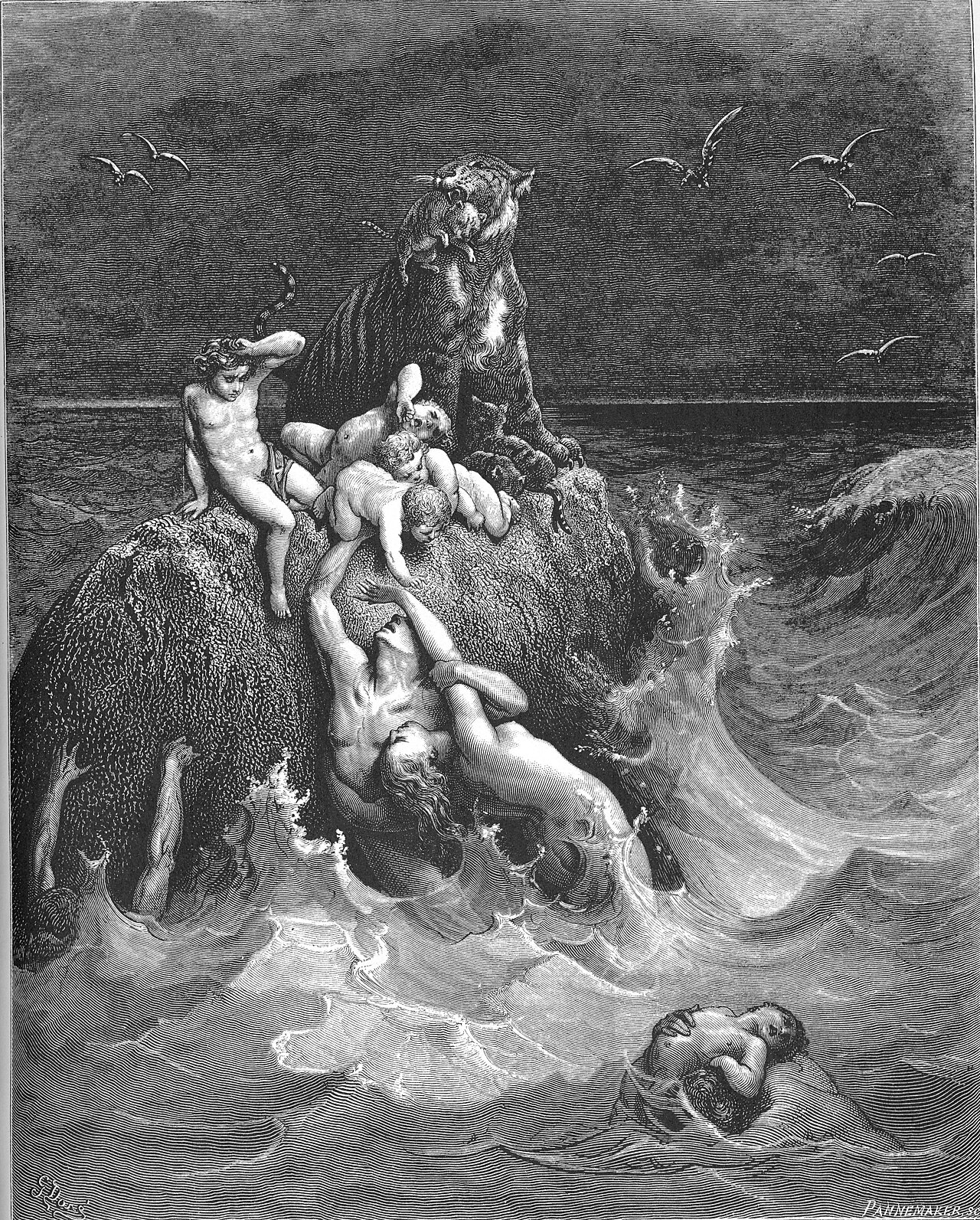
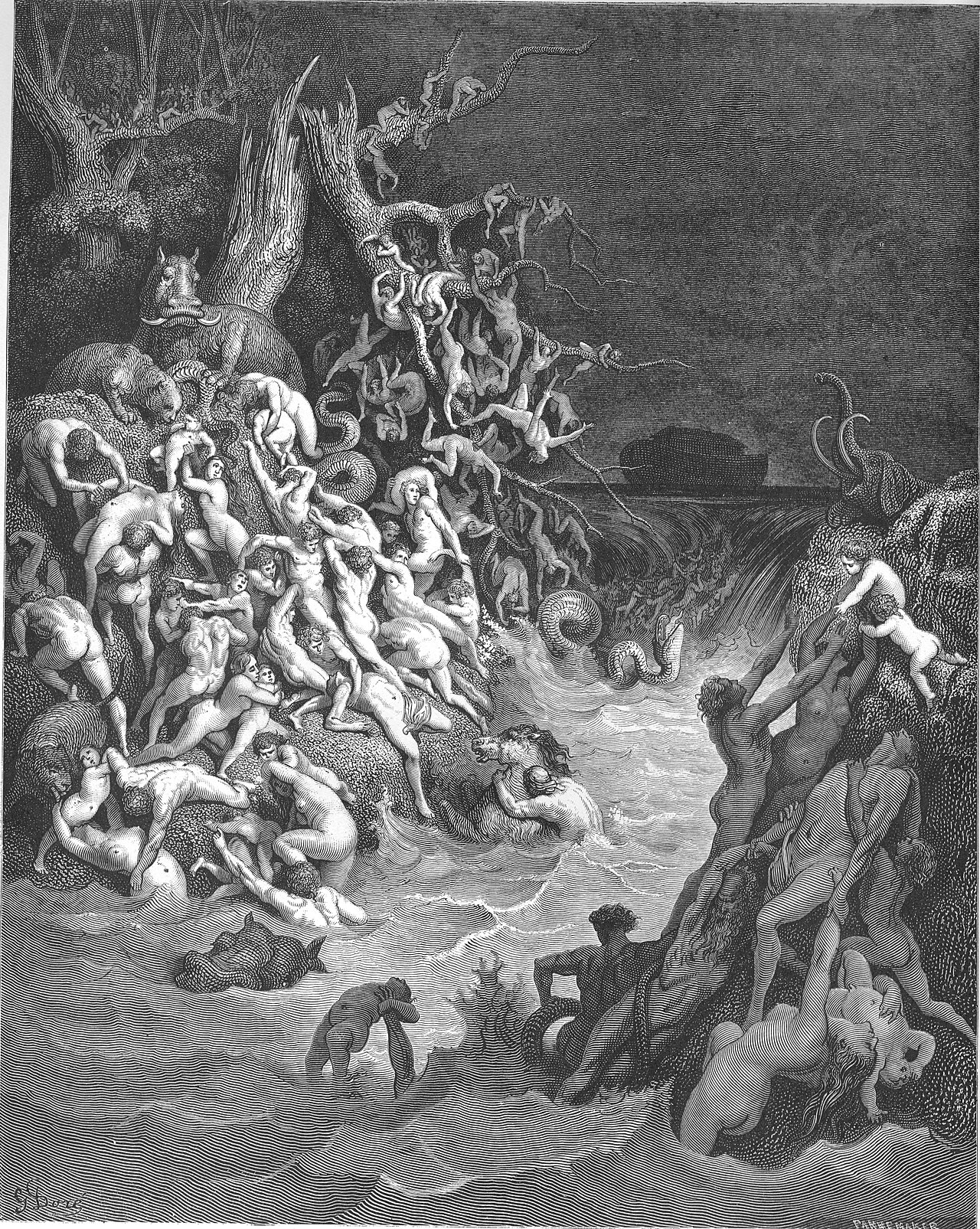
2 verified pieces depicting Ararat
Sources cited
- OpenBible.info Bible Geocoding: Araratread 2026-08-20The coordinates on this page. Used under CC-BY with attribution to OpenBible.info.
- The Berean Standard BibleAll Scripture quoted here, from the site's own verse store. Public domain since 2023.
- R. H. Charles, translator, The Book of Enoch (Oxford: Clarendon Press, 1912)The translation behind this site's 1 Enoch text. A labeled Second Temple study resource, never canon.
- Flavius Josephus, Antiquities of the Jews, Book I, chapter 3The Place of Descent, and the quotations of Berossus and Nicolaus of Damascus on Baris.
- Boris B. Piotrovsky, Urartu: The Kingdom of Van and Its Art (London: Evelyn, Adams and Mackay, 1967)The Urartian record and the excavations at Karmir Blur.
- Friedrich Parrot, Journey to Ararat (English edition 1845)The first recorded ascent, 9 October 1829, in the climber's own account.
- Fernand Navarra, J'ai trouvé l'arche de Noé (1956); English edition Noah's Ark: I Touched It (1974)The 1955 and 1969 wood, cited for the claim it makes and reported here with the radiocarbon results.
- Lorence G. Collins and David F. Fasold, "Bogus 'Noah's Ark' from Turkey Exposed as a Common Geologic Structure," Journal of Geoscience Education 44:4 (1996), 439-444The geological study that identified the Durupınar formation as a natural structure.
- Porcher L. Taylor III, "Imaging the Ararat Anomaly," University of RichmondThe 1949 US Air Force frames and the 1995 declassification.
- Bernard Ramm, The Christian View of Science and Scripture (Grand Rapids: Eerdmans, 1954)A named holder of the regional-flood reading, cited for the position it argues.
- Davis A. Young, The Biblical Flood: A Case Study of the Church's Response to Extrabiblical Evidence (Grand Rapids: Eerdmans, 1995)A named holder of the same reading.
- Adam Clarke, Commentary on the Bible (1832)Ararat and Tournefort at Genesis 8:4, the raven, the three dove flights, and the altar. Public domain.
- Albert Barnes, Notes, Explanatory and Practical, on the Old and New Testaments (1832 to 1869)Ararat as a land, and the Qardu reading of the versions at Isaiah 37:38. Public domain.
- Robert Jamieson, A. R. Fausset and David Brown, Commentary Critical and Explanatory on the Whole Bible (1871)The nineteenth-century peak figures, the rainbow, and the warning in Luke 17. Public domain.
- Matthew Henry, Commentary on the Whole Bible (1710)The seasons as covenant faithfulness, and the bow read toward Revelation 4:3. Public domain.
- John Wesley, Explanatory Notes upon the Old Testament (1765) and upon the New Testament (1755)The altar at Genesis 8:20, and the antitype at 1 Peter 3:21. Public domain.
- Charles H. Spurgeon, The Metropolitan Tabernacle Pulpit, Sermon No. 517: "The Rainbow" (1863)The ark and the washing of regeneration. Public domain.
- Hippolytus of Rome, Exegetical Fragments, third centuryMount Kardu and the ark's course read as a sign of the cross. The attribution is not secure and this page says so. Public domain.
- Augustine of Hippo, City of God 15.26 and Letters 164The door in the side as his reading, and his figural reading of 1 Peter 3:20. Public domain.
- Ephrem the Syrian, Commentary on Genesis, fourth centuryWhat was accepted at Noah's altar. Public domain.
- Bede, Homilies on the Gospels, Homily XI, on the Feast Day of TheophanyThe dove of Genesis 8 held beside the dove at the Jordan, presented as his reading. Public domain.
- Cosmas Indicopleustes, The Christian Topography, Book 12, sixth centuryA Christian writer preserving Berossus at second hand. Public domain.
- Chuck Missler, "The Gospel in Genesis" (1996)Cited at 33 words with the work named, under the site's cite-only rule for authors in copyright.
- Michael S. Heiser, "The Ancient Near Eastern Context for Genesis 6:1-4" (drmsh.com, 2015)Cited with the work named, under the same cite-only rule.
- Gustave Doré, La Sainte Bible (Tours: Alfred Mame et fils, 1866)The three engravings on this page. Public domain.
- The site's own tables, queried 2026-09-02places, verses at translation_id 3, apocrypha_books and apocrypha_verses for 1 Enoch, pull_quotes, scholars, lexicon_entries and persons.
Keep studying
On this page
Keep this page