
People and genealogy
The people of Scripture
The people this site has written or filed, set in the period each one stands in, from before Abraham to the letters of the apostles.
Summary
111 lives are written here in full, and 117 more names carry a register row with the verses that hold them. Five studies take a whole group at once and are counted apart.
- Genesis opens with every nation. It narrows to the family God calls in Abraham.
- The family goes into Egypt, comes out under Moses, and takes the land under Joshua.
- Judges lead until Israel asks for a king. Then 39 reigns follow the split.
- Assyria takes the north and Babylon the south. Persia sends the people home.
- The Gospels open four hundred years later. The Twelve carry the story into Acts.
The people by era
Show the groups
- Five walks across the familyeach takes a whole group at once5 group studies
- Before AbrahamAdam to the tower2 written lives, 7 in the register
- The patriarchsAbraham to Joseph6 written lives, 9 in the register
- Egypt and the wildernessMoses to the plains of Moab3 written lives, 9 in the register
- The conquest and the judgesJoshua to Samuel7 written lives, 3 in the register
- The united kingdomSaul, David and Solomon7 written lives, 9 in the register
- Judah, the southern throneRehoboam to Zedekiah25 written lives, 1 in the register
- Israel, the northern throneJeroboam to Hoshea24 written lives, 4 in the register
- The kingdom years, both thronesdated by century, not by reign3 written lives, 5 in the register
- Exile and returnBabylon to the Persian years13 written lives, 3 in the register
- Jesus and the Gospelsthe birth to the ascension14 written lives, 17 in the register
- The church, from Acts onwardPaul, his circle and the letters7 written lives, 47 in the register
- Named elsewhere in Scripturethe record gives no date3 in the register
Five walks across the whole family
Each of these five pages takes a whole group at once and sets it on one figure. You can see the shape of the kings or the judges before opening a single life.
5 studies, each of a whole group
- The PatriarchsAbraham to Joseph as one covenant relay: the promise restated, the altars, the crises of faith, the deathbed blessings.
- The Twelve JudgesThe era before the throne, on the cycle wheel: tribe, oppressor, years, one saving act, one flaw.
- Kings of Israel and JudahEvery reign on a split timeline: good and evil verdicts, with the prophets active in each.
- The ProphetsSamuel to Malachi on one chronological rail: writing and non-writing, aligned to the kings, ending at the four hundred silent years.
- The Women of ScriptureEden to Romans 16 on one seed-line: matriarchs, prophetesses, the five women of the genealogy, and the contested passages handled honestly.
Before Abraham
The first eleven chapters of Genesis, from the garden to Babel. The rest of Scripture keeps looking back to these names.
2 written lives, 7 in the register
.jpg?width=640) AdamThe first man, created by God from the dust of the ground and animated by divine breathMichelangelo, The Creation of Adam
AdamThe first man, created by God from the dust of the ground and animated by divine breathMichelangelo, The Creation of Adam NoahA righteous man who found favor with God in a corrupt generationEdward Hicks, Noah's Ark (1846)
The register: 7 more names in this era, each with the passages that hold them
 AbelThe second son; the first martyr, whose acceptable blood-offering is faith's first witness, and whose blood “speaketh better things” in Christ (Heb 11:4; 12:24)8 passages
- CainAdam's firstborn; the first murderer, who killed his brother Abel out of jealousy and became the archetype of the way of self-will (Jude 11)8 passages
 EnochThe seventh from Adam who “walked with God, and he was not; for God took him” — translated without death, a pattern of the resurrection (Heb 11:5)6 passages
 Eve“The mother of all living” — deceived at the Fall, yet the woman whose seed is promised the victory over the serpent (3:15, 20)17 passages
 Nimrod“The mighty hunter before the LORD” and first empire-builder — founder of Babel and Nineveh, the seed of the world-city that opposes the city of God (10:8–12)3 passages
- SethThe appointed son given “instead of Abel”; the head of the godly line of promise through which Noah and ultimately Christ descend (Luke 3:38)6 passages
- ShemNoah's son through whom the covenant line runs (9:26); father of the Semitic peoples and ancestor of Abraham11 passages
The patriarchs
One family across four generations, carrying a promise it could not keep, and Job, whom the record sets in the same age. Every later covenant is spoken back to these names.
6 written lives, 9 in the register
 AbrahamAbraham, originally Abram, was called by God to leave his homeland for an unknown landRembrandt, Abraham and Isaac
 SarahAbraham's wife and the mother of IsaacIsaac Isaacsz, Pharaoh Gives Sarah Back to Abraham (1640)
.jpg?width=640) IsaacThe miraculous child of Abraham and Sarah, the son of promise through whom God's covenant continuedCaravaggio, The Sacrifice of Isaac
IsaacThe miraculous child of Abraham and Sarah, the son of promise through whom God's covenant continuedCaravaggio, The Sacrifice of Isaac JacobA supplanter transformed by grace into Israel, prince with God. His twelve sons became the twelve tribes of Israel, and despite his deceptions, God chose him to carry the covenant promisesRembrandt van Rijn, Jacob Wrestling with the Angel (c. 1659)
 JosephJoseph rose from pit to palace through God's providencePeter von Cornelius, Joseph Interpreting Pharaoh's Dream
 JobA blameless man who suffered catastrophic lossLéon Bonnat, Job
The register: 9 more names in this era, each with the passages that hold them
 EsauIsaac's elder son who despised his birthright (Heb 12:16); father of Edom, Israel's perennial neighbor and adversary28 passages
 HagarSarah's Egyptian servant and mother of Ishmael; the first person to name God — “Thou God seest me” (El Roi, 16:13)7 passages
 IshmaelAbraham's son by Hagar — blessed and made a great nation, but not the covenant heir; Paul's figure of the flesh (Gal 4:21–31)29 passages
 JudahJacob's fourth son who pledges himself for Benjamin; the tribe that carries the scepter to Shiloh (49:10) and the line to Christ (Matt 1:3)46 passages
 LeahJacob's unloved first wife, on whom the LORD's eye fell — the mother of Judah, the messianic tribe, and of Levi, the priestly tribe10 passages
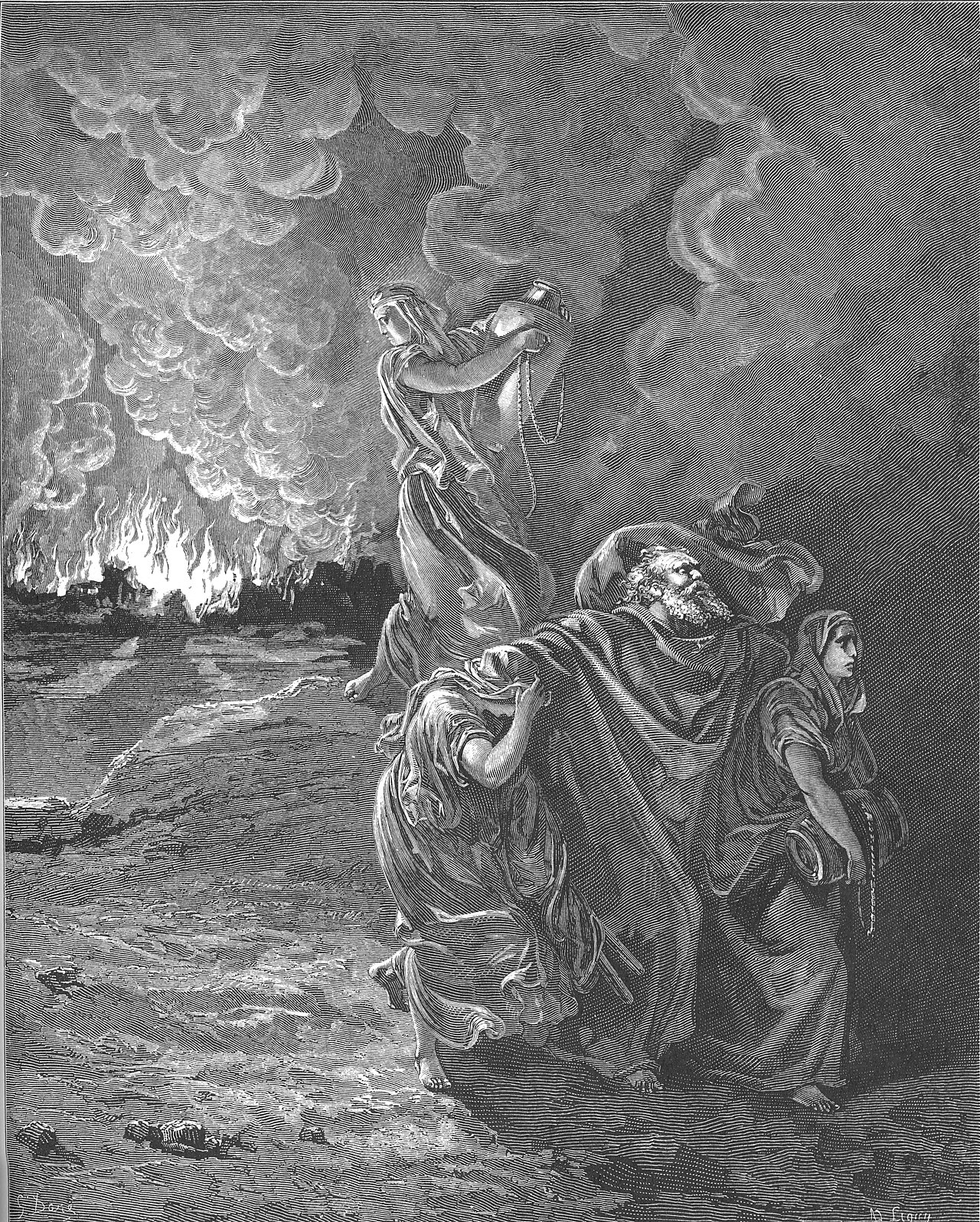 LotAbraham's nephew — the man who walked by sight toward Sodom and was saved “so as by fire” (2 Pet 2:7–8)12 passages
 MelchizedekKing of Salem and priest of the Most High God, without recorded genealogy, who brings out bread and wine — the type of Christ's eternal priesthood (Heb 7; Ps 110:4)6 passages
- RachelJacob's beloved wife; mother of Joseph and Benjamin, who dies on the road to Bethlehem — later wept for in the prophets (Jer 31:15; Matt 2:18)15 passages
 RebekahIsaac's bride, drawn from Abraham's kindred by providence (ch. 24); mother of the twins, who receives the oracle “the elder shall serve the younger.”11 passages
Egypt and the wilderness
The generation that left Egypt, took the law at Sinai, and died in the desert. Its leaders and its rebels are both here.
3 written lives, 9 in the register
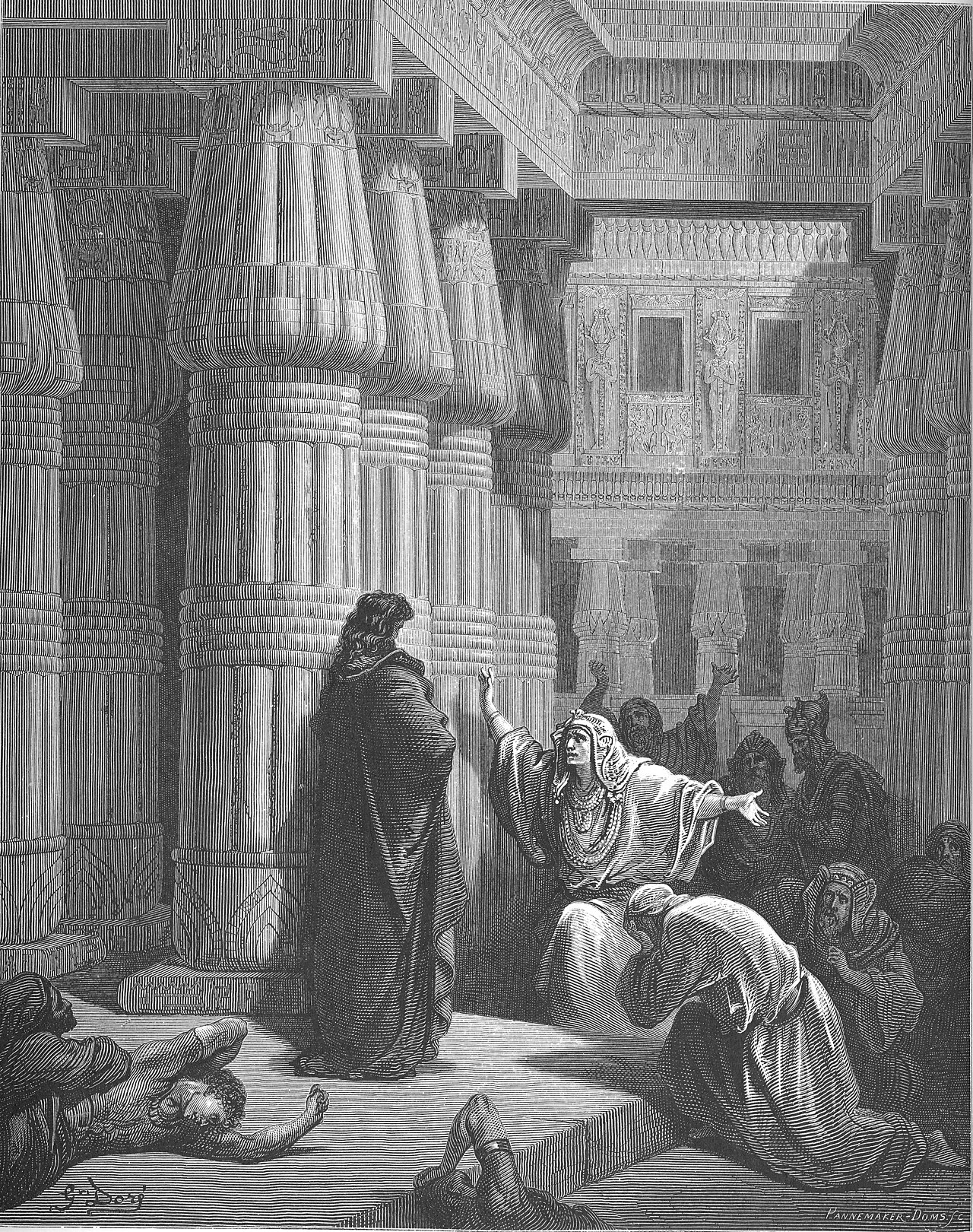 Pharaoh of the ExodusThe unnamed Pharaoh who held Israel in slavery, resisted Moses through ten plagues, and lost his army in the Red Sea. His hardened heart became the occasion for the greatest display of God's power in the Old TestamentGustave Doré, The Egyptians Ask Moses to Depart, The Holy Bible (1866)
 MosesThe central human figure of the Old Testament, the prophet who led Israel out of slavery in Egypt, mediated the covenant at Sinai, led the people through forty years in the wilderness, and received the TorahRembrandt, Moses with the Ten Commandments
 AaronMoses' older brother and spokesman before Pharaoh, later consecrated as Israel's first high priestafter Bernard Picart (attrib.), Aaron Is Fitted with the Breastplate (Hoshen) (c. 1700)
The register: 9 more names in this era, each with the passages that hold them
- AbihuAaron's second son, killed alongside Nadab for the strange fire Jehovah had not commanded — "I will be sanctified in them that come nigh me."8 passages
 Balaam son of BeorThe Mesopotamian diviner hired by Balak to curse Israel, rebuked by his own donkey, and constrained to bless four times — the Star out of Jacob among his oracles; attested extrabiblically at Deir Alla14 passages
- BalakKing of Moab who hired Balaam against the camp on his border and got four blessings and a prophecy of his own destroyer for his fee6 passages
 CalebOf Judah, one of the twelve spies — the man of another spirit who wholly followed Jehovah; one of only two of the census generation to enter the land, still claiming his mountain at eighty-five16 passages
- EleazarAaron's third son who succeeded him as high priest on Mount Hor, founding the line that runs to Phinehas and Zadok24 passages
- IthamarAaron's fourth son, ordained priest in Leviticus 8; overseer of the tabernacle's accounts and the Gershonite and Merarite service9 passages
 KorahThe Kohathite Levite who led two hundred fifty princes against Moses and Aaron — "ye take too much upon you" — and was swallowed alive with his company; his sons died not, and their psalms survive20 passages
 MiriamProphetess and sister of Moses and Aaron who led the women's song at the sea; struck with leprosy for challenging Moses' unique authority and restored at his intercession; died at Kadesh7 passages
 PhinehasGrandson of Aaron whose zeal at Baal-Peor stayed the plague and secured "my covenant of peace… an everlasting priesthood."11 passages
The conquest and the judges
The land taken, then nearly lost again, under leaders God raised one at a time. Ruth belongs to these years.
7 written lives, 3 in the register
%20John%20Martin%20-%20NGA%202004.64.1.jpg?width=640) JoshuaMoses' servant and successor, who led Israel into the promised landJohn Martin, Joshua Commanding the Sun to Stand Still upon Gibeon
JoshuaMoses' servant and successor, who led Israel into the promised landJohn Martin, Joshua Commanding the Sun to Stand Still upon Gibeon RahabA Canaanite prostitute who hid the Israelite spies and was saved when Jericho fellJames Tissot, The Harlot of Jericho and the Two Spies (Rahab's scarlet cord) (c. 1896-1902)
 DeborahA prophetess and the only female judge of Israel, who led the nation to victory over Canaanite oppressors through faith and wisdomFrancesco Solimena, Deborah and Barak
 GideonA reluctant judge who defeated Midian with only 300 men, demonstrating that victory comes from God alone, not from human strengthGustave Doré, Gideon Chooses 300 Soldiers (1866)
 SamsonA Nazirite with supernatural strength who fought the PhilistinesPeter Paul Rubens, Samson and Delilah
 RuthA Moabite widow who chose to follow her mother-in-law Naomi back to IsraelJulius Schnorr von Carolsfeld, Ruth in the Field of Boaz
 HannahA barren woman whose persistent prayer produced Samuel, Israel's greatest judge and prophetAert de Gelder, Hannah Presenting Samuel to Eli
The register: 3 more names in this era, each with the passages that hold them
- BoazThe mighty man of wealth in Bethlehem who spread his skirt over Ruth as kinsman-redeemer (goel), bought the inheritance at the gate, and fathered Obed — the redeemer-figure of the book7 passages
- EliHigh priest of Israel at Shiloh who mistook Hannah's silent prayer for drunkenness and raised the boy Samuel; his corrupt sons defiled the tabernacle, and his house fell under the judgment spoken by a man of God and confirmed through Samuel15 passages
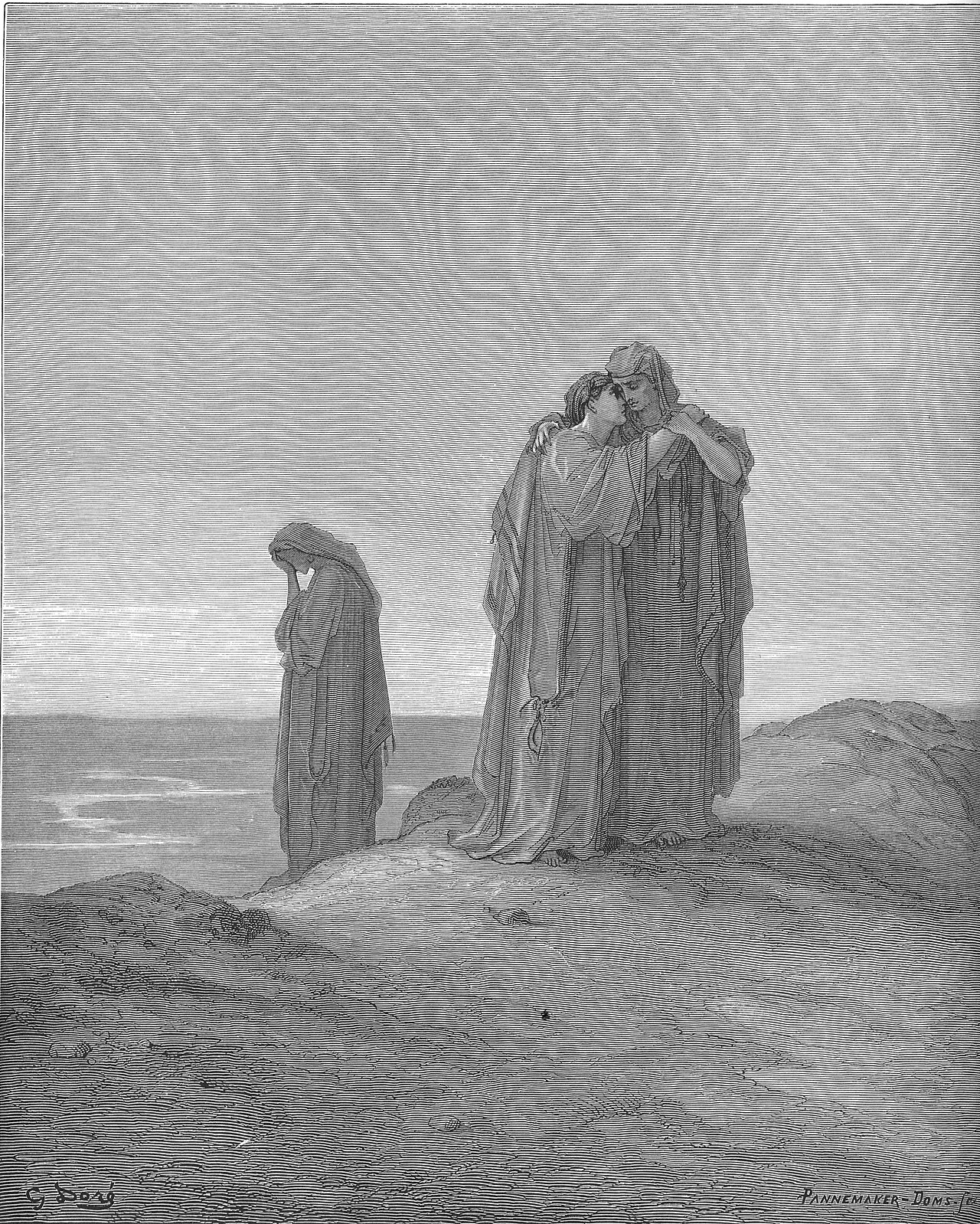 NaomiElimelech's widow who returned from Moab calling herself Mara — "the Almighty hath dealt very bitterly with me" — and whose emptiness God filled through Ruth's faithfulness and Boaz's redemption4 passages
The united kingdom
Three reigns over one nation, with the prophets who stood beside them. The throne is given, built up, then split at Solomon's death.
7 written lives, 9 in the register
 SamuelThe transitional figure between the period of the judges and the monarchyFrank W. W. Topham, Samuel Dedicated by Hannah at the Temple (19th c.)
 SaulThe first king of united Israel, chosen by God but ultimately rejected for his disobedienceSalvator Rosa, The Shade of Samuel Appears to Saul (1668)
 DavidIsrael's greatest king, a warrior, poet, and man after God's own heartGerard van Honthorst, King David Playing the Harp
- GadGad the seer served David from the outlaw years through the kingship
 NathanDavid's court prophet, the trusted counselor who delivered the Davidic covenant (2 Samuel 7) and confronted David's gravest sin with the parable of the ewe lamb (2 Samuel 12). His ministry set the prophet as the conscience of the monarchyJames Tissot, Nathan Rebukes David
 SolomonThe wisest and wealthiest king, who built the Temple but whose heart was turned away by foreign wives in his old ageNicolas Poussin, The Judgment of Solomon
- AhijahAhijah the Shilonite prophesied in the reigns of Solomon and Jeroboam I. He tore his new garment into twelve pieces and gave Jeroboam ten of them, the sign of the divided kingdom (1 Kings 11:29-39), and later pronounced judgment on Jeroboam's house (1 Kings 14)
The register: 9 more names in this era, each with the passages that hold them
 AbigailNabal's wife, a woman of good understanding whose swift intercession kept David from avenging himself with his own hand — and who became his wife when the LORD returned Nabal's wrong on his own head9 passages
- AgagKing of Amalek, spared by Saul against the express command — the partial obedience that cost Saul the kingdom; hewed in pieces before Jehovah by Samuel at Gilgal3 passages
 AhimelechPriest of Nob who gave the fugitive David the showbread and Goliath's sword, not knowing the king's quarrel; slain with eighty-five priests on Saul's order at Doeg's hand4 passages
- AsaphA Levitical chief musician appointed by David over the temple song (1 Chr 16); twelve psalms bear his name (Ps 50, 73–83)35 passages
- Doeg the EdomiteSaul's chief herdsman and informer, the one man willing to fall upon the priests of Nob when the king's own footmen refused — remembered in the superscription of Psalm 52
- Hiram of TyreKing of Tyre and friend of David who supplied cedar of Lebanon, craftsmen, and gold for Solomon's temple and fleet — the Gentile partner in the house of the LORD's building
 JonathanSon of King Saul who climbed a cliff to rout a garrison on the conviction that nothing restrains Jehovah; cut a covenant of steadfast love with David and stood between his father's spear and his friend's life; fell with Saul on Gilboa45 passages
- NabalThe wealthy fool of Carmel — "as his name is, so is he" — who repaid David's protection with insult; his heart died within him when Abigail told him what her wisdom had averted1 passage
%20-%20The%20Queen%20of%20Sheba%20before%20King%20Solomon%20-%20NG3107%20-%20National%20Gallery.jpg?width=640) The Queen of ShebaCame from the ends of the earth with hard questions to test Solomon's wisdom and confessed the half had not been told her; Jesus cited her as a witness against his generation (Matt 12:42)
The Queen of ShebaCame from the ends of the earth with hard questions to test Solomon's wisdom and confessed the half had not been told her; Jesus cited her as a witness against his generation (Matt 12:42)
Judah, the southern throne
The line of David held Jerusalem for twenty reigns, from the split under Rehoboam to the fall of the city, with the prophets sent to them.
25 written lives, 1 in the register
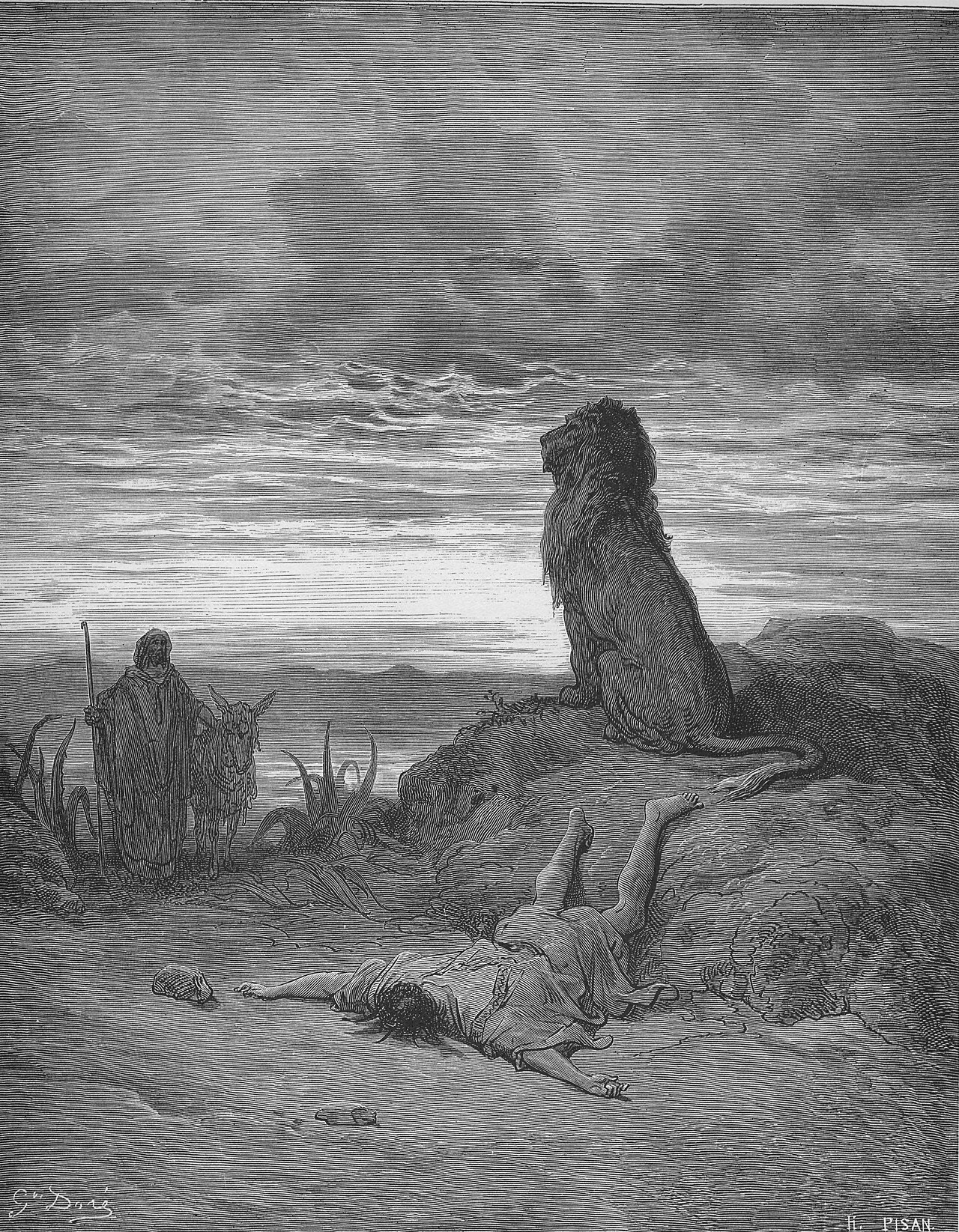 RehoboamSolomon's son whose foolish response to the people caused the kingdom to splitGustave Doré, The Disobedient Prophet Is Slain by a Lion, The Holy Bible (1866)
- AbijahBrief but militarily successful reign
- AsaGodly king who instituted reforms and trusted God for victory, but later relied on foreign alliance and persecuted a prophet
- JehoshaphatGodly king who strengthened Judah spiritually and militarily, but made unwise alliances with wicked kings of Israel
- Jehoram of JudahSon of Jehoshaphat who married Ahab's daughter Athaliah and led Judah deeply into Baal worship
- Ahaziah of JudahThe sixth king of Judah who reigned for only one year, deeply influenced by his wicked mother Athaliah and the house of Ahab
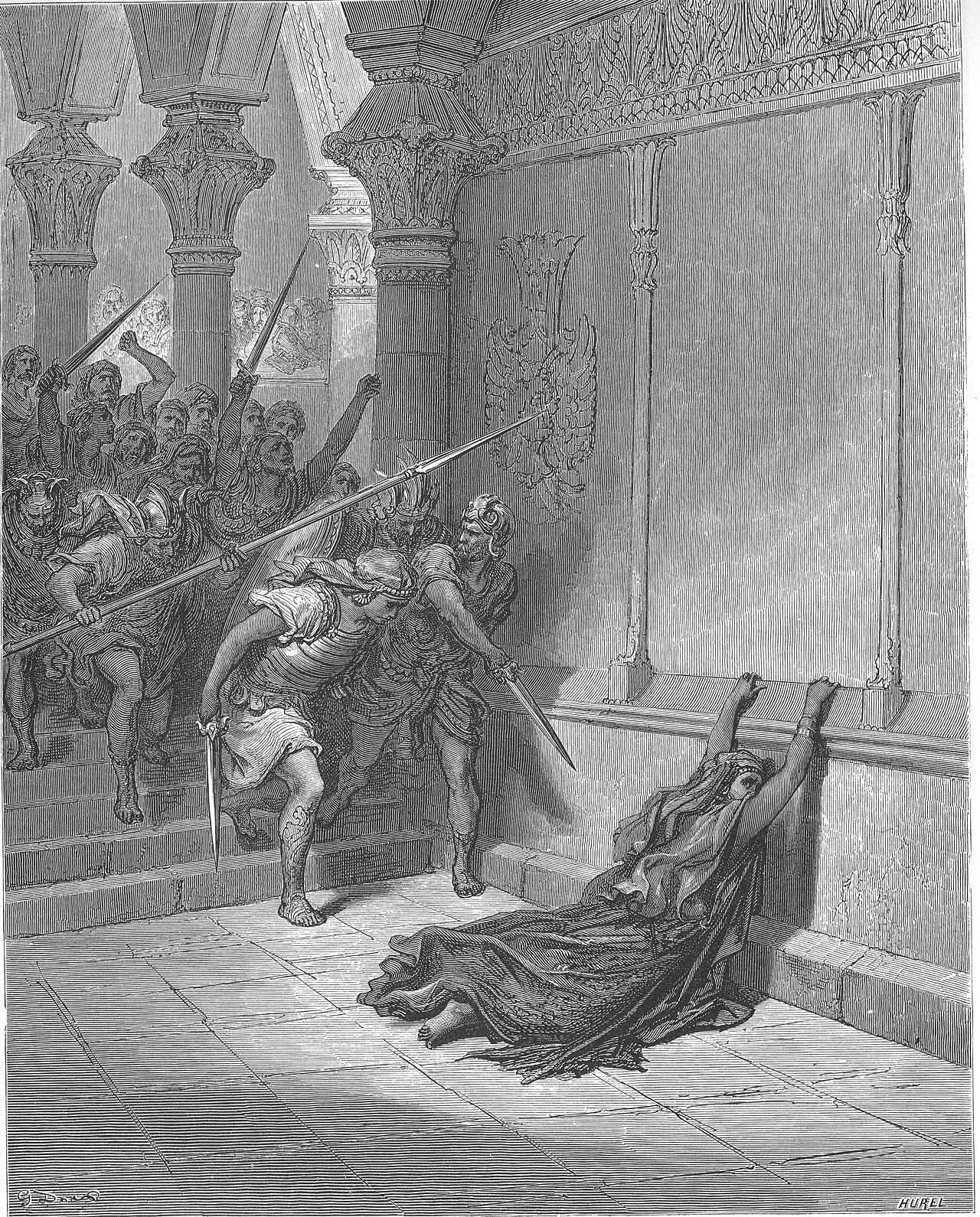 AthaliahDaughter of Ahab and Jezebel who seized the throne of Judah by slaughtering the royal heirs after her son's deathGustave Doré, The Death of Athaliah, The Holy Bible (1866)
 Joash of JudahThe child king hidden in the Temple who was crowned at age seven and repaired the Temple under the guidance of the priest JehoiadaFrancesco Hayez, The Coronation of Joash
- AmaziahThe ninth king of Judah who defeated Edom but then foolishly worshipped Edomite gods
 UzziahAlso called Azariah, Uzziah reigned fifty-two years, one of Judah's longest reigns, and was a builder and a strong commanderRembrandt, King Uzziah Stricken with Leprosy
- JothamOne of the consistently good kings of Judah who grew powerful because he walked steadfastly before the LORD. He built the Upper Gate of the Temple and defeated the Ammonites but never entered the Temple as his father had done
 IsaiahIsaiah of Jerusalem prophesied through the reigns of Uzziah, Jotham, Ahaz, and Hezekiah (c. 740-680 BC). Called in a vision of the throne in the year King Uzziah died (Isaiah 6), he left the longest prophetic book in the Old Testament and its fullest messianic prophecies: Immanuel, the Prince of Peace, the Suffering Servant, the new heavens and new earthMichelangelo, The Prophet Isaiah (Sistine Chapel ceiling) (1508-1512)
- AhazOne of the most wicked kings of Judah who practiced child sacrifice, introduced Assyrian religion into Jerusalem, closed the Temple, and refused Isaiah's offer of a divine sign
 MicahMicah of Moresheth was contemporary with Isaiah, prophesying during Jotham, Ahaz, and Hezekiah's reignsGustave Doré, Micah Exhorts the Israelites to Repent (1866)
 HezekiahOne of Judah's greatest kings who reversed his father Ahaz's idolatry, reopened the Temple, held the greatest Passover since Solomon, and trusted God when Sennacherib's 185,000-man Assyrian army was destroyed by the angel of the LORDWillem de Poorter, King Hezekiah
- ManassehThe longest-reigning king of Judah, fifty-five years, and the most wicked, who practiced child sacrifice and sorcery and built altars to Baal throughout Jerusalem
- AmonThe fifteenth king of Judah, who reigned two years
 JosiahThe greatest reforming king of Judah who became king at eight years old, began seeking God at sixteen, and at twenty-six found the Book of the Law. He led the most sweeping religious reform in Judah's history and held the greatest Passover since the time of SamuelUnknown, Josiah Hearing the Book of the Law
.jpg?width=640) ZephaniahZephaniah prophesied early in the reign of Josiah (c. 640-625 BC), before or during the great reformUnknown (Yaroslavl school), The Prophet Zephaniah
ZephaniahZephaniah prophesied early in the reign of Josiah (c. 640-625 BC), before or during the great reformUnknown (Yaroslavl school), The Prophet Zephaniah JeremiahJeremiah, son of the priest Hilkiah of Anathoth, prophesied through Judah's last forty years (c. 627-586 BC) and on into the Babylonian exileRembrandt, Jeremiah Lamenting the Destruction of Jerusalem
- Jehoahaz of JudahThe seventeenth king of Judah, who reigned three months before Pharaoh Neco deposed him and carried him to Egypt, where he died, the first king of Judah to die in exile
- JehoiakimInstalled as king by Pharaoh Neco, Jehoiakim was a ruthless ruler who burned Jeremiah's scroll, killed the prophet Uriah, and imposed heavy taxation
- JehoiachinReigned only three months before surrendering to Nebuchadnezzar and being exiled to Babylon for 37 years
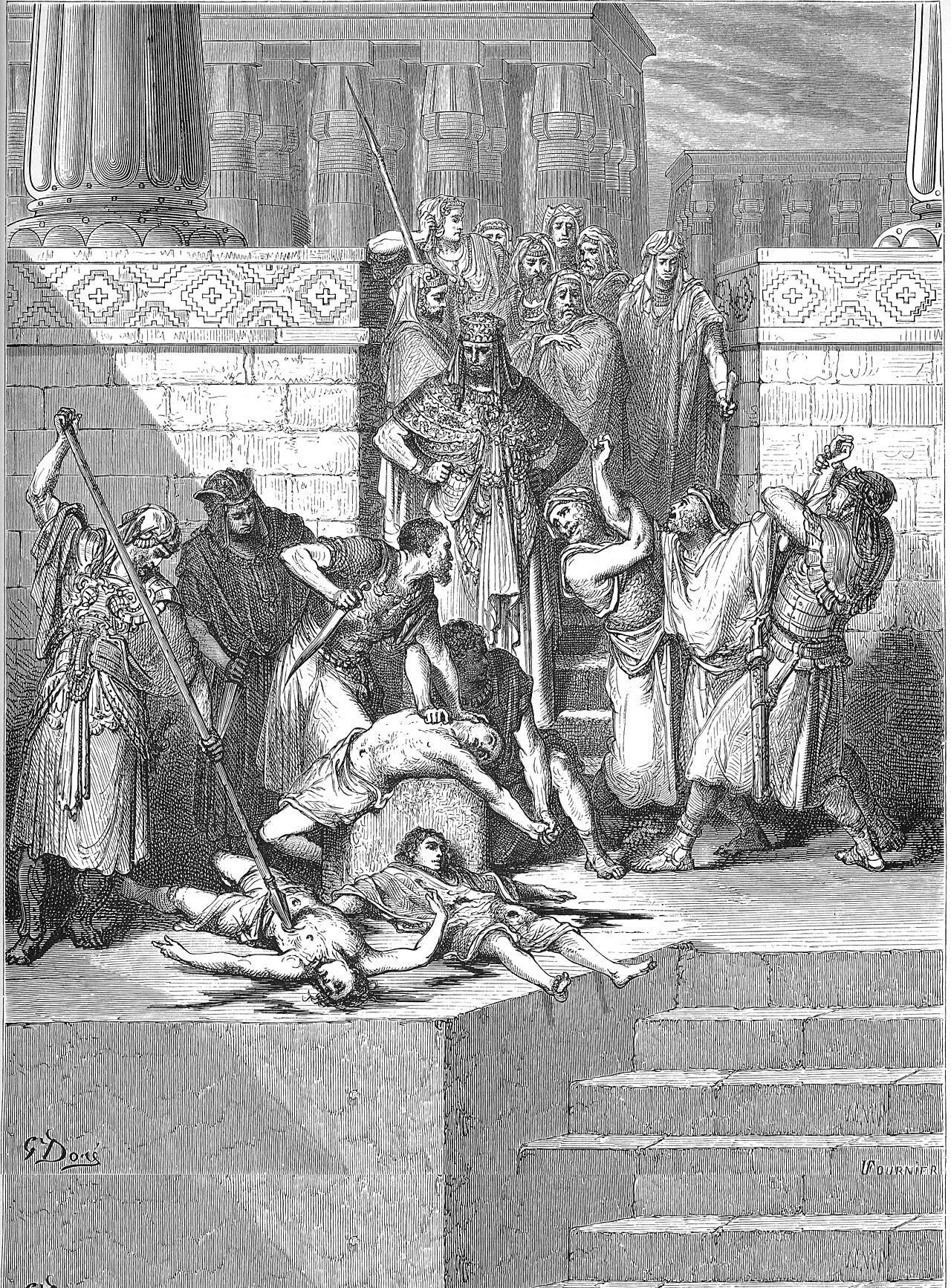 ZedekiahThe last king of Judah, installed by Nebuchadnezzar, who repeatedly consulted Jeremiah but lacked the courage to obey himGustave Doré, Zedekiah's Sons Are Slaughtered before His Eyes, The Holy Bible (1866)
 JoelJoel son of Pethuel prophesied after a devastating locust plague in Judah, interpreting it as a prefiguring of the greater "day of the LORD." His prophecy of poured-out Spirit (Joel 2:28-32) is cited by Peter at Pentecost (Acts 2:16-21) as the inaugural text of the church's ageMichelangelo, The Prophet Joel
The register: 1 more names in this era, each with the passages that hold them

Israel, the northern throne
Nine dynasties rose and fell in two hundred years, each judged by the calves at Bethel and Dan. Elijah and Elisha were sent against this throne.
24 written lives, 4 in the register
- Jeroboam IThe founder of the Northern Kingdom of Israel who led the ten tribes in revolt against Rehoboam
- NadabThe second king of Israel who reigned only two years
- BaashaThe third king of Israel who came to power by assassinating Nadab and exterminating Jeroboam's dynasty
- ElahThe fourth king of Israel who reigned only two years and was killed while drunk by his chariot commander Zimri, fulfilling the prophecy against Baasha's house
- ZimriThe fifth king of Israel, who reigned seven days, the shortest reign of any Israelite kingJeremias van Winghe, Phinehas Slaying Zimri and Kozbi the Midianite (17th century)
- OmriThe sixth king of Israel who founded the Omride dynasty, built Samaria as the new capital, and was considered so wicked that Assyrian records referred to Israel as "the house of Omri" for generations
 AhabThe seventh and most infamous king of Israel who married Jezebel and introduced systematic Baal worship to IsraelUnknown, Jezebel Promises King Ahab Naboth's Vineyard (undated)
 ElijahElijah the Tishbite was the prophetic voice against the Baal worship that Ahab and Jezebel established in the northern kingdom (c. 874-853 BC). His contest with the prophets of Baal on Mount Carmel, the fire he called down, his departure in a chariot of fire, and his appearance with Moses at the Transfiguration make him the prophetic pattern beside MosesGiuseppe Angeli, Elijah Taken Up in a Chariot of Fire
- Ahaziah of IsraelThe eighth king of Israel who reigned two years and followed the sins of both his father Ahab and his mother Jezebel
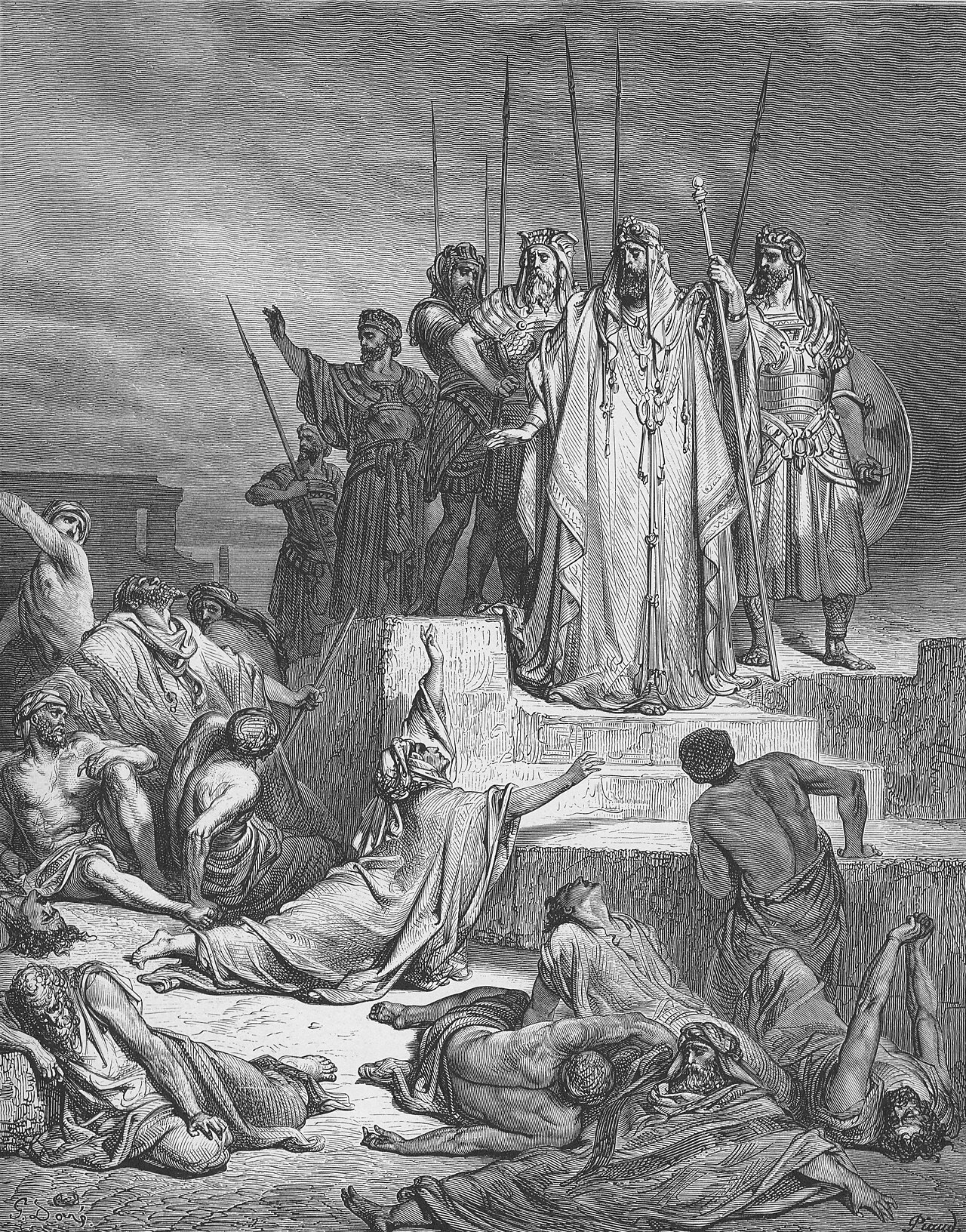 Joram of IsraelThe ninth king of Israel who removed the pillar of Baal his father had erected but kept the golden calves of JeroboamGustave Doré, A Famine in Samaria, The Holy Bible (1866)
 ElishaElisha son of Shaphat was Elijah's successor and received a double portion of his master's spirit (2 Kings 2:9). His ministry ran through the reigns of four northern kings, from Ahab's house to Jehu's, and the text records about twice as many miracles for him as for Elijah, parallel in form and larger in reachPieter Fransz. de Grebber, Elisha Refusing Gifts from Naaman (c. 1630s)
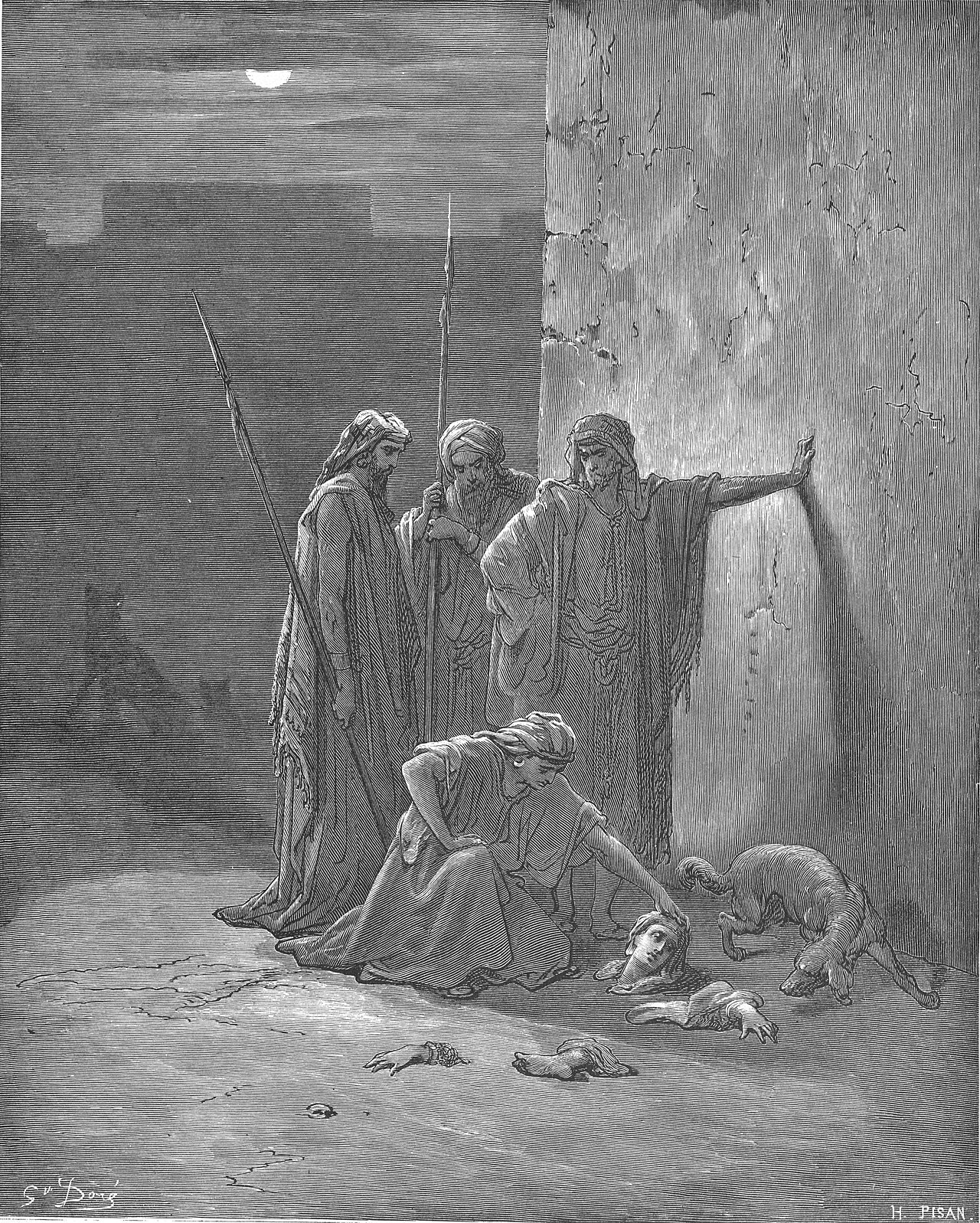 JehuAnointed by Elisha's messenger to destroy Ahab's house, Jehu executed Joram, Jezebel, all seventy sons of Ahab, and destroyed Baal worship in IsraelGustave Doré, Jehu's Companions Find Jezebel's Remains, The Holy Bible (1866)
- Jehoahaz of IsraelThe eleventh king of Israel, oppressed by Syria throughout his reign until Israel's army was reduced to almost nothing
- Jehoash of IsraelThe twelfth king of Israel who visited the dying prophet Elisha and received the arrow prophecy of partial victory over Syria
- Jeroboam IIThe thirteenth king of Israel with the longest reign of any northern king (41 years), who restored Israel's borders to their greatest extent since Solomon
 AmosAmos of Tekoa, a Judean shepherd and dresser of sycamore figs, prophesied against the northern kingdom in the prosperous reign of Jeroboam II. His message names injustice hidden under religious observance, and it stands among the plainest prophetic charges of covenant hypocrisy in the Old TestamentGustave Doré, The Prophet Amos (1866)
- Zechariah of IsraelThe fourteenth king of Israel, who reigned six months, the last of Jehu's line
- ShallumThe fifteenth king of Israel who assassinated Zechariah to take the throne but himself reigned for only one month before being killed by Menahem, making him one of the shortest-reigning kings in history
- MenahemThe sixteenth king of Israel, remembered for cruelty: he ripped open the pregnant women of a city that would not open its gates to him
 HoseaHosea prophesied in the last decades of the northern kingdom before its fall to Assyria in 722 BC. His prophetic sign was his own marriage to Gomer, an unfaithful wife whom he bought back, a living picture of the LORD's covenant love for unfaithful IsraelJames Tissot, Hosea
- PekahiahThe seventeenth king of Israel who reigned only two years before being assassinated by his officer Pekah and fifty Gileadites in the citadel of the palace in Samaria
- PekahThe eighteenth king of Israel who allied with Syria in the Syro-Ephraimite War against Judah
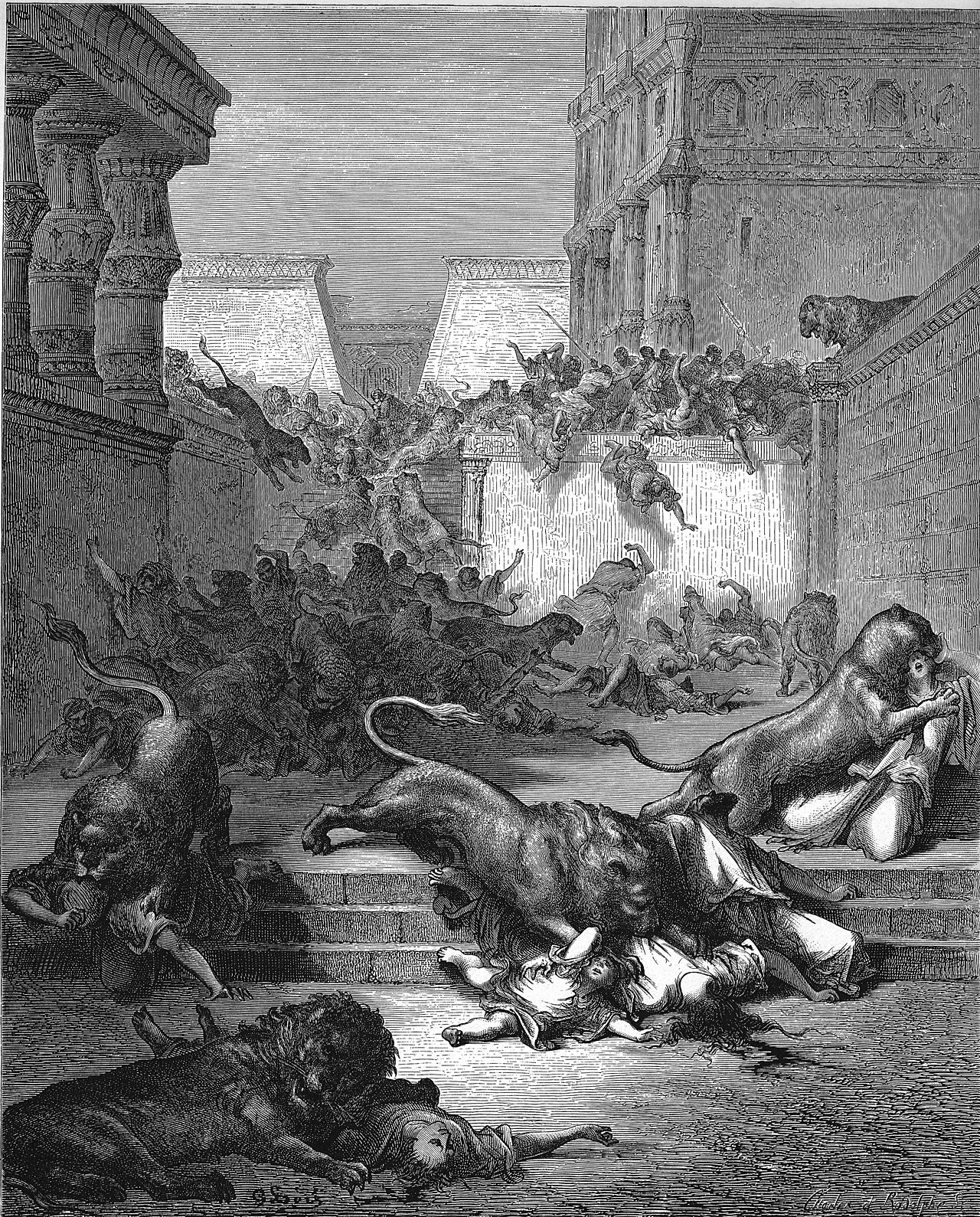 HosheaThe last king of the northern kingdom, who killed Pekah to take the throneGustave Doré, Foreign Nations Are Slain by Lions in Samaria, The Holy Bible (1866)
- HuldahHuldah the prophetess, whose husband Shallum kept the wardrobe, confirmed the rediscovered book of the Law when Josiah's workers found it in the temple (2 Kings 22; 2 Chronicles 34). Her word set Josiah's reform in motion
The register: 4 more names in this era, each with the passages that hold them
 GoliathThe Philistine champion of Gath who defied the armies of the living God for forty days — felled by a shepherd's sling stone and beheaded with his own sword in the valley of Elah5 passages
- JezebelSidonian princess and Ahab's queen who institutionalized Baal worship in Israel, ordered Elijah's death after Carmel, and engineered Naboth's judicial murder — thrown down at Jezreel as Elijah had spoken14 passages
- Micaiah ben ImlahThe one prophet Ahab hated because he never prophesied good concerning him; against four hundred flattering voices he told the truth about Ramoth-gilead — and the heavenly court behind it
- NabothThe Jezreelite who refused to sell the inheritance of his fathers to Ahab; framed by Jezebel's letters and stoned — the vineyard whose blood set Elijah at the king's door2 passages
The kingdom years, both thrones
Names the record sets in the kingdom years without naming a throne. The prophets here are dated by century, not by the king they served.
3 written lives, 5 in the register
 JonahJonah son of Amittai of Gath-hepher (mentioned in 2 Kgs 14:25) is the prophet whose rebellion became his signPieter Lastman, Jonah and the Whale
 NahumNahum of Elkosh prophesied the fall of Nineveh, the Assyrian capital, fulfilled in 612 BC when the Medes and Babylonians besieged and destroyed the cityUnknown, The Prophet Nahum, San Giovanni in Laterano
%2C%201423-1435.JPG?width=640) HabakkukThe only prophet whose book is a dialogue between himself and the LORD, a wrestling with how God can use the wicked Babylonians to judge JudahDonatello, Habakkuk (Lo Zuccone)
HabakkukThe only prophet whose book is a dialogue between himself and the LORD, a wrestling with how God can use the wicked Babylonians to judge JudahDonatello, Habakkuk (Lo Zuccone)
The register: 5 more names in this era, each with the passages that hold them
- Ethan the EzrahiteA wise man and Levitical singer, named for Ps 89 — the lament over the seemingly broken Davidic covenant8 passages
- GehaziElisha's servant who ran after Naaman's silver with a lie and carried Naaman's leprosy away with it6 passages
- HazaelThe Aramean officer over whose face Elisha wept, foreseeing the cruelty of his coming reign; king of Aram and scourge of Israel14 passages
- Heman the EzrahiteA Levitical singer of the Korahite guild, named in the superscription of the somber Ps 889 passages
- NaamanCaptain of the host of Aram, a great man and a leper, healed in the Jordan's seventh dip at Elisha's word — the Gentile grace Jesus cited at Nazareth (Luke 4:27)6 passages
Exile and return
The people who kept faith in a foreign court, and the ones who came back to build. Two empires and their kings stand here too.
13 written lives, 3 in the register
 NebuchadnezzarThe greatest king of the Neo-Babylonian Empire who conquered Jerusalem, destroyed the Temple, and took Israel into exileWilliam Blake, Nebuchadnezzar
 DanielTaken to Babylon as a youth of noble birth in the first deportation from Judah (605 BC), trained in Babylonian learning, and rose to advise Nebuchadnezzar and later Darius the MedePeter Paul Rubens, Daniel in the Lions' Den
 EzekielEzekiel son of Buzi, a priest, was among the exiles deported to Babylon in 597 BC. Called in the fifth year of his exile, he prophesied to the community by the river Chebar for at least twenty-two years, with visions of the wheels, the valley of dry bones, the restored temple, and the river flowing from itMatthäus Merian the Elder, Ezekiel's Vision
 ObadiahObadiah's one chapter, the shortest book in the Old Testament, is a judgment on Edom for standing with Jerusalem's destroyers in 586 BC. Its wider point is that the day of the LORD is near upon all the nationsJames Tissot, Obadiah (prophet portrait, Jewish Museum series) (c. 1888-1902)
 Cyrus the GreatThe founder of the Persian Empire, named by Isaiah about 150 years before his birthGustave Doré, Cyrus Restores the Vessels of the Temple (1866)
 Darius the GreatThe Persian king who confirmed Cyrus's decree and allowed the Jerusalem Temple to be completed in his sixth yearNicolaes Knüpfer, Zorobabel and Darius (17th century)
%20School%20-%20The%20Prophet%20Haggai%20-%201430496.20%20-%20National%20Trust.jpg?width=640) HaggaiHaggai prophesied in the second year of Darius (520 BC), urging the returned exiles to resume the second temple, whose building had stalled for sixteen yearsBritish School, The Prophet Haggai
HaggaiHaggai prophesied in the second year of Darius (520 BC), urging the returned exiles to resume the second temple, whose building had stalled for sixteen yearsBritish School, The Prophet Haggai ZechariahZechariah son of Iddo, a priest of the returned community, prophesied contemporary with Haggai to encourage the temple reconstructionMichelangelo, The Prophet Zechariah
.jpg?width=640) XerxesAlso known as Ahasuerus, Xerxes is the Persian king in the book of Esther who deposed Queen Vashti, chose Esther as queen, authorized Haman's genocide plot against the Jews, and then had Haman executed and issued a second decree allowing Jews to defend themselvesArtemisia Gentileschi, Esther before Ahasuerus
XerxesAlso known as Ahasuerus, Xerxes is the Persian king in the book of Esther who deposed Queen Vashti, chose Esther as queen, authorized Haman's genocide plot against the Jews, and then had Haman executed and issued a second decree allowing Jews to defend themselvesArtemisia Gentileschi, Esther before Ahasuerus- EstherA Jewish orphan who became Queen of PersiaArtemisia Gentileschi, Esther before Ahasuerus
 EzraA priest and scribe who led a second wave of exiles back to Jerusalem, devoted to studying, obeying, and teaching God's Law. He confronted the returned community's intermarriage with pagan nations and, with Nehemiah, restored the public reading of ScriptureGustave Doré, Ezra Kneels in Prayer (1866)
 NehemiahCupbearer to the Persian king Artaxerxes who, grieved by reports of Jerusalem's ruined walls, obtained permission to return and lead the rebuilding effort despite fierce opposition, completing the wall in just fifty-two daysGustave Doré, Nehemiah Views the Ruins of Jerusalem's Walls (1866)
 MalachiMalachi, whose name means "my messenger", is by tradition the last of the writing prophets, prophesying perhaps a century after Haggai and Zechariah, around the time of Ezra and NehemiahUnknown (15th century), The Prophet Malachi
The register: 3 more names in this era, each with the passages that hold them
- Joshua the high priestSon of Josedech, first high priest of the return (Ezra 2:2; Hag 1:1) — cleansed of filthy garments before the Angel of the LORD with Satan standing to accuse (Zech 3), then crowned in the BRANCH's living parable of the priest-king (Zech 6:9-15)
 MordecaiEsther's cousin and guardian at the gate of Susa, who refused to bow to Haman, uncovered the plot against the king, and was raised to second in the kingdom "for such a time as this."10 passages
 ZerubbabelGovernor of Judah and grandson of Jeconiah who led the first return and laid the second temple's foundation; Haggai's signet-ring promise rests on him in Messiah's line13 passages
Jesus and the Gospels
The Twelve stand here, where a reader first meets them, with the family, the friends, the rulers who tried Jesus, and the witnesses of the resurrection.
14 written lives, 17 in the register
.jpg?width=640) Mary, Mother of JesusA young Galilean woman chosen to bear the Messiah through the Holy Spirit's overshadowingGerard van Honthorst, Adoration of the Shepherds
Mary, Mother of JesusA young Galilean woman chosen to bear the Messiah through the Holy Spirit's overshadowingGerard van Honthorst, Adoration of the Shepherds John the BaptistJohn the Baptist, son of the priest Zechariah and Elizabeth, was the forerunner of Christ, the Elijah who was to come, whose baptism in the wilderness announced that the kingdom was at handLeonardo da Vinci, Saint John the Baptist
%20-%20The%20Massacre%20of%20the%20Innocents%20with%20Herod%20-%20NG1239%20-%20National%20Gallery.jpg?width=640) Herod the GreatThe Idumean king appointed by Rome who rebuilt the temple in Jerusalem on a grand scale, and who tried to kill the infant Jesus by ordering the slaughter of the boys of Bethlehem, the first ruler to move against the MessiahGerolamo Mocetto, The Massacre of the Innocents with Herod
Herod the GreatThe Idumean king appointed by Rome who rebuilt the temple in Jerusalem on a grand scale, and who tried to kill the infant Jesus by ordering the slaughter of the boys of Bethlehem, the first ruler to move against the MessiahGerolamo Mocetto, The Massacre of the Innocents with Herod AnnaAnna the prophetess was an 84-year-old widow who worshipped night and day in the temple with fasting and prayerRembrandt, The Prophetess Anna in the Temple
 Herod AntipasThe tetrarch of Galilee who executed John the Baptist after Salome's dance, who Jesus called "that fox," and who mocked Jesus at his trial when Pilate sent him for examinationPeter Paul Rubens, The Feast of Herod
 AndrewAndrew, brother of Simon Peter, was among the first disciples called and is remembered throughout the Gospels for consistently bringing others to Jesus, from his own brother to a boy with loaves and fishes to Greek visitors seeking the LordJosé de Ribera, The Martyrdom of Saint Andrew
.jpg?width=640) PeterA fisherman who became the leading apostle, bold, impulsive, and devoted to JesusCaravaggio, The Crucifixion of Saint Peter
PeterA fisherman who became the leading apostle, bold, impulsive, and devoted to JesusCaravaggio, The Crucifixion of Saint Peter James, Son of ZebedeeJames, son of Zebedee and brother of John, was part of Jesus' innermost circle of three, present at the transfiguration and in GethsemaneRembrandt, Saint James the Greater
.jpg?width=640) John the ApostleJohn was a 'son of thunder' who became the apostle of loveEl Greco, Saint John the Evangelist
John the ApostleJohn was a 'son of thunder' who became the apostle of loveEl Greco, Saint John the Evangelist Mary MagdaleneDelivered by Jesus from seven demons and became one of His most devoted followersGuido Reni, The Penitent Magdalene
.jpg?width=640) ThomasThomas, also called Didymus, is remembered for doubting the other apostles' report of the resurrection until he saw and touched the risen Christ himself, then offering one of Scripture's clearest confessions: 'My Lord and my God.'Caravaggio, The Incredulity of Saint Thomas
ThomasThomas, also called Didymus, is remembered for doubting the other apostles' report of the resurrection until he saw and touched the risen Christ himself, then offering one of Scripture's clearest confessions: 'My Lord and my God.'Caravaggio, The Incredulity of Saint Thomas%20Vermeer%20-%20Christ%20in%20the%20House%20of%20Martha%20and%20Mary%20-%20Google%20Art%20Project.jpg?width=640) MarthaMartha, sister of Mary and Lazarus, welcomed Jesus into her home and served Him faithfully, though she was gently corrected for anxious distractionJohannes Vermeer, Christ in the House of Martha and Mary
MarthaMartha, sister of Mary and Lazarus, welcomed Jesus into her home and served Him faithfully, though she was gently corrected for anxious distractionJohannes Vermeer, Christ in the House of Martha and Mary- Mary of BethanyMary of Bethany, sister of Martha and Lazarus, is remembered for sitting at Jesus' feet to learn and for anointing Him with costly perfume before His death, an act Jesus declared would be told wherever the gospel was preachedJohannes Vermeer, Christ in the House of Martha and Mary
 LazarusLazarus of Bethany, brother of Mary and Martha, died and lay four days in the tomb before Jesus called him back to life, one of the most public and dramatic miracles of Christ's ministry and a turning point that hastened the plot against JesusRembrandt, The Raising of Lazarus
The register: 17 more names in this era, each with the passages that hold them
 AnnasFormer high priest and father-in-law of Caiaphas, before whom Jesus was first examined (John 18:13,19-24)5 passages
 CaiaphasThe high priest who counseled "that one man should die for the people" — an unwitting prophecy of the atonement (John 11:49-52; 18:14)11 passages
- CleopasOne of the two disciples who walked to Emmaus on the day of the resurrection1 passage
 ElisabethWife of Zacharias, kinswoman of Mary, and mother of John the Baptist1 passage
 JoannaWife of Chuza, Herod's steward, and one of the women healed by Jesus who followed him and ministered to the mission out of their own substance (Luke 8:3). She is among the women who find the tomb empty and report to the apostles (Luke 24:10)2 passages
- Joseph of NazarethCarpenter of Nazareth, a just man of David's line; husband of Mary and legal father of Jesus, obedient to the angelic word in taking Mary, naming Jesus, and guarding the child in Egypt
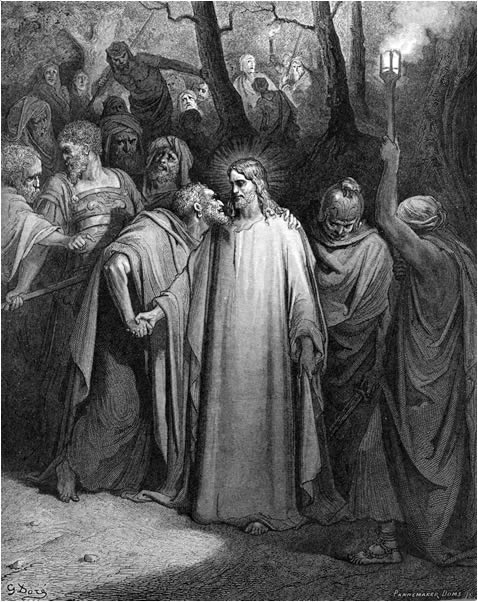 Judas IscariotThe disciple who kept the purse and betrayed Jesus; "he went out straightway: and it was night" (John 13:30)
.jpg?width=640) Matthew (Levi)Tax collector of Capernaum called by Jesus from the receipt of custom; one of the Twelve; traditional author of the first Gospel, written to show Jesus as Israel's Messiah-King9 passages
Matthew (Levi)Tax collector of Capernaum called by Jesus from the receipt of custom; one of the Twelve; traditional author of the first Gospel, written to show Jesus as Israel's Messiah-King9 passages- MatthiasChosen by lot to replace Judas among the Twelve, on Peter's stated qualification: a man who had been with them the whole time the Lord Jesus went in and out, and a witness of the resurrection1 passage
- NathanaelThe Israelite "in whom is no guile," called from under the fig tree, to whom Jesus promised the opened heaven of Jacob's ladder (John 1:47-51)2 passages
 NicodemusA Pharisee and ruler who came to Jesus by night to hear of the new birth, later defended Him, and helped bury Him (John 3; 7:50; 19:39)2 passages
 PhilipA disciple from Bethsaida who brought Nathanael to Jesus and asked "Show us the Father" (John 1:43-46; 14:8)21 passages
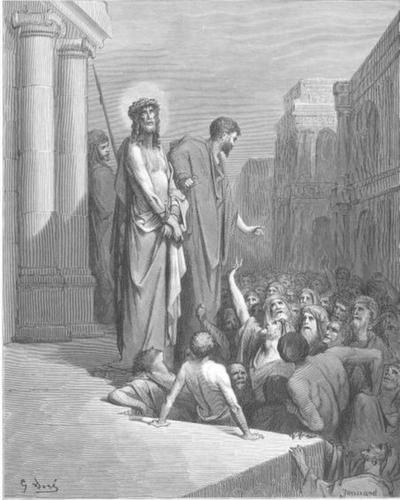 Pontius PilateThe Roman prefect who found no crime in Jesus yet delivered Him to be crucified, asking "What is truth?" (John 18-19)
 SimeonA righteous and devout man of Jerusalem on whom the Holy Spirit rested, promised he would not die before seeing the Lord's Christ32 passages
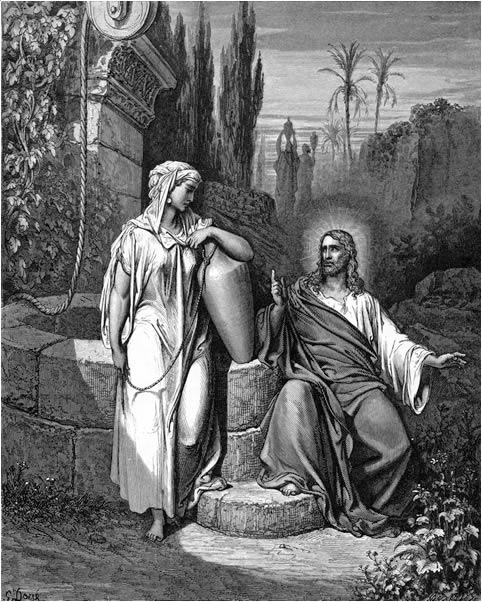 The Samaritan WomanThe woman at Jacob's well to whom Jesus revealed living water and declared Himself Messiah; her testimony brought a Samaritan town to faith (John 4)
 ZacchaeusA chief publican of Jericho, rich and short of stature, who climbed a sycamore to see Jesus and was called down by name1 passage
- ZachariasA priest of the course of Abijah and the father of John the Baptist4 passages
The church, from Acts onward
Paul and his circle, the men and women of Acts, and the churches the letters were written to. The Twelve stand one period back, where they were called.
7 written lives, 47 in the register
- AgabusForetold the famine that sent the Antioch relief to Judea (Acts 11:28), and bound his own hands and feet with Paul's belt to show what waited for him in Jerusalem (Acts 21:10-11)
%20-%202006-46%20-%20Princeton%20University%20Art%20Museum.jpg?width=640) BarnabasBarnabas, a Levite from Cyprus originally named Joseph, sold his property to support the early church, vouched for the newly converted Saul when others feared him, and became Paul's missionary partner before their eventual, sharp disagreement over John MarkBartholomeus Breenbergh, Saints Paul and Barnabas at Lystra
BarnabasBarnabas, a Levite from Cyprus originally named Joseph, sold his property to support the early church, vouched for the newly converted Saul when others feared him, and became Paul's missionary partner before their eventual, sharp disagreement over John MarkBartholomeus Breenbergh, Saints Paul and Barnabas at Lystra PaulA Pharisee who persecuted Christians until the risen Christ appeared to him on the Damascus roadRembrandt, The Apostle Paul
 Philip the EvangelistPhilip the Evangelist, one of the seven chosen to serve the early church, carried the gospel to Samaria with great effect and led the Ethiopian eunuch to Christ on a desert road, becoming a bridge figure in the gospel's spread beyond JerusalemRembrandt, The Baptism of the Ethiopian Eunuch
 StephenOne of the seven chosen to serve the early church's Greek-speaking widows, full of faith and the Holy SpiritHans Baldung, The Stoning of Saint Stephen
 TimothyA young disciple from Lystra, raised in the faith by his mother and grandmother, who became Paul's closest missionary companion and was entrusted with pastoral leadership of the church at EphesusUnknown, Saint Timothy
- TitusA Greek convert and trusted companion of Paul, a test case for Gentile freedom from circumcision, a peacemaker sent to the troubled Corinthian church, and later left to organize church leadership on the island of Crete
The register: 47 more names in this era, each with the passages that hold them
A
- Alexander the coppersmithDid Paul much evil — "the Lord will render to him according to his works" (2 Tim 4:14); possibly the Alexander of 1 Tim 1:20
- Ananias of DamascusA disciple at Damascus told in a vision to go and lay hands on the man who had come to arrest him; he argues briefly with God about it, and goes — greeting the persecutor as Brother Saul
- ApollosEloquent, Alexandrian-trained teacher mighty in the Scriptures (Acts 18:24-28), instructed more perfectly by Priscilla and Aquila; his name became a Corinthian factional banner though he was Paul's unified fellow-laborer (1 Cor 3:5-9)6 passages
- ApphiaAddressed with Philemon and Archippus (Phlm 2), traditionally his wife — "Apphia our sister."1 passage
 AquilaA Jewish tentmaker of Pontus who, with his wife Priscilla, labored alongside Paul and "laid down their own necks" for him (Rom 16:3-4; Acts 18)7 passages
- ArchippusFellow-soldier addressed in Phlm 2, charged in Col 4:17 to take heed to the ministry received in the Lord2 passages
- ArtemasOne of two men Paul considered sending to Crete so Titus could winter with him at Nicopolis (Titus 3:12)1 passage

D
- DemasPaul's fellow-worker (Col 4:14; Phlm 24) who later forsook him, having loved this present world (2 Tim 4:10) — the New Testament's quiet cautionary arc3 passages
- Demetrius (3 John)"Demetrius hath the witness of all men, and of the truth itself" (3 Jn 12) — likely the letter's carrier
- Diotrephes"Who loveth to have the preeminence" — refused the elder's letter, prated with wicked words, and cast out those who would receive the brethren (3 Jn 9-10)1 passage
E
- EpaphrasColossae's founding evangelist, the beloved fellow-servant from whom the church learned the gospel (Col 1:7), always striving in prayer for the Lycus Valley churches (4:12-13); Paul's fellow-prisoner in Philemon 233 passages
- EpaphroditusThe Philippians' messenger and minister to Paul's need — brother, fellow-worker, fellow-soldier — who was sick nigh unto death and gambled his life for the work of Christ (Php 2:25-30)5 passages
- ErastusThe city treasurer of Corinth who sent greetings in Romans (16:23) — possibly the official named in a Corinthian pavement inscription3 passages
- EuniceTimothy's Jewish mother (Acts 16:1; 2 Tim 1:5), through whom he knew the sacred writings from a babe (2 Tim 3:15)2 passages
- EuodiaPhilippian laborer in the gospel, exhorted with Syntyche to be of the same mind in the Lord (Php 4:2-3) — women who labored with Paul, whose names are in the book of life
G
- Gaius (3 John)The beloved addressee of 3 John, walking in truth, commended for faithful hospitality to the brethren going forth for the sake of the Name (3 Jn 1-8)
- GallioProconsul of Achaia and brother of the philosopher Seneca; he threw Paul's accusers out of his court at Corinth as a matter for their own law1 passage
- GamalielThe Pharisee and teacher of the law who talked the Sanhedrin out of killing the apostles with an argument from patience: if this counsel is of men it will come to nothing, and if it is of God you cannot overthrow it. Paul's own teacher6 passages
H
- HermogenesNamed with Phygelus among they of Asia who turned away from Paul (2 Tim 1:15)1 passage
- Herod Agrippa IThe king who killed James the brother of John with the sword, imprisoned Peter, and died at Caesarea after accepting the acclamation of a crowd calling his voice the voice of a god — the persecutor's death at the hinge of the book
- Herod Agrippa IIThe last of the Herodian kings, who heard Paul's defence at Caesarea alongside Bernice and Festus and answered with the most quoted half-sentence in Acts: with but little persuasion thou wouldest fain make me a Christian1 passage
- HymenaeusFalse teacher delivered unto Satan that he might be taught not to blaspheme (1 Tim 1:20); with Philetus he said the resurrection was past already, overthrowing the faith of some (2 Tim 2:17-18)2 passages
J
- James, the Lord's BrotherNot a follower during Jesus' ministry, and the leader of the Jerusalem church afterwards; the most rigorously observant figure in the leadership, and the one who pronounced that the Gentiles should not be troubled
- John MarkCousin of Barnabas and the young man who left the first journey at Perga; the disagreement over taking him again split Paul and Barnabas — and Paul later asked for him as useful for ministering
L
 LoisTimothy's grandmother, first named bearer of the unfeigned faith that dwelt in the family line (2 Tim 1:5)1 passage
 LukeThe beloved physician and companion of Paul; careful historian of the orderly account — the Gospel of Luke and the Acts of the Apostles, one two-volume work to Theophilus12 passages
 LydiaA seller of purple from Thyatira, worshipping at a riverside prayer meeting outside Philippi when the Lord opened her heart — the first named European convert, and the host of the church that met in her house4 passages
O
- OnesimusPhilemon's runaway slave, begotten in Paul's bonds and sent home as a brother beloved — the letter of Philemon is his story; travels with Tychicus carrying Colossians (Col 4:9). The name means useful, the wordplay of Philemon 112 passages
- OnesiphorusThe one who oft refreshed Paul and was not ashamed of his chain, seeking him out diligently in Rome (2 Tim 1:16-18) — set against the day when all Asia turned away3 passages
P
- PhilemonColossian believer with a church in his house, owner of Onesimus, recipient of Paul's most personal canonical letter — refreshing the hearts of the saints (Phlm 7)1 passage
- PhiletusNamed with Hymenaeus as teaching that the resurrection is past already (2 Tim 2:17-18)2 passages
- PhoebeA deaconess of the church at Cenchreae whom Paul commended, and the likely carrier of the letter to the Romans (Rom 16:1-2)1 passage
- PhygelusNamed with Hermogenes among all they of Asia who turned away from Paul (2 Tim 1:15)
- Porcius FestusFelix's successor as procurator, before whom Paul appealed to Caesar — and who interrupted Paul's defence to tell him that much learning had made him mad2 passages
- PriscillaA tentmaker and teacher who, with her husband Aquila, instructed Apollos and hosted a church — Paul's coworker (Rom 16:3; Acts 18)8 passages
- PubliusThe chief man of Malta, who lodged the shipwrecked party for three days; Paul prayed for his fever-stricken father and healed him, and the whole island's sick came after2 passages
S
- SilasA leading man among the brethren, sent from Jerusalem to carry the Council's letter to Antioch, and then Paul's companion on the second journey — singing hymns at midnight in the Philippian jail when the earthquake came12 passages
- Simon MagusThe sorcerer at Samaria who believed and was baptized, then offered the apostles money for the power to give the Holy Spirit — and gave his name to the sin of simony
- SosthenesCo-sender of 1 Corinthians (1:1); traditionally identified with the synagogue-ruler beaten before Gallio in Acts 18:17 — an identification held loosely2 passages
- StephanasHead of a Corinthian household called the firstfruits of Achaia, baptized by Paul himself; part of the delegation that brought the Corinthians' news to Ephesus (1 Cor 1:16; 16:15-18)3 passages
- SyntychePhilippian laborer in the gospel, exhorted with Euodia to be of the same mind in the Lord (Php 4:2-3)1 passage
T
- TertiusThe scribe who wrote the letter to the Romans at Paul's dictation and added his own greeting (Rom 16:22)1 passage
- TheophilusThe named recipient of both Luke and Acts, addressed as "most excellent" (kratistos, a title of rank). Luke writes to him so that he might know the certainty concerning the things wherein he was instructed (Luke 1:1-4; Acts 1:1)2 passages
- TychicusBeloved brother and faithful minister, Paul's letter-carrier for Ephesians and Colossians (Eph 6:21-22; Col 4:7-8), sent again in 2 Tim 4:12 and Titus 3:127 passages
Named elsewhere in Scripture
Names the record places by book rather than by reign. Their pages say what Scripture says and leave the date open.
3 in the register
The register: 3 names in this era, each with the passages that hold them
- AshurbanipalAssyria's last great king, sacker of No-Amon (Thebes) in 663 BC — the precedent Nahum turns on Nineveh itself (Nah 3:8); likely the "great and noble Osnappar" of Ezra 4:10. His Nineveh library preserved much of Mesopotamian literature
- Epimenides of KnossosCretan poet-prophet whose line "Cretans are always liars" Paul quotes at Titus 1:12 ("a prophet of their own"), and whose altar tradition stands behind Acts 17:23's unknown god
 Michael the archangelThe archangel — prince who stands for Daniel's people (Dan 10:13, 21; 12:1), who durst not bring a railing judgment against the devil in the dispute over Moses' body (Jude 9), and who wars in heaven (Rev 12:7)
Keep studying
On this page
Where they stood3
The written lives come from this site’s own character pages. The register rows come from its person dossiers. The number in a register row is how many passages Orville J. Nave lists under that name in Nave’s Topical Bible (1896), a public domain work.