
Ruth 2:2
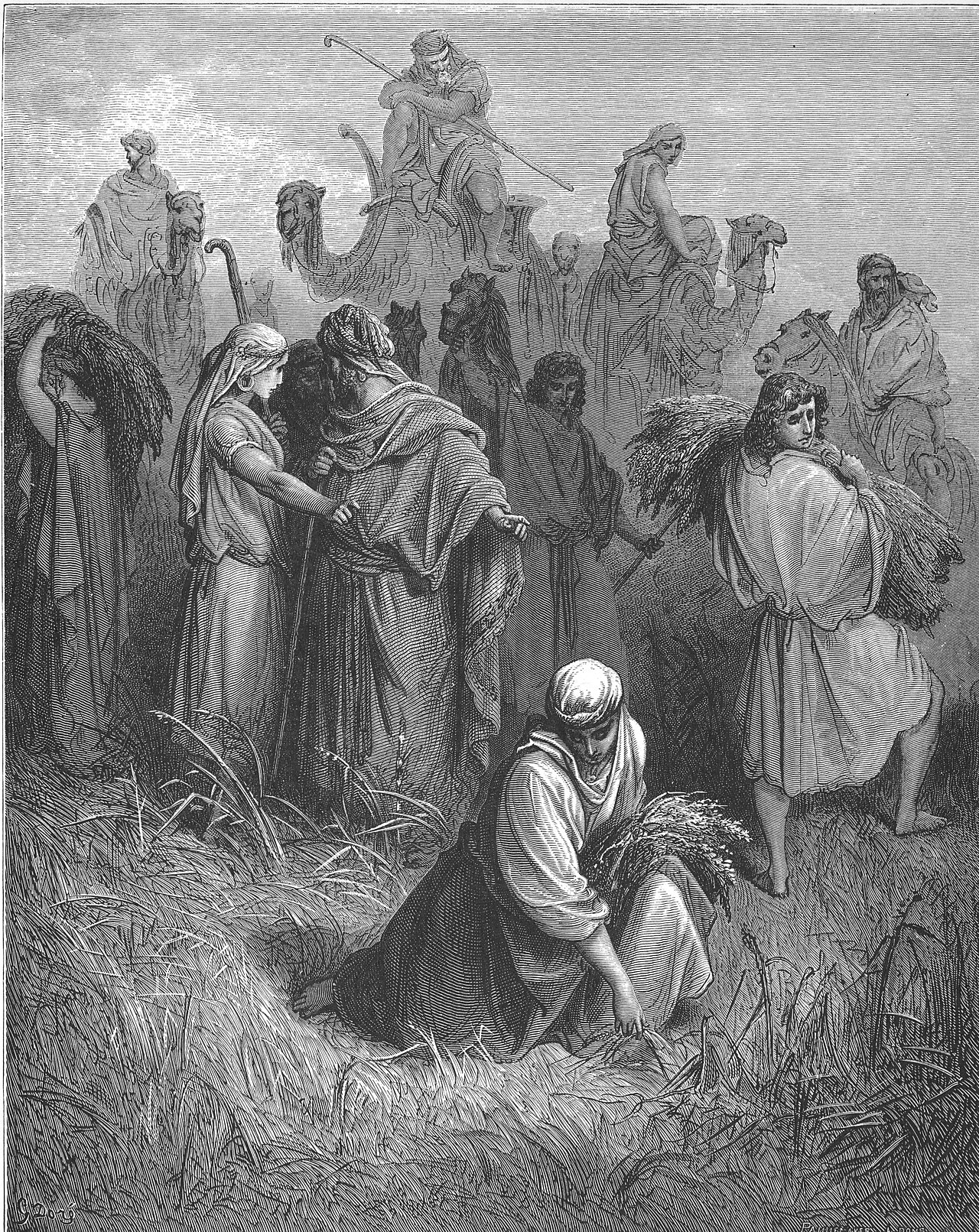
in Ruth 2And Ruth the Moabitess said to Naomi, “Please let me go into the fields and glean heads of grain after someone in whose sight I may find favor.” “Go ahead, my daughter,” Naomi replied.
BSB
The same verse in ASV and KJV ▾
ASV
And Ruth the Moabitess said unto Naomi, Let me now go to the field, and glean among the ears of grain after him in whose sight I shall find favor. And she said unto her, Go, my daughter.
KJV
And Ruth the Moabitess said unto Naomi, Let me now go to the field, and glean ears of corn after him in whose sight I shall find grace. And she said unto her, Go, my daughter.
⋯
This verse in Ruth 2
Commentary
8 notes on this verseDoes the widow Naomi seem to you of small account, who supported her widowhood on the gleanings from another's harvest, and who, when heavy with age, was supported by her daughter-in-law? It is a great benefit both for the support and for the advantage of widows that they so train their daughters-in-law as to have in them a support in full old age, and, as it were, payment for their teaching and reward for their training.
This site's exposition
Now Naomi had a relative on her husband’s side
on Ruth 2:1-2
The book names Boaz before Ruth reaches his field, so the reader knows what she does not. Albert Barnes reads the word for "relative" as a near acquaintance. The phrase "a prominent man of noble character" is the Hebrew the angel uses of Gideon at Judges 6:12.
This site's exposition
glean heads of grain after someone in whose sight I may find favor
Leviticus 19:9 and Deuteronomy 24:19 left the edges of a field and the dropped grain to the widow, the poor and the foreigner. Jamieson, Fausset and Brown note that the right to follow close behind the reapers still depended on the owner's goodwill. So Ruth goes looking for favor.
The record, by era
The Puritans and the Awakening3 voices
Glean - Which was permitted to the poor, and the stranger, Deut. xxiv, 19, nor was she ashamed to confess her poverty, nor would she eat the bread of idleness. In whose sight - For though it was their duty to permit this, yet she thought it might perhaps be denied her; at least, that it became her modestly and humbly to acknowledge their kindness herein.
And Ruth the Moabitess said to Naomi,....
It is also an example to poor people to work for their living, and not beg that which they are able to earn. We must not be shy of any honest employment, though it be mean, ergon ouden oneidos -- No labour is a reproach. Sin is a thing below us, but we must not think any thing else so That Providence calls us to.
The Nineteenth Century2 voices
A commentator
Jamieson, Fausset & Brown1802–1910
Commentary Critical and Explanatory on the Whole Bible (1871)
Ruth . . . said unto Naomi, Let me now go to the field, and glean--The right of gleaning was conferred by a positive law on the widow, the poor, and the stranger (see on Le 19:9 and De 24:19). But liberty to glean behind the reapers [Ru 2:3] was not a right that could be claimed; it was a privilege granted or refused according to the good will or favor of the owner.
Glean ears of corn - The word glean comes from the French glaner, to gather ears or grains of corn. This was formerly a general custom in England and Ireland; the poor went into the fields and collected the straggling ears of corn after the reapers; and it was long supposed that this was their right, and that the law recognized it.
How the passage was read
What the Jewish commentators add
On the verses either side of this one
A kinsman. A relative; he was the son of Elimelech’s brother. Our Rabbis of blessed memory said, “Elimelech, and Salmone. Rus:21. the father of Bo’az, and the anonymous kinsman, 2 Ibid.:1. and the father of Naomi, 3 Therefore Bo’az and Naomi were cousins.
This section is reception history: how the passage was read and kept in the Jewish tradition. Where a reading parts from an essential of the Christian faith, the section says so at that point.
Texts and citation data: Sefaria; each excerpt follows its version’s licence. 2 further sources are cited on this chapter that carry no English text this site may quote or only restate the verse.
The words behind it
19 Hebrew wordsEvery Hebrew word of this verse in the order it stands, with what it means and the door to its own study. The last column counts the times a word stands in the whole Bible: the rarer the word, the more the places it appears belong together.
| Hebrew | Sound | Meaning | Word study | In the Bible |
|---|---|---|---|---|
| וַתֹּאמֶר֩ | vatomer | and she said | H559 → | 5305 times |
| ר֨וּת | rut | Ruth | H7327 → | 12 times |
| הַמּוֹאֲבִיָּ֜ה | hamoaviyah | the Moabite [woman] | H4125 → | 16 times |
| אֶֽל־ | ʾel- | to | H413 → | 5510 times |
| נָעֳמִ֗י | noomi | Naomi | H5281 → | 21 times |
| אֵֽלְכָה־ | ʾelekhah- | let me go | H1980 → | 1546 times |
| נָּ֤א | na' | please | H4994 → | |
| הַשָּׂדֶה֙ | hasadeh | the field | H7704 → | 334 times |
| וַאֲלַקֳטָּ֣ה | vaalakotah | so I may glean | H3950 → | 37 times |
| בַשִׁבֳּלִ֔ים | vashibolim | among the ears of grain | H7641 → | |
| אַחַ֕ר | ʾachar | behind | H310 → | 715 times |
| אֲשֶׁ֥ר | ʾasher | [the one] whom | H834 → | 5497 times |
| אֶמְצָא־ | ʾemtza'- | I will find | H4672 → | 455 times |
| חֵ֖ן | chen | favor | H2580 → | 69 times |
| בְּעֵינָ֑יו | beeinav | in view his | H5869 → | 887 times |
| וַתֹּ֥אמֶר | vatomer | and she said | H559 → | 5305 times |
| לָ֖הּ | lah | to <the> her | ||
| לְכִ֥י | lekhi | go | H1980 → | 1546 times |
| בִתִּֽי׃ | viti | O daughter my | H1323 → | 588 times |
וַתֹּאמֶר֩and she said
vatomerH559 →5305 times
ר֨וּתRuth
rutH7327 →12 times
הַמּוֹאֲבִיָּ֜הthe Moabite [woman]
hamoaviyahH4125 →16 times
אֶֽל־to
ʾel-H413 →5510 times
נָעֳמִ֗יNaomi
noomiH5281 →21 times
אֵֽלְכָה־let me go
ʾelekhah-H1980 →1546 times
נָּ֤אplease
na'H4994 →
הַשָּׂדֶה֙the field
hasadehH7704 →334 times
וַאֲלַקֳטָּ֣הso I may glean
vaalakotahH3950 →37 times
בַשִׁבֳּלִ֔יםamong the ears of grain
vashibolimH7641 →
אַחַ֕רbehind
ʾacharH310 →715 times
אֲשֶׁ֥ר[the one] whom
ʾasherH834 →5497 times
אֶמְצָא־I will find
ʾemtza'-H4672 →455 times
חֵ֖ןfavor
chenH2580 →69 times
בְּעֵינָ֑יוin view his
beeinavH5869 →887 times
וַתֹּ֥אמֶרand she said
vatomerH559 →5305 times
לָ֖הּto <the> her
lah
לְכִ֥יgo
lekhiH1980 →1546 times
בִתִּֽי׃O daughter my
vitiH1323 →588 times
A shaded row is a word that stands 400 times or fewer in the Bible.
The walk
8 stopsEach card is a verse this one points to, and under it the verses that one points to in turn. Where several paths arrive at the same place, that place is listed first: the text keeps returning to it.
Through
Leviticus 19:16You must not go about spreading slander among your people. You must not endanger the life of your neighbor. I am the LORD.
it leads to
- Exodus 23:1
“You shall not spread a false report. Do not join the wicked by being a malicious witness.
- Exodus 23:7
Stay far away from a false accusation. Do not kill the innocent or the just, for I will not acquit the guilty.
- Proverbs 20:19
He who reveals secrets is a constant gossip; avoid the one who babbles with his lips.
- Exodus 23:1
Through
Leviticus 23:22When you reap the harvest of your land, do not reap all the way to the edges of your field or gather the gleanings of your harvest. Leave them for the poor and the…
it leads to
- Leviticus 19:9–10
When you reap the harvest of your land, you are not to reap to the very edges of your field or gather the gleanings of your harvest.
- Deuteronomy 24:19–21
If you are harvesting in your field and forget a sheaf there, do not go back to get it. It is to be left for the foreigner, the fatherless, and the widow, so that…
- Isaiah 58:10
and if you give yourself to the hungry and satisfy the afflicted soul, then your light will go forth in the darkness, and your night will be like noonday.
- Proverbs 11:24–25
One gives freely, yet gains even more; another withholds what is right, only to become poor.
- Leviticus 19:9–10
Through
Leviticus 19:9When you reap the harvest of your land, you are not to reap to the very edges of your field or gather the gleanings of your harvest.
it leads to
- Leviticus 23:22
When you reap the harvest of your land, do not reap all the way to the edges of your field or gather the gleanings of your harvest. Leave them for the poor and the…
- Leviticus 23:22
Where this verse is studied
On this page
About Ruth
Who and where
2 names in this verse with a page on the site.
This page draws on Adam Clarke, Commentary on the Bible; Albert Barnes, Notes on the Old Testament; Ambrose of Milan, Concerning Widows 6.33; Jamieson, Fausset & Brown, Commentary Critical and Explanatory on the Whole Bible; John Gill, Exposition of the Old Testament (1748-1763); John Wesley, Explanatory Notes upon the Old Testament; Keil and Delitzsch, Biblical Commentary on the Old Testament: Joshua, Judges, Ruth and Matthew Henry, Commentary on the Whole Bible.